
Indian River Distillery
Whiskey Flight Overview
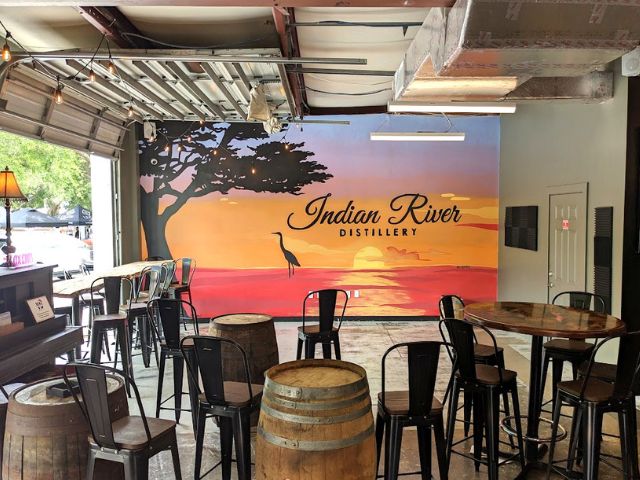
Drew Hannush heads to Florida's Treasure Coast for a virtual visit to Indian River Distillery in Vero Beach. Founded by Ray Hooker and his family, the distillery combines Florida history with a passion for rum, bourbon, gin, and American single malt. Along the way, Ray shares stories of pirates, the infamous Ashley Gang, and the unique challenges of making whiskey in a subtropical climate.
In This Episode
• Visiting Indian River Distillery in Vero Beach, Florida
• The Treasure Coast Craft Spirits Festival
• Building a family-owned distillery from the ground up
• Florida whiskey and tropical maturation
• Malted wheat bourbon and American single malt production
• Distilling experiments—including a memorable tomato mash mishap
• The story of the Ashley Gang and Florida's outlaw history
• Pirates, treasure ships, and legends of the Treasure Coast
• Things to see and experience around Vero Beach
📍 Indian River Distillery
Vero Beach, Florida
Transcript
Drew H (00:08):
Welcome to Whiskey Lore's Whiskey Flights, your weekly home for discovering great craft distillery experiences around the globe. I'm Drew Hannush, the Amazon bestselling author of the Kentucky Travel Guide called Experiencing Kentucky Bourbon and also the guide to over 1000 American Distilleries. That book is called Experiencing American Whiskey. Today we are headed further south. Yeah, I said that we were going to be ending up the Deep South tour last week, but I had a great pleasure of actually heading down to Vero Beach, Florida back in April to attend the Treasure Coast Spirits Festival in Vero Beach. Thanks to Ray Hooker, the co-founder of Indian River Distillery, which is right where that festival takes place, right in the road, right next to it. And I will say to you that if you want to go to one place to learn about Florida Spirits, it's a great festival and it gives you a lot of access to a number of distilleries.
(01:06):
We actually have one of our listeners to the podcast, Grove and Grain. I got a chance to meet with them and taste their aged rum and their silver rum. Had a conversation with Lugos. I'd not heard of them before. Got a chance to taste their barrel rested aged rum. And if you think this is all about rum, it is not. There are a lot of rum distillers there, but there were also a lot of people making whiskey and Oceanside was one that I got to chat with them for a little while and who I did a profile of in the experiencing American whiskey book, Blenders who are taking advantage of all the great craft spirits that are being made around the United States, making some wonderful blends Down Island, which does single cast rums with barrels from around the world. It's definitely something I would put on my calendar for next April to check it out if you are into whiskey and rum.
(02:00):
The only problem I had was that didn't have a lot of time in Vero Beach and so I didn't actually get any time to go over and check out Indian River Distillery besides doing a walkthrough. So today I want to remedy that by not only getting to learn more about it myself from Ray Hooker, the co-founder of the distillery, but also let you guys learn a little bit about it as well. So this is going to be a virtual visit. Let's go ahead and join the conversation with Ray Hooker, co-founder of Indian River Distillery of Vero Beach. Well, first of all, thank you for inviting me down to the Treasure Coast Spirits Festival. That was a lot of fun.
Ray H (02:42):
It was a lot of fun. Yeah, I enjoyed it. It's a young festival. It's something we're trying to build, but I think it's unique and it's small and it's a cool little spot too.
Drew H (02:52):
Yeah. What got this into your mind to do this?
Ray H (02:56):
My Rotary Club. I've been in Rotary for 20 years now and we use our industry knowledge, the different members to try to create fundraisers that will help the business community and help our club so we can raise something for our charities.
Drew H (03:14):
One of the nice things about the way the law is structured in Florida is that you can actually do bottle sales during your festivals. How big of a plus is that in terms of ...
Ray H (03:25):
That is because, and I'm guessing a lot of states are very similar that to the craft beer industry that there's a festival like that going on every weekend. And a lot of these breweries are pulled in many places and they could do a festival every week throughout the entire year. And they realized that all that does is burn up money because once you have your exposure, you don't need to do a festival every weekend. But in the craft spirits industry in Florida, there is a financial incentive for the distillers to be there. So if you have a festival that draws the right kind of people and they purchase bottles, they're at least covering their costs from being in that festival. So it makes it a little bit more feasible being that most of us are really small businesses anyway.
Drew H (04:17):
Yeah, it's hard to be seen. So this actually creates a really great opportunity for people to go to one spot and be able to engage with a bunch of different spirits from across the state.
Ray H (04:32):
Yeah, it is. And Florida's a big state land mass wise and distance wise. If you drive from Key West to the Florida Georgia line, it's something around 600 miles. It's a long way.
Drew H (04:46):
I learned the hard way because when I was younger, I actually had a job opportunity in Fort Walton Beach and I had a friend that lived in Hollywood, Florida, which is down by West Palm Beach and Fort Lauderdale. I get done with my interview at three in the afternoon. I said, "Okay, well, I'll just drive down and see my friend there in Florida." And it's like midnight and I'm just getting to the turnpike. It's like, holy cow. So hard to try to get every distillery across. How many distilleries do you tend to have in and how far out do they come in from?
Ray H (05:23):
Well, we've had between 20 and 25. My goal is 35 total, but it's hard to get all those people here. We've had people from the Panhandle, which would be Distillery 98. Generally, Sean comes up from Papas Pilar, Rome and Key West. So a prety big swath of the state. Some of them are stressed right now and working really hard so they weren't able to make it this year, but it is what it is. They're going to try it again next year.
Drew H (05:53):
Awesome. Awesome. And the variety. The thing that got me about it, of course, I'm always looking whiskey first, but it was a great opportunity for me to actually try some things that I had a Polish liqueur while I was there, which was Kubrick, I think is what it was called, Frasier Valley. And then a lot like aged rums, finished rums. I'm not really a rum guy, but after going through and tasting a lot of the rums there, I was like, okay, I see now there's like degrees of rum. There are some molasses, there's some that are cane sugar and either one could hit your flavor profile.
Ray H (06:33):
Oh yeah. Yeah. Rum is the wild west right now. I think it has been for a while. There's not as many rules and there's so many different people making it and so many different flavor profiles. If you go from a really clean Puerto Rican style rum to a heavy double hot still Jamaican muck-based rum, it's like night and day difference.
Drew H (06:54):
Yeah. There was one vendor that you had there, Down Island that was- Down Island. Yeah. He had rums from all over the world. I'm like, that is a really cool idea.
Ray H (07:07):
Yeah. He sources rare barrels from everywhere. Ghana, Paraguay, Jamaica. He has some, he's talking about doing Australian rums, a Hawaiian rum. He finds them all over the place.
Drew H (07:28):
So you're definitely doing it next year?
Ray H (07:30):
Oh yeah, absolutely. Absolutely.
Drew H (07:32):
Okay. And so how can people find out more information about it and make sure they get there?
Ray H (07:36):
Treasurecoastcraftspiritfestival.com or follow us on Facebook because we always post about it.
Drew H (07:42):
Okay. And you always try to do it in April?
Ray H (07:45):
April. Yeah. First weekend in April is the ideal date for it.
Drew H (07:48):
That's perfect because everybody's coming down for spring break, so why not?
Ray H (07:51):
Yep. And we're a very transient area in the wintertime and our snowbirds haven't quite gone home in April, so it's the last weekend we can do that.
Drew H (08:02):
So let's talk about your baby, Indian River Distillery. When did you guys get started?
Ray H (08:07):
It was established in 21 and we first started production in 2023.
Drew H (08:12):
Okay. And this is a family business?
Ray H (08:14):
It is a family business. Indian River Distillery is my wife, Mandy and my son, Chandler, and myself.
Drew H (08:20):
And this isn't your first business together?
Ray H (08:23):
It is not, no, no. We had a business for 14 years before that. It was a pest control and landscaping business locally.
Drew H (08:31):
Okay. So interesting that you would be dealing with chemicals and that sort of thing on that side of things and now you're coming in and doing a distillery, but I imagine this was a completely different mindset in terms of what you had.
Ray H (08:46):
Yeah, completely different. Yeah. It's a different effect if you drink the pest control chemicals.
Drew H (08:53):
Well, what was that like? I mean, did you have distilleries around you could kind of lean on in terms of, or were you kind of flying by the seat of your pants on it?
Ray H (09:02):
By the seat of our pants at first, it started as a hobby playing around and experimenting and seeing what I could do. And then we started doing a lot of research into Florida distilleries. And at that time, I think that was 2014, 2015, there wasn't a lot of distilleries in Florida. We went around and visited what we could and talked to who we could and said, "I think this would be a great idea." And right when we were coming online with our plan and putting it in place, that's when the Florida laws changed to where we could do different things in our tasting rooms and do bottle sales and things like that. So that helped out quite a bit.
Drew H (09:42):
Yeah. I'm trying to think. Well, when I came down, I was looking for distilleries and the only one I ran into was Kazuba, which was in St. Petersburg. They closed. And they've closed, yes. So yeah, it's interesting because you probably, I mean, I think a lot of people probably think rum first and they don't really think that there's whiskey distilleries in Florida.
Ray H (10:08):
Yeah, they do. And we immediately joined the Florida Craft Spirits Association and tried to make friends with whoever we could and other distilleries around because I think that's how a business is done. You need to be friendly and work together with everybody around you. That's how innovations are made. That's how partnerships are made and that's how things get better and that's how the industry is going to get better. So I made friends with as many as I could. I made pretty close friends with Tom McPeek who owned Sugarworks Distillery and they're about an hour and a half north of us. I drove up there probably three or four times a week before our permits came through for construction and just helped him out. Tried to be there before he was there in the morning and walked out the door every evening at the same time as him.
(10:55):
That way I wasn't a burden. I was actually being additive to his business while he just freely offered information.
Drew H (11:02):
That's great. Well, that's one of the nice things about this industry. Nobody's overly protective because it would be hard for you to create what he's creating exactly the same way he's creating it.
Ray H (11:13):
Yeah. And there is some people that try to be secretive about what they do and they have their secret grain bill and it's just a lot of that's marketing. I'll write my recipe down for somebody and let them do it because you're not going to do it the same way as I do it.
Drew H (11:29):
Yeah. Did you start whiskey first or was your idea of another spirit before whiskey?
Ray H (11:35):
I think our first product that we produced was rum. Then we did corn whiskey and then vodka. Then after that was gin. We needed to get the four categories of spirits online as quickly as possible to support our tasting room because we have cocktails in our tasting room. The best that we could do to get online and create a little bit of revenue was get those four categories online. We sourced whiskey in the very beginning and that's what we called our now whiskey, which stood for not our whiskey. We could be transparent about what we were doing. Then we transitioned over and we have our own whiskey that we blend with the source whiskey and that's what our bourbon is now, the Raylands Reserve.
Drew H (12:22):
Okay. And so when you're doing that and you are first of all looking for a whiskey to source, because this is always the interesting thing I find in starting with sourcing is how do you keep your customers happy moving from the sourced whiskey into what you're distilling on site? And how much does what you source speak to what you really want to create as your finished product?
Ray H (12:50):
I think as small as some of our brands are when they're doing this, just transparency and communication to the customers will help with that because everybody knows what you're doing hopefully and you're explaining it well that we're using this as a transition into what our brand is eventually going to be. So it's going to take, if we do the best job we can probably seven years to completely stop sourcing our bourbon, that's a slow transition. People would get used to that.
Drew H (13:25):
Yeah. Was there a particular flavor profile you were looking for? Were you saying, "I want to do a high rye." What does a florida climate say to all of this in terms of what you're going to do also?
Ray H (13:36):
The florida climate laughs at whatever I try to do. I like a wheated bourbon. So we use a 45% Indiana wheated bourbon with our malted wheat bourbon. Our grain bill is usually two types of corn, jimmy red corn and yellow dent corn creating 60% of the mash bill and then the rest is made up by malted wheat and barley.
Drew H (14:08):
Oh, so all the wheat you're using is malted?
Ray H (14:10):
All the wheat's malted, yeah.
Drew H (14:12):
Okay. Interesting. Did you experiment at all between using malted wheat versus not using malted wheat?
Ray H (14:19):
Yeah, I have the barrels that I'm sitting on, but we've only been in production for a few years now. Short period
Drew H (14:24):
Of time. Yeah.
Ray H (14:25):
Can
Drew H (14:25):
You kind of get a personality?
Ray H (14:28):
I do. I do. You're starting to get a personality out of both of them and I like malt. Sorry.
Drew H (14:34):
Okay.
Ray H (14:35):
Yeah.
Drew H (14:36):
Well, the other thing that I noticed in going around Florida and the deep south is a lot of distilleries do kind of lean into wheated bourbons. And I wonder if part of that, because I always think of the Peppy Van Winkles and all those that they want to age for a long time usually are wheated bourbons because wheated seems to do better in that barrel for a longer period of time. Do you feel like that's kind of the direction you're going to head with this as maybe rapid aging is also this would create a benefit using wheat?
Ray H (15:12):
I don't think there's any way we're going to be able to do a 10-year-old whiskey in a new American oak barrel.
Drew H (15:19):
Yeah.
Ray H (15:19):
With our climate, it's too much.
Drew H (15:22):
Yeah.
Ray H (15:22):
It's too much. I have a barrel now it's a 53 gallon number three char barrel from Adirondack Barrel Company, which is a really high quality barrel, four year seasoned snaves. And for one year in that barrel, that whiskey looks like Pappy Van Winkle. It's that dark. Yeah, it's that dark, that fat.
Drew H (15:48):
Okay. Well, and that's the thought is now you're kind of doing a rapid aging. So again, that idea that that wheat might be able to handle that a lot better than rye, which might get lost with too much barrel influence.
Ray H (16:04):
Maybe. I think if we distilled the spirit really clean and didn't have a lot of flavor, I think that rapid aging would probably work. But if you want the flavor of the grain, it takes a while for that to develop into the barrel into something that's palatable that you want to drink. So you've tasted bourbons or whiskeys that are just, it's all barrel, it's no grain. So I think our climate and the heat and the humidity, I think it speeds up certain portions of the aging process and not other portions of
Drew H (16:42):
It. Before we got on here, we were talking about American single malt and the fact that you had just released an American single malt. And one of the things that I've noted about American single malts is that if they're distilled on column still, sometimes they can be a bit flat, but you actually are doing something in terms of how you are distilling through that column because to talk about pot stills, the advantage is reflux and where you're taking your cuts of that whiskey.
Ray H (17:13):
And
Drew H (17:13):
Are you getting enough of those congeners coming in that provide the kind of flavor bouquet you get out of a barley? So how
Ray H (17:23):
Do you
Drew H (17:23):
Do that?
Ray H (17:24):
I think when you talk columns still, a lot of people are thinking like a coffee still or a large continuous column and we have a column on top, our batch still. So it's not a continuous column, but we have a six plate column. They're not active plates. I control the reflux with the deflagamator. I can't take a plate out that would involve taking the still apart. So what I've learned to do is hold the spirit in a hundred percent reflux for a little while and that concentrates a lot of those coningers and flavors on those plates. And then I slowly take off the heads cut after I've compressed it and then I'm dragging the rest of the spirit through those flavors. The same way you could use that same piece of equipment to ruin a spirit by dragging tails throughout the entire thing. That's the same thing I'm doing, but I'm using flavor.
Drew H (18:23):
That's interesting. What clued you into that? Did somebody kind of give you something that spurred this in your mind that said, "You know what? I do need to look at how I'm taking this off of the still instead of just running it through and grabbing
Ray H (18:36):
At
Drew H (18:36):
A particular point."
Ray H (18:37):
I might not seem it, but I'm a litle bit of a nerd and I talk about nerds. Our still is made by Still Dragon North America and that's Larry Taylor. He came from the home distillation community 20 years ago on home distiller and created his company and then started making stills for businesses and distilleries our size and even larger. He lives pretty close to us so I get the benefit of having a really intelligent distiller and I can spitball things with them quite often.
Drew H (19:12):
What was probably the most challenging thing you've dealt with in terms of producing spirits at the distillery?
Ray H (19:20):
Gin.
Drew H (19:21):
Gin? Okay.
Ray H (19:22):
Gin. Yeah. Gin, I left that to last completely discounted because I wasn't really a gen drinker at that time and to me it was vodka with pine needles. Then I started doing it and trying it and running tests and I realized that from my test up to a full size batch, none of the different botanicals you use scale linear or at the same rate. So everything when you're building that recipe is going to be different within that scale. I had a hard time at that and I got some help. I got some info from Tom McPeak. He helped me out a little bit and I spent a lot of time on the phone with Alan Bishop and he helped me out quite a bit. Gave me a good idea of the rate at which the different botanicals scale. I was able to create a gin that a lot of people like and I actually like, and I'm kind of a fan of gin now because it makes an amazing cocktail.
Drew H (20:25):
Oh, nice. Okay. So you talk about, because I wasn't a big gin fan either, but I've grown accustomed to it over time. I see myself though not gravitating towards gins that are heavy in the juniper. Did you look to see what other things you could kind of elevate in the flavor or?
Ray H (20:44):
Absolutely. I don't like a London dry gin, too much juniper. So we focused on botanicals that we could source from Florida or would be sourced from Florida. So we stuck with elder flour and that's a very dangerous botanical that does not scale at all. Hibiscus, we used a lot of hibiscus. Blackberry root we used as kind of a fixative and give a litle bit more of an earthy tone, citrus, angelica root, some things that were available in Florida.
Drew H (21:19):
You distilled something else, so I heard through the grapevine that didn't turn out so good, an experiment that you did with a red fruit/vegetable.
Ray H (21:32):
Tomato.
Drew H (21:34):
Yeah,
Ray H (21:34):
Talk
Drew H (21:34):
About that.
Ray H (21:35):
My assistant distiller and all around helper, Michael, he's also a bartender in our tasting room. He likes to experiment around with different things that we find on our test still. So we have some regulars that are farmers and we had some really sweet tomatoes that they brought in and we tried to find the sugar content of the tomato with a refractometer and we said, "Well, what kind of spirit would this make?" And it fermented very vigorously and blew the top off of the carboy and sprayed tomato all over the wall and ceiling of the production room. I think I wrote that in one of my newsletters and explained what happened a big giant mess.
Drew H (22:23):
This is what you get for not distilling rye in your recipe because the thing about rye is that it expands and people always get into trouble with it if they don't know. So you got
Ray H (22:34):
It
Drew H (22:34):
All except in a nice big red splash.
Ray H (22:37):
Splash, yeah. And we experiment around quite a bit. There was a new yeast that I had been talking with Chernel Lane from lotams and I was not happy with the yeast that we were using for rum because I wasn't getting the flavor profile that I wanted. It was a great flavor, but it wasn't what I was looking for. So this was a genetically engineered Caribbean yeast strain. They had worked to make it a little bit more stable than what some of the Caribbean rum distilleries were using. We did that with a Florida black strap molasses and it fermented vigorously and just completely overflowed the fermenter and I had molasses everywhere. I have pictures of that somewhere too. It's just a huge sticky mess because we do open fermentation That would probably make more sense. It wouldn't be a big deal in a closed fermenter, but I like traditional open fermentation.
Drew H (23:39):
The one thing that we haven't really discussed yet, and of course going into your brands and what you're naming your different spirits, I love history. Let's talk a little bit about the history behind these names. First of all, your own family's history. Your family's actually a rare breed in that you're actually really Florida native.
Ray H (24:01):
We are. Yeah. We're Florida native. We've been in Indian River County since 1903 and been in the state of Florida since before Florida was a state. So my family names are on the documents that voted to turn Florida into a state.
Drew H (24:20):
Wow. Okay. And so when we think about Florida history, I mean, it is a state with a really interesting history. St. Augustine is probably the one place people would know some history about Florida. First of all, let's talk about the Ashley Gang because that's the story that you're using for your bourbons. In fact, multiple names.
Ray H (24:41):
Absolutely. The Ashley Gang, they're called historically the notorious Ashley Gang. We have a museum in Stewart a little bit south of here that has an exhibit and part of the top floor is specifically towards the Ashley Gang was John Ashley, his brother, his dad, Clarence Middleton, Laura Up the Grove, Hanford Mobley. There was a pretty good group of fellas that ran roughshod up and down the state and they were definitely outlaws for sure. They wore back and forth with a couple of the sheriffs. During that time, Florida's county and town structure wasn't the same as it is now Indian River County, St. Lucie County, Martin County were all St. Lucie County. And then below that, you had Palm Beach County or Miami, Dade County. Now we're a lot of different counties and most of that happened in 1925 during this time. The notorious Ashley Gang, they had stills in the Palmettos and in the scrub all throughout our state.
(25:57):
They robbed trains, they robbed banks. They actually were the last American pirates to rob the British crown.
Drew H (26:05):
Wow. Okay.
Ray H (26:06):
Prohibition, they didn't like any non-Florida booze coming into our state and there was a lot of stuff coming out of the Caribbean. They took a boat and they went to The Bahamas and they stole all the money from the British government that they had in that fort
(26:23):
And stole the rum and brought it back to Florida because non-Florida rum was okay if it was their rum. They had a good time running from law enforcement. It's come to light later on that the reason that they were able to elude law enforcement so many times and so well is because they had the Black community on their side. They supported the Black community and a lot of the old-time local law enforcement were part of the Klue Klutz Klan or the anti-everybody but me movement. So they got a lot of inside baseball and inside information on when the sheriff's deputies were coming to raid them and they just wouldn't be there when it happened. The Ashley Gang was ended in 1925 when a tip came to the sheriff of then St. Lucie County from the Palm Beach County Sheriff that they were going to be traveling up north on US1 That Old Dixie Highway at that time it was called and that was the main north south thoroughfare through our area.
(27:33):
And there's a choke point at the Sebastian River with a little bridge that goes across and they hung a chain across the Sebastian Bridge and they put a red lantern on there, which would signal that the bridge is out, you need to stop. When the gang stopped, they jumped out and the official story from the sheriff's reports where they stopped and they got the Ashley gang and they handcuffed him and John Ashley with his hands handcuffed behind his back, found a pistol in his pocket and tried to shoot one of the deputies. So the deputies opened fire and killed them all.
Drew H (28:11):
Wow.
Ray H (28:11):
A couple of the deputies, one in particular on his deathbed, wrote an autobiography that told exactly what happened. The sheriff said, "We put them in jail. They always get out. They always break out. No jail will hold these fellas, so we're going to do some frontier justice." And got them dead right there on the bridge, took their bodies to Stewart, which is just south of us or Fort Pierce, which was the county seat at that time and laid them on the ground in front of the post office for everybody to see.
Drew H (28:45):
Okay. So what's interesting is I always like to see if I can find a little bit of backstory on these just in case there's something interesting to chat about. And this Laura was interesting last name- Up the grove. Laura Upper Grove. Up the grove. Yeah. I was reading about her retrieving the eye of John Ashley. You know the story behind that?
Ray H (29:09):
Yeah, absolutely. Absolutely. She got it back from the sheriff. He figured he didn't want that flight and gave it back to her. I think she went right in his office to try to get it and he said he couldn't find it. And then I think she pulled a gun on him, didn't
Drew H (29:22):
She? Yeah. And that he was bragging that he was going to wear it on his watch chain or something like that.
Ray H (29:28):
Yep. On our grand opening, when we first did our release and opened to the public, it was a wild time for us. It was a wild day. We were the first distillery within a hundred miles of our area. I'm a local, so I know everybody. Oh man, I think we had swamp buggies out in front of our place and airboats, and it was just a big time. That was the busiest day we've ever seen. And although I am a people person, I I do need to recharge." And it was a long day talking to a lot of different people and I was looking for some comfort in the room and sitting at the corner of the bar was an old guy that obviously looked like he was from Florida, old Florida people. "Okay, well, I'm going to go talk to that fella." I went and sat next to him and he's holding a bottle of our gang corn whiskey and he's smiling and he says, "I wanted to thank you for what you're doing and telling these stories." Okay, well you're welcome.
(30:33):
I think people need to know these stories of our area. And he holds up the bottle and he points at the Ray Lynn on the bottle and he says, "That's my grandpa." Wow. Yep. And I said, "Well, I'm nice to meet you. My name's Ray." And he says, "Well, my name's Ray Lynn. It's nice to meet you too." He's got the same name of his grandfather
(30:52):
And his dad had the same name. He's just a local Florida good old boy, been around forever. He's probably, I think he's 73 now and became pretty good friends with the guy. I try to talk to him every few weeks or once a month at least and just nice to see that family connection. He says, "I appreciate you telling the story the proper way." And I've gotten phone calls when we first opened from retired police officers from Miami and Palm Beach County saying that I was glorifying the criminal outlaw past the Florida. And no, I'm telling stories, stories of things that happened and history that we're not going to wash away. People are going to know these stories.
Drew H (31:38):
Yeah. Well, I mean, this is the thing. I just actually read a post this morning on LinkedIn that was talking about brands should be talking about authentic things and they shouldn't be making stuff up or having all these fantastical stories or connecting themselves to stories in the area. But to me, there's no better thing than whiskey, which is something that you want to ... When you're sitting around, you're telling stories and who better to get people intrigued about the history of an area through just a curious name on a label? Wait a second, what is that all about? Opens up a door to being able to tell these stories. And then as you say, what just happened with you in that particular case is that you ended up with somebody who it connected with in the local community, and then you're going to learn more about it because you're actually talking to somebody.
(32:32):
You've opened the door to that conversation.
Ray H (32:36):
All of our brands together will have a story from local history because as a Florida native and somebody who's been around a long time, it burns me up that people come to Florida and they think all of Florida is Orlando, Mickey Mouse and South Beach Miami.
Drew H (32:54):
Yeah. Or
Ray H (32:54):
New
Drew H (32:55):
York transplants.
Ray H (32:56):
Or New York transplants. Yeah. Right. Most people don't realize that Florida is still one of the biggest cattle producers in the country. Florida had cowboys before Texas was even a thought. We have cowboys from the 1600s.
Drew H (33:13):
Wow. Yeah. See, again, as a history guy, I love hearing this stuff. And as a whiskey guy, I was actually really impressed when I started talking to Florida distilleries and hearing about the use of rye and using local rye. And it's like, wait, everybody in Kentucky tells you you can't grow rye even in Kentucky, that you have to go up north to get that stuff.
Ray H (33:36):
And it's
Drew H (33:36):
Like all of these things kind of get broken down over time with these craft distilleries creating out of what actually is in the area.
Ray H (33:47):
Yeah, that's true. And our rum is the treasure fleet rum, which is from the 1715 treasure fleet, which is why our area is called the Treasure Coast. Most people have heard of the Treasure Coast, but don't understand why it's called the Treasure Coast. Well, there's billions of dollars in treasure a hundred yards off the Vero Beach. It's right there. We had Pirates, Henry Jennings, all of these Pirates of the Caribbeans camped out on Vero Beach trying to salvage some of this treasure from the Spanish. Florida's a wild place. It's cool.
Drew H (34:28):
Well, when you have that much coastline, there's boundary. You've got the golf stories and you got the Atlantic stories and that tie in. I don't think people realize how close the Bahamas are to the United States.
Ray H (34:42):
It's really close. A lot of my family and friends take a weekend trip to The Bahamas and their 22-foot center console boat. It takes them a couple hours to get there.
Drew H (34:52):
Yeah. Well, talk about the experience there. And so when people are coming into the area, first of all, when you mentioned me coming down, I looked and I went Vero Beach. No, I've been to Vero Beach. Oh, Dodgertown. Because I actually went ... Yeah, I went there to watch the Dodgers spring training years ago before they moved out to Arizona. It's on. Yeah. Yeah. But you actually have the Jackie Robinson complex right there.
Ray H (35:21):
Horse complex. Yep. Yeah. Yeah. The Jackie Robinson Sports Complex is we could hit it with a rock from our distillery because we're on the Vero Beach Regional Airport and they host all kinds of adult and youth sports games and tournaments and things like that. It's a cool complex. It's neat. It's something I grew up being around the Dodger town and then when the Dodgers left and went to Arizona, it took the wind out of our sails. MLB coming in and doing the Jackie Robinson sports complex has really changed that area back to something special.
Drew H (36:02):
I mean, actually, I stayed in a hotel that was in downtown Vero Beach, but it wasn't hard to walk out there. You just walking through neighborhoods basically to get out there. So yeah, easy to get around. There's another distillery in town, 21st Amendment.
Ray H (36:18):
21st Amendment. Yep. Yeah. 21st Amendment. We have three or four breweries. They're within a nice walk, some really good breweries. Our area has a barrier island. So we have the Indian River Lagoon and then a barrier island, which then has the beaches. We have a lot of marsh out west. So you could be gator hunting in the marsh and surfing at Sebastian Inlet in less than 30 minutes.
Drew H (36:48):
Okay. And then so when is the best time to come and experience Indian River?
Ray H (36:57):
Probably during the winter months. That's what most people do and that's our general tourist season. But if you really want to see what the sleepy town of Indian River, Vero Beach is like, I would say September. Going to be a little hot and humid here, but it's always beautiful.
Drew H (37:16):
Okay. And so when they come in, you got cocktails, you also have musical events and things like that going on?
Ray H (37:25):
Yep. We try to have local musicians playing a couple of times a week. Every once in a while, we'll get a bigger group of musicians or a full band and let them play. We can do bottle sales. Generally, I don't have a structured tour schedule. If you want a tour, just ask and I'll say, grab a cocktail and let's go talk about what I do and we'll walk around and I'll just show you what I do.
Drew H (37:50):
Yeah. I wish I'd have gotten to spend a little more time there. You were busy on festival day trying to get all the ducks in a row and- All
Ray H (38:00):
The cats herded.
Drew H (38:01):
Cats herded. Exactly. So I really appreciate you making the effort to contact me and have me come down and the discussion today and talking about what you're making, a little bit of history and some fun stories. I don't think anybody's going to be distilling tomatoes anytime soon.
Ray H (38:19):
Oh, let them do it. Let them do it.
Drew H (38:23):
There you go. Well, thank you so much and hope we get more people going down to Florida and realizing that there's much more than just Disney to go see down there.
Ray H (38:32):
Absolutely. Well, thank you so much. I appreciate the opportunity and I'll touch base with you before the next festival. I'd like to see you again.
Drew H (38:38):
Sounds great. Cheers.
Ray H (38:40):
Yes, sir. Have a great day. Bye.
Drew H (38:41):
Well, I hope you enjoyed this virtual flight to Indian River Distillery in Vero Beach. If I peaked your interest in making the trip to the distillery and the Treasure Coast Spirits Festival, or if you're interested in visiting any of a thousand plus whiskey distillery destinations with experiences across the United States, make sure to pick up a copy of my brand new Amazon bestselling book, Whiskey Lore's Travel Guide to Experiencing American Whiskey. It's the only book on the market that gives you options of distilleries to visit in any of the 50 states and it gives you travel tips, tasting advice, and anything you need to know to get the most out of your distillery adventures. Plus you'll have online access to make a travel wishlist of your favorite distilleries. No whiskey fan should be without it. Find it on Amazon or get a signed copy at whiskeylord.org/shop.
(39:29):
That's Whiskey Lore's Travel Guide to Experiencing American Whiskey.
(39:35):
And as we prepare to leave Vero Beach and make our way to our next distillery destination, if you're still on the fence about a visit to Indian River Distillery, let me give you my three reasons why I think you should have this distillery on your whiskey lower wishlist. First, it might be Disney, spring training, baseball, or the beach that brings you to Florida, but make sure that you're heading out and getting a taste of the local whiskey scene. There are plenty of choices for your palate at Indian River. You can have a cocktail. You can sit there Ashley Gang-inspired whiskeys or taste the local botanicals that Ray discovered as he was trying to craft his own spirit. Second, best part of local spirits are the people and the stories they tell. While you're enjoying the cocktail, hear the story of the Ashley Gang, the Pirates along the Treasure Coast, and ask if there are any special places you might go visit to enhance these stories while you're enjoying Vero Beach.
(40:30):
And third, make sure to put a note on your calendar for early next year. You want to check the dates for the Treasure Coast Spirits Festival. Ray and the Vero Beach Rotary put on a great event. And even with 25 distilleries there, that filled up my hours really quickly and lots of tasty spirits and conversations. Well, just like a snowbird, we're going to head north to New York and next week I've got a Long Island distillery that's pushing the limits of distilling. Make sure you subscribe to the Whiskey Lower podcast so you don't miss a moment as we get closer and closer to our special 4th of July episode. I'm your travel guy, Drew Hanish, and until next time Cheers and Sloan Java. Transcripts and travel information, including maps, distillery planning information and more, heads at whiskeylore.org/flights. Whiskey Lore's a production of Travel Fuels Life, LLC.
About Indian River Distillery
Ask about a tour.
Take a Whisky Flight to Indian River Distillery
Map to Distillery
Note: This distillery information is provided “as is” and is intended for initial research only. Be aware, offerings change without notice and distilleries periodically shut down or suspend services. Always use the distillery’s websites to get the most detailed and up-to-date information. Your due diligence will ensure the smoothest experience possible.