
Hinterhaus Distilling
Drew (00:01):
Members of the whiskey lore speakeasy. Did you know that you are going to get an extra 30 minutes of my interview with Nate from Hinter House just by going to patreon.com/whiskey lore? We are going to be diving into three of hinter house's whiskeys that we're not going to cover on the show here, as well as a brandy. And we're also going to talk much more in depth about droughts, California barley, and a journey from Alaska to the Silicon Valley and here to Arnold, California. Check it out as a member of the speakeasy. That's at patreon.com/whiskey lore.
(00:42):
Welcome to Whiskey Lord's Whiskey Flights, your weekly home for discovering great craft distillery experiences around the globe. I'm your travel guide Drew ish, the bestselling author of Whiskey Lord's Travel Guide to Experience in Kentucky Bourbon second Edition, the Lost History of Tennessee Whiskey, and the book that bust 24 of Whiskey's biggest myths, whiskey lore, volume one, and talk about having an adventure. As I was leaving Fray Ranch, I was saying goodbye to Kolby. Then the wind started kicking up and this is something that somebody who's not very familiar with, the high desert is just going to be totally unprepared for. I'm looking at my GPS as I'm starting to head towards Virginia City, which is the place I was staying that evening, and it said, well, it's going to be an extra half hour. It's just an hour away, but now it's saying an hour and a half.
(01:32):
And as I'm driving towards it now it's saying it's two hours for me to get there and I'm going, what is going on? So I pull over, I'm looking at my app and it shows that the road is closed because there is flooding ahead. And so when you don't get a lot of rain in the place, when you do get rain, it can cause some calamities. And this is what I was facing, so how am I going to get to Virginia City now? I'm not really thinking about the disappointment that I'm not going to be able to actually explore the town. I'm much more concerned with that is where my hotel is, so how am I going to sleep tonight? And I wanted to get something to eat, so I thought, well, I'll go get something to eat, but there was nothing around. So I had to drive about 15 miles north to get to I 80 and there's a little town there and I got some Mexican food while I was there.
(02:22):
Then I looked at my GPS and it still looked like it was blocked, so I decided to take a little nap in the car. I didn't know what else to do. I'm in the middle of nowhere and I have no idea. And finally at about eight o'clock, the rain had subsided and it looked like the GPS was telling me that it might be possible for me to get through. So winging a prayer, I headed back in that direction and what had scared me was the first time I started driving in that direction, it was like this river on the side of the road and I knew it wasn't really a river was a ditch, but the water was coming down it so strong and there was actually a pickup truck that was nose down in it. And so I was not going to take any kind of chances on that first drive through.
(03:10):
So I was looking for that pickup truck and I saw it again as I went driving by. Nobody had pulled it out. And as I got closer and closer to the turnoff for Virginia City, I saw that the water wasn't so bad. It wasn't necessarily across the road. There were cars going through maybe a little low water. And then I was able to turn off onto the road to go to Virginia City, which is an uphill drive, twists and turns, and the only thing I really feared there was if there was mud across the road or something like that. So I get to Virginia City, well, I did a whole series on Virginia City with Chris Wimmer of the Legends of the Old West podcast, and I was so looking forward to going and seeing this. And Ron Gallagher, the guy that I interviewed, and if you don't know anything about Virginia City, I highly recommend going back and listening to that episode.
(04:00):
He is a man that's in his eighties. He lived through the Bonanza era and kind of seeing the transformation of the town into much more of a tourist destination. But I was so looking forward to getting a chance to see this place. I could only walk it at night. It was nine o'clock, so everything was really closed except for one casino. So I just walked up and down the boardwalk past the buckets of blood and the Delta Saloon, the Washoe Club, and tried to soak it in as much as I could. Next morning I got up, walked up there again, it was nice and sunny, so I got some nice pictures while I was up there and then got my car started heading down the hill towards Hinter house, which is in California. It is in the mountains in California. And so I had to cross the Sierra Nevada mountains to get there.
(04:49):
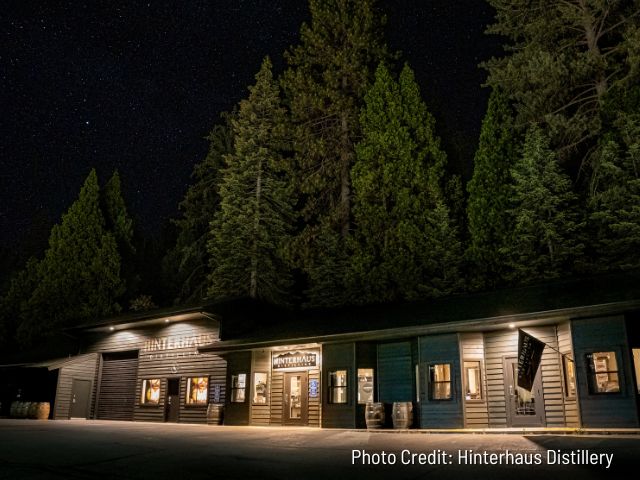
So I passed by Minden Mill while I was on my way, and then I also gassed up while I was in Carson City. I knew gasoline was going to be expensive. Once I got into California, I paid 3 28 I think, and then all I could see was over $4 the whole time I was in California. So I was glad that I did that as well. Drove through t's pass. One of the things that was really interesting about this drive was that as you're driving over these mountains, you are taking some hairpin curbs and they don't believe in signage up there at all. I've been on roads where they don't believe in guardrails here, not really signage. So you got to be prepared if there's going to be a big twist and turn in the road coming up. I pull into the town of Arnold, the distillery is fairly easy to spot.
(05:40):
It's up on a hill and it's one of the first businesses you really run into after you've come through a bunch of just forests. And so I was a few minutes early and decided to take a few pictures outside and then wandered in the side door. And there was Nate Randall, man I'm interviewing today, and he and his wife Bonnie, had started this distillery way back at the beginning of the pandemic, and they had moved from Silicon Valley. Previous to that, Nate was actually from Alaska, so I knew being up in the mountains, this was probably old hat to him, he walked me around the distillery. We kind of checked out what he was working on. He was actually making some vodka out of grapes, which I found fascinating. It's California, so makes sense. They brought some single malts out for us to taste and to get into the conversation, the first thing that I wanted to ask Nate was about this property. It's really out in an area where there's not a lot of prime property for doing a distillery, but this one just really seemed to be perfect.
Nate (06:46):
Yeah, yeah. I mean some of it is just luck. Some of it is because it's one of the only buildings in Arnold that's on the main drag. The Highway four is what we're on, and this is the street that goes through town. So if you're going to have a business, you really want to have frontage on it, but it's one of the only buildings in town that could support a distillery. So things like it's got a slab that you can put it on. It's not an old building. It's got some pieces of it that have higher ceilings and just some basics like that. It's got a great parking lot. I mean really boring kind of stuff. But yeah,
Drew (07:26):
It's good for tourism.
Nate (07:27):
Exactly, and it's been an awesome spot and we're very fortunate that we have this place and that people care that we're here.
Drew (07:38):
You're in an isolated area and you didn't bring in a Dave Pickerell or you're really kind of doing all of this on your own. So how did you go about learning how to make whiskey and especially the kind of whiskey you want to make?
Nate (07:52):
Yeah, so a lot of reading, a lot of diving deep into books, some of which are hard to stay awake when you're reading it, some of which are more on the fun side and the glamorous side of the distilling industry. But yeah, we hadn't done any alcohol production ourselves. My wife worked in the wine industry, so she did have a hand in harvest and some of those kind of things, and was definitely around wine making. I had tried brewing beer at home a few times and quickly discovered that my home brew didn't taste as good and cost three times as much as the stuff I could get at the store. So yeah, we just fell in love with the process. And anybody else, I just say we're spirits fans just like anybody. We just took it one step further and started a distillery. So we're very interested in how things are made. There's not a ton of information out there for the general public. Most people have never been to a distillery. So just like anybody, we went down the rabbit hole and started learning and I went to a few distilleries and volunteered my time mainly to see if this dream of what the lifestyle is is in reality what I'd like to do every day.
(09:11):
It sounds really cool. But we're owner operators. I mean, we're not, like you said, we didn't hire people to come up with recipes. We don't hire people to do our head distilling or anything like that. So day in and day out, we're cleaning, we're distilling today, we're doing vodka, and it's a very long day, but it turns out through that volunteering at other places, I absolutely love the day-to-day of it. I love the smells, I love the just visceral quality of making something tangible that people appreciate. So yeah, that's kind of how it started. And like I said, we just kind of took this thing and this love of whiskey and spirits to the next level and we're like, let's make our own and see what happens.
Drew (09:56):
The moment I walked up, I stuck my head in the door over there and just the smells came at me. And that doesn't always happen. I mean, you are storing your barrels within the building, so you're getting some of that angel share.
Nate (10:11):
Yep, everything is here. And that's one of the things we're really passionate about is in the industry of distilling, again, taking a step back, wine has it baked into it that terroir exists. You go to a winery and in many cases you can see the grapes outside the tasting room and there's a built-in recognition that the place matters. And we're very passionate about the fact that we believe where your distillery is matters and it's going to impact the flavor. So where we're at is unique to where somebody else is at. And so things like our barrel aging warehouse or our open top fermentors or the fact that we have our doors open if we're here, we're not trying to climate control, we're not trying to control the processes. We're doing the opposite. We're trying to let mother nature in. We're trying to let this area impact our whiskey and our elevation and our climate and everything else and the grains and whatever, just all of it adds up to something that's unique for us. And I think that's the case for every distiller depending on how they do things.
Drew (11:25):
Yeah, it's funny that somebody that has just been doing reading and the rest kind of instinctively went towards doing what Distillers did back in the 17 and early 18 hundreds, which was keeping those fermenters open, allowing wild yeast to do the work. So there is some drawback to that. And so talk about the pros and cons of doing wild yeast and allowing East in with your yeast that you're putting in.
Nate (11:55):
Sure. So I think taking a step back, there's also some of this that is just necessity and not overextending yourself. So my career has been in innovation and primarily healthcare, but working for companies who don't have a lot of money to invest in it. So when you don't have a lot of money to invest, you reach outside of yourself and you come up with creative solutions. So things like our open top fermentor were things we desired, but the way we came across it was because we didn't have money.
(12:34):
And so there's some of these things that happen because we're willing to do whatever it takes in the best way we can, but some of the pros and cons. So I think the greatest pro of it is nobody can really replicate what we're doing. And that can be said for a distillery in Scotland on a certain coast that's getting its grains locally to the folks in Kentucky who are doing things their way in their place. So some of the cons would be we don't have control of it and we're not trying to control it, so we don't temperature control, and it is just going to be the way it's going to be. If somebody wants us to come out with a fully grained to glass American single malt whiskey that's 18 years old, it's never going to happen because by the time we got to 18 years, by the time we probably get 10 or 12 years in our location, in our facility, there's going to be nothing left in the barrel because of angel share. It's dry, it's hot, the elevation, all these different things. So there are some cons just depending on how you view them,
(13:45):
But it's also embracing the way things work. So things like flavors and single malt, the reason that Scotland's able to do what they're able to do is because of the setup they have, the climate, everything else involved in it, same thing in Kentucky. And so it's us learning what our facility and our location allows us to do. And so I like to say one of the things we do best is hopefully take really great ingredients and really solid processes and let everything else do what it's going to do. So we step out of the way and let those things shine through. We're not trying to put our imprint on it, we're trying to let this place shine through and hopefully the flavor profile of doing that is something people enjoy.
Drew (14:38):
Yeah, interesting to note that it is about a two and a half hour drive between where I came from, fray Ranch and here, and you both deal with dry climates, but deal with completely different weather in terms of you keep a very cool temperature here, you're not going to get the heat that he gets there that he has to deal with and the major temperature swings. So in a way it's kind of Scotland, but then dry, and that's where your aging issue comes in is that you're probably losing a decent amount out of the barrel. And so you have to find some kind of balance between how do I take this out at the right time where I'm getting flavor and I'm not destroying the flavor and going all oaky with the spirit. What have you kind of learned now you've been doing this for four to five years, so it's not a huge amount of time to have a full knowledge of it, but have you seen yourself changing techniques a little bit as you've been making whiskey and learning?
Nate (15:42):
Yes, and some of that is related to what we're learning. Some of it is related to the way the world was when we started. So again, we couldn't get full size barrels. You could only get what you could get, and factories were shut down. So we ended up getting some smaller size barrels for some of our first batches, not because we desired that, but that was what was available and we had to put the juice in something. So some of that has been a transition. The other thing that's been fascinating for us to see firsthand, again, we're new, we're learning this industry and it's a lot of fun to experiment and learn, but where in our facility these things sit in relation to still, in relation to any humidity that comes into the building has a big impact. And we're not a giant place
(16:35):
You're here. It's not a giant place at all, but literally one room to the other, the aging is drastically different. And to your point of, again, we go back to terroir, and terroir means a lot more than just where the grains or grapes are grown. It's everything that goes into the process and location is crazy. So us versus where the folks at Fray Ranch is a very different thing as you highlighted. But even if we were on the other side of Highway four, so right now we're on the south side, if we were on the north side, we would be getting full sun all day long. The facility would be much warmer and just that would have an impact. So you're talking 500 yards or less away could have a drastic impact where we're at, just to give people a visual, it is California, but we've got the tall trees. So
(17:32):
These pines are a couple hundred feet tall, some of 'em, and we're tucked up against a hillside. We get very little sunshine on our building. So in the wintertime, the barrel storage warehouse will be usually in the forties in the summer it can get up to the seventies. So pretty moderate temperature. And what we've discovered is just the way things age in that environment actually suits my palette a lot. I love lighter single malts. I'm not a huge fan of darker, extra aged single malts or new oak, but that's just my profile that I like. So yeah, all of those things are impacting our decisions, but mostly we're not trying to make a decision and stay in that lane. We're trying to experiment, have fun, do things like anybody would do, you or I or any other whiskey fan. Let's try something. Let's try something new.
Drew (18:31):
Especially in these early days, I mean, because you're kind of getting a sense of what the place is and how it's going to affect things. Are you using the same types of barrels? Are you doing the same type of char or no char? What is your philosophy on that?
Nate (18:46):
We are all over the map. So we've tried everything from very low to no char to heavy char. We've done X bourbon barrels, X single malt barrels, X wine barrels, rye barrels, port barrels, I mean, you name it, we've thrown it at it. We have settled on some barrel treatments and some grains that we really enjoy that are going to be one of our standard signatures when that's ready probably in a couple of years. But otherwise, we have multiple different presentations of single malt that are going to continue to evolve and try different things. So one of the things we tell our patrons is with these first batches and continuing on in those lines, one's called discovery, one's called singularity. With those lines, you should expect batch to batch some drastic changes because we're playing with every input that we can. And we also have, as we've talked about, the natural world around us. So one summer is going to be different than another one. Winter is going to be different than another. There's different things in the air this year than there were last year. So all of that is stuff we can't control, but the things we can control we're very creative with, and that's kind of what we wanted to do. We don't want to make the same thing every day. We want to try to make the best, most exciting thing we can every day.
Drew (20:22):
Yeah. One of the things that's most important in an American single mall is the barley, and you're getting California barley, but one thing that I always hear about California or about the droughts that go on so very hard, I would imagine, to grow a standard barley, but you said as we were talking earlier, that you a different type of barley that you guys, so talk about the history of this barley and how it really fits nicely with California's weather.
Nate (20:57):
Yeah, I mean, we're extremely fortunate to have stumbled into a place and in a region that this exists. So Lynn Gallagher was a professor at uc Davis, and he spent his entire career essentially studying barley and trying to come up with a viable dry farmed barley so it doesn't require any additional irrigation that also had wonderful flavor profiles for beer and spirits. He ended up creating this over a lifetime of his work, and it's called Buddha 12, that variety. We're fortunate again that we have a local maltster in Alameda, so not that far from here that does traditional Scottish style floor malting.
(21:47):
And so they're spreading it out on the ground, doing the rakes, very manual style of process, probably not the most commercially viable thing to do, but results in amazing flavor profiles. And then they do like any other maltster varying degrees of kiln. So whether you're going to get your dark sort of roasted malts all the way up to the very light, hardly touched, hardly roasted malts. And so yeah, we've got this very fortunate situation of having these resources near us and being able to literally go to the farms where these barleys grow and watch through the whole process. And we know it's high quality, we know it has unique characteristics, and we know it has a lot of flavor.
(22:42):
And one of the advantages that I feel that Scotland has when it comes to single malt is that these distilleries were grown up in small communities generally, and because of the times and because of the world at the time, if you need a barley, the farm down the street was the one that was going to grow it. So you have ingrained naturally this idea of terroir. You're not getting barley from the prairies of Canada over to Scotland. It's not this global infrastructure. It's very localized. And so we're very fortunate to have that resource near us and people who care as much about barley as we do about the spirit that we're making it into. So we start with that, and we use other barleys too, from other craft maltsters around the country. Most of our stuff is going to come from there. But again, we're experimenters, so we like to try things, and we've used some stuff from Colorado and just different places. If somebody's doing something cool and unique, we want to taste it. We want to know how that spirit tastes when you make it. And so I think that is one of the things that people taste in our whiskey is the ingredient in the base ingredient. And then everything from there again is us kind of stepping out of the way and making hopefully quality decisions about how we treat
Nate (24:10):
It.
Drew (24:17):
If you're new to the show and you hear me doing these whiskey flights and you're like, why does he call this podcast Whiskey Lore? Well, way back in 2019, after traveling to Kentucky and Scotland and hearing tons of whiskey lore on my journey through distilleries, I decided it was time to put together a podcast series where I would research the truth behind the lore and then reported back to you. But after I got done with my Irish series back in season six, I soon realized that I needed to do more research. And that doing a weekly podcast was very difficult to do, so I moved to writing books, and that's how we got the lost history of Tennessee Whiskey book and the Whiskey lore volume one book. Well, I have missed storytelling so much that this Thursday I am going to reintroduce you to a potential new series that I call Truth or Lore.
(25:13):
And rather than doing a whole big story within a story kind of dramatized thing like I did in my earlier episodes, in this one, we're going to go right to the heart of the matter. I'm going to pose a piece of lore and then spend the next few minutes going through the history. And by the end, you'll know what I know in terms of whether the item is truth or lore. And for this pilot episode, we're going to be digging into the answer to the question was Old Forrester really the first bottled bourbon? If you love whiskey history, I want you along with me here on this podcast to make sure you're subscribed. And if you guys like the episodes, I will keep making them. So the first whiskey we're going to taste through a couple, the first whiskey is batch one. So batch one probably holds a special place in your heart because that is the one that you started with. And so you probably put, I say taking it in musical terms, you kind of put all your best ideas into that first run with what, and so it can either be a hit or a miss. You grow in the second batch and third batch or that first batch actually, you go, wow, look what I did.
Nate (26:38):
Yeah, yeah, absolutely. And I think just by nature of things, we weren't a distillery that had large investors or anything like that. So as we've grown and as we've changed over the years, the processes change as we have money to invest in a bigger tank or things like that. So this first batch was definitely very fly by the seat seedier pants and the fermentation processes and what we did with that, we are very intentional with what we were trying to do with it flavor profile wise, and again, the grains we were using and then pleasantly surprised that people liked it and that we liked it. So yeah, it's a fun one. We came out of the gates with a single malt whiskey that has six different malts, so pretty intense all from Admiral, so these very local barleys. And we list all this stuff on the back of the bottle so you can read the percentages of the malts. If somebody wanted to try to copy it, they could. We used a Cooper out of Louisville called Kelvin Cooperage, which I'm sure people are familiar with. 69% of this was in X American single malt barrels,
Nate (27:55):
So
Nate (27:55):
Second or first fill rather American single malt barrels. And then the other 31% was new heavy toast, number three, char American oak. So we list all this stuff just because we're nerds and we think somebody else might be interested in what we're doing. And with this, this is called our discovery release. So every batch is going to have a different flavor profile. It's going to have different characteristics, it's going to have different things we've done and experimented with. So yeah, this was a fun one, and it's 92 proof, so that that's our standard that we do on these
Drew (28:34):
Batches. You already poured it.
Nate (28:36):
I already poured it. It's been aerating
Drew (28:38):
Slide a hand.
Nate (28:39):
Yeah,
Drew (28:41):
Nice little fruiting note on there. I love the fact that you used X American single malt barrels.
Nate (28:47):
A lot of it is just sort of what's out there and the way the world is. And you get back to some of the inside sausage making process of running a distillery. And as somebody from outside the industry, you just start asking yourself questions like, why new oak for bourbon? And what do you do with those barrels when they're done? And Scotland takes a lot of 'em. And so we have a bourbon product here, so we're like, well, that's built in. We can just keep the barrels. We don't have to sell 'em to anyone. But then asking questions about what is a single malt X single malt barrel tastes like? What does an X brandy barrel taste like? Is there still useful life in there that we can enjoy?
Drew (29:31):
It's funny, I mean, you get the fruity note on this that kind of rolls throughout grain notes, but the caramel from that toasted barrel kind of rolls through the whole experience and lays on your palate at the end.
Nate (29:47):
It does. And the other thing I think that is kicking up a bit of that toastiness, and the more we've experimented with different grains, the more we've learned about them is this kiln Smith from Admiral, and it's one of your deep, I would call it almost a chocolate malt. So if you're going to make a porter or you're going to make a stout, this is one of the primary malts you'd have in there. And that kicks in a lot of the kind of burnt char flavors as well. And our son Keegan, who's the assistant distiller here, he's the one who really went down the rabbit hole on barley and what it means and why it's important and why you can't just use a distiller's barley, in our opinion, to make a great small batch malt. And so he went down the rabbit hole of brewing, fermenting and distilling single malts. So a single grain treated a single way, and then aging it to find out what are the flavor characteristics of even just that new make. And people would think generally that barley tastes like barley when you distill it, but the various forms of barley one through four can taste drastically different. So it is really fun to think of just all the inputs that you could potentially have and the flavors you can create.
Drew (31:19):
So I can tell from tasting that your appreciation for scotch whiskey because it isn't heavy handed, some American single malts I've had, the barrel has just put too much influence on it. And this is just enough that the fruity notes, as I say, kind like an aply note coming through is very apparent. It's the distillate that I want to taste. The barrel is a nice compliment, but I think sometimes people get a little heavy handed with the barrel and you're in a situation where you've got the dry conditions. So the fact that you've held onto that through that is amazing. So what has that taught you going forward in terms of choosing barrels and chars and the rest?
Nate (32:04):
Yeah, so I think it's taught us a couple things. It's taught us that we do enjoy based on all the batches we've done and all the stuff we have aging, we do enjoy a bit of the new char, let's call it kind of bourbon notes.
(32:21):
We enjoy a touch of that, but we like it to be hidden and in the background a little bit, what we want to really taste and our flavor profile of our malts are the biscuity, the fruity, the green apple, some of those fun lighter flavors. And that's just our palette. We lean towards your lighter single malt whiskeys. We enjoy those flavors, but it's also taught us that, yeah, we like a little bit of that. I'm not going to call it smoke because we don't have smoked grains, but a little bit of that smoky char kind of a thing in the background and also the color. I mean, to me, a dark whiskey tells me that it was in a heavy handed barrel, like you said. And that flavor profile that we should expect would be that heavy barrel profile. I prefer in single malt, I prefer the grains to come through if we can. So we have a percentage of our stuff that does go into new charred barrels. We've got a percentage of our stuff that goes into X bourbon barrels. We've got a percentage of our stuff that goes into X brandy barrels because we find that very interesting.
(33:40):
And our brandy is an X bourbon barrel. So you can see kind of the lineage there.
Drew (33:48):
I don't know if you were talking me into it over the time that we've been talking about brandies, but I get kind of a grape note in this, which was interesting, which means that aging in the brandy barrel with this particular type of barley is probably a natural compliment.
Nate (34:07):
We get a lot of fruit from their barley and the way the maltsters are treating the grain. The other thing that we suspect has to do with our flavor profile at this distillery, because it carries through almost all of our spirits, there is that note of light fruitiness, a great viscosity. I think it has to do with the still design. And we didn't design the still because again, the times that we started it was COVID and factories were shut down. So we had to get creative, and we ended up finding one on the secondary market. So we kind of fell into it. But I think a lot of flavor that people taste in spirits, and we do know this, but specifically our profile at this distillery also has to do with distill the way we're distilling the temperatures, the altitude. Maybe it's the barometric pressure. I have no idea, but there's a lot of science there, I'm sure. But yeah, so I think there are some characteristics that flow through all of our spirits just based on our facility.
Drew (35:20):
It's one of those things when you travel around and you go to distilleries and you taste something and you go, man, I really want to get a bottle of that, but I'll wait until I get home and then I'll just order a bottle if I can get it. Because craft a distill, sometimes that's difficult to do, but when you're experimenting this way and you're creating something that is so unique, it's like I better grab a bottle now so I don't miss out on the opportunity to have it.
Nate (35:50):
Yeah, a hundred percent. And it's the batch based system, and we tell people that all the time. If there's something in here that you like, you should probably get it because it won't be the same next time. And even if we try to do it again, it may not taste the same because again, we're not trying to match flavors. We're trying to make something as good as we can each time.
Drew (36:17):
I'm starting to understand how you guys ended up in the elite eight of our fan favorite craft distillery competition because these are really unique whiskeys and something that I can't really compare any American single malts that I've run into that are like these. So you've mastered this very quickly.
Nate (36:42):
Thank you. Yeah, I think, again, I would go back to we're very purposeful with every decision and we're very careful with what we do and we pay attention. And I think that's reflected. I think it's mostly ingredients, little things that you don't think about. But we're in the Sierra and we're very close to the source,
(37:00):
So our water isn't going through a bunch of hoops to get to our tap. There's just all these things that go into it that don't have a whole lot to do with us. We're more stewards of the ingredients than anything else, and hopefully we're creative and hopefully we're educational when people come in and visit us. If they're on vacation, they get to learn something and they have a good experience and enjoy themselves and enjoy the area. So that's really what it's about. And yeah, we've enjoyed it. American Single Malt is an amazing thing and it's amazing community, and there are distillers across this country who are doing awesome things. And so we're just honored to be a very small corner of that.
Drew (37:47):
So when somebody wants to come to the area, two things. One, when do you guys do tours? When can they come in and do tastings? And then what are some things that they might pair with a trip here? This is a little bit, you have to have some intention of coming to this area,
Nate (38:07):
Especially in the wintertime because you can only get here one direction. That pass you came over is closed in the winter impassable.
(38:15):
So yeah, that's a great question. So Thursday through Sunday or our general hours to the public, so make sure it's not early in the week, and there's phenomenal things to do. So about 30 minutes down the mountain from where we're at is a town called, which has a bunch of wine tasting rooms, phenomenal wines, restaurants, beer pubs. It's a great place to visit. Old school kind of a place. Black Bart stayed there. And I mean, there's a lot of cool history in this area. And then up where we're at in Arnold, we're next door neighbors with Cals Big Trees State Park, which again is where the giant Sequoia live. And people think big trees and they think like, oh, I've seen a big tree. You've never seen a tree this size unless you've seen a giant Sequoia. The base of some of them are the size of a small house. Wow. It's otherworldly and prehistoric. So that's definitely something to take advantage of. And then there's all the lakes and things that are super accessible. There are small lakes that are five minutes down the road and then other more remote places. So anything outdoors is definitely something to do. But the giant Sequoia are one of the wonders of the world. So I feel like that is definitely something for me personally that every person should see before they die.
Drew (39:46):
Okay. And eating places around here, probably few and far between. Where would you suggest people may check out?
Nate (39:55):
Yeah, there's a lot of phenomenal places. So just up the road from us in Dorrington, there's the Lube room, which is super popular. You could go all the way down to Murphy's. There's the Murphy's Poor House, which is great run by wonderful folks. There's the Murphy's Hotel, which is really popular because again, the history of it, ex-presidents stayed there, and a lot of different folks. And then down in Angels Camp, there's some phenomenal places. Miners Lounge is one that comes to mind that has great cocktail menu as rural as it seems, and as out of the way as it seems. There's some amazing things happening, and so there's pleasant surprises. Just go in and check places out.
Drew (40:40):
Well, thank you, Nate. I appreciate you talking to me earlier and going through and talking about your progression. I would say that for somebody who's just learned this on their own, you've done an amazing job. So I mean, if people haven't, and pronounce the name, is it Hinter Haus?
Nate (40:56):
If you're American, it's
Drew (40:58):
Hinter House. Okay.
Nate (40:58):
Which
Drew (40:59):
Is how I've been calling
Nate (40:59):
It. Yeah, it's a little bit different In German is Hinter Haas?
Drew (41:03):
Haas? Yes, that's it. Okay.
Nate (41:04):
But yeah, it's hinter house. It just means the house in the back. So the idea is we're out here in the back of Silicon Valley. We're out here just kind of on our own doing our thing, and we are greatly inspired by on our Laur side and some of the gins and things like that by the alpine regions of Europe. So that's a whole nother section of our business that we haven't talked about,
Nate (41:33):
But
Nate (41:33):
That's a lot of inspiration too. And just the culture of European ski spirits and Apri ski and all of that.
Drew (41:44):
Nice. Well, I look forward to seeing the evolution of your spirits, and I'm sure I will be back. I appreciate you taking the time.
Nate (41:52):
Yeah, thank you.
Drew (41:53):
Cheers. Well, I hope you enjoyed this trip to Hinter House Distillery. If I piqued your interest in visiting this California gym, make sure to head to whiskey lord.org/flights where you'll find this and all of my other journeys, along with a website filled with over 1300 other distilleries, they're just waiting for you to discover when you find the one you're interested in, just click the bookmark icon next to the distillery. Sign up for a free membership. And when you're ready to travel, use the site's convenient planning tools, maps, tour dates, booking links, and more to make your perfect distillery itinerary come alive. Start your journey@whiskeylore.org slash flights as I make my way to my next distillery destination, you're still on the fence about a visit to Hinter House Distillery. And let me give you my three reasons why I think you should have this distillery on your whiskey lore wishlist.
(42:45):
First, the word is terroir and ner house's single malt are loaded with California personality. You can discover just how flavorful drought tolerant barley can be, or dive into the variety of barrel experiments going on at the distillery. Second, there is no better talking piece when you're sitting around with your friend sipping whiskey. Then when you have a whiskey that nobody else can get their hands on, especially one that impresses, make sure you grab one of those special batches at Hinter House. And third, why wouldn't you want to come to this part of California? California is America's jewels just waiting for you to explore. And hinter House just happens to be on the way. Well, I hope you enjoyed this visit to Hinter House. Still got three quarters of a tank of gas left in the car, and a long haul ahead of me going to go from the center of the Golden State, and by my way, up to Oregon, the state rich with distilling tradition. While you may be thinking, I'm heading to Portland, there's plenty of whiskey spread throughout the state, so I'll be excited to explore a brand new area. Make sure you got your ticket to ride along by smashing that subscribe button on your favorite podcast app. I'm your travel guide Drew Hanish. And until next time, cheers and Slava for transcripts and travel information, including maps, distillery planning information and more@zoowhiskeylore.org slash flights. Whiskey lore is a production of Travel Fuels Life, LLL C.
(44:19):
Don't forget this Thursday. History returns to whiskey lore.
About Hinterhaus Distilling
Tasting room available.
Take a Whisky Flight to Hinterhaus Distilling
Map to Distillery
Note: This distillery information is provided “as is” and is intended for initial research only. Be aware, offerings change without notice and distilleries periodically shut down or suspend services. Always use the distillery’s websites to get the most detailed and up-to-date information. Your due diligence will ensure the smoothest experience possible.