
John Emerald Distilling Co
Whiskey Flights Overview
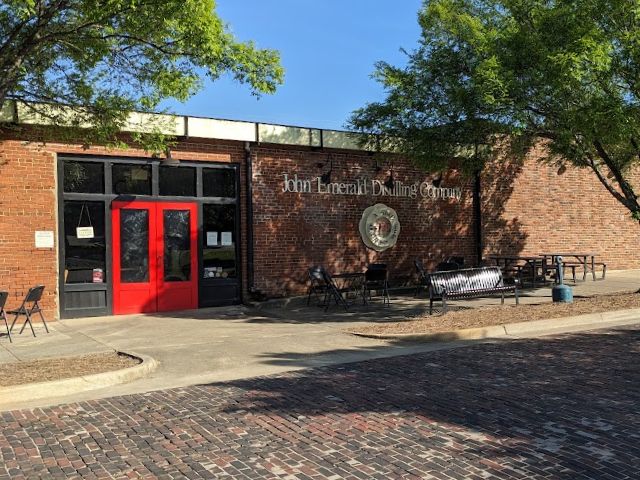
What began with a desire to spend more time with family led Jimmy Sharp and his father to transform an old cotton warehouse beside the railroad tracks in Opelika, Alabama, into one of the state's most distinctive distilleries. In this episode, Drew Hannush visits John Emerald Distilling Company to explore the Scottish roots behind Alabama's first post-Prohibition whiskey, the challenges of making spirits in Southern heat, and why rum, brandy, and American single malt all have a place under one roof.
In This Episode
• How a family dream became one of Alabama's pioneering craft distilleries
• Why an old cotton warehouse in Opelika became the perfect home for John Emerald
• Jimmy Sharp's apprenticeship at Springbank Distillery in Scotland
• Alabama's first post-Prohibition whiskey and the rise of American single malt
• Smoking malt with peach and pecan wood
• The influence of barrel size and char levels in Southern aging conditions
• Making rum from local sugar cane syrup and harvesting cane for rum agricole
• Muscadine brandy and spirits inspired by family history
• Grain-to-glass production and sourcing ingredients from Alabama farmers
• The stories behind the names and animals found on every bottle
• Cocktails, tours, and things to do around Opelika and Auburn
• Plus, Drew shares his three reasons why John Emerald Distilling Company deserves a spot on your Whiskey Lore Wish List
📍 John Emerald Distilling Company
Opelika, Alabama
Transcript
Drew H (00:08):
Welcome to Whiskey Lore's Whiskey Flights, your weekly home for discovering great craft distillery experiences around the globe. I'm Drew Hannush, your travel guide, bestselling author of Whiskey Lore's Travel Guide to Experiencing American Whiskey, experiencing Kentucky Bourbon and Whiskey Lore Volume one, the book that busts 24 of Whiskey's biggest myths. And today I got an early morning start as I am heading into Alabama. Had to get through Atlanta before rush hour traffic is always an exciting time. And I also had to try to figure out when I was going to get breakfast because when you get to Alabama, you're in central time, yet when you're in Georgia, you're in Eastern time. And so it just so happened that the places in Georgia were getting to their prime time in terms of busyness. But if I cross the border, the breakfast places were just getting open. So I decided to wait until I crossed the border.
(01:05):
The town I'm in is Opelika, part of the Opelika Auburn area, an area that's growing quickly, especially with the introduction of the new Kia plant that I passed by just across the border in Georgia. And the distillery I'm visiting is John Emerald in Opelika. I'd like to say that I timed this out perfectly. I did not. I got in the area a little bit too early. I was meeting Jimmy Sharp at nine o'clock and I got into the area around 7:30, so decided to kill some time working on answering emails and that sort of thing. Once nine o'clock arrived, I came in, we got a chance to walk around the distillery, talked a little bit about getting the right char level on barrels and the sizes of barrels for all the considerations that go into making whiskey in the Alabama heat. We also talked about his adventures of going down and harvesting his own sugar cane for his agricole rum.
(02:00):
I have to say that I'm still a little fuzzy on a lot of things surrounding rum because I haven't really dived into it too much and this term agricole didn't really make sense to me at first. What it basically means is that it is rum that's not made from molasses, but instead from pressed sugar cane juice. And so we're going to learn a little bit about that here and maybe taste some of his rum while we're here. One of the main things that put John Emerald on my radar is that they actually started off by making American single malt instead of bourbon as their first aged spirit. And thanks to my friend on Instagram Finities 18, he's the one that turned me onto this place and told me that I needed to come down and check the place out. And so hopefully we'll get a chance to taste that as well as there's some whiskeys here sitting in front of us.
(02:50):
Thank you, Jimmy, for the tour around the distillery. And to get started with this, why don't we kind of dive a litle bit into the background of the distillery and start with the name, John Emerald. Where does that come from?
Jimmy S (03:03):
So John Emerald is my grandfather's first and middle name. My father and I started the distillery in 2013 and the main catalyst to get us started was I traveled extensively at my old job. I had a subcontracting company, did a lot of work overseas, kicked around the idea of doing a story for a long time. And when I started to have children, I was like, "Well, I'm gone way too much." I missed my kids growing up. So we thought that was as good a reason as any to pull the trigger and probably my best chance of convincing my wife to invest all of our money in a distillery, but it's for the baby. So because of that, we themed it around our family. So a lot of our products are named for different ancestors. John Emerald does the holes. My grandfather's first and middle name, our vodka was called Elizabeth Vodka after my great-grandmother.
(03:48):
It was kind of a funny story. We named it after her. I didn't know her in life. She passed away before I was born. I don't know. We were probably three or four batches in and we had already bought tons of labels and everything. And then at that point my uncle says, "You know she was a massive tea totaler, right? She's super against me. " Oh no. And I was like, "Well, that's a little late to tell me that,
Drew H (04:08):
Isn't it?
Jimmy S (04:09):
" But I'm just going to assume she was a proper Southern Baptist and she had the bottle in the crisper or
Drew H (04:16):
Something. Had her medicinal spirit somewhere.
Jimmy S (04:19):
Somewhere the pastor didn't see.
Drew H (04:21):
One of my favorite stories was about someone during the temperance movement was a big temperance person and they always talked about how they had their bitters before they went to bed. Wait a second now. Sounds like you're nipping on something with a name you don't know. Yeah. And your father is involved directly with you?
Jimmy S (04:44):
Yeah, we started it together and he's still involved, but he gets to keep his own schedule these days. He's a avid glider pilot, so he
Drew H (04:53):
Spends
Jimmy S (04:53):
A lot of his time doing that now. And like I say, he's still involved with the distillery though and everything.
Drew H (04:58):
Yeah. Well, I'm sure everybody can hear the railroad. Yeah. We get to
Jimmy S (05:03):
Enjoy the trains throughout the day for
Drew H (05:06):
Sure. So what was this building that we're in right now?
Jimmy S (05:10):
This whole block were all cotton warehouses originally. And it was Montgomery Pen Cotton was the company and they owned the whole block and then they sat dormant empty for a long time. I guess when all the mills in the area, if you had bought a towel or a sheet or something, generally it came from this area.
Drew H (05:28):
There were
Jimmy S (05:28):
All these textile mills all around East Alabama and going into Georgia too, but they all shut down probably what in the 50s and 60s and up through the 70s. And so a lot of the infrastructure, which this was like a cotton syndicate basically that they moved in. There used to be railroad spurs that ran into these buildings and everything that are no longer present, but
Drew H (05:51):
They
Jimmy S (05:52):
Were ... Yeah. So it was a great spot. And at the time Alabama had some rules, I think they've amended them since, but where you had to be to a small scale distillery or brewery had to be built in a historic building. Oh,
Drew H (06:04):
Wow.
Jimmy S (06:04):
I think people use that as a way to leverage historical preservation lobbies to help get certain allowances put into laws for breweries and distilleries to have certain abilities to do this, that, and the other. And that was one of the kind of ... They hitched their wagons together a little bit to get some politics done. But I don't think that's the case anymore, but at least not for breweries anyways. But we like the idea that we enjoy being in an old building. It just gives a nice bit of history and a little good vibe and everything, so it makes it nice.
Drew H (06:39):
Yeah. People look for the distressed brick in buildings. Oh yeah. You have it in space. Oh yeah.
Jimmy S (06:45):
It's
Drew H (06:45):
Nothing
Jimmy S (06:45):
But distressed brick.
Drew H (06:47):
Yeah, absolutely. So are you from Opelika originally?
Jimmy S (06:50):
No, I grew up in Montgomery.
(06:52):
And we tried to open in Montgomery and we just were in course of doing our due diligence. We ran into just one bureaucratic problem after another. And at the time we were the second distillery to open in Alabama and we were the first distillery of whiskey, first distillers of whiskey and rum in the states, its prohibition. But so only one other person had ever gotten a license and nobody had done it in Montgomery. So all the different agencies were like, "Well, you can't do this or you can't." Had a fire marshal tell me I couldn't store whiskey in wooden barrels because it's flammable liquid. And when we showed him where the exception in the international fire code was for beverage alcohol stored in wooden barrels, he said, "Well, that's just the ... " He had previously admitted that was the source of their rules, the International Fire Code.
(07:41):
And when I showed him the page where the exception for alcohol was, or for whiskey was, he said, "Well, that's just a guideline. We make the
Drew H (07:50):
Rules." I think we're
Jimmy S (07:52):
In the wrong town, I think. So we expanded our search and my wife is a fourth generation Auburn grad so that side of the family at least required me to consider this Auburn area and all the Auburn was probably a little bit just space and real estate prohibitive for us to get going. We discovered Opelika and it's been a really great fit. We feel like it's a great place to raise our kids and great community. We're close enough to the Auburn University to get a lot of benefit from it, but we're far enough away not to get a lot of problems from it. So it's kind of the best of both worlds in that regard.
Drew H (08:29):
Yeah. I thought it was interesting driving in this morning and we talked about it for a minute about the fact when you crossed the border, it was miles in before I saw the time zone change, but I always wonder about that world of how you deal with people coming from Georgia versus- It's
Jimmy S (08:47):
A constant problem. I mean, during COVID, when we were all shut down, we were doing hand sanitizer like a lot of distilleries were and we would have a line from our front door every bit of two blocks long because we got with our Auburn Opalica tourism got partnered with us and we were giving it away
(09:05):
For the most part and we were selling it to hospitals and school departments and things like that. But as far as people coming with their own jugs and stuff, we were giving away. But anyhow, people, I'd open up my roll up door and we'd post at nine o'clock, we'd open at nine o'clock, the line would already be formed and there'd be at least four or five people just red face mad, just yelling, just chewing me out like, "I've been waiting here an hour." I'd just have to wait until they gave me a chance to be like, "Sir, you changed time zones." I'm on time. And then they're like, "Oh, then you get to watch them eat a little crow." My bed, I'm sorry.
Drew H (09:48):
It's funny because you were saying that on the Alabama side of the border, because Columbus, Georgia is right there, people actually just kind of live in the other times. Yeah, like
Jimmy S (09:59):
Phoenix City and all that, Eastern Time Zone, that's right.
Drew H (10:02):
Yeah, that's really interesting.
Jimmy S (10:03):
We're far enough in that your phones will switch, but barely.
Drew H (10:08):
So make sure you plan appropriately driving through. Yeah.
Jimmy S (10:13):
I think we send a lot of people coming for a tour from Eastern time zone inadvertently send a lot of people to some of the local restaurants because they get here and they're like, "Oh wait, it's not open yet." Or they're on the first tour of the day and what they're closed and they look at that and they realize it on their own that, "Well, now we got an hour to kill it. Well, let's go over here and have some lunch." So I'm happy to send some people to some of them. We got a lot of great local restaurants too, so it's good that people generally have a really good experience when they do that.
Drew H (10:43):
Nice. Well, talk about the journey into making whiskey. Where did you pick up your skills?
Jimmy S (10:50):
Yeah. So like I said, me and my father decided we were going to do it and we had, at that point in time, we'd tinkered around with some home brewing and we never illegally distilled in our garage. We were just going to say that. But when we decided to go for it, we were going to go and we went to bought lots of conferences and workshops and things like that and different places and then I got an internship in Scotland. So I got to go over to Spring Bank and train there for ... It was a very short visit, but it was a little less than a month, but they were super gracious and I felt like I got to dip my toes in just about every aspect of it. And that was a great place to work just because they weren't huge. They're bigger than us, but they weren't enormous.
(11:35):
So I feel like I gleamed a lot more off that for what we were trying to do than what I might have got at a much bigger, more advanced technical ... Springbank's almost a working museum in
Drew H (11:47):
A lot of ways. And they do everything there.
Jimmy S (11:50):
Yeah.
Drew H (11:50):
They've got the floor malting, they've got the ... I'm surprised, do you have a peated whiskey here?
Jimmy S (11:55):
They do
Drew H (11:56):
Even beat.
Jimmy S (11:58):
But they do. And it was just neat because I think that went dormant in the '70s and then they bought it in the late '90s, the current owners. And when I was there, they were about 10 years roughly in to owning it, maybe a little longer, but the only thing they modernized was the heat source. They went to steam coils instead of a direct fire
Drew H (12:22):
Because
Jimmy S (12:22):
They even still sit on these fire pits. They're all big brick podiums, I guess. And that clearly where they would put wood fires underneath it, or maybe it was heat fires, I have no idea, but now that's the only thing they think they modernized was the heat source, which was kind of neat. So otherwise it was pretty much ancient equipment, but it ran beautifully.
Drew H (12:47):
Had they opened Glen Gile yet?
Jimmy S (12:49):
They had.
Drew H (12:49):
That's the more
Jimmy S (12:50):
Modern ...
Drew H (12:51):
Yes.
Jimmy S (12:51):
That's like the same owners, but they did as modern as you can be with single malt.
Drew H (12:57):
Obviously
Jimmy S (12:57):
There's some limitations, but they went like a fly sparge and all that kind of stuff and a certain amount of automation where they could. And so it was also neat to see ... I didn't work at Glen ... You just said it and I forgot-
Drew H (13:11):
Glen Gile. Yeah. Glen
Jimmy S (13:12):
Gile thank you.
Drew H (13:12):
Because there's Glen going too, and that always throws me off. Yeah. It's
Jimmy S (13:15):
So confusing, right? But we got to go over there and tour it a little bit and see how they operate and it was neat to see the differences and stuff.
Drew H (13:24):
Was there something you brought back from there in terms of a technique or style or something that you wanted to- Well,
Jimmy S (13:31):
They made me a believer in a proper double distillation, which I find ... And we've tinkered with some single pass distillation. We're using a hybrid ... Of course, in the US we could use a hybrid pot still where they can't use a hybrid pot still in Scotland. Even with the hybrid pot still, I think we're not able to beat the yield, the improved proved yield off of double distillation, but also I think the quality is just the whiskey comes out cleaner, I think just brighter and the white dog anyways and we just really like that process
Drew H (14:04):
A
Jimmy S (14:04):
Lot for everything. For rums, I think it's great for even brandy. We don't make a lot of brandy, but we do a little bit and the double distillation just seems to favor everything.
Drew H (14:14):
So in terms of what you've got lined up here, you have a single model. You've got two of them actually. That's
Jimmy S (14:20):
Our 86 proof and then we do a cast strength at 116 proof. I brought both those over. I got our musketine brandy,
Drew H (14:28):
Which
Jimmy S (14:28):
I liked. I used to joke this is the officially the world's best musketine brandy
Drew H (14:32):
Because
Jimmy S (14:32):
It's the world's only muscanine brandy, but I was recently corrected. Apparently there's somebody in Georgia making a litle muscadine brandy,
Drew H (14:39):
So
Jimmy S (14:39):
I can't make my joke anymore, but I think that's our age rum that we make from local sugar cane syrup. Like I was saying before, we have a new rum that I'm real fired up about coming out soon. It's a rum agrico made straight from cane juice that took some logistical work to get it where we could run the juice in time to get it before it fermented on its own in a way we didn't want it to. But we kind of cracked the coat on that and got that rolling, but we still continue to make the syrup based, which is still different than a molasses based, but it's ...
Drew H (15:14):
Yeah. Well, I was talking about the fact that, and my listeners have heard me say it before, kind of this burnt rum flavor that I'm not really a big fan of, but when you're talking about making it out of sugarcane and just the syrup, probably that flavor is-
Jimmy S (15:30):
That's minimized. With syrup, there's a lot less burnt flavor assuming the syrup was made properly compared to molasses. Because the reality is when people are processing, companies are processing sugar cane with the intent, the main intent is to make sugar,
Drew H (15:45):
Table
Jimmy S (15:45):
Sugar. You got domino sugar or whatever. So the molasses is the byproduct, so there's not a lot of care in what flavors are produced from that molasses. Now some people obviously like and expect that kind of charred sugar flavor that you get from molasses, but I do enjoy ... I
Drew H (16:06):
Like
Jimmy S (16:06):
A syrup based from and I've enjoyed making that and I really am excited about the agrico. It's like this year it'll all be blunt and then next year we'll start putting some in barrels too
Drew H (16:18):
As we
Jimmy S (16:18):
Get access to more sugar cane.
Drew H (16:21):
I usually tend to want to taste the whiskey first, but since we're talking about the rum, maybe we should dive in and then do a quick tasting on that. This is so interesting now. You are actually getting to go out in the fields for this agrico? Well,
Jimmy S (16:36):
We got with a grower. We had a guy making cane syrup for us predominantly and unfortunately he passed away
(16:44):
And that was in Hedland, Alabama, just near Dothan. And then his family did not intend to keep up with the ... They let their patch go I think in favor of RV parking or something. So I found a new grower and other access to the syrup, which I have to get it from multiple places and stuff because there's no one person making enough of it for us. But I found this grow down there and he said, "Okay, I'll grow it, but you got to harvest it. " And initially it was just a quarter acre. So I thought, oh yeah, how hard can a quarter acre be? No big deal. And me and my four other buddies went down there to cut it and we found out it was pretty hard,
(17:27):
But we got it cut and we got it mostly stripped. We had to pack up some of it unstripped where you just cut the strip and meaning you pull all the leaves off and top it. And so we had to do some stripping back here because we ran out running out of sunlight towards the end there. But we got back here and there's a local guy that had access to a mill and all that. And so we went and milled it and then rushed it over to the distillery, got it in the fermenters in time and made what came out to be a really pretty batch of rum agriculture. All we're waiting on now is the, we got it all made. We're just waiting on the labels to show up. They're being printed as we speak. They might be in the mail right now, I'm not sure.
Drew H (18:06):
I just get this vision of cutting cane in Alabama and the heat. It's not a summertime.
Jimmy S (18:12):
It's not. Fortunately, as the good Lord planned it out, the sugar cane
Drew H (18:18):
Is
Jimmy S (18:19):
Available for harvest in late October, early November. So we
Drew H (18:22):
Get to ...
Jimmy S (18:23):
I mean, I guess it could be hot sometimes
Drew H (18:25):
There,
Jimmy S (18:26):
But ...
Drew H (18:26):
This is interesting because the rum character is there, but to me, it's very herbally kind of notes in this. Yeah.
Jimmy S (18:34):
And some of that is the ... It's not terribly old. Some of that's the youth of the barrel that adds maybe more of a kind of herbal equality of oak, some that it can give sometimes. And it's used oak. It's once used single malt barrels
Drew H (18:51):
And
Jimmy S (18:51):
Quarter cast in this case. We based the recipe off of early ... And of course we didn't have to taste this, but it's like pre-prohibition rum recipes that we found just writings on. I mean, the difference being just how it was aged mostly. And the way early pre-probation rum was aged in America was a lot very, very similar to how whiskey was aged. It's like there was lightly used or new barrels predominantly and that's where this is a combination of both. We occasionally use a new barrel and occasionally use a used barrel and it's a vating of both, but yeah.
Drew H (19:33):
What kind of flavor do you think this brings to a cocktail in terms of using this versus using something else? Like I said, I'm not noting that burnt note in this at all.
Jimmy S (19:45):
No, that's the syrup base for sure. It makes it a little brighter and I think herbally is a good description and we also don't ... A lot of rums will back sugar. We don't back sugar anything.
Drew H (19:56):
So
Jimmy S (19:56):
We figure we want this to be like a gateway roam for a whiskey drinker. So you can sip on it like a whiskey and that's great and that's how I prefer to do it. And we're constantly increasing the age on it, the average age and we're at about three years and a quarter cast right now, but now we've been filling 53s full size barrels, which can go ... I'm of the philosophy that a quarter cast, you don't want to go more than about three years, otherwise the oak just totally takes over or potentially takes over. But the 53s will go ... The ones we have now are at about three years, but we're going to go longer on those, just get a little more age statement on them and I'm excited to get those out into the world. But we don't do a ton of rum.
(20:45):
Whiskeys are sort of our main focus, but yeah. And I
Drew H (20:50):
Would assume on those that you basically are not going to be, even on your whiskeys, that you're not going to afford char, you're with the heat down here.
Jimmy S (21:00):
Yeah. We're doing a three
Drew H (21:02):
Almost
Jimmy S (21:02):
Everything. I was telling you before, we've done some side experiments where we're messing with ones and two level chars. I like to give them more time before I make a big switch, but I'm kind of leaning towards the two might be for things that are going to go longer, being
Drew H (21:21):
Older.
Jimmy S (21:22):
So as we grow, like most young distilleries, we're increasing our average age and as much as we can and trying to balance, keeping the lights turned on with holding whiskey back and all that kind of stuff.
Drew H (21:35):
So
Jimmy S (21:35):
We're getting there. We're getting the age up there and that's the goal. And as we do that, like all experiments around whiskey, it's a slow learning curve. You just got to wait it out and see what happens, right?
Drew H (21:48):
Yeah.
Jimmy S (21:49):
And then make adjustments accordingly and then wait again.
Drew H (21:55):
So every bottle that I'm looking at has a name on it other than John Emerald and also has an animal on it. So if we could taste the single malt and while you're pouring it, kind of give me an idea as we have another train going by. We are by the railroad track too. I don't even
Jimmy S (22:13):
Hardly hear them anymore.
Drew H (22:18):
So talk about the names on it and what the animals signify.
Jimmy S (22:23):
So it's all themed, like I said, we've themed our distillery kind of around our family. So the extra name, like the rum is called Spurgeon's Rum. Spurgeon was one of my great-grandfathers and for our own enjoyment on the John Emerald side of things, if it has an animal on the front, that's an indication. We only put an animal on the bottle if we accomplished our grain to glass concept, meaning
Drew H (22:51):
We went
Jimmy S (22:52):
From a direct relationship with the grower on some level and we carried it all the way to the bottle. And 95% of that relationship is with local Alabama and sometimes in Georgia, but within a pretty close range,
Drew H (23:09):
Because
Jimmy S (23:10):
We're pretty close to the Georgia border here. But yeah, that's the idea of the animals and all the animals are animals that you would find in Alabama, potentially.
Drew H (23:19):
No relation to the name that they're associated with.
Jimmy S (23:21):
Well, for our own enjoyment, we tried to say, okay, Spurgeon, which who I call Great Grandpa Hammock, he was like a big kind of cocky, loud ... He was a character of sorts and so he gets to be the rooster. I was very young when he died, but I can remember going to visit him and going in his house and his favorite trick was to scare us was to, he would loosen his dentures as we were coming in, hit a whole set of false teeth, I guess, and he would just launch them at us.
Drew H (23:58):
Oh no.
Jimmy S (23:59):
So you'd come in the door and these teeth flying at you, scared you to death.
Drew H (24:03):
Nightmare.
Jimmy S (24:04):
Yeah, right.
Drew H (24:06):
Do you wake up at night sometimes like coming out of a nightmare of teeth flying at you? Little
Jimmy S (24:11):
Denture PTSD.
Drew H (24:13):
Yeah. It's not coming across as sweet. I'm getting a smoky note and not a peated smoky note, but more of like a wood smoky note.
Jimmy S (24:24):
We smoked 20% of the grain with peach and pecan wood.
Drew H (24:26):
Okay.
Jimmy S (24:27):
So this is the single malt, that's our John's Alabama single malt, John after John Emerald. It's actually the first legally distilled whiskey in the state of Alabama since prohibition. So that's a fun little piece of history we get to have under our belt. And like I said before, it's a little bit unusual for a distillery in Alabama to start with a single malt, but that's where I kind of cut my teeth and learned the trade. And my entry into whiskey was studying my family history, which is Scottish and you can't learn about Scotland without learning about Scotch. And so that's just kind of where I got interested in whiskeys in the first place.
Drew H (25:04):
Yeah. Nice. There's almost a little citrusy sugary note at the end, like a lemony kind of a note that I get out of it. Yeah,
Jimmy S (25:15):
I can see that.
Drew H (25:16):
Yeah. Yeah. Interesting. I'm sure you've heard all sorts of-
Jimmy S (25:19):
It's fascinating to me, you hear it all the time with all different kinds of products, but when it's your own product, you're probably listening on a different level,
Drew H (25:27):
You know
Jimmy S (25:28):
What I mean?
Drew H (25:29):
Analyzing where that note might be coming from.
Jimmy S (25:32):
And I'm always fascinated about what everybody's take is a little different, which I love that. I mean, I feel like if I keep getting different answers, that means there's at least, if nothing else, there's at least some complexity there.
(25:47):
So there's something that people are reading on it. I think it's been fun to be making single malt right now too, just because the whole American single malt has become a bit of a ... Well, it's a legitimate category now that where it didn't used to be a protected standard of identity, which I appreciate that it is now because keep some ... And there was a few people out there calling it single malt and not putting it in barrels, just using oak spirals or different that, which I mean, it's all fine, but I like that now it can't be a blend. It's got to come from that distillery to be American single mall. I think that's a great little piece to just keep ... I don't know. It's good to keep the fakers out I guess and just protect the category.
Drew H (26:30):
So you had nothing that came up that where you went, uh-oh, I can't ... This isn't going to work. Yeah.
Jimmy S (26:36):
The American Single Malt makers of a super long acronym and I can't remember that, but I'm a member of the organization and they were pushing hard to get it all done, but luckily everything they were pushing for the only thing they did that's different, we do all of ours in virgin barrels, that's the piece that maybe is the bridge to bourbon, that it's for a bourbon drinker is that the oak quality is more akin to that because it's a virgin barrel, you're not required to use a virgin barrel for American single malt when the new standard of identity came out, which we might experiment in the future with tinkered around with used barrels, but ...
Drew H (27:16):
Are you taking barrels of different char levels and mixing them together to make this- Everything's a
Jimmy S (27:22):
Three.
Drew H (27:22):
Everything is a three. Okay. Yeah.
Jimmy S (27:23):
Everything's a three right
Drew H (27:24):
Now. This is really interesting because while you say it's a virgin barrel, I'm not getting a ton of caramel or char flavors. I'm getting what I would almost say remind me of what I'd get out of a rye whiskey, not the peppery side, but again, the herbally side and the oak is coming through as like a fresher oak flavor rather than ...
Jimmy S (27:52):
And that might also be partly the effect of a quartercask, which right now everything's coming out of a quarter cast where I expect by mid summer we're completely gone from all our quarter cast whiskeys out
Drew H (28:07):
Of our
Jimmy S (28:08):
Door and it'll all be 53 from then on. I mean, that seems to make a little difference. The oak's a little louder in the conversation I guess the
Drew H (28:18):
Point where- Without being the typical heavy char.
Jimmy S (28:22):
Right. And that might be that also because we didn't go to a four or five, I can't imagine people that do a five, I'm like, I don't know what.
Drew H (28:32):
In Alabama especially.
Jimmy S (28:33):
Ooh,
Drew H (28:33):
Yeah. If
Jimmy S (28:34):
You're trying to just drink an ashtray or something,
Drew H (28:38):
What are you trying to do? What will happen with these other barrels, the barrels of rum and muskardine brandy? Are you going to be doing some finishing on that single wall?
Jimmy S (28:48):
Yeah. Yeah. Well, that's the plan is to rotate them back through because we're doing some brandies and we're doing some rums and so now we're going to have ... It'll be a little incestual because it's our own real, but we'll take some of those rum barrels and in some cases, in a lot of cases, the rum barrel once held whiskey, now held rum, and then we might put whiskey back in at post rum just as a rum finishing. So we're going to play with things like that and have different releases and things like that going forward. The other nice thing is when we get through this next round of quarter casts, which again will be like about mid ... We've dumped all the barrels. It's just vaded in a tank. So once we're through that, we'll be on the 53s and we'll add an edge of H statement to the labels, which will be a five year at
Drew H (29:36):
That
Jimmy S (29:37):
Point and some will be held back for longer obviously and that's the live and learn situation. I wished I had done that years ago. I just sucked it up and put five, six, 10 barrels away and just said, "Oh, we're going to wait." I do have a couple barrels like that, but they're earmarked for specific people.
Drew H (29:59):
Yeah. Okay.
Jimmy S (30:00):
Somebody paid
Drew H (30:01):
That
Jimmy S (30:01):
Barrel set aside. Well,
Drew H (30:04):
Speaking of age, you got a bottled and bond bourbon coming out?
Jimmy S (30:08):
Yeah, this fall. We're excited about that one. It's bloody butcher corn, wheat and barley. So it's a wheated bourbon all from Lee County. The bottle and bottle will be coming out late September, something around there is when we expect to be pulling the first barrels and it's come out really nice. We've done what we call a barrel club where we were able to ... ABC made us call it a membership, not a ... We were trying to sell shares of some of the early barrels and people that bought shares get to come in annually and we do a pull and we do one bottle. We pull about a half a bottle's worth to hold to next year out of the barrel and we pull another half bottle to taste that year. So the next year we can taste the previous year against the current year and just everybody can kind of see how it's progressing.
(31:02):
And that gives people an experience to experience aging a barrel the way we experience it, because we're testing it in a very similar way. Hopefully annually, otherwise we taste our way into an empty barrel.
Drew H (31:18):
So
Jimmy S (31:18):
We try to manage that as well. But because it is always dangerous to open a barrel crack and pop a bung on a barrel with customers around because we have another taste, let me try it again. Next thing you know, you're like, there's nothing left. But no, we've been doing that. So we had the early this fall, last fall, we had the four year taste and I was ready to put in a bottle then and it came out really ... I'm sorry, the three year taste and it was so nice. But we're going to let bottle and bond, so it's got to be four. So
Drew H (31:53):
We're
Jimmy S (31:53):
Going to go the full four and then we'll hold some again back for later releases that'll be older. And then the year after that or 27, we'll have our first rounds of four year old high rye bourbon that we made. And that's also all locally grown. And then we're doing ... Oh, the other thing we're doing really, really soon, we're just again waiting on the labels being printed. We're going to do one early release of a ... We did a high malt rye,
Drew H (32:27):
Which
Jimmy S (32:28):
Just came out really ... And the only reason I'm doing a pool of that is during that barrel club tasting, I pulled a sample out just to see what people thought of it so far and everybody's just like, "Bottle it, bottle it. Ready? We want it. " So I guess I'm going to bottle it, offer it to the club people first, whatever. Just we're just going to do one barrel to kick it off and then the rest will be available here in the distillery, whatever doesn't sell to the club.
Drew H (32:51):
So it's just rye and multiply? Rye
Jimmy S (32:53):
Malt barley.
Drew H (32:54):
Okay. Yeah,
Jimmy S (32:54):
100%. And it's coastal rye or black rye. It's a slightly unusual varietal of rye. It's a few little different quality than typical rye whiskey does, but still has some of the traditional spicy notes, but it has a litle bit more of almost a, I don't want to say honey, but it's got a little more sweetness to it than typical rye. Like we were saying before, I was talking earlier, that's something we're looking at doing as we go forward is really leaning into the specific varietals of grains and things and to talk more about that in our marketing and also just in our production, just to really dig into what's causing this flavor or that flavor and sharing that with people in the way we present it to the world.
Drew H (33:45):
Very nice. So you do tours here?
Jimmy S (33:48):
We do.
Drew H (33:48):
When do you hold the tours?
Jimmy S (33:50):
Well, we do them daily at every other hour.
Drew H (33:56):
Is
Jimmy S (33:56):
That how we do it? Yeah, that's right. And then our website has a place to sign up for them and that kind of thing. We generally encourage people to sign up for them just because we're a small outfit so we might have a kid home sick from school one day or something like that. So we could manage our staff a little better if we know they're booked a litle bit ahead. Although we do take walkups though too though. If somebody walks in and we're able to do it, we do it
Drew H (34:22):
Kind of thing.
Jimmy S (34:23):
Yeah.
Drew H (34:23):
If somebody's coming to the area and they want to pair up something fun to do along with it, of course they could go get a four year degree at Auburn University if they wanted to. That's right. But what else might they ...
Jimmy S (34:34):
Well, if someone's a golfer, we have world-class golfing around here. We've got RTJ golf course, Robert Trenton Jones, designed golf course here in town and throughout the year has hosted some big tournaments too. I don't golf, so I forget the name of some of the tournaments, but I know a lot of people come here for that though.
Drew H (34:55):
It's
Jimmy S (34:55):
A golf destination of
Drew H (34:56):
Sites.
Jimmy S (34:57):
We've got fantastic restaurants downtown. Opalika is a great little downtown to visit. It's great if you're in a day range, it's a fantastic little day trip to come down, come see the distillery. We've got a couple breweries on either side of us that are nice that are non-distributing breweries, at least at this point. So it's just like if you want to have their beer, you got to come see them. Got a handful of just really nice restaurants from everything from white tablecloth down to a wing joint kind of thing, but all good, really good representations of their respective stage or level of restaurant or dining, I guess. And then of course the university is great. There's always things going on with the university nearby with various sporting events and then not to mention just all kinds of programs. Auburn's really built up their culinary department, their culinary school and hospitality department, I guess they call it.
(36:02):
And we've been getting involved with that a fair amount. I've been teaching some extended education distilling courses and things over there, which has been fun to play professor for the day
Drew H (36:16):
Kind of thing.
Jimmy S (36:17):
And those are a good time. They're constantly doing wine tastings and spirit tastings and all sorts of things over there and a beautiful, beautiful facility that they built. And so that's always a cool thing to check out, especially people that are interested in ... They had a cheese tasting thing over there, just random things like that. I mean, it's all catered around the students, but then they do things that anybody can sign up for to come just for a day to go and be involved in these tastings and things. And so that's always a fun thing too. And we always encourage people to go over there because they're a good partner to our brand. So you can also get a lot of John Emerald cocktails while you're
Drew H (36:59):
There. Perfect.
Jimmy S (37:00):
Yeah.
Drew H (37:01):
Well, Jimmy, thank you so much for taking the time today and showing me around your beautiful distillery. Nice rustic feel in here. And then nice big area back there and be fun to watch and see how you grow over time and it's a pleasure to finally get a chance to meet you.
Jimmy S (37:16):
Yeah, likewise. Thanks so much.
Drew H (37:18):
All right. Cheers. Cheers. Well, I hope you enjoyed this flight to John Emerald Distillery down by the tracks in Opelika. If I peaked your interest in making a trek down I- 85 into Alabama, or if you're interested in visiting any of the 1000 plus whiskey distillery destinations across the United States that make whiskey and have experiences, make sure you pick up a copy of my Amazon bestselling book, Whiskey Lore's Travel Guide to Experiencing American Whiskey. It is the only book on the market that gives you options of distilleries to visit in any of the 50 states. It provides travel tips, tasting advice, and everything you need to know to get the most out of your distillery adventures. Plus you'll also get online acces to make travel wishlists of your favorite distilleries. I got to say, no whiskey fan should be without it. Find it on Amazon or get a signed copy for Father's Day at whiskeylore.org/shop.
(38:14):
That's Whiskey Law's Travel Guide, Experiencing American Whiskey.
(38:22):
Let's be prepared to head out of Opelika and make our way to our next distillery destination. If you're still on the fence about a visit to John Emerald, let me give you my three reasons why I think you should have this distillery on your Whiskey Lower wishlist. First, if you're traveling between Montgomery and Alabama, or maybe you're heading to Auburn for a game, or maybe even the Brusal Whiskey Festival, visit to John Emerald is a great way to get your feet settled on the ground in the area. Enjoy some local culture and enjoy a crafted cocktail or flight before heading out to explore local restaurants and live music. Second, dive deeper into the process of how they make their American single malt and learn how peach and pecan wood make it uniquely theirs or stretch yourself by diving into their rum or brandy. And third, well, let's dive into those cocktails, shall we?
(39:16):
Try a cherry bomb made with their Muskegine brandy, a bourbon based Blackberry Hot Toddy, or an old fashioned made with their American single malt. Well, I'd love to stay longer, but John needs to get set up for customers. I am cutting it close on my timing getting to my next distillery destination. We are about to head from the oldest modern distillery in Alabama to the state's newest distillery, although you have probably heard of the brand name before. It's actually Alabama's oldest current brand of whiskey. Make sure you subscribe to the Whiskey Lord Podcast so you don't miss a moment as our Deep South journey carries on. I'm your travel guy, Drew Hanish, and until next time Cheers and Slanjaba. For transcripts and travel information, including maps, distillery planning information and more, to whiskeylor.org/flights. Whiskey Lord is a production of Travel Fuels Life LLC.
About John Emerald Distilling Co
Tours are available.
Take a Whisky Flight to John Emerald Distilling Co
Map to Distillery
Note: This distillery information is provided “as is” and is intended for initial research only. Be aware, offerings change without notice and distilleries periodically shut down or suspend services. Always use the distillery’s websites to get the most detailed and up-to-date information. Your due diligence will ensure the smoothest experience possible.