
Chattanooga Whiskey Experimental Distillery
Whiskey Flights Overview
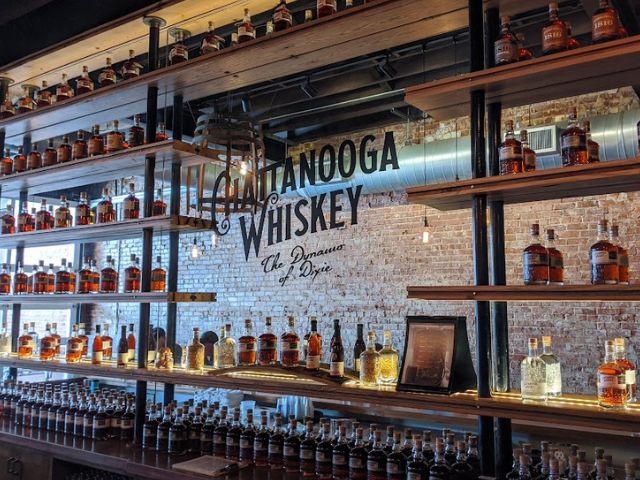
Chattanooga Whiskey helped bring legal distilling back to Chattanooga, but the Experimental Distillery is where the real magic happens. In this episode, Drew Hannush returns to downtown Chattanooga to reconnect with co-founder Tim Piersant and explore the small-scale distillery where Tennessee High Malt was born. From pot still whiskey and peated experiments to custom barrel finishes and an ever-growing library of recipes, this is a look inside one of American whiskey's most creative laboratories.
In This Episode
• The fight to bring distilling back to Chattanooga
• Why Chattanooga Whiskey abandoned sourced bourbon for its own recipes
• Creating Tennessee High Malt and exploring specialty malts
• The role great beer plays in making great whiskey
• More than 500 experimental barrels and counting
• How Chattanooga's two distilleries work together
• Transparency, recipe codes, and tracking every release
• Single Pot Still Whiskey and inspiration from Ireland
• Triple Islay and combining peated malts with Scotch cask finishes
• Why flavor starts long before the barrel
• New experiments, collaborations, and botanical infusions
• Exploring downtown Chattanooga and the Experimental Distillery experience
• Plus, Drew shares his three reasons why Chattanooga Whiskey deserves a spot on your Whiskey Lore Wish List
📍 Chattanooga Whiskey Experimental Distillery
Chattanooga, Tennessee
Transcript
Drew H (00:00:00):
Want a deeper dive into Chattanooga whiskey and the experimental distillery? All you need to do is become a Patreon member at patreon.com/whiskeylore. Members of the Speakeasy and Club 1897 get bonus coverage of many of our whiskey flights and interviews. Check it out at patreon.com/whiskeylore. Welcome to Whiskey Lore's Whiskey Flights, your weekly home for discovering great craft distillery experiences around the globe. I'm Drew Hannush, the bestselling author of Whiskey Lore's Travel Guide to Experiencing Kentucky Bourbon, experiencing American Whiskey. And today I am going to be your travel guide as we virtually make our way up I- 75 from Atlanta for the first of four distilleries in this series. We're going to be traveling into Tennessee down through Alabama and into central Georgia over the next couple of weeks. Today we are heading to the border of Georgia and Tennessee to the reinvigorated town of Chattanooga, where we're going to meet with Chattanooga Whiskey's co-founder, Tim Piersant.
(00:01:12):
And this is not Tim's first rodeo in terms of being on the Whiskey Lore podcast. He was on way back in September of 2021 on interview number 32. And back then we took a deep dive into the history of the distillery. The unique reason that they started sourcing whiskey in the early days and that harsh cutoff line where they went straight from sourced whiskey to what they were making in- house, their high malt bourbon. And we also talked about their distiller, Grant McCracken, his journey over from Sam Adams into making whiskey and their focus on barley and creating really good flavored beer for their distillate. Now all of that took place over at their riverfront production facility, but they have a second distillery and that's the one that I initially visited the first time I came to Chattanooga because that is the tourist friendly distillery.
(00:02:09):
And that's what I want to get into today and talk with Tim about, get you familiar with what's going on at the tourist-friendly experimental distillery. It is right off of Market Street, easy to find. All you got to do is take exit 178 off of I- 24 when you're getting towards the center of town. I always say when you're in Chattanooga, make sure you plan a little extra time because when you're coming off of I- 75 onto 24, most of the time I end up hitting traffic around there. Then once you get off exit 178, head north a few blocks up on Market Street and you're going to see the railroad terminal. That'll be on your right. That is the home of the famous Chattanooga Chucu. It is right across the street from the experimental distillery for Chattanooga whiskey. There's plenty of paid parking around.
(00:03:00):
When I go downtown, I actually like to start off with some breakfast or lunch. My favorite spot there is the Bluegrass Grill. It is on Main Street. Really large portions there for you to get fueled up for the day. If you're traveling solo like me, I like sitting up at the bar, have some coffee, talk to whoever's sitting next to me and kind of get the lay of the land while I'm there. Then after that, you can walk over to the old terminal, get your picture taken with the famous Chattanooga Choo Choo. Maybe double up your distillery tours. There is a Gate 11 distillery, which all you have to do is get your picture taken, turn around, and there is the distillery in the terminal. Then head over to the Chattanooga Whiskey Experimental Distillery across the street. It's a smaller distillery, so always a good idea to get some reservations ahead of time.
(00:03:53):
Maybe sit at the bar after your tour to kill a little time before you head back across the street. Tell you lots to do right down in this one little section of town. Grab the grand old trolley. The evening tour is about an hour long. It's the Chattanooga History Tour and sightseeing experience and that is a full day itinerary, which will give you a great overall perspective of the town of Chattanooga. And if you want to get even more psyched up for your trip before you go and you want to know more about the whiskey history of Chattanooga, check out chapter 18 and 24 in my audiobook, The Lost History of Tennessee Whiskey. You can find that on Apple Books or Spotify. And that's going to paint a picture of Chattanooga's whiskey scene in the late 19th and early 20th century, including the story about the coffin maker who was smuggling whiskey during prohibition.
(00:04:49):
Fun stuff. A lot of great history around Chattanooga whiskey. And now that you're primed on things to do in Chattanooga, it's time to get into our conversation with Tim as we inspire you to make your plans to visit the Chattanooga Whiskey Experimental Distillery. Tim, it's been a while. Last time we talked, you were actually just releasing your first Bottled in Bond bourbon.
Tim P (00:05:12):
Yeah. I went back and listened to a little bit of the episode and one of the first things that I said, or maybe you said, it was like your 2017 BIB and I was like, "Oh my God, that was the first one that we released that feels like that was like half my kids' lifestyle."
Drew H (00:05:30):
Yeah. Well, I mean, one of the things we'll talk about is kind of the progression since then, because of course you're coming off of much older stocks of whiskey than you had back then to work with. So it'll be fun to kind of chart this out and see how things have changed. Let's get started off first though by kind of introducing people again if they haven't heard the initial episode, which is a little echoey. I think we were in the hardest surface space in the entire distillery.
Tim P (00:06:00):
That sounds like our entire riverfront distillery. So
Drew H (00:06:04):
There's
Tim P (00:06:04):
Just not a very soft space to go
Drew H (00:06:06):
To in that. No. Let's take this back and kind of the origins of the distillery. Kind of talk about that time period, what got you interested in distilling and what it took for you to get that first jump in terms of building a distillery.
Tim P (00:06:22):
So just backing up to 2011, October of 2011 was when my co-founder and I started Chattanooga Whiskey. We were inspired by the history of whiskey in Chattanooga. We were inspired by the fact that no one had done anything with it, which was really shocking to me. I mean, that was why I felt like this had to happen. It had been almost a hundred years since there was a distillery making anything in Chattanooga. And so that became our mission to make it once again and we ran into the laws and the laws were more challenging to change than we thought because there was an active member of the Tennessee House that was a part of blocking it in 09 and was still there in 2012 and 2013. And so we had to kind of grind our way to the finish line basically. And then finally once we got the walls passed, House Bill 102 was our House Bill 102 and Senate Bill 129 was coined as the Chattanooga Whiskey Bill because I guess we were the ones that really decided that we needed to fight and then it was almost amended to death because there were distilleries I both wanted to jump in and amend it and then there were distilleries I wanted to amend it so it wouldn't happen.
(00:07:58):
And so we made it through in May of 2013 and then my co-founder and I split up. I wasn't quite sure what the future of the company looked like. That was when fortunately through Larry Ebersol, I was introduced through Larry Abersold through Brian Sprance. I was introduced to Grant McCracken, who was actively the head brewer at Boston Beer and Grant and I were the same age, similar interests. We hit it off. I'm a creative brain and he's super creative and there were a couple of things that really made this thing move forward. One is he had already been a part of the brewing movement and I think he saw a writing on a wall in terms of kind of his level of creative power and influence within that and also that he was fairly handcuffed through Boston Beer and wanted to get outside of being handcuffed in brewing and became a certified distiller and was very interested in it.
(00:09:08):
Loved the fact that we could how we could create products without having to worry about oxygen ruining things. And so also fell in love with our Vote Whiskey campaign. We saw Vote Whiskey as we started off as rule changers and I think Grant is a very kind of independent rule changer himself in the fact that we're in Tennessee and that we can change the rules in Tennessee and that kind of impact that we can have this. Basically Grant is, he's an amazing complex storyteller, but when he tells a story, it's the truth and he saw a story that we had started writing and wanted to be a part of that and helped me build the experimental distillery in 2015 to get started, which is a hundred gallon pot still and that allowed us to, because it was small, because we could only make really one barrel of whiskey a week, he said, "What are we going to make?" And I was like, "Well, we're selling Chattery Whiskey 1816, which is this MGP recipe, this 75214 recipe." And when my co-founder and I were going to build something, we were just basically going to build our ... We're going to make our version, kind of our Tennessee version of that.
(00:10:33):
And Grant challenged me, he's like, "You just spent two years changing laws and raising capital and doing all this stuff to be the first back in Chattanooga." He's like, "I don't see anybody in the world of bourbon or American whiskey exploring specialty malted grains like they should." He really saw that as the future and saw Chatteroo whiskey as being able to continue to carve our own path through that exploration and fortunately because the experimental distillery was small enough, it felt like a low risk proposition. So that's what we did. We just started exploring the world of specialty malty grains, one barrel at a time, one week at a time and then a couple of years later and it was kind of a holy cow moment like, look at all these recipes that we have when we coined and trademarked our own style throughout that process as you already mentioned called Tennessee High Malt officially trademarked, we were so proud of our body of work and even our investors and our board was and tourism was going well for us as well and we saw that we might actually make a little bit of money someday and we were like, "Let's scale this thing." And that's where the big risk came in as far as I'm concerned.
(00:11:50):
I mean, not just the risk to build a distillery that's 30, 40, 50 times bigger, but the risk of selecting a recipe that no one has ever experienced before at that scale and replacing 1816, which we had built to an 18,000 case brand, to me one of my proudest moments was our team selecting barrel number 91 blindly out of essentially a March Madness type bracket of our hundred plus recipes and then scaling that up and then choosing to stop, do a cold start and a full stop on what was a sourced whiskey that kept us alive, that changed the laws, that brought us a capital around all these things. I've never seen that happen in another modern day distilling story and so that's one of the things that I'm most proud of and then where we've taken it from there and how we've continued to scale recipes and how we've continued to explore the world of specialty malt and bourbon and American whiskey.
Drew H (00:13:09):
It's fascinating to me. I mean, that's one of the things that I pointed out in the initial episode, how almost crazy it seems to say, "Okay, I'm going to take a product that I have built into a success for what it is and I'm just going to 100% turn it off and go to something different." And you know you're changing because what kind of, was that a high rye bourbon that you were getting from them? Yeah. Yeah. 21%,
Tim P (00:13:37):
Yeah.
Drew H (00:13:38):
Okay. So now you're shifting to a high malt. There's part of me that says, "Okay, you're probably going to do well because malta barley can bring a lot of personality." So flavor's not necessarily going to be lost here. But if I, for instance, am a LaFroid drinker or I drink wild turkey and I'm used to a particular flavor and then all of a sudden you have said, "Nope, it's kind of like new Coke to old Coke, this idea of pulling the rug, but we didn't talk about it the first time that you said you had something like a hundred recipes."That is interesting. You were doing a lot of experiments in those early runs.
Tim P (00:14:25):
Oh yeah, we utilized over a hundred different specialty malted grains. We used probably more than 30 yeasts. Now we exclusively use independent stave company, but back then we started off with using some kelvin barrels and some ISC barrels and different toasts and different chars. We ended up working with the head of R&D for ISC to develop a bunch of additional custom toasting and barrel finishes, which ended up serving us really well in the future, but we did a lot of experimentation in those first two years and we never stopped. So if you take a tour of the experimental distillery and you go down in the basement, I mean, I think we're well over 500 experimental barrels that we've filled now and that's kind of where it's one of those ... There's certain things that we have done and that we do that I feel confident in hanging my hat on that no one else has ever done before.
(00:15:32):
And when I look at our body of work from a craft perspective, we just for the second time won best craft producer in America by Whiskey Magazine and the icons of Whiskey Awards, there's a lot of awards out there, right? There's a lot of judging panels out there, but that one is the most special to us because I think it represents us the best. I think when it comes to craft, I would never claim to be the biggest or even necessarily the best whiskey. I mean, I do think we have one of the best whiskeys, but in terms of the word craft and what goes into it from a modern day distilling perspective, I don't think there's another distillery in America that's anywhere close to what we've done. I can't take credit for that because that is the intent and the genius of Grant and the whole team and the whole team, the whole production.
(00:16:30):
We have a production team of 12 now led by a new head distiller. Grant is founding distiller and chief product officer. Our new head distiller is Tiana Saul, who's been with us by the way, for over a decade and been distilling with us for eight of those 10 years and she is equally as smart and creative as Granite is. And so we just have an unbelievable team that continues to ... They don't just push the envelope because we want to be different. It's all part of now this framework, this Tennessee High Malt framework and it's all part of Whiskey to the people, which is one of our missions within Chattanooga whiskey. How do we bring within this framework, this Tennessee High Malt framework that we've built, how do we bring affordable, unbelievably complex and deep whiskeys to rich whiskeys to the everyday sipper so you don't feel like, yeah, I mean, does it cost us a lot of money to do these things?
(00:17:42):
Sure, but we want anybody who is interested in sippy whiskey to be able to afford a bottle of Chattanooga whiskey, which is why our prices are the way they are.
Drew H (00:17:52):
I think it's interesting you're actually now doing a little collaboration with Brian Sprance and so it's kind of coming full circle in terms of the recommendation to now all of a sudden working together and both of your distilleries are ... I mean, the thing I remember in walking through the distillery with you was we walked over to taste the mash as we were going through and the thing that stuck out to me was I was like, "This is the first distillery I've been to where I feel like I could just put that in a bowl and eat it because it just tastes so good." It's that idea of somebody coming out of that brewing background who actually is concerned that the beer you're producing is going to be quality even before it hits the still.
Tim P (00:18:43):
That's a great compliment coming from you that's seen a lot so I appreciate that and that is something that we take great pride in because we used to have koozies that we sold out of the gift shop that said great whiskey comes from great beer, which is an underrated or completely unknown aspect of whiskey making by the average whiskey consumer and we take a lot of care and pride in every step of the process that begins obviously with the grain, where it's coming from and what types of grain we're using the cooking process, whether you're using a sour mash or not, the fermentation process, open top, closed top, the type of yeast you're using the temperature and the amount of time that you're fermenting there's a lot that goes into it and that every step, moving to the still, the type of still and what your proof you're running at and how many times you're running it.
(00:19:50):
So every single step of the process we call that essentially like flavor loading on the front end versus flavor loading on the back end and I think what is awesome about having arguably the best brewer in the world making Chattanooga whiskey while we acknowledge the importance of the barrel and that's why we work so closely with ISC on our finishes I think it is totally overlooked because of tradition of what happens on the front end. Traditionally it's been about utilizing three grains, corn rye barley or corn wheat barley and it's been about fermenting to 6% ABV, which is doing that as quickly as possible because fermentation is just a necessary means to an end. Where the reality is fermentation is a huge flavor driver. Same thing with the distillation aspect and basically just get it into a barrel and let it do its thing has been kind of the traditional history of whiskey and so taking a craft beer approach requires a lot of exploration and a lot of patience and thought and planning on how you can drive flavor in every step leading up to the barrel, which is expensive, but when you taste the product throughout that process, when you taste the mash, when you taste the fermented wash, you know, when you taste the raw distillate off the still prior to going into the barrel, it matters.
(00:21:34):
I mean, I can't tell you how many hundreds of people I've been on a tour with that have been to dozens of distilleries that have said, "This is the best white dog whiskey I've ever had in my life." I take great pride in that and that's also part of Tennessee high malt and that is one of the benefits of having a great brewer making our product.
Drew H (00:22:01):
It's got me thinking now that I need to start testing distilleries when I go in and say, "How much does the barrel influence? Give me a percentage." And it would be a really telling statement to hear the answer because I think when I started traveling across Kentucky, I would hear numbers like 80, 85%, large numbers coming in and I've learned in tasting white dog in many different places overseas and here that there are very flavorful spirits that come straight off the still that sometimes I taste and go, "Gosh, I don't even know if I'd want to put this in the barrel because it just is so good the way it is. " And so if I gave you that number and said, "Okay, what percentage of your flavor do you think comes from the barrel?" I know you have a lot of different whiskeys, but if you toss the number out there ...
Tim P (00:22:54):
I'd probably say maybe as high as 25 or 30%. It matters a lot because you're bringing wood sugars to the table and it spends almost all of its life in a barrel and so you're drastically changing the product by putting it into a barrel. And you can taste the difference between when a barrel is 53 gallons or 30 gallons and you can taste the difference between when a barrel is toasted versus charred and no toast or a two char versus a four char. I mean, those all have significant flavor impacts on the product. So I don't want to take anything away from that. Obviously if your barrel is aged in a really cold climate, it's going to have significantly less impact than a hot climate, but I think you can ferment a whiskey to taste bad and it doesn't matter what the barrel is. I mean, we've explored malting every cereal grain that you can malt including corn and I can sit here and I can tell you that malted corn is not good.
(00:24:07):
So if you use a malted corn in your product, it's probably not going to be a very good product. It doesn't matter what kind of barrel. It doesn't matter if it's 10 years old.
(00:24:20):
If your fermentation is this big short, hot fermentation and you're getting a bunch of estrification from the yeast that isn't pleasant, I'm going to tell you that you might get a little bit of like Sharpie or something in there, flavor note and guess what? That Sharpie flavor note, it's not going away. It doesn't matter if the product is three years old or 10 years old, that's where it's like you can really screw a product up on the front end or you can make the product a lot better on the front end. So I'll give it a fair shake and say it's probably at least a quarter of the flavor, but I mean, I'm not going to give it half.
Drew H (00:25:03):
The other thing that you are now experiencing is that when we first had our conversation, I mean I have a bottle back here of the 111 and it's aged two years. So how long are you now aging your 91 and your 11 flagships?
Tim P (00:25:21):
Well, those are our flag. And you have the old cask label, that's back when the cast label was black and gray officially a collectible.
(00:25:35):
We've moved into a gold and white label and now 911 and 9B, they all have the label that we call the hug where it looks like the labels, like you can see it on your triple Isla bottle right there where it looks like the label's hugging the bottle. So that's officially been our label, I guess, for a while now. But 111 and 91, those are really our two flagships. We've really bottled those based on demand as much as possible. So they haven't increased a lot in age, but they're now both over three years old when they were originally two. So if you consider that they've aged 33% greater or whatever that math is, I'd say that's fairly significant, especially when you consider 91 as a Solara barrel and 111 is unfiltered. Our goal has always been to not allow the product to go backwards in age because, well, we want it to be straight bourbon whiskey, so let's be honest, you can't go below two anyways, but then we have so many limited time offerings, LTOs in our industry lingo that a lot of those, I mean our age range has gone from back in the day between two and three or two and four years old to now between three and seven years old,
(00:26:59):
Depending on what the label is.
Drew H (00:27:01):
It's interesting to see also the way that you do your recipes and that you have a code for your recipe. I've always loved your transparency and the fact that you can look at a bottle and you know what kind of grains you're using, not just rye and barley, but you're breaking down the type of barley that you're using and then talking about the distilling process in there as well, but there's only so much information you could put on a label. So I'm assuming this is part of the reason why you have to kind of shorthand with using recipe numbers instead.
Tim P (00:27:38):
Yeah. So first of all, I mean if you want to learn about our recipes or you want to learn about anything about our product, it's all available on our website. There's a lot we kind of overload with information on there. The way we approach making whiskey is with the best intent possible to make the highest quality whiskey possible and to build on top of our own unique story and there is nothing to hide when it comes to that. If you want to rip us off, well, it's not going to be unique to you. It's not going to be authentic and eventually, especially in a world now that of artificial intelligence, people are seeking, especially if they're going to put something in their bodies, they're seeking authenticity so that's probably not going to work out very well for you. And plus our body of work now almost 15 years into it is so deep that it's kind of hard to catch what we've done.
(00:28:51):
It's just going to require a tremendous amount of work and creativity. So yeah, I mean the batch numbers are our Julian dates and that's how we track that stuff and then me and Grant and Tiana work closely on basically making sure that we can track all of our products. We keep retains of everything that we make so if we have to go back and check something, fun fact on that actually. For the longest time part of our packaging was raw cork from Portugal and that dates all the way back to the very first bottle that we ever launched in 1816 and we wanted to keep that and we went through several evolutions of utilizing raw cork and so it became a big part of our story and we could not control cork tank and so we had to go back to our retains frequently because we would have customers reach out and say, "Something is wrong with this product." And then we'd try to get the bottle back and then we'd have to go to the retains and make sure that it wasn't actually the product.
(00:30:16):
Turns out that cortex is not a massive issue but it's there and if it's even like half of a percent of your product and you're selling a lot of bottles, well that's a lot of people that could potentially have a negative impact. So we ended up switching over to Beachwood, which has been fantastic and we haven't had any issues. I don't want to take anything away from Raw Corp because it's super cool, but that was just one of the reasons that retains are super important and just a personal experience that we were like, "We want to be able to control our quality from grain to glass and we don't have any control over that. "
Drew H (00:30:58):
It's interesting. I was just at the beam conference and while I was there, I was talking to some people who sell cork and I asked them a question. I said, "With wine, you tilt the bottle sideways and you want it touching the cork." And I said, "Is it the same with whiskey?" And they said, "No, no. You really don't want that. " So it's interesting that you just jumped into this whole thing on cork because ... And I came home and I took the bottles that I had leaned over and I only did like three of them and I said, "Okay, I can't do that anymore.
Tim P (00:31:34):
I got to get it
Drew H (00:31:35):
Right."
(00:31:37):
Lesson learned. So what's interesting about the transparency thing too is, was that an initial thought and was it born out of your 1816? Because I don't know that maybe a lot of people know what you talked about before, which was the vote campaign where basically Chattanooga was not allowing you to build a distillery and so you were sourcing stuf from MGP and you were putting in big letters on the front made in Indiana. And so you kind of right off the bat established yourself saying, "Look, we're going to tell you what it is. " Did it just feel like a natural progression to do that or was that kind of the first thing in your mind when you started all this?
Tim P (00:32:23):
When Joe and I started the company, that was something that we had a lot of fun with was telling people that it was made in Indiana when there were other brands that were getting sued for not being transparent at that point in time in 2011, 2012. One of the reasons that actually there was one day where we took a photo of made in Indiana, made in Lawrenceburg, Indiana, or distilled in Lawrenceburg, Indiana on the side of the bottle where most people don't read and we circled it with a red Sharpie. We circled it and then we posted it on Facebook on our own Facebook page basically saying, "Hey, check it out everybody. We don't make our own stuff." And
(00:33:10):
People went crazy. I mean, it was kind of weird. It was like, "What? I can't believe you don't make your own stuff." It's like, we've been saying this the whole time, you just aren't reading the label. And that was all part of the mission to change the law. It was like, look, if you don't know that it's not made here, then you don't have any reason to support our change essentially. And so that's what it was born out of initially and once Grant came on board, I mean, Grant is such a high integrity person and product integrity became number one for us in everything that we do and so transparency is just a part of product integrity as far as
Drew H (00:34:01):
I'm concerned. The experimental distillery, I'm assuming that Tiana probably spends more time over there probably than over ... How do you divide your time up when you have two distilleries, one's doing experiments and the other one is just kind of running through your standard fare of products?
Tim P (00:34:23):
It's a huge pain in the ass. It's very cool. It's a great part of our story and our process, but it's challenging because we want to make sure the right hand and the left hand know what's up. They know they're communicating with each other. Out of our 12 distillers or production members, each of them have a designated specialty role and so we have multiple distillers that have new product development roles or like we have an experimental distillery manager so we have designated distillers that focus on recipe development and designated distillers that focus on day to day larger scale production. Grant and Tiana collectively, even though our team that focuses on NPD, they do a lot of recipe development and they have a lot of their own creations, but the story and the product is steered by Grant and Tiana. Grant has essentially become the Chattanooga whiskey historian and Tiana works very closely with Grant on in basically our bag of tricks that we have and we've got a lot of bag of tricks that they, that bag of tricks is adding to the story, not taking away from the story, which could be very challenging, right?
(00:35:59):
I mean, focus or the lack of focus easily can be the thing that kills a brand. And so Tiana now spends more time at Riverfront because she manages the team and she actually, I mean, she's an executive in the company so she also is involved in her executive level conversations, including even marketing. Tiana even gets involved in marketing as well. Grant's very involved in marketing and so she spends more time at Riverfront, but her and Grant are kind of daily painting the vision of Chattanooga Whiskey and so we don't get over to experimentalists even though it's a mile away as much as we like. I mean, there's a point in time where you used to just go and sit at the bar over there at Experimental Distillery, it's still one of the top tourist attractions in Chattanooga. It's one of the best distillery attractions, even though it's a smaller operation, the reviews speak for them.
(00:37:04):
We have multiple thousand reviews that it's a 4.9 or five star on average and it's because you're able to not just experience history but experience the creation of really changing the rules of American whiskey and you get to explore those products that you actually can't explore anywhere else either and those products are always the inspiration to what comes out of Riverfront. So in one of our bottled and bonds, if you see one of the batch codes, because we blend multiple recipes together for BIB, if you see the batch code B005, well that is a malted wheat forward bourbon that was born from the fifth experimental batch ever released. And so these codes actually reference experimental codes when those recipes were originally born. Wow.
Drew H (00:38:13):
Complicated. It's a lot. It's
Tim P (00:38:15):
Complicated.
Drew H (00:38:15):
It is. So let's simplify a little bit. We're going to talk about a couple of your experimental whiskeys. Well, this first one is not necessarily listed as an experimental whiskey, although I think you only made five barrels of it, which is the single pot still whiskey. And I would love to know what your inspiration was for or where the inspiration came from for doing what some will call the Irish style, even though its history kind of predates Ireland as well.
Tim P (00:38:47):
I do really enjoy Irish whiskey. At one point I drank it more than I do now, but that's just because I have so many Chattanoo whiskey labels that there's no reason to have any of the bottles in my house at this point, but it's pretty cool that we work with a lot of different specialty malted grains, grain suppliers, including like maltsters that do a lot of floor malting as well. So we have these relationships with these really cool, like historic maltsters and so we're already utilizing these grains. We're already utilizing a hundred gallon pot still. We have a copper column and doubler at riverfront, but experimental, it's always been a hundred gallon pot still with four plates on it. So with our materials and with our pot still and the fact that like this form of American whiskey or bourbon is unique to America that we're making, well that's kind of just like Irish single pot still, right?
(00:39:55):
They kind of have a very synergistic relationship where what it means to Ireland is what we're making means to America. So the opportunity to actually do like a Tennessee style pot still is pretty cool. So that was the inspiration. So we're utilizing a variety of different malted grains. I think 50% of the mash bill comes from UK, 30% of the mash bill comes from Riverbend Malthouse in Nashville, North Carolina and then we have a couple of other, I think we have maybe four grains, four grains or five grains that are in there. I need to go back there. I need to go back and look. My head is swimming with EXP.
Drew H (00:40:39):
I was going to say, you got five listed that I could see, floor malted barley, but what people may not understand about potstell whiskey is that it uses unmalted barley. So you got calypso unmalted barley, a pale malt and then holist oats, which could be its own conversation.
Tim P (00:40:56):
Yeah. So in that combination of malted and unmalted, which is that relationship of our pot still just like Irish potstell. And it's kind of fun. I mean, actually you tell me, but we had some green spot here and then we were trying to kind of side by side and you can tell that there's a relationship between our pots and Irish pot still.
Drew H (00:41:25):
I get the lemony notes on the nose and I always think whenever this was what was an eye opener when I went to Ireland was tasting it at so many different stages of age and the younger ones, I kept blowing people's minds over there because I would say this tastes like graham crackers to me. So a lot of honey notes in it and they were going, "What's that? " And I went, "Oh, they don't have graham crackers over here." Okay. Yeah, so it's grain and honey. It's kind of like when people say sultanas over there and I'm like, "What the heck's the salt?" "Oh, it's a golden raisin. Okay, I understand. Speak my lingos.
Tim P (00:42:03):
"We use the graham cracker. I love the graham cracker note in Chattanooga whiskey. I use it all the time. So it's good to know now that when I'm advertising that I've lost an entire audience of Irish whiskey drinkers because they don't know what a graham cracker is. Shame on
Drew H (00:42:20):
Me. Yeah. You don't know till you know.
(00:42:23):
I get tropical fruit notes on this. I almost got like a little banana note that was coming through on this, which is unusual. The other thing about it is usually there's a pepperiness on the end and on the finish and I get that pepperiness on this as well and it's kind of like the graham cracker comes through at the end also for me on this one. So it's unique. It does not taste like any that I've had. Now I did let a friend of mine taste it who's a huge redbreast fan and he said," Wow, this tastes like it came from Ireland.
Tim P (00:43:00):
"Huge compliment.
Drew H (00:43:00):
Yeah, absolutely. I
Tim P (00:43:02):
Mean,
Drew H (00:43:02):
I'm
Tim P (00:43:03):
Proud to hear that.
Drew H (00:43:04):
It's interesting to note that because one of the things that I did in terms of researching triple distillation was diving in and looking at what distilleries were using triple distillation over in Ireland. And what I found was triple distillation was usually historically used for potstell whiskey because potstell whiskey is oily, that unmalted barley, but this isn't quite as oily and so it really doesn't feel like it needs to go through a third distillation. I always tend to note that this is a very oily spirit because of the unmalted barley. Did you find that you were noticing that and that maybe you had to treat it differently?
Tim P (00:43:44):
It's definitely more of a grant Tiana question than it is for me, but I can tell you that this is double distilled, not triple distilled and part of that I think is the same reason we do on the column still we run at 133 proof instead of 145 proof or 150 proof. We just want to make sure that we don't distill the flavor out of it. And so that was a big part I think of from a potstell perspective. Now we do run at a higher proof on the pot still because there is so much more going on and then also I think not doing a triple distillation, I think the intent behind that was to not lose the flavor of the grain.
Drew H (00:44:40):
What about your barrel selection? Because when you're aging overseas, you're going to be aging in very cool climates. You're not going to get kind of the harshness of barrel aging on a spirit like this. What kind of barrels did you end up using to do this and kind of your though process behind that?
Tim P (00:45:04):
Well, this one we're using toasted and charred oak, 53 gallon barrels. So it's like a 115 entry proof and it looks like new chard oak, custom toast instead of a typical Irish Xburb in our ex cherry cask. So it's 60% two char with our 91 custom toast profile with an 18 month seasoning and then 20% three char, 18 month seasoning, but no toast and then 20% four char with no toast. So it's really a blend of our two char, three char or four char and some toast.
Drew H (00:45:53):
Okay, interesting. And then did you age it underneath the experimental distillery in your litt basement area there?
Tim P (00:46:01):
Most likely, because that is where all of our experimentals are aged, on occasion we'll bring them over to Riverfront. I would imagine that these also aged in that underground dunnage.
Drew H (00:46:14):
The interesting thing about this being single pot still is there's really no definition in the US for single pot still. So my question is, if you took it over to the riverfront distillery and you put it through your column still, could you still call it single pot still whiskey?
Tim P (00:46:32):
Well, I don't know why we would want to do that, but I feel like that might go against our product integrity guidelines.
(00:46:44):
So perhaps, but we are excited that we're one of the first to be doing this to our knowledge and we are planning on doing more of it or more things like it. We've never exactly replicated an experimental batch before. It's kind of the beauty of the experimental, but we have found ways to scale them sometimes. So I don't know how scaling this is going to be next to impossible for us because a hundred gallon pot still does not make a lot of product and we don't have a bigger pot. So I don't know exactly how we will do that, but that's definitely a good question for a grand interview.
Drew H (00:47:24):
Very nice. Very nice. Well, the other one you have opened my eyes as well because you were doing an triple Isla cask finish. Now of course the first thing that I have to do when I get this being a fan of peated whiskey is I need to see if I can determine where those barrels came from because this is basically what you're doing, right? You're distilling a bourbon, a high malt bourbon, and then you're
Tim P (00:47:51):
Putting
Drew H (00:47:52):
It into ...
Tim P (00:47:53):
That we have done high malt bourbons and that was scotch cask, but triple Isla is, it utilizes three different recipes. One of them is a peated bourbon recipe that we have utilized in the past for scotch cask, but that's only one of three. The other two recipes are not bourbon so technically triple Isle is
Drew H (00:48:16):
Not. Okay. Oh, interesting. All right. So the peat that I'm getting is not necessarily just coming from a cask. You are actually using peat in your recipes.
Tim P (00:48:29):
Correct. And not just any peat, we're actually utilizing three different ... Three unique peat malts are in ... So kind of the beauty of Triple Island is really fun. I mean, I wish that we had a microphone and a loudspeaker for the whole country of whiskey drinkers to kind of hear and understand all this because there's so much complexity behind our labels. Most people just get overwhelmed pretty easily by it, but triple Isla is really cool because it's finished in three types of scotch whiskey casks sourced from three different distilleries. It's a custom blend of three different peated whiskeys made with three different unique peat malts sourced from three different UK malthouses. Wow.
Drew H (00:49:21):
Yeah,
Tim P (00:49:21):
It's got a lot ...
(00:49:23):
It's very ... When we say triple, that is an understatement that's not ... And that's kind of what kills me about a lot of this. Again, I'm not here to shame anybody's craft, but when you look at barrel finishing, the history of barrel finishing or even the history of toasting, most of the time it's somebody taking a flagship recipe and a classic finishing barrel, or most of the time it's a flagship recipe and it's put into a toasted barrel or there's just so many ... It just kind of dumbs down the process a lot of the time whereas when we're working with the finishing barrel, we also work with not just usually one recipe, but multiple recipes to be able to custom blend, to compliment the unique finishing barrel that we're utilizing. So there's a lot. So when we use the word triple, it has multiple meetings, not just one.
Drew H (00:50:29):
Right. Okay. Do you disclose what the distilleries are that you get casks from?
Tim P (00:50:36):
We can't. There's other partnerships like the partnership with New Riff and Confluence or the partnership with Silver Oak when we did a Silver Oak Cab finish where we can, but for the Iowa casks, I can't, but I can tell you ... I mean, I can tell you we just don't advertise it, but feel free to go ahead and guess and I'll confirm.
Drew H (00:51:07):
Yeah. Well, that's tough because the first thing I would do is I would probably say some of them are coming from the big boys because they would be the ones that would have non-disclosure. In other words, it's probably not coming from Kilhoman. It's probably not coming from Buna Haben. It's probably not ... Yeah. So I can discount the ones that I ...
Tim P (00:51:28):
No, I think you're spot on. Yeah. Okay. It's coming from three of the kind of cult classics.
Drew H (00:51:39):
Okay. Yeah. I mean, probably if I wandered the south end of the island, I would probably get a little taste of each.
Tim P (00:51:46):
Yeah, right. Yep.
Drew H (00:51:49):
Nice. Okay. We'll let people guess from there. That's the fun part. And then what's interesting is that you're getting the malt from different maltsters. This is the reason why there's not really a medicinal kind of character to this. You're probably getting more of the inland, like bared malts gets much more of a foresty kind of a smoke rather than, or heathery smoke.
Tim P (00:52:14):
Yep, I'd have to get those malts from Grant in order to figure out which malts we are using. I do not have that in front of me. Right now I am going through some of the information, but so to highlight and enhance the qualities of these multiple finishing barrels, our distillers brought together a custom blend of three different peated whiskeys made with three unique peated malts sourced from three UK malthouses and aged for over five years, but I can get that for you and let you know.
Drew H (00:52:53):
Okay. Okay. I might be interested just on the side there, but yeah, a lot of cocoa notes coming through there. I almost thought it was the chig, which has kind of got a creosote kind of note to it because I pick a little of that up, but that could be ... This is the thing about blending all of this stuff together, all of these different influences, is that the way flavor and smells work, one can work with another and create a completely different note that you really wouldn't expect. And so that's what makes it tough. I mean, I think about a distillery over there that makes kind of an ashy kind of flavor or it's got much more of an ashy kind of a note to it and I sense that's probably a distillery that's in here and you've kind of alluded to where these are at.
(00:53:45):
So I think that is in that range, but you also get some of the ... I mean, I get some of the fruit notes through there too, kind of a little apple note coming through there as well, maybe some baking spice clove kind of thing coming through as well. I think a peated whiskey fan is going to be surprised at how much pea impact there really is
(00:54:09):
With this whiskey and how do you turn a bourbon drinker into a peated whiskey drinker?
Tim P (00:54:17):
Well, I think you have a bourbon recipe in there is my guess, and you don't crush them over the head with peat.
Drew H (00:54:29):
That's true. I always tell them, "Just forget everything you know about whiskey and just drink this like a savory spirit and go from there."
Tim P (00:54:37):
Yeah, I think it's like once somebody has an experience with peat and they're not quite sure and then somebody says, "Band-aid." Well, then they think about that for the rest of their lives. And then if somebody has an experience with pete and they're not sure and somebody says, "Ooh, can't fire," then they think about that for the rest of their lives. So I don't know. There's definitely obviously varieties that lean one way or the other, but I've always had a positive experience with Pete and I've always thought of it as campfire and therefore I've always liked it.
Drew H (00:55:15):
I agree. Once you get it, I think it stays with you from that point on. Well, anything special coming up? Do you have some experiments you're excited about coming up?
Tim P (00:55:27):
Yeah. I mean, we're working on another gen concept, which is going to be our fourth gen concept and all of our gens are again, of course, utilizing our Tennessee high malt bourbon base or rye base. Infusions, we did the intergalactic comic crusher, which was our project alpha, our alien bottle, if you will, that featured 42 different botanicals infused. So we're doing a lot of infusions featuring a lot of different botanicals at Experimental right now. We had a spice cacao that was like an Aztec hot chocolate type thing that was killer and we've done coffee infused in the past. We've done cacao using real cocoa nibs in the past, this is kind of a spiced version of that for the holiday season. So continuing, continuing to infuse because we love it, continuing to push the envelope on our bottled and bond and obviously we don't want people to forget about 91 and 11 because those are our flagships.
(00:56:48):
We have our 14th founders anniversary coming out this week, this Friday.
Drew H (00:56:53):
Nice.
Tim P (00:56:54):
So that's really exciting. The blend of our past, our present or future utilizing our three Solera barrels. I think we're pretty much sold out of our Confluence project, the different barrels we did with New Riff, which was cool. Who knows what kind of collaborations we'll do in the future, but always, always pushing the envelope we're probably going to release a Intergalactic Comic Crusher 2.0, which will be kind of fun because that's really the first time we've gotten any of these infusions out into the market, at least into the Tennessee market. So a lot of those things, yeah, we're in 30 states, but a lot of stuff you got to come to Tennessee for and that's just part of who we are. So yeah, those are the things that come to mind right now.
Drew H (00:57:48):
Never a hardship coming to Tennessee for me. I love coming there and there's plenty of whiskey around and Chattanooga is definitely one that people should check out when they're coming through the state. So Tim, always a pleasure chatting with you and talking through what you're doing. And as I say, I'm a big fan of your mission of transparency and I love malted barley and where it goes now. I love the fact that you're using unmalted barley and some spirits and experimenting and just keep rolling the way you're going because you're just pushing the boundaries of flavor and that's what we need as whiskey drinkers. So cheers to you.
Tim P (00:58:26):
Yeah. Thank you, Drew. I appreciate that. Again, in 2026 for the second time in 2023, we won Craft Producer of the Year for America and for the World by Whiskey Magazine 2026. We won it again for America and the reason I say that is to kind of state when it comes to craft, when it comes to a deeper level of complexity and a truly authentically handmade product that just goes to the next level, I hope people will give Chattanooga a try and watch what we do because I think our story's pretty special from a modern day distilling perspective.
Drew H (00:59:08):
Fantastic. Cheers to you. Thank you.
Tim P (00:59:12):
Cheers.
Drew H (00:59:14):
Well, I hope you enjoyed this virtual tour of Chattanooga Whiskey's Experimental Distillery in downtown Chattanooga. If I peaked your interest in traveling to Chattanooga or maybe you're interested in visiting any of the other 1000 plus whiskey distillery destinations across the United States, make sure to pick up your copy of my brand new Amazon bestselling book, Whiskey Laura's Travel Guide to Experiencing American Whiskey. There is no better book on the market for introducing you to the wealth of distillery experiences across America featuring over 220 distillery profiles plus details on tastings, tours, and cocktail experiences across all 50 states. It's on sale now on Amazon. We're get a signed copy for Father's Day at whiskeylore.org/shop.
(01:00:01):
As we're prepared to leave Chattanooga and make our way south to two fun Alabama distilleries, let me give you my three reasons why I think you should have the Chattanooga Whiskey Experimental Distillery on your whiskey lower wishlist. First, if you think there's nowhere new to stretch in terms of bourbon making, well, Chattanooga broke the mold by stepping away from high rye and wheat whiskeys and instead focuses on one of the most underappreciated grains in bourbon, the barley. Here you can truly see how great beer can turn into great whiskey. Second, if you want to stretch your palate, well, today we tried the pot still and the Isla styles, but there are plenty of other experiments going on at Chattanooga. So plan on spending some time after your tour tasting through a flight or picking up on a distillery exclusive to take home. And third, after your tour and your trip to the basement dunnage warehouse, plan some extra time to discover downtown Chattanooga, maybe even walk down by the riverfront, there's plenty to see around the area.
(01:01:05):
Well, onto our next destination. It's not exactly the easiest place to get to from here. About a three and a half to four hour drive. I'll probably head down I- 75 to Georgia State Road 53 through Rome and then down US 27 until I get to 85, where I will then cross into Alabama. There is the town of Opelika and we're going to visit a family run distillery that took an early dive into American single malt. Make sure you subscribe to the Whiskey Lord Podcast so you don't miss a moment because our Deep South journey carries on. I'm your travel guy, Drew Hannush, and until next time Cheers and Sloanjava. For transcripts of travel information, including maps, distillery planning information and more, head to whiskeylore.org/flights. Whiskey Lore's a production of Travel Fuels Life LLC.
About Chattanooga Whiskey Experimental Distillery
Tours are available.
Take a Whisky Flight to Chattanooga Whiskey Experimental Distillery
Map to Distillery
Note: This distillery information is provided “as is” and is intended for initial research only. Be aware, offerings change without notice and distilleries periodically shut down or suspend services. Always use the distillery’s websites to get the most detailed and up-to-date information. Your due diligence will ensure the smoothest experience possible.