
Conecuh Ridge Distillery (Clyde Mays)
Whiskey Flight Overview
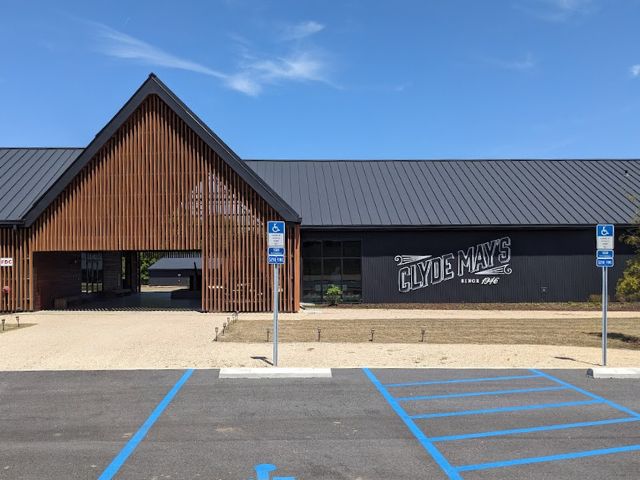
For decades, the name Clyde May has been synonymous with Alabama whiskey, even though the brand itself had never called Alabama home. In this episode, Drew Hannush travels to Troy, Alabama, to visit Conecuh Ridge Distillery and sit down with Clyde May's grandson, L.C. May. Together, they explore the remarkable story of a World War II veteran turned moonshiner, the family's decades-long journey to bring the brand back home, and what visitors can expect from one of the South's newest whiskey destinations.
In This Episode
• Meeting L.C. May, grandson of legendary moonshiner Clyde May
• Clyde May's service during World War II and his Purple Heart legacy
• Moonshining in rural Alabama and life on the run from revenuers
• The original still that survived and found its way back to the May family
• Growing up around a moonshine tradition that remained alive into the 21st century
• What makes Alabama Style Whiskey unique
• The story behind the hint of apple in Clyde May's signature whiskey
• Why the brand spent decades producing whiskey outside Alabama
• Bringing Clyde May's legacy home to the new Conecuh Ridge Distillery
• The meaning behind the Conecuh name and the waters that shaped the region
• Things to do around Troy, Alabama, from golf and hunting to Southern cooking and Gulf Coast road trips
• Plus, Drew shares his three reasons why Conecuh Ridge Distillery deserves a spot on your Whiskey Lore Wish List
📍 Conecuh Ridge Distillery
Troy, Alabama
Transcript
Speaker 1 (00:08):
Welcome to Whiskey Lore's Whiskey Flights, your weekly home for discovering great craft distillery experiences around the globe. I'm Drew Hanish, the best-selling author of Experience in Kentucky Bourbon, experiencing American whiskey and the book The Bus 24 of Whiskey's Biggest Myths, Whiskey Lore Volume One. As we continue our drive through Eastern Alabama, we're leaving Opelika on I- 85, headed towards Montgomery for our next destination, the Koneca Ridge Distillery. And if that name is unfamiliar to you, perhaps the whiskey brand that they're making there will ring a bell. It is the home of Clyde Mays Alabama style whiskey, straight bourbon, and straight rye whiskeys. Products that have been on the market for quite some time and there's no secret that they are sourced whiskeys, but they are now finding a new production home in Troy, Alabama. And today our host at the distillery is going to be Brand Ambassador LC May.
(01:05):
Now for interstate travelers, getting to this distillery, it's a little bit off the beaten path, but only about an hour and a half from Opelika. It's about an hour south of Montgomery. And for whiskey travelers, there's a nice selection of distilleries around this area as well if you want to add some onto your trip. John Emerald, of course, is the closest. Still Pond Vineyard and Distillery, that's about two hours away in Georgia and that's not far from 1861 or 13th Colony. You could also head to Timber Creek and Florida and if you head that way, it's only about an hour and a half away from where Koneca Ridge is and you'd be on your way to Destin, Florida. Now, GPS gave me three different ways to get here from I- 85. I decided to take the straightest route, which isn't the fastest, but it's right off of exit 42, went down State Road 53 to US 29 South, then onto State Road 223 through Union Springs.
(02:06):
And that was a nice little cut through beautiful little curvy roads. Kind of reminds me of Backwoods Tennessee as much as it does Alabama. I do have to say that I did need my GPS once we got in Detroit though, because it was a little bit of twisting and turning through town and taking some different roads to get there. But once I arrived, there's going to be lots of parking here for people. So don't worry about the hassle of trying to find where you're going to park your car. It's out in the country. And just as I showed up, LC came out to greet me. We walked into the restaurant area, which is still under construction, but just about finished. He went through the history of the brand, talked about the location. We walked through the gift shop into the distillery itself. We checked out the new stills and also the fermenters and stepped into the bottling hall where I saw many of their products being lined up and ready to be boxed.
(03:04):
It's definitely an impressive facility. We got a big area outside there in between the buildings for outdoor events. So there is a lot to look forward to with this distillery. Unfortunately, because he was short on time and I was short on time, didn't get a chance to do an onsite interview, so through the magic of modern technology, we're going to hop online and give you a chance to meet LC May. LC, thank you so much for walking me around the distillery when I was down there.
Speaker 2 (03:34):
Yeah, no, thanks for coming and seeing everything. It's exciting to be able to have people lay eyes on it finally.
Speaker 1 (03:44):
Yeah, absolutely. This is a project we'll kind of dive into what has gone on with the distillery and getting all of it up and running and kind of the long journey to getting to having a distillery there. But let's kind of start off first. Of course, the brand is Clyde May. Your name is LC May. There's a connection there, isn't there?
Speaker 2 (04:08):
Yes. I am the grandson of Clyde May. My LC stands for Lewis Clyde May. My grandfather was also Lewis Clyde May. He just always went by his middle name, Clyde. And when I was younger, people started calling me LC, so that's what I've always gone by, but I'm Lewis Clyde May II.
Speaker 1 (04:34):
Okay. And we'll kind of talk about the connection and the way into the brand as we go. But first get people acquainted with, they may have seen a bottle of Clyde May on their shelves and may be wondering who is this person and how did he get his name on a bottle of whiskey? So give me a little bit of background on Clyde.
Speaker 2 (04:58):
Yeah, absolutely. It's certainly been a long journey for the brand, but my grandfather born and raised in rural Southeast Alabama, had somewhat of a difficult childhood and was bound and determined to grow up and provide a better life for his family. Unfortunately, he just lived in a time and a place where seeking higher education or doing things like that was just really not even possible for him. So he had to figure out creative ways to provide a more comfortable life for his growing family. Before he did that, it's always worth mentioning. Clyde May fall in World War II, Purple Heart Recipient, Bronze Star recipient, fall in the Southwest Pacific Theater. Return home. He had already married my grandmother, but they had eight children together, so a lot of mouths to feed in rural Southeast Alabama. And in addition to a full-time day job in 1946, my grandfather started making moonshine whiskey and he never sold a legal bottle in his entire life.
(06:07):
From 1946 until his death in 1990, never sold a legal bottle. In fact, the only timeframe between 46 and 1990 that he wasn't making whiskey illegally is when he was in prison for eight months for making whiskey illegally. So he had the rap sheet to prove it as well, but he did a lot of things differently. There were a lot of moonshiners in this area, a lot of great products being made, but he was a firm believer that his reputation is attached to anything he does. No matter if it's making whiskey or building birdhouses, it didn't matter. Your reputation is attached to your product. So he did a lot of things differently to help set him apart from his competition. In other words, he let his product do the talking for him. One of the things he did was age a lot of his moonshine and whiskey.
(07:02):
And after he died, one of his sons, my uncle Kenny May, started the legal brand that we know today based on Clyde's aged whiskey recipe. And over the course of the last 25 years, we've had a bit of a roller coaster legal history, just like Claude May had a rollercoaster of an illegal history and it's all led to finally being back home in Troy, Alabama and opening up this state-of-the-art distillery.
Speaker 1 (07:32):
So let's dive into some pieces in this because it's interesting. So talk a little bit about his World War II experience because apparently he was wounded while he was in service.
Speaker 2 (07:42):
Yes. He was a leader of a 12-man rifle squad. He joined the US Army. He signed up like many, many, many Americans. As soon as they kind of got the call, they went and fought. He didn't talk about the war too much. He was one of those kind of guys that once he got home, he didn't really talk too much about it, but he did fight in the Southwest Pacific Theater. He was in an infantry known as the Statue of Liberty Division. For those that are history buffs, if you're familiar with Desmond Doss of Hacksaw Ridge Fame, Desmond Doss was in that same infantry. Clyde got injured in the battle that took place before Okinawa. Clyde was shot in his feet, ankles, and shins. So because of that injury, that was one of those types of injuries where he could not continue to fight. So he was sent home and recovered in a hospital.
(08:41):
I say sent home. He was sent back to the US and then recovered in a hospital in San Francisco and then was sent home after that. But he received a Purple Heart and a Bronze Star for his service during World War II.
Speaker 1 (08:56):
When he came back here, was he making sugar shine or was he making just a grain based?
Speaker 2 (09:01):
A lot of moonshine around here. It has sugar in it, but it's still grain based as well. Sugar's part of the process also, but he was a firm ... A lot of people, when they think of moonshining, they think of corn whiskey and Clyde May did use corn, no doubt about it, but he was a firm believer in rye and wheat. He felt both of those were flavor grains. So what he was distilling probably would've met a lot of the qualifications to be a bourbon had he done it the exact, maybe not a straight bourbon because he couldn't age it as long as we do today, but he was a firm believer in rye and wheat. In fact, when he got arrested in 1972, one of the things that they used sort of as evidence against him during his trial were all the 50 pound bags of rye that they found in his barn.
(09:56):
And they were like, "Hey man, what are you doing with all this? " And rye does not grow to any abundance in Southeast Alabama. So they kind of had him dead to rights in that regard. So when he returned home from the war, he had a background with moonshining because a lot of moonshiners in the area would get a young man or a younger teenager to help him when they needed assistance. So Clyde was exposed to whiskey making for a good part of his life, but it wasn't until right around 1946 that he kind of set off to do it himself and kind of have his own setup and venture. Over the years he tweaked things and experimented with things and it took a while to kind of figure out what he considered the perfect process.
Speaker 1 (10:50):
Yeah. Do you think he would've gone legal had he had the option to do so?
Speaker 2 (10:54):
Absolutely not. There is no doubt in my mind. He was, like I said earlier, he was in a time and a place where getting a legal license or doing it legally was not something that ever crossed his mind, ever. Distillation of spirits in the state of Alabama was not legal until 2014 and he died in 1990. So you can imagine there was just no though process there of, "Hey, I'm going to get known for it and then I'm going to go apply for a license." And it was probably even been more difficult since he got arrested and had a rap sheet to go with it. So even if
Speaker 1 (11:33):
He
Speaker 2 (11:33):
Had wanted to, I'm sure there would have been some level of a legal hiccup to doing so. But if he were alive today, he was also not big about being in the spotlight. He liked to let his product do the talking for him. So I tell people all the time, if he were alive, you and I wouldn't be on this talking to each other right now. We wouldn't be communicating. He'd be tucked in the woods somewhere still doing it illegally. I think it took honestly his death in order for us to be able to do what we've done to get his name and what he was doing out there, just because he liked to stay out of the limelight so to speak.
Speaker 1 (12:14):
Interesting that you think about it, if you're going to get started doing something illegally, you're probably going to have a tough time sourcing equipment, especially in a era when there wasn't necessarily easy access to still makers, but he made his own still, so I understand.
Speaker 2 (12:33):
Yes, just like I mentioned earlier, you kind of learn the process just by trial and error, and he definitely could build his own still towards the back end of his life. It's a fine line, because if you're building your own still and they know the revenuers, federal agents, local sheriff's department, they know you're making whiskeys. So it's not something where he could probably make every one of his stills. So it's almost like a balancing act of, okay, I'm going to get someone I trust to build my next steal. But then if the eyes of the law are on that guy, then okay, I'm going to build this one. It's just like when you set up a moonshine steel, once it gets busted and destroyed, Claude May got arrested one time, but he probably had 20 or 30 steels get destroyed that were discovered. So once that one gets destroyed, that's a dead spot.
(13:31):
You can't just rebuild in that same spot. You're constantly having to be on the move and on the go. So similar with building stills, you would build some and then if you felt like there was too much heat on you, you might need to get someone else to build it for you. Someone that he trusted to make it to his specifications, of course, but it's just a balancing act.
Speaker 1 (13:53):
Yeah. Did any of those ... Well, we saw one of those still. Talk about how you got that still that you have on site.
Speaker 2 (14:00):
Yeah. So the county that we grew up in is Bullock County. The county seat is Union Springs, Alabama. That was our address growing up. And Bullock County sometime in the late '80s, early '90s, decided they were going to open up a museum to tell some of the history of the county that there's a lot of interesting stories and facts about the county, but one of the more prominent and well-known things about this area is moonshining. So they said, "Hey, we're going to put a moonshine still in our museum, but we got to get one." So they told the local sheriff's department, "Hey, next time you find a steel, don't destroy it. Just hack a few holes in the bottom, confiscate it and bring it to us." So that's what they did. Well, the steel they just happened to find next was one of Clyde Steels and it was unique because it was a steel that he designed.
(15:01):
He called it the 240 steel because there's on particular piece, the tank cost about $240 worth of copper to build in the late '50s, early '60s. We call it the Clyde 240 today, but obviously he didn't call it that because you can't really attach your name to something you're doing illegally, but it went to the museum,
(15:23):
Stayed there for a good amount of time. Museum shut down some years later sometime around, I don't know the exact date the museum shut down, but sometime around 2011, 12, 13, somewhere in that ballpark. And we as a May family and as a company thought that the steel was lost forever because we had no ... When your last name is May, you can't really go knocking on any doors asking for a moonshine still. They're not going to give it to you. So we just thought it was history. We didn't think anything else of it. And we learned that one of the volunteers at the museum had actually taken the still and putting it in his barn in Bullock County. So once we heard this, I went and met with him and after a few conversations over the course of a few weeks, I explained to him, "Hey, we want this still to be able to not only tell the story of Clyde May, but tell the story of moonshining in this area." And I think it's important for us to have that centerpiece to do it with.
(16:35):
And moreover, it was Clyde still and I'm Clyde also, so I think it's time for it to go back to its rightful owners. So he was very kind and donated it back to us. So now it serves as sort of the centerpiece when visitors come to the site, it's right there in the middle of our breezeway in the first building that you walk into.
Speaker 1 (17:02):
It's great to see it come full circle. I wonder how much did you hear about this moonshining legacy when you were growing up? Was it kind of the family secret or was it just really well known around the community?
Speaker 2 (17:17):
Well, technically both. I mean, it's always a secret because Clyde May got arrested for making whiskey, but all four of his sons, my dad and my three uncles have also been arrested at least one time for a whiskey related charge. So for that reason, on a local level, it's not so much a secret. Everybody's
(17:43):
Like, "Hey, yeah, I know Billy May," which is my dad. I know Billy May's making moonshine and stuff like that. But for me personally, at the same time, when Clyde May died, my dad continued to make it illegally. Even as the brand was made legally, the brand was so small for a long time. We always hoped it would get to this point, but it was hard to see that vision and I'm glad it got to this point, but my dad didn't stop making moonshine illegally until 2013. So to put that in perspective, I was a freshman in college. I'm 31 now.
(18:27):
I use that term again, a balancing act. So yes, the locals in this rural area, everybody knows Billy May's making whiskey, but at the same time when I'm out and about, I'm not actively saying, "Hey, my dad makes whiskey." So I was quite obsessed with it growing up once I discovered and was old enough to know what my dad was doing and what my grandfather had done and what my uncles had done, I became quite obsessed with the idea of this legacy and the quality of making or what it takes to make a quality whiskey. And when I was a little boy, when I was probably 10, 11, 12 years old, I used to tell my dad, when I grow up, I want to be a moonshiner. I want to be just like you guys. And my mom, who was a school teacher, she hated hearing that.
(19:22):
That was something that frustrated her greatly, but that's when you're the namesake of someone that's such a legendary whiskey maker and you watch your dad make it and even now that dream has never died. I just plan on breaking the family tradition of getting arrested. I'm just going to do it by the books
(19:45):
To pay our taxes and do all that stuff unlike some of my family members. But yeah, it's crazy. I'm able to openly talk about it now because my dad no longer makes it. My grandfather obviously died and we had this legal brand, but there was a time in my life where any information I got or wanted to receive, it had to be done sitting in the living room asking family members, not so much going out and just asking the public or talking about it in public.
Speaker 1 (20:21):
Let's talk about the whiskey itself and one of the things that has apparently survived and kind of been brought forward is this Alabama style concept. Talk about what is Alabama style whiskey.
Speaker 2 (20:39):
I mentioned earlier, Clyde Mae, a majority of what he sold in his life was unaged white lightning moonshine, but he did take the time to age a lot of his moonshine into whiskey. Now he didn't have the luxury of aging it for as long as we do today. He was lucky if he could age it for a year because every time he aged it in a 53 gallon barrel, he was sitting on 53 gallons of evidence. And I know you know, and I'm sure a lot of the people that'll listen to this know when a 53 gallon barrel is pretty heavy when it's empty when it's full, there's no picking it up on your shoulder and moving it from place to place. So you have to pick a hiding spot and it better be a good one. And he experimented with aging initially he did not like the finished product and what we know now and probably what he knew also is the reason it did not meet his standard of excellence is the barrel did not have enough time to work its magic.
(21:41):
It was a 53 gallon chart of barrel, but when you age it for a year, it's just not getting enough interaction with the walls of that barrel to create a naturally smooth, flavorful product. So time was not something he had. So he experimented with different finishes to try to soften the whiskey that way. And it wasn't just some kind of epiphany overnight, "Oh yeah, let's do this. " It was trial and error. It was figuring out what worked and what didn't work and through that process he discovered that adding oven dried apple slices to the barrel
(22:22):
At the very end of the aging process, not for flavor but for finish. So this wasn't apple pie, moonshine or anything. It was just something to help take a little bit of that burn and spice off the back end. He would take fresh apple slices, he would put them on a pan and put them in the oven and turn on the broiler and you only have to do it for a few seconds and that apple slice will get kind of a charred brown. It'll even be a little smoky and you throw that in those apple chips and the barrel for about a week or two before you would dump the barrel. So it would age for 11 months and two weeks without any apple, but then would age the last week or two with that little handful of apple chips in the barrel. So that hint of apple, like I said, it was never meant to flavor the product.
(23:14):
We like to say it's not a flavored whiskey, it's a whiskey with flavor. And then that's kind of the thought process that Clyde may had. So when we carried on this aged whiskey recipe, we took that same process and tweaked it a little bit. We didn't have to use physical apple slices because A, we're able to age it as long as we want today. Our Alabama style whiskey is four to five years old, so it's older than what Clyde May was doing. We use an apple extract that we add at the end of the process. We actually add it after the barrels have already been dumped and we add it to the blend, but it's such a subtle amount that there are people who have been drinking this product for years and have no idea there's a hint of apple there. Now once you tell somebody about it, it's in their head, you know what I mean?
(24:06):
All of a sudden they're like, "Oh yeah, I'm getting a ton of apple on this. " And I'm not saying you want ... Obviously people with a sharp nose and a sharp palate can pick up on that stuff. I'm not saying that, but it's not in enough abundance for it just to be just out of the gate apparent to you. But we came up with the term Alabama style whiskey because when we started this brand legally in 2001, we could not legally make the product here in Alabama. So that's where the term Alabama style whiskey was born, but of course now we're finally able to bring it home, but we've kind of established ourselves with that finishing process and Clyde's original recipe being known as Alabama style whiskey. We have other products. We have plenty of straight bourbons and a straight dry whiskey. It's important to note that the only one that has a hint of apple is any bottle that says Alabama style.
(25:05):
If it doesn't say that, then it just is what it says it is. So either a straight bourbon or a straight dry whiskey.
Speaker 1 (25:11):
I feel like you're missing out on a great moment in the unbarreling of these whiskeys and it'd be interesting to know if there was any kind of little celebration once you started to empty that barrel out in Clyde's day, because I think back to my youthful days when we used to drop fruit into alcohol and then you- Oh yeah. The joy was eating the fruit actually.
Speaker 2 (25:39):
Yeah. We are planning once we are fully, fully operational here, we have a lot of plans to try to more closely emulate some of the things how Clyde did it because there's things he also did that we're not doing at all right now that have nothing to do with the hints of apples. So there's going to be some the ability to do a lot more experimentation and things to create. I'm sure a lot of them, at least to start with, will be like distillery exclusive products like stuff you get out of our gift shop, but we have a lot of things on the horizon and some great ideas that we're going to play around with and take to market as well.
Speaker 1 (26:25):
Well, let's talk about the evolution of the brand and kind of how it got started. Whenever I heard about Clyde Mays, people who are persnickety about things will go, "Well, yeah, but it's not really made in Alabama, but that's changed now." But talk about why it wasn't made in Alabama for so long.
Speaker 2 (26:44):
Kenny made my uncle, he decided in 1999 that he was going to carry on his father's legacy and create and take Clyde's age whiskey recipe and create a legal product. He started the process in 1999. He spent the better part of three years doing everything he could to have legislation pass to be able to build a distillery in Alabama and make it in Alabama. And at that time, the state was just not ready for it. They were not in a mindset where they were accepting of that, but Kenny May, God love him, he tried his best. He really, really, really wanted to do it here in Alabama. So in 2001, after many years of lobbying for it and trying, he decided to make it outside of the state of Alabama to our specifications. You got to think, I know we are in the midst of a bourbon boom, maybe it's deflating a little bit, but over the last several years, bourbon has really exploded.
(27:52):
In 2001, there was no bourbon boom. So you could use terms like sourcing and contract distilling and people didn't even know what you were talking about. There was no listing off of Mashville and people knowing what distillery it came from. It was just a completely different time. Kenny was doing it because he had no legal option. He couldn't make it in Alabama so he said, "I'm going to take my dad's recipe and make it elsewhere." And that's the way it remained for 13 years. It wasn't until 2014 that the state finally changed their mind and said, "Hey, you know what? We're going to allow distilleries in the state now." Well, that was a very tricky time for us because that was right around the time that we were really starting to expand nationally. We were finally starting to grow the brand outside of Alabama and the Florida Panhandle and maybe parts of Georgia and Mississippi and we had a tough decision to make.
(28:56):
We could have built a distillery right away in 2014, but it would not have been any sort of visitor experience or anything. It wouldn't have been anything to write home about
Speaker 1 (29:10):
And
Speaker 2 (29:10):
Not that there's anything at all wrong with that. If we would have done it that way, that would have been fine too. As long as we're making a quality product, that's what's most important. But being that we are the official state spirit of Alabama, we'll backtrack a little bit. We were named the official state spirit in 2004, even though we couldn't legally make it in Alabama in 2004,
Speaker 1 (29:33):
But
Speaker 2 (29:34):
The legislators who passed that, they all say it's because of the spirit of the man, Clyde May, not so much the spirit of the whiskey, but with us being the official state spirit and with so much on the line, it was important for us to do it the right way and that's the only way Clyde would have had it. We could rush the process, we could throw up four walls and throw a still in there and Get to work real quick or we could raise capital and build something that Clyde May could be proud of, that the May family could be proud of and that the state of Alabama could be proud of. So that was the beginning of a years and years long process to get to where we are now. And yes, to your point, I've heard it a thousand times, but that's not even made in Alabama, that a lot of people I'll use this moment to clear the air on a few things.
(30:32):
I hear a lot too, yeah, it's made in Florida. Never been made in Florida ever. At one point we used a bottling company in Florida. So our labels at one point said bottled in Auburndale, Florida. And people assumed it was distilled there because it was bottled there. We have ever only bottled or excuse me, only ever distilled in either Indiana or Kentucky and soon to be Alabama now, but I'll use that moment to clear the air. But obviously there are things that I wish could have happened sooner, but going back to what I said a moment ago, if you're going to do it the Clyde May way, you have to do it the right way. And we have come a long way. We're getting ready to open this bad boy up to the masses. I mean, as you are seeing, it's a bar, restaurant, gift shop, tasting groom, distillery, bottling facility.
(31:33):
So on 78 acres of property. So you got space for live music and events and things of that nature too. So it was a tough decision and it's been a long road and we definitely had to take the road less traveled, but we had to if we wanted to do it the right way. And honestly, going back in time, I think I'm a firm believer that everything happens for a reason and I think it worked out this way so that we could build the distillery this way. Because had Kenny built this thing in 2001, it wouldn't have looked anything like this.
(32:08):
Had we rushed it and built it in 2014, it wouldn't have looked anything like this. And we're a small company. We are not owned by any large conglomerate spirits owner. We are made up of a small group of investors. So every penny that was spent on this place came via our blood, sweat, tears to get it there. But I know that anyone who visits this distillery and this property, I know they will walk away saying it was worth the wait. And a lot of brands build the distillery and then they have to kind of create and tell the story of their brand and kind of create that popularity. We just did it the other way around. We built the brand and now we're finally able to bring it home to Troy, Alabama.
Speaker 1 (32:55):
Well, I mean, in many ways that's a great way to go because you've already built up some loyalty behind the brand and you've got revenue coming in and you know what's already out there versus putting all of that upfront investment into a place and then hoping that you can get it out into the market and get people to purchase. Talk about the name of the distillery because I was butchering the name when I first said it.
Speaker 2 (33:24):
You and everybody else that doesn't live in the state of Alabama, trust me. So when Kenny started the brand, the original name of the brand was Clyde Mays Koneca Ridge Whiskey. And he did that in his mind. He didn't want to call it Clyde Mays and make it seem like he was competing with Jack Daniels, Jim Beam, the other brands that were somebody's name. Of course, we quickly changed that. We wanted the focus to be on Clyde. So it became Clyde Mays Whiskey, but the name of our distillery is Connecker Ridge Distillery and this will clear the air both locally and not so locally. So the name is, it's spelled C-O-N-E-C-U-H, but it's pronounced Kaneca.
(34:15):
But in the great state of Alabama, we have some of the best sausage that's made anywhere on planet earth called Kaneka Sausage that's made in Koneca County in Evergreen, Alabama. So on a local level, a lot of people, when they hear about Koneca Ridge Distillery, if they don't know a lot of the history, they say, "Oh, that must be made or must be from Koneca County," which is about just under two hours from here. The name Koneca comes from the fact that Union Springs where we're from, there are 27 natural flowing springheads that form creeks all throughout Bullock County. Those creeks, some of the purest water in the state, that was my grandfather's water source. Those creeks flow through our family property, but those creeks eventually form the headwaters of the Koneca River. So the Koneca River spans eight counties in the state of Alabama and the headwaters start in Bullock County.
(35:22):
So in the area where I'm from, where Clyde may live, where Clyde Maymade is whiskey, locals always refer to it as the Koneca Ridge. So in that little small circle of Alabama, when you say Koneca, they don't think of the sausage or of Koneca County, they think of that area. So that has been the point of some confusion and as particularly the pronunciation is always we have a good time with it though. We understand that it's not something that rolls off the tongue per se, but like I said, we got to keep things lively and interesting. We don't want it to be too boring. We got to be able to ... We're in sales and we got to find an entryway to be able to tell a story and that's a good way to do it.
Speaker 1 (36:17):
Absolutely.
Speaker 2 (36:18):
With a mispronunciation, you can say, "Well, actually," and then tell a little bit about Clyde May.
Speaker 1 (36:24):
Yeah, absolutely. Well, now when I first learned about you, I was looking up to try to figure out where you were at and I was like, "I drove through there, but that was many years ago, but I was on my way to Panama Beach." And so kind of describe your location, where you are geographically and how people probably will find you when they're and bump into you even when they're going.
Speaker 2 (36:52):
Absolutely. Well, we're located in Southeast Alabama and Troy, Alabama, which is directly south of the capital city of Montgomery. We are right off of Highway 231, which is a major highway that a lot of people take on their way to the Florida Panhandle, rather it be Panama City Beach or Fort Walton Beach or Destin. There's several other beaches down there, but the Florida Panhandle, depending on where you're coming from, a lot of people that are driving from Kentucky or driving from Indiana, they're like, "Oh yeah, I've heard of Troy." It's because they drove through Troy on their way to the beach. So we expect a lot of that beach traffic. So for anyone listening, if you frequent the beautiful sugar sand beaches of Florida, you can swing right in here. It's literally two minutes off of Highway 231. You just take a left turn and then you can come visit us and get right back on the road and head down there.
(38:00):
If you are visiting the beaches of Alabama, which is Orange Beach Gulf Shores, it's not off of I- 65 or anything, but it's just a quick little 40 minute detour off I- 65. Come visit the distillery and you turn right back around and I promise it'll be worth the stop and the trip for sure. But yes, a lot of our traffic in terms of impulse traffic, people who swing in here that didn't plan on stopping here, I feel will be people that are on their way to the beach.
Speaker 1 (38:37):
Well, when you start having events there, and of course you got the restaurant there, so there's pieces that they can do on site.
Speaker 2 (38:44):
Absolutely.
Speaker 1 (38:44):
But if somebody is coming to the area and they're like, "Yeah, I'd like to do something else in the area kind of pair along with my trip there." What kind of stuff can they do in the area?
Speaker 2 (38:54):
Yeah. Well, with Troy, it all kind of depends on your interest and what you like to do, of course. There are, I'll say just as a shameless plug, one of the more famous restaurants in the state of Alabama is called Sisters, Sisters Restaurant. It's kind of a Southern style food, really good Southern home cooking spots. I highly recommend we're going to have a great restaurant too. Don't get it twisted, but that is kind of a local staple and locally and well known depending on the time of year and how much time you have. Troy is also home to Troy University, which has some great athletics, football, baseball, great stuff to do with that. And also Troy is kind of a fixed in the middle of a square between four different Robert Trent Jones golf courses. So Robert Trent Jones Golf Trail is one of the most visited golf trails in the world.
(40:00):
It's a lot of people come to Alabama just to play golf and we are about 30 minutes or 40 minutes north of the one in Dothan, Alabama. We're only about an hour away from one in Prattville, Alabama. We're only about an hour away from one in Greenville, Alabama. So no matter where you're coming from, no matter what angle you're coming from, if you're playing that trail, you can easily find an excuse to stop at our distillery as well when you're playing the golf trail.
Speaker 1 (40:32):
All right. Well, great. When will you most likely have tours? I know that you're beginning and getting things set up and ready to go, but right now, do you kind of anticipate what days of the week you're going to be doing today?
Speaker 2 (40:44):
Yeah. So right now our tasting room and gift shop are currently open. So if you're in the area and want to visit, we're open Thursday through Saturday gift shop and tasting groom. If you're coming through on say a Tuesday and don't think you can't swing out here, there's always someone out here and we're happy to show you around and let you look around the gift shop and walk you around the property. We're easy that way, but Thursday through Saturday are the set hours for that. Tours, we're still finalizing a few pieces of the puzzle as it relates to our steel house to get the certificate of occupancy, but we hope by sometime in the early part of July or the month of July that we'll start full-blown tours and we'll release our hours. We'll be open five days a week, six days a week for tours and tastings and gift shop and our bar and restaurant will be right there soon thereafter as well.
(41:46):
So you can stop and grab a bite to eat, have a cocktail, sit out on the back porch and enjoy life a little bit. But all of our updates, of course, social media is king in today's age, LinkedIn, Facebook, Instagram, @clydmayswhiskey. You can go on our website and join our email newsletter, which kind of gives you exclusive access and some early insights into some of our, not only the openings of certain things, but also some exciting releases that we have coming down the pipeline as well. So just make sure to follow those social media pages and join our newsletter as well. So we hope to have everything rocking and rolling in terms of tours this summer. It's a moving target. Nothing we do out here is easy, but we've come a long way. We're crawling before we walk and we'll have something out here that people will definitely enjoy visiting and be glad they stopped by.
Speaker 1 (42:49):
Well, it was a really nice drive down from Opa likea and not that far to go. And then you have a beautiful facility there. So I highly encourage people to come out and put it on their list. Make sure you pinpoint where it is on the map and there are lots of things to do around that area.
Speaker 2 (43:06):
Yeah, absolutely. Yeah, just all depends on your interest and what you're doing, depending on how long you can stay. Some great hunting around here as well, fishing, really cool things to do, but definitely one of your next stops needs to be Connector Rich Distillery, Home Claude's whiskey.
Speaker 1 (43:25):
Perfect. Thank you, Elsie. Thanks for joining me and thanks for the walk around the distillery.
Speaker 2 (43:31):
Absolutely. Anytime. Look forward to having you back. Thanks for having me today and I appreciate your support of the brand. Thanks, Drew.
Speaker 1 (43:39):
Cheers.
Speaker 2 (43:41):
Cheers. Well,
Speaker 1 (43:42):
I hope you enjoyed this virtual flight to Connectca Ridge Distillery, the home of Clyde Mays Whiskey. If I peaked your interest in making the trek down Detroit, Alabama, or if you're interested in visiting any of the over 1000 whiskey distillery destinations across the United States, make sure to pick up a copy of my now Amazon bestselling book, Whiskey Lore's Travel Guide to Experiencing American Whiskey. It is the only book on the market that gives you options of distilleries to visit in all 50 states. It provides travel tips, tasting advice, and everything you need to know to prep you for your distillery adventures. Plus you'll get access to online tools for making wishlists and direct connections to my whiskey flight episodes and also my deeper dive interviews. No whiskey fans should be without a copy. You can find it on Amazon or get a signed copy for Father's Day at whiskeylore.org/shop.
(44:36):
That's Whiskey Law's Travel Guide to Experiencing American Whiskey.
(44:42):
And as we prepare to leave Koneca Ridge and make our way to our next distillery destination, if you're still on the fence about a visit to Koneca Ridge, let me give you my three reasons why I think you should have this distillery on your Whiskey Law wishlist. First, for fans of Clyde Mays Whiskey and if you like Moonshine History, it's a great way to see one of Clyde May's original Moonshine making stills. Learn a little bit more about and taste some of Clyde Mays Alabama style whiskey. Second, if you keep your eyes on Clyde Mays website at clydemays.com, you can book a tour or watch their social media to see when they'll be hosting outdoor events. Or if you're short on time, reach out to them to experience a guided tasting or plan to stay a little bit longer and do a tour and enjoy some food and cocktails in their new restaurant.
(45:32):
And third, if you use I- 65 or I- 85 to get to those white sand Gulf Coast beaches, Latroy, Alabama might just be on your path or maybe a perfect alternative route since you're a whiskey fan to go taste what's in store at Clyde Mays. Well, it's time to make our way to our final stop on this Deep South excursion. We're heading back across the border into Georgia to visit the state's longest operating distillery near the home of a famous peanut farmer and one of the best military museums in the country. Make sure you subscribe to the Whiskey Lore Podcast so you don't miss a moment as our Deep South journey continues. I'm your travel guy, Drew Hanish, and until next time Cheers and Slanjaba. For transcripts and travel information, including maps, distillery planning information and more, head to whiskeylore.org/flights. Whiskey Lore's a production of Travel Fuels Life, LLC.
About Conecuh Ridge Distillery (Clyde Mays)
Ask about tours.
Take a Whisky Flight to Conecuh Ridge Distillery (Clyde Mays)
Map to Distillery
Note: This distillery information is provided “as is” and is intended for initial research only. Be aware, offerings change without notice and distilleries periodically shut down or suspend services. Always use the distillery’s websites to get the most detailed and up-to-date information. Your due diligence will ensure the smoothest experience possible.