
Dad's Hat (Mountain Laurel Spirits) Distillery
Drew (00:08):
Welcome to Whiskey Lord's Whiskey Flights, your weekly home for discovering great craft distillery experiences around the globe. I'm your travel guide Hanish, the bestselling author of experiencing Kentucky Bourbon, experiencing Irish whiskey and the brand new book that bust 24 of Whiskey's biggest myths, whiskey lore, volume one. And today I have made my way across the state of Pennsylvania from Gettysburg through the Amish villages to a place where I used to work King of Prussia. I worked at the King of Prussia Mall, which back then was the second biggest mall in America, but now is probably fourth, fifth, sixth. I'm not sure what they had done to get it to second was take two neighboring malls and basically build them into being one mall. And so it was cheating a little bit probably, but it worked out in the long run. And then I'm driving in to go to my distillery destination in Bristol, Pennsylvania, which is near the Delaware River north of Philadelphia.
(01:12):
But to get there I thought, well, I don't want to deal with toll passes, epass, all that stuff. Yes, they'll mail your bill to you and all of that. It's just a hassle I didn't want to deal with. And I was feeling a little bit nostalgic, so I thought, well, even though it's like 10 o'clock in the morning, I'm going to see if I can drive down into Philadelphia and cut across. So I went down the school Hill Expressway. Well, that was a mess. Decades since I've lived in the area and that road has not changed one bit and it really can't, even if Philadelphia just explodes in, the amount of people around that road is always going to be the same because it is just built on a hillside and the river is on the other side of it, so there's really nowhere for you to go.
(02:05):
And so of course I got backed up in traffic and I saw my GPS that it really was going to take me quite a while to get through Philadelphia. So using my memory of where I used to live, I knew that I could take us one, which is Roosevelt Boulevard, which is a multi-lane road, be a little slow, but I'd at least not get stuck in traffic and there'd be enough lanes to get through and probably not enough people driving through there. And it was the best decision I could have made. And actually it was kind of cool because again, more reminiscing, I used to work near the Roosevelt Mall, which is at Cotman Avenue and Roosevelt Boulevard, so I actually drove by there. The place I used to work is a record store. Well, that tells you how long ago. It was not really any record stores around anymore.
(03:00):
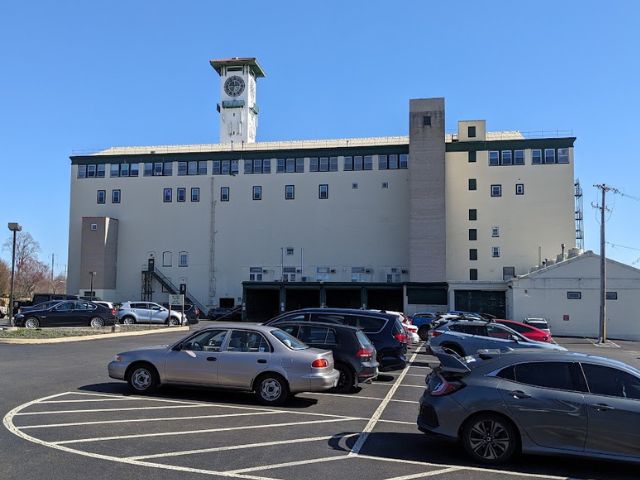
And actually there was a plane crash over in that area not too long ago. And when it happened, I was looking at the footage and the plane crashed actually right in front of where I used to work. It was kind of trippy to look at it and see exactly where that was and to see that area on the news. But finally I made my way over to I 95 to get up north of town to Bristol and took off on a road that takes you kind of back into a commercial area. And the distillery I'm at is dad's hat, and this is a distillery I've long wanted to visit. Now they have a tasting room in Bristol, but then they also have the distillery and they do tours, but the tours are only on Saturdays and they're not every Saturday. So we'll get some details on that from founder Herman Maholic coming up in just a moment.
(03:57):
When I came in, Herman and I had a nice long conversation, did some tastings through their whiskeys. I have a bottle of dad's hat at home, and I have to tell you, it is a really great whiskey and it's one of those that has a very distinctive flavor to it. And so I was wanting to dig in and find out more about that particular whiskey. And that's when I discovered that the whiskey that I've fallen in love with is quite a youngster actually. So we're going to talk a little bit about that. We'll talk about where he is getting his rye from. If you are a Patreon member, you actually will get to hear a little bit more about Rosen Rye as well in the extended episode that we have at patreon.com/whiskey. And we're going to talk about his proofing system and how he gets consistency in his whiskeys. Also talk about what is happening with his white dog. That's all coming up. So let's get started. First of all, the name Dad's hat, kind of a curious name. Well, Herman's father was a big fan of wearing fedoras, and so in his memory that is where the name of the distillery comes from. He also has some stories about his family history involving rye whiskey. So I wanted to start our interview off by getting him to talk a little bit about that.
Herman (05:21):
Yes, I grew up in the apartment above a tavern that my grandfather started as a speakeasy back in the twenties in western Pennsylvania in a town called Monsen, Pennsylvania, which is next door to a town that used to be called Gibson. And Gibson was where the Gibson Distillery was started in the 1850s I think, and existed, which was really one of the largest whiskey distilleries in North America until 1920. And so my grandfather, he was working in the wire mill, the steel mill next door, and he was a whiskey fan in his twenties in the 19 teens drinking whiskey from the Gibson Distillery in Gibson, Pennsylvania. So he was working in the steel mill and during prohibition decided that working in a steel mill was not a great way to live his life. So he decided to start a speakeasy. And that speakeasy turned into our family tavern in 1933, and that's where I grew up. I lived in the apartment upstairs from our family tavern and Rye whiskey, of course was featured there. In fact, I have a couple of old photographs where old Overholt, which has become kind of a bottom shelf whiskey back in the fifties, the forties and fifties was a top shelf whiskey,
(06:44):
And you can see it, it's literally on the top shelf in the bar. And that was a featured whiskey in the bar that my grandfather started and where I grew up. So unfortunately when the mill closed in the late 1970s, the bar closed. But again, having grown up there and having experienced and been steeped in that whole history, and even my grandfather until his later years in his nineties was before dinner. Every night he had a shot of old overholt and a beer. He would say, bring me my medicine. That was, his medicine was a shot of old overhaul. So rye whiskey was kind of in my brain. And after working in the real world and industry in 2006, there was an article in the New York Times that talked about how rye whiskey was making a comeback mostly linked to Brooklyn hipsters cocktails, that kind of stuff. So that caught my attention and they tasted 13 different rye whiskeys in that article. And because my wife is amazing, she bought me all 13 for Christmas that year. Wow. Which included Red hook rye, which is a unicorn these days, and old school Rittenhouse rye, which is now made in a different distillery and all these rye whiskeys were under the tree. When I, in 2006, well after that time, I decided that let's think about bringing rye whiskey back to Pennsylvania, which is of course the historical home of American whiskey.
(08:34):
We wrote a business plan and in 2009 we did some work with Michigan State University on what was Pennsylvania whiskey and what did it look like. So we developed our recipe and our business plan based on that.
Drew (08:49):
And when you started this, there were no rye distillers in the state of Pennsylvania?
Herman (08:55):
That's correct. Mixter closed up in the late eighties, so we brought rye whiskey back to its historical home in Pennsylvania.
Drew (09:03):
So now people talk about the nightmare of working with rye for the first time. You're walking into this really not having done this before. So how did you kind of get worked into this? Being able to distill and figure out how to get around the issues that some people run into when they start working with rye whiskey?
Herman (09:24):
We talked to a still maker called Carl Stills who had a relationship with Michigan State University. So we actually spent quite a bit of time with Michigan State and the team there to develop our process and they were very informative regarding all the things to look out for when you're working with rye. And so in terms of our distillation, mashing temperatures and all those kinds of parameters, we were able to test those
Drew (09:55):
With
Herman (09:55):
The team at Michigan State, and that helped us really start on the road to fine tuning a really robust process for our rye whiskey production.
Drew (10:06):
So I discovered dad's hat actually while I was in Bardstown, Kentucky and was at Bardstown Bourbon Company and they had some on the shelf back there and I went Pennsylvania rye. I wonder what that's like because I had had Rittenhouse rye. Now of course, we tasted the Rittenhouse rye that you had, that your wife had purchased in 2006. Very different from the Rittenhouse Rye that I've had here. Very expressive and interesting flavors and not a lot of barrel. It would be really interesting to know what the mash bill on that was, but when you started doing work here and you were working on that first mash bill, what considerations were you putting into that? Were you looking for a historic mash bill or were you just kind of experimenting and seeing what you could come up with?
Herman (10:59):
We wanted to use the historic mash bill as a base, a baseline, and the 80% grain and 20% malt was really the reference point. So many of the old distillers in Pennsylvania, that was their mash bill. There were a few people doing, and when we say malt, in our case it's mostly malted barley. There were a couple of guys doing malted rye, but for the most part, barley was the choice. So that's where we started. No corn, 80% grain, 20% malt, no corn and sweet mash, we're not doing sour mashing here.
Drew (11:35):
Oh, okay. Alright.
Herman (11:37):
Which is also a Pennsylvania tradition, and so that's with the guidance of our research and working with Michigan State, that's the recipe we settled on. Looking back at some of Pennsylvania distillers back in the even pre-prohibition that 80 20 mix was what they were practicing.
Drew (12:00):
Okay. When I first started getting interested in rye whiskey, it was like, there's Maryland rye, there's Pennsylvania rye. The question being what really was the difference and whether it's the addition of that corn or not. And then we see something like Rittenhouse, which is a name that I was familiar with when I lived in Philadelphia, and it's like, okay, how does this get associated? And it says Pennsylvania style on the bottle, yet it's filled with corn. I call it an almost
Herman (12:32):
Rittenhouse rye before they moved to Kentucky, was actually made at the old public or distillery on Delaware Avenue. Near wood is now the wet Woodman bridge outside of Philly, and when they moved it to Kentucky as old Overhold did the same thing, they added corn to the mix because corn is a very productive grain in terms of alcohol production. So when you're scaling up, but the old school recipe would've been 80 20 without corn.
Drew (13:00):
Yeah. One of the stories around your whiskey that I find fascinating is where you get your grain from. You were initially looking to try to find Pennsylvania rye to work with.
Herman (13:13):
Correct.
Drew (13:14):
Okay.
Herman (13:14):
Yeah. We contacted a grain dealer in Lancaster County originally. We were dealing with Lancaster farmers in the first year or two and we were introduced to the Meese family up in Bucks County, and they've been on that land since 1716. There's a really interesting place, it's near Doylestown called Castle Valley Mills. Castle Valley Mills is an old school grain mill. They take local grain, they make the most amazing grits you ever want to chase. So they introduced me to the Meese family and the Meese family have been a wonderful resource for us because not only have they been there forever since 1716, but the current manager, his name is Nevada, Nevada me, he is really meticulous about the quality of the rye that we get from him. One of the key things for rye is leaving it in the ground. It's a wintering crop, so you plant it in the fall,
Drew (14:17):
It
Herman (14:17):
Winters and then you harvest it in the spring. He waits until really mid-July. So the rye is very mature. The rye berries are very flavorful and he takes the risk of leaving it in the ground that long because if there's a storm and it was called lodging, if it knocks that rye over, he can't harvest it. So he's very waits and waits and waits until it's really ripe and you get really good ripe berries before he harvests it. So that's the first step. Second step is he's invested in cleaning equipment that's specific for rye, so he's not using a corn cleaner, he's using rye cleaner so that the rye that is cleaned from the harvest goes into storage very clean, which really makes a difference because you don't use all the rye in September. It's used through the year. And in addition to that, he's added an aeration system which keeps the rye dry and clean all the way through the following spring before the next harvest, so that if we get rye from him in May or June after the year after the harvest, it's really just as good as it was in the August or September the year was harvested.
Drew (15:41):
As you're listening to this podcast, you find yourself going, man, I wish I could travel around like Drew and go visit all of these different distilleries and meet founders and be able to taste some great whiskeys and really get to know the spirits behind these labels. Well, you know, just got to find some vacation time and then use the website that I'm building for you guys, whiskey lo.com/travel. I have been busy at work trying to expand this catalog of distilleries so that all you have to do is basically go out to the website, pick a state, pick a country, and then be able to pick the distilleries that you want to visit. I've got links to websites, I've got links to social media, and I have maps to show you where all the distilleries are in a particular state or country. And I am quickly building that list out and thank you to Jeff Bayer, by the way, who has given me a big list of Colorado distilleries.
(16:41):
He runs the Colorado Whiskey Guy account on Instagram. There are a lot of Colorado distillery, so I was really thankful that he gave me a list to work off of, and I've put all of them up now@whiskeylower.com slash Colorado because you're going to be able to choose your state and actually just put in whiskey-lower.com/whatever the name of your state is. I'm also taking all of these whiskey flights and interviews and I'm going to be doing more interviews and posting them up along with these profiles. So you're going to be able to meet a lot of the founders and get some basic information before you start planning out your trip. So watch for this to grow over the years and watch out for a brand new edition of experiencing Kentucky bourbon. The second edition is going to have 12 new distilleries added to it on top of the ones that are already out there. All of the information from my revisits that I did just a couple of months ago, new history, and you're going to be able to put these on your wishlist because I will be updating the website and you'll have a special code in that book to be able to access the extended profiles. It's all@whiskeylord.com slash travel, and it's all in an effort to get people traveling to craft distilleries, supporting them and helping them grow.
(18:04):
We were walking around a little bit before this and you took me over to what I call sort of the SRA style of getting whiskey for putting in the bottles that you're basically collecting in two separate tanks, two different whiskeys from different origins. So talk about your process of doing that.
Herman (18:31):
Yeah, what we've done, one of the challenges for a small distiller as we are compared to the really big guys is maintaining for our main products a consistent flavor characteristic. So the way we've tackled this is that we have 6,000 liter tanks over there and we harvest whiskey from our 15 gallon barrels, which are aged for only a year and 53 gallon barrels, which are aged for four to six years in separate tanks. Those tanks are currently about half full and we never empty them so that we bottle from those tanks and we add barrels back to those tanks, but we never empty them. So that basically what we bottled today is going to be blended with what we harvested from bottles next week so that we're blending together what we bottled and what we harvested so that we get a consistent flavor profile. Now over the years, has that profile evolved? Yes, we always work to be better and better, but we don't want from bottling to bottling these radical changes that might put off our consumers.
Drew (19:43):
Yeah, well, you poured some out into a ladle for me to taste of the one year. Yeah, it's
Herman (19:51):
Only 1-year-old. That's
Drew (19:51):
It. And you might think that the one year whiskey would be maybe overly aggressive in one way or another, but I mean it was beautiful to drink out of there at cast drank, not overly peppery. And that's something that I think sometimes draws people away from rye whiskey as they hear, oh, it's very spicy, but I was drinking it at cast drank that was not spicy, and it was only a year old. And come to find out when I looked up on my phone to see what do I have at home, I have the 90 proof, which is what comes out of that. And I love that whiskey.
Herman (20:30):
Yeah, our 90 proof, we call our classic, it's mostly our 15 gallon barrel whiskey that's been aged for about a year, and we do throw a bit of our older whiskey in there to kind of balance it out a little bit, but I know lot of people think that older is better, and this is only 1-year-old whiskey, and we're not trying to make 18-year-old scotch. It's a young, bright, spicy, not too spicy, but spicy. It's bright, it's delicious. And one of the things we have done with the guidance of the work we did at Michigan State University originally is the malt we use is a very high quality two row malt.
(21:14):
So we have 80% grain and 20% malt. That malt brings a lot of good flavor that presents itself in the young whiskey and the barrel eventually will combine with that to make beautiful flavors for our straight whiskey. But in our younger whiskey, it presents itself in a wonderful fruity balance of flavors that I think is very enjoyable. And it goes well in cocktails. And I mean, I know that a lot of hardcore whiskey folks will think this is kind of an anathema, but this time of year as the weather's getting nicer, that 90 proof classic whiskey on the rocks on my back deck on a sunny day's delicious. It's bright, it, it's refreshing almost. It's wonderful. It's not a whiskey you're going to put in a sniffer and sip in front of the fire. It's not, and we don't pretend it is. It's a different animal and we think it drinks wonderfully.
Drew (22:17):
I think as we were talking through it, my perspective on it was that it's a good whiskey to put on ice if you want to drink something on ice because it's not necessarily about the mouthfeel, but that's nothing against the flavor. The flavor of it is amazing, and you could drink it without ice and you're fine to do that.
Herman (22:37):
Absolutely.
Drew (22:37):
It's just that once you step up to the next, which is the other container that you have over there, which has the older whiskeys in it, then you start getting more of that mouthfeel into the
Herman (22:48):
Whiskey there. All the whiskey in that other 6,000 liter tank has a minimum of four years. Right now it's mostly five to six years old, so you got a lot more barrel on it. But we try to keep that balance between what the rye brings to the table and what the barrel brings to the table. And I mean, frankly, that whiskey is just absolutely delicious. I mean it, we're trying to find the right niche for it because it is our 95 proof straight whiskey that some people pass over because the other stuff's less expensive. But boy, it's really delicious. That's really a sipper. You put that in a glass and you can just sip that along and it's got a wonderful mouth feel. It's paid as dues in the barrel and it's delicious. And oh, by the way, the white whiskey, we put into those barrels in the small barrels, we take a cleaner cut off the stove
Drew (23:48):
Right
Herman (23:49):
In the big barrels. We take a, what I call a fatter cut because we know it's going to have four to six years to mature in those barrels. And so we build it that way. It's kind of like a wine, like a bojo novo. They build it to be drunk the day after it's open. But if you're building an old Cabernet, you want those to have the structure to survive or to build themselves over that time. So that's what we do here. We build the young whiskey to be drunk young, and we build the old whiskey to be drunk, older. The other thing we do, because we have a pot still with a hybrid column, that enables us to kind of fine tune that. So whether it's going into the small barrels or the big barrels or as we're coming off the still early on, we can do a really, really, really tight cut of the heads so that we avoid some of the furniture polish effects you might get in a younger whiskey. So we're very conscious of being very careful about how we run that still depending on what we're making.
Drew (24:59):
But you also have
Drew (25:00):
A white dog?
Herman (25:01):
We do. And frankly, it's becoming increasingly popular for cocktails. I haven't checked the spring menu yet, but as of the winter menu at Death and Company, which is really kind of on the Mount Rushmore of cocktail bars in New York, they have a dads hat white rye cocktail on their menu because we put a lot of effort into getting the best rye. As we talked about earlier, the malt we use is a two row malt, which brings also a lot of flavor. So our white spirit off the still has a lot of flavor to it. We were finding bartenders, in fact, you were here earlier, I loaded up a truck. We just sold a bunch of our white whiskey to Don in dc. There's a bar in DC that's also found it to be quite a great cocktail ingredient. Building good flavor into the white Spirit is a good starting point because then when it gets in a barrel, it's only going to get better.
Drew (26:00):
So somebody's coming to Philadelphia or to Eastern Pennsylvania and they want to come visit the distillery, you actually have two different options as to what they can do if somebody wants to come out and visit the distillery itself. Kind of describe a little bit about what do they experience when they come over here and when do you hold those tours?
Herman (26:22):
We do tours right now. We'll see if we get, increase the frequency roughly two times per month on Saturdays. So we have, if you go to our website, dads hat ride.com, you can go and sign up for one of our tours on a Saturday, which is, right now we have April and two in May online and there's a 12 o'clock, one 30 and three o'clock tours. We try to get 10 to 15 folks per tour and we do a walkthrough. We describe in detail what we do here, and then we go back to our tasting room here at the distillery to do a flight tasting. We'll go through our whiskeys and you get a chance to taste the whiskey, the younger whiskeys, the older whiskeys, and some of our finished whiskeys. And so that usually lasts a total of about an hour and a half.
(27:14):
We also have on Mill Street, which is right near the waterfront near the King George Hotel King George Inn in Bristol, we have the Mill Street tasting room, which is open five days a week. And it basically gives you opportunity to try our whiskeys, but we also have cocktails that feature our whiskeys there. It's basically like a cocktail bar with an amazing array of cocktails based on our whiskeys, but also because of the rules in Pennsylvania allow us to offer. If you come in and you absolutely insist that you need to have a gin and tonic, we can do Blue Coat gin and tonic because Blue Coat's made in excellent gin, by the way, made in Philadelphia. So we can offer that to you as well. So anything alcoholic made in Pennsylvania, we're able to sell there. So like Pennsylvania beers, we make a selection of really excellent local beers, wineries. We have a couple of really great wineries in the area. We have a Manaus, which is a super cery up in Bucks County. We also offer their siters there. And the cocktails there are amazing. We have a guy there, Len Boris, who's our manager there, who's been in the industry for a while. Amazing, amazing cocktails.
Drew (28:28):
It sounds like a one-stop shop for getting a taste of Eastern Pennsylvania.
Herman (28:32):
Absolutely. And you can walk down the street and there's a few restaurants in the area that are fantastic, and Bristol has kind of reimagined itself, and it's Bristol Mill Street and the King George offer a great place to visit.
Drew (28:47):
Okay. This is a foodie area too. I mean Pennsylvania, I think the eastern part of the state. What place would you probably send them to as something to get a taste of this area?
Herman (28:58):
It depends on how far you're going to go. In Philadelphia, there's a place called Tallulah's Garden, and Tallulah's started as a Amy Alexi's, the woman who started it. She started a place done in Kennet Square that was a one seating, one table place to, it was just a very kind of a simple farm to table place. She's started and now the place called The Love. And she has done a great job of, it's a very much a locally focused farm to table experience, but one of the things that we like is that she buys barrels from us.
Drew (29:44):
Oh, okay.
Herman (29:45):
Nice. There you go. From a very selfish point of view. Yes. No, the restaurants are fantastic. Okay. So you can go there and she has on her menu a dad's hat. She calls it her over Proof Rye cocktails.
Drew (29:59):
So
Herman (29:59):
She picks barrels from us, and so we sell her barrel strength whiskey that she makes amazing cocktails with at the Love and at Tallulah's Garden.
Drew (30:10):
Okay. And of course, everybody wants to know what's your favorite cheese steak place?
Herman (30:17):
Deandro.
Drew (30:18):
Okay. Up this way, or
Herman (30:19):
No? It's in closer to Philadelphia.
Drew (30:23):
Okay. All right. I'll have to check it out. I'm a cheese steak guy, so
Herman (30:28):
There's a lot of good options.
Drew (30:29):
Yes, absolutely. Well, Harmon, thank you so much for walking us through and I mean, when I think of Penn Rain Eye, I mean this was the first one that I discovered. You were the first one to really kind of carve out the new world of craft distilling, and it's great to finally meet you and get to see what you're doing here.
Herman (30:49):
I'm happy you're ever to stop by and welcome everyone else. When's come visit.
Drew (30:53):
Cheers.
Herman (30:54):
Cheers.
Drew (30:55):
Well, hope you enjoyed this visit to Distillery number 16 on the Whiskey Lo Whiskey Flights great 48 tour of America's great craft distilleries. If I peak your interest in visiting Dad's hat, we'll make sure to head to whiskey lore.com/flights where you can view the profile of this distillery or at whiskey-lore.com/travel. You'll find over 900 other distilleries across the globe to put on your wishlist. We've only got one more stop here in the Mid-Atlantic region on my way down I 95 through some rush hour traffic to see if I can get to our next distillery destination in Delaware. Meanwhile, if you are still on the fence about visiting Dad's hat Distillery, let me give you my three reasons why I think you should have this distillery on your whiskey lore wishlist. Well, first of course, it's the whiskey, and Herman and his team have really perfected their process of making Pennsylvania rye.
(31:50):
Get a chance to see it up close and personal, learn about this Sora process, and really taste the difference between that 90 and 95 proof whiskey and maybe even get to try some of that white dog or cast strength spirit. Second, it may be Herman, that is the one that gives you the tour. If so, well, when you look around the distillery, there'll be plenty of things for you to ask questions about. Look for photos because it was looking at some of those photos that actually sparked some of our conversation. And third, while you're at it, ask him about those bottles that his wife gave him back in 2006. You'll see some of those bottles empty behind the tasting bar and some other bottles with a lot of history that he loves to talk. It's a fantastic distillery for stories. I hope you enjoyed this visit to Dad's Hat Distillery as we head south. We're going to learn about Delaware whiskey in the next episode. Make sure you got your ticket to ride along by smashing that subscribe button on your favorite podcast app and your travel guide Drew Hanish. And until next time, cheers and Slava for transcripts and travel information, including maps, distillery planning information and more. At to whiskey lore.com/flights. Whiskey lo of production of Travel Fuels Life LLC.
About Dad's Hat (Mountain Laurel Spirits) Distillery
Tours available on various Saturdays.
The Dad's Hat Mill Street Tasting Room is at a separate location: 131 Mill St, Bristol, PA 19007 and open Thursday through Sunday..
Take a Whisky Flight to Dad's Hat (Mountain Laurel Spirits) Distillery
Map to Distillery
Note: This distillery information is provided “as is” and is intended for initial research only. Be aware, offerings change without notice and distilleries periodically shut down or suspend services. Always use the distillery’s websites to get the most detailed and up-to-date information. Your due diligence will ensure the smoothest experience possible.