
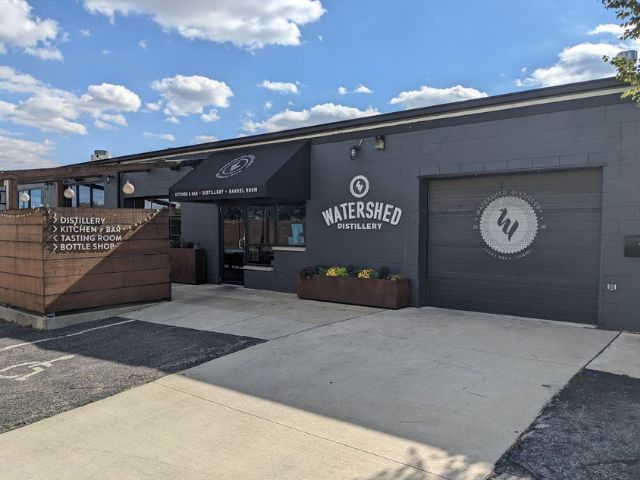
Watershed Distillery
Drew (00:00):
Want to hear what I talk about while I'm doing a full tour of a distillery? Join me for an extended walkthrough of watershed and a taster of their bourbon as a member of the whiskey lore speakeasy. Just head to patreon.com/whiskey lore and look for the watershed Full tour episode. Welcome to Whiskey Lord's Whiskey Flights, your weekly home for discovering great craft distillery experiences around the globe. I'm your travel guide Drew Hanish, Amazon bestselling author of Experiencing American Whiskey, experiencing Kentucky Bourbon and Whiskey Lore, volume one where I bust 24 of Whiskey's biggest myths. And today is the last day of the northeastern swing of the great 48 tour. And actually I'm dipping into the Midwest here as on my way home through New York. I thought, you know what? I don't have any pictures from Ohio of distilleries for my experiencing American whiskey book, so I need to stop somewhere and get a photo.
(01:06):
And watershed had actually invited me the last time I was driving through Ohio, but I didn't have time to stop, so I made arrangements and driving into Columbus, I get to the distillery. I actually decided to kind of scout around the area a little bit more because there are a bunch of distilleries right around north of downtown Columbus. And so I passed by Echo Spirits. I didn't stop in. I had an appointment, and so I wanted to get there on time. And as soon as I walked in the door, Ryan Denrick, their cask manager, was there to meet me. And actually he decided to pull Tommy Householder in, who is their US brand ambassador. And so we're going to talk with both of them, and they've invited me to tour around the distillery and do a full tasting of their whiskeys. So that is what I am going to do today. And so I know nothing really about watershed. I have heard about it. I've had a lot of people talking about it, and they do well in our Instagram fan favorites competition. So I decided that the best way to start this conversation off was to ask Tommy to tell me a little bit about the background of watershed.
Tommy (02:19):
So actually in September, we just celebrated our 15 year anniversary as a distillery right here in Columbus, Ohio. We're actually one of the first ever at Columbus, Ohio as well. And we've now grown to be the largest distillery in the state of Ohio. We were founded by two local guys as well, Greg Lehman and Dave Rigo. Greg Lehman, I think was kind of more the brainchild behind this whole project. He was such a good volleyball player at Ohio State. He actually got to go play professionally in Europe.
Speaker 3 (02:42):
And
Tommy (02:42):
During his travels, he realized how important small businesses can be to small communities. And for instance, the town that he was living in, they made soda, but only for that town. They had a brewery that was only for that town, a distillery just for that town. When he was there, he's like, that's really kind of cool. When he moved back to the United States and in Columbus, Ohio, we didn't have a distillery. We had a few breweries. We had about five or six craft breweries. And when he met his business partner, Dave, they're like, well, maybe we go into beer. And they thought, well, six breweries were a little oversaturated, which is comical.
Ryan (03:11):
It's hilarious because it was like 30 now.
Tommy (03:13):
Yeah. And Sustainable Highways, about 400 breweries in tap rooms. So we could have been a brewery, no problem. We thought distillation would be cool because no one was really doing it. If you didn't know prohibition originated here in Ohio. We could think Westerville, which is a northeast suburb of Columbus, Ohio. If you go there today, there was a prohibition museum in Westerville. So there was all these archaic laws after prohibition of things you could and couldn't do. So we looked into it, and to get a distillery up and running, you have to have lease on property. You have the equipment purchased, you have to have equity buildup, and obviously a little business plan before the state even says you're legally allowed to produce this and put it into liquor stores. So they quit their jobs, they raise the money, they got the property, which we've had since day one over there, and they go in for the state board. And about 10 minutes in the presentation, the state's just like, yeah, you're good to go. Wow. That was like what? They wrote an hour long business plan. They were sweating bullets going in this meeting, and the state just gave them the complete.
(04:07):
And so we actually got allocated to 26 liquor stores early on that we could actually put product into.
(04:12):
But before we even got to that point, we're like, okay, the name watershed, where does that come from? And we really want to be community driven. And a watershed is actually where bodies of water will collect. And the bigger the watershed, the bigger opportunity there is for a town or community to pop up around that. So think about here in Columbus, we have the Scioto and the Oji River Meet. Columbus pops up. New York City has the Hudson and the ocean meat. New York City pops up, Northern Ohio has Toledo, Cleveland, Canton, Akron, all these waterways. So we thought, well, what better name to name our distillery than watershed. Distillery where community starts. So we like to think we're the spirit of Ohio, the spirit of community, and that's kind of where that name comes from as
Speaker 3 (04:48):
Well.
Tommy (04:49):
And one of the first two things we ever made was vodka and gin, just to kind of keep the lights on as we're aging whiskeys and things like that.
Drew (04:55):
The goal was always to go into whiskey, but yes,
Tommy (04:57):
Totally. But it takes time, obviously, and vodka is the number one drink spirit in the world. So we thought, well, let's get some vodka going. People are going to want to drink that no matter what. Let's get some gin going because it's a quicker turnaround as we age. That bourbon until it's ready in 20 12, 20 13
Drew (05:11):
Was when it
Tommy (05:11):
First came out.
Drew (05:12):
We talked about the gin, and now you're doing a barrel. When did you get into doing a barrel aged gin?
Tommy (05:19):
Yeah, so actually it was kind of before the bourbon was even ready. We knew, okay, once these barrels are empty, we can't use 'em again to make bourbon. So we thought, well, why don't we age gin 'em and see what happens? We give 'em to brewery partners all the time to do beer in. So we had this genius idea. So we started working on it in their early stages. We actually had to go down to Kentucky to find barrels to actually play around with. So barrel brokerages, they'll get empty barrels sent to them. So our owners and one of their uncles hopped into a pickup truck one day and drove down to Kentucky to get a barrel, and they show up at the front door and they're like, Hey, we're here to pick up some barrels. And the lady at the front desk said, well, do you guys have an appointment? And they said, Nope. They're like, guys, we send thousands of barrels out a day by appointment only. Let's come back some other time. So on their way out, they felt kind of bad and they're like, alright, guys, do us a favor. Go out the building, go around the corner and go talk to the guys on the back of the pickup truck. They're like, okay, what is this scavenger hunt?
Speaker 3 (06:12):
So
Tommy (06:12):
Sure enough, they go around the corner, there's these two good old Kentucky boys on a smoke break, and they're pedaling barrels as a side hustle on the
Drew (06:19):
Side building. Okay.
Tommy (06:20):
So we got two old forester and a wild Turkey barrel actually from these guys $300 later. So we brought the barrels back to Columbus, Ohio, I guess the wild Turkey barrel had whiskey left in it. So Greg and Dave sipped on that. As they filled those three barrels up before peel gin, they only sit for three months, and they tasted it. They're like, eh, it's okay. And needs to sit longer, sits for six months. And they taste it. They're like, that tastes like crap. Why do we think this was a good idea? So out of frustration, they kind of just sealed the barrel off and forgot about it.
(06:46):
Well, a whole year eclipses and that uncle that went on that trip with them, they were there for a holiday party. He's like, what'd you guys do with that barrel of gin? It didn't taste good. Don't worry about it. Well, they're all pretty drunk at this point. They're like, well, let's go find it. So they found it, they tasted it, and they're like, it took a full year of being in that barrel to get those flavors really soaked up to an idea that we really truly liked. So from that came the barrel H four peel gin. So it was kind of like a happy accident. We were trying to fix one issue with, we're going to have all these empty barrels. What do we do with them? And then we tried to play around with it. Yeah, we don't like this. And all of a sudden it just clicked. Once it hit that one year mark. I mean, Ryan can attest to the color and flavor of how soon most of that comes in. It's like, what do you say the first year or two is like?
Ryan (07:25):
Yeah. So anytime you use a brand new barrel, the liquid's going to gain about 70% of its color just in the first year just from the extraction. And then the years after that, you're getting more oxidative reactions, you're getting more aerification reactions. So all of that liquid gains a lot of that color very quickly. And that's all pulling. It says wood sugars, it says tannins. It's the lignins from the hemo cellose layers. It's pulling all that into the barrel pretty quickly.
Drew (07:52):
But when you're using a used barrel,
Ryan (07:54):
You're still, those reactions are still happening just at a much slower rate. And the amount of available sugars obviously is depleted because from the first round of extraction from making bourbon. So it's a lot more softer extraction. It's a lot subtler. That's why it takes a year plus to get the content that we're looking for.
Tommy (08:13):
We do a tasting of one of those.
Ryan (08:15):
Yeah, sure.
Tommy (08:15):
So this is actually, I think a good one to try. This is our flagship gin. This is where it all started first, honestly. So this is a four peel gin. There's four different citrus peels, lemon lime, grapefruit, and orange coriander, all spice, cinnamon, and of course juniper. Now all gin has to be at least majority juniper in the botanical blends. London dry gins are 80, 90% super pining in your face. So when we came out with the gin, we wanted to be something a little bit different, a little bit more approachable. I called it gateway gin, trying to get a gin for the first time. This is the gin for you. So this is the gin that we actually age in a used burn barrel for a year. But I think starting here is kind of fun to try out. Honestly, we became known as a gin distillery early on because this is so unique.
(08:54):
It is very different. It's really good in cocktailing and things like that. So this is what then goes into a used burn barrel for one full year. So you can see kind of that maturation process a little bit on that. But what's nice about this, because it's not super piney than any wood notes that we get off that barrel actually help out with this. If this was a London dry gin and then we put it into that barrel and you got more woodsy on it, it might be a little too over extrinsic, in my opinion. I've had barrel aged gins that go into a brand new barrel, and you can tell that wood just comes in and that color gets a lot darker, but I'll grab that barrel aged gin for you to try as well.
Drew (09:26):
Yeah, this is really good for, I imagine, in a cocktail.
Ryan (09:32):
Oh, for
Drew (09:32):
Sure. That you are wanting a citrus note in.
Ryan (09:36):
Definitely. It's super versatile with our on-premise accounts, and that's probably behind vodka. That's our second bestselling spirit.
Drew (09:44):
Is it? Okay.
Ryan (09:45):
Especially during summer. During summer, it just takes off.
Drew (09:48):
It's always that thing that you don't expect when you start up a business and you're going, I want to make whiskey. And then your top seller is vodka.
Tommy (09:58):
Well, like I said, it's the number one drink spirit in the world. So you got to have it where you don't really send our vodka outside of Ohio very often. There's a couple states that get it, because we work with some bars and restaurants that have expanded outside of Ohio. But what's nice about our vodka, and this is used in a lot of our products, is actually it's made of corn and apple. So apples grow great in Ohio in the Midwest, so we try to utilize as much apple in the process of a lot of our programs and a lot of our products as well. So the vodka is corn and apple, I believe we use a little bit of that obviously in this too as well.
Drew (10:28):
Yeah, Johnny Appleseed, the story I heard, and he crossed Ohio, I think it's Ohio where the last tree that he planted, I think so, is still alive.
Tommy (10:38):
I think it's like the Urbana Springfield area, I'm pretty sure is where it was
Drew (10:42):
Located. Yeah. Okay.
Tommy (10:43):
Little did we also know that Johnny Appleseed was a raging alcoholic, and a lot of the apples that were growing were crab apples. So they would ferment them and make hard apple cider or apple jack or apple brandy. So there's stories of him going around, not only laying seeds, but he would peddle booze out of his bag and he would sell alcohol to people and stuff like that. He'd lived until he was like 70 or 80 years old, which was old back then. But he lived on the land. He was a vagrant, basically, which is pretty wild.
Drew (11:07):
Well, that's the little known side of American spirits drinking is the idea that we were brandy drinkers across, especially on the frontier, because yes, there was corn growing. That's usually how you claimed your land. But a lot of times you couldn't get out to your land because of attacks and other sorts of things. So planting trees, you could always come back and get to your trees and not necessarily have to be there for,
Tommy (11:35):
And it was a way of claiming land too, with the apples. I heard somewhere just the other day that during prohibition, they were cutting down apple trees to basically limit people from making apple brandy and applejack and things like that, which is sad, unfortunately. But here in Ohio, especially in northern Ohio, we get a lot of apples from there. Here in Columbus, we have lids, fruit farm and things like that, but Northern Ohio up by Elyria in Cleveland areas where we get a lot of our apples for 'em.
Drew (12:06):
Alright, so you know that I've put out Whiskey Lord's travel guide to experiencing American whiskey. I'm doing the Whiskey Flights episodes, and I'm actually introducing a new name to our Instagram awards. They're going to be called the Pagoda Awards, all of this to make 2026 the easiest year ever for you to discover great distilleries coast to coast. For the longest time, distilleries outside of Kentucky and Tennessee have struggled to get themselves seen by people, and so it is time for that to end. So this new book, of course, it highlights 227 out of a thousand distilleries in the United States with write-ups to help you figure out which distilleries you might want to visit. But what you may not yet know is that I'm actually going a step further with this by featuring a select number of distilleries by doing expanded profiles like I do in experiencing Kentucky Bourbon.
(13:08):
And these are going to be out on whiskey lord.org/american, which is the companion website to Whiskey Lord's travel Guide to experiencing American whiskey. These profiles will reveal a deeper story about the distilleries, what makes them special. I will include what you'll taste when you go there, special things to watch out for tips, deeper tour information, and my top three reasons to visit, and this along with the maps that are already out there, booking links and the ability to add the distillery to your very own member wishlist, free of charge. And even better, I'm introducing you to founders and distillers through videos on those pages as well. And I just launched my first one, which is Kim McLaughlin of McLaughlin Distillery in Ley, Pennsylvania, which is just northwest of Pittsburgh. Kim has a great story. It is a quirky and fun distillery. He is making corn whiskey.
(14:10):
He's made his own barrels before and I think you're really going to enjoy learning more about them. If you have a copy of experiencing American whiskey, flip open the page 200 because I actually have a QR code there that you can scan with your phone. It'll take you right to the McLaughlin Distillery webpage where you'll be able to watch that video and learn more about the distillery. It's all in an effort to make travel as easy as possible for you and to allow whiskey fans to make informed decisions on which distilleries they want to visit. Cheers. Do you have multiple mash bills that you do at bourbon or just
Ryan (14:55):
We do. So we do a rye bourbon. So 71% corn, I'm sorry, 72% corn, 21% rye, 7% malted barley. We also have a wheated mash bill that is just replaced the rye with the wheat. And then we do a straight rye whiskey that we produce that's 85% rye, 15% malted barley. And then we are also making a little bit of single malt here as well. So we're putting a little, are you making it off the pot or are you making it off the pot? Off the pot. So all the single malts off the pot. We're doing a little bit of experimentation off the column still, but obviously the more stuff that's not bourbon that runs on here, it cuts into our production.
Speaker 3 (15:33):
So
Ryan (15:33):
We try to keep this pumping out as much bourbon as possible throughout
Drew (15:36):
The year. Okay. The American single ball, is it on grain or off grain?
Ryan (15:39):
On grain.
Drew (15:39):
On grain, yep.
Ryan (15:40):
Everything we do here is on grain. We actually get it milled into flour, so we don't have to deal with a lot of the grain beds and stuff. And we are able, because it is a flour, it's more of a slurry. The stillage is a slurry and we can send it right down the drain. We don't have to have a grain separator and separate the liquid from the solids. It's all just like this slurry that goes right down the drain.
Drew (15:59):
Okay. Really interesting.
Ryan (16:01):
Yeah, it makes it a lot easier for us. I know stillage is always a big topic with distilleries and how to handle it, so we're really lucky that it's fine enough that we don't have to have any sort of rectification process for that, and we can just send it down the drain and forget about it.
Drew (16:14):
Yeah. Are you doing a sweet mash or sour bash?
Ryan (16:16):
Sweet mash.
Drew (16:16):
Sweet mash. Okay, so you don't need any of
Ryan (16:18):
That? Yeah, we don't do any backset. Everything is just one, one tank is empty. We hook it right up to the next one and keep it right on going.
Tommy (16:26):
Okay. So this is now our warehouse, our rick house. This is where we age, everything. This
Drew (16:31):
Is a lot bigger than I expected it to be. It really goes on.
Ryan (16:35):
People are always shocked to walk in here and see the quantity that we have storing in here. I
Drew (16:40):
Think mainly because it was so compact in the other room, and then all of a sudden you walk in here and it's like, holy cow, this is a warehouse.
Ryan (16:48):
Yeah, absolutely. Absolutely. Yeah. So this used to be the old rogue fitness distribution place. So all the weights and lifting equipment used to be in here. So when they moved out, we kind of took this over and it's about the same time we got the column still 20 16, 20 15, and that's when we started to move all the barrels over here and kind store on this side. Since we had all this space.
Tommy (17:09):
And we got about, what, 4,000
Ryan (17:10):
Ish barrels? There's about 4,300 barrels in here now, obviously. So we're producing about 800 to 1200 barrels a year off the still. That goes up and down depending on the production demand every year. But we have the capability to do about 12 to 1400 barrels a year.
Drew (17:26):
Yeah. Does barrel number one still exist?
Ryan (17:28):
It does not, no. So anybody that you kind of talked to that had our bourbon early on, like we were talking about starting out, it was just Dave and Greg, just two guys, obviously they're not much experience, had to buy all the equipment. There wasn't that much cashflow going around. So along with selling the gin and vodka, they had to put in their pockets. They had to figure out some sort of income. So the first little bit of bourbon we released, it was young.
Speaker 3 (17:54):
It
Ryan (17:54):
Was about two years old. It was a different mash bill than it was today as well. It was a five grain corn, rye, wheat, malted barley, and an ancient grain that is native to Ohio called spelt. And again, anybody that had it early on, it wasn't the greatest M bill. It wasn't the greatest aged. It was only two years old,
Speaker 3 (18:13):
Tasted
Ryan (18:13):
Young. So they had to kind of pedal those barrels out really early on just to keep the lights on. So currently I've got about seven and 8-year-old whiskey in here. So from about 20, 20 16, 20 17, right about the time we got that column
Tommy (18:26):
Still and everything here, and he can speak about a little bit more, but the way we've organized this warehouse, so anything where these racks are here to the left is either experimental whiskeys that we're working on, apple brandy or barrelage gin. Everything down that direction is straight bour whiskey, that three grain ma bill that we set of corn, rye, malted barley is most of everything down that direction. So before we move on to the bourbons, there are two really fun products that we make as well. We do an old fashioned in a bottle, so this is kind of cool. We've been doing this for a really long time. We actually outdate bull and a couple of these others on the rock. So we've been doing this longer than those folk. So this uses bourbon, Ohio, cherry juice, aromatic and orange bitters, and raw sugar. It's already diluted down, so all you got to do is pour it over ice and call it a day.
(19:08):
We used bartenders and hospitality professionals to help create this recipe too, as well. Tons of baking spice flavors, really good for holiday times, really good for event spaces for bars and restaurants that have large scale events and things like that. That's really something fun that we do. And we also, of course, make apple brandy. We use a lot of apples for a lot of things. So we told our farmers in northern Ohio, just give us more apple juice, please. So it comes on a big tanker. We do ferment that with a brandy yeast. It's one of the only other types of yeast that we use. We then distill it and we age it for at least two years on site. So it's definitely more of a whiskey drinker's apple brandy, I will say.
Drew (19:40):
It's
Tommy (19:40):
Got a nice little kick, but it's great for cocktailing, it's really great for
Drew (19:43):
Cocktail. Is the pastel or is that the column still? It's
Tommy (19:45):
A little bit of both. Is it? Okay. Yeah. We like the flavors of both. Think more like rich red apple on one, more bright green apple on the other than we blend 'em together. And the apples that we get, they're a mixed bag of all different types of apples from northern Ohio. So it's not just one style on that. It is the longest and probably sometimes most time consuming product for us to make because of the high sugar content from the apples on that. And that's why the brandy yeast works the best to break down those sugars and things like that. Cool.
Drew (20:09):
Very, very fruity and well, caramel apple on the finish there, which is really nice. So
Ryan (20:20):
We don't use the traditional french oak for our brandy. We're still using American oak. It's easy for us to get, it's a little cheaper. So yeah, it's a little atypical from brandy maturation, but I'm figuring it out and it's working well for us.
Drew (20:31):
I guess part of it is also figuring out your char level and how that's going to, I see you're using a five
Ryan (20:38):
Char. Yeah. Yeah. So we traditionally, we went into all char fives. That's kind of what Dave and Greg decided on when they had the pot. Still, it gives 'em a little bit more extra filtration from that carbon layer. But now in 2025, a part of that el lavage programming, we're kind of changing up what we're going into. So now I'm going into twos, threes, fours, and fives, a little bit more paints to paint with, so to speak. Us having the columns still now, everything's coming off that our whiskey has a lighter profile. We're able to segment more of what we want to keep, more of what we want to send down the drain. So with that said, I want to be able to do more dynamic blends, more, have different profiles to play with other than the same profile over and over and over. Now, if we were a big producer, like MGP or whoever, that's exactly what you want to go for. You want repeatability, you want consistency. That's not necessarily what you want at a craft level. You want to be unique, you want to be creative, you want to be ahead of the trend, so to speak.
(21:40):
So we're kind of changing that methodology and changing that train of thought.
Drew (21:44):
Nice. It's all about learning and getting a feel for it, and maybe you bump into something that is just an even better way to do
Ryan (21:52):
It. Absolutely. Absolutely. Yeah. We'll see what the future holds, but we're really excited about the changes that are happening and the stuff that I've given to the team that have tasted it, they've all been super supportive and they're into it. So I think we're on a really good track here.
Tommy (22:04):
And I dunno if we mentioned it too. All of our barrels do come from Jackson, Ohio, a space side. Cooperage is
Drew (22:08):
Where we're getting all our
Tommy (22:09):
Barrels from. So I'm not sure if we mentioned that or not.
(22:11):
So we used to use independent stave for years, and then when we found out there was a great cooperage right here in the state of Ohio that was giving jobs to a very kind of a town that really went through an opioid epidemic and we're like, we got to get back to them. They're really doing great things for that town. Actually, I gave a tour to somebody the other day that's from Jackson. So as soon as I said Jackson Ohioans, her face lit up and she confirmed everything I said. She's like, yeah, an opioid epidemic went through. It was really bad. Bayside opened up, gave people jobs, gave people money, gave people a reason to live. And so we support them. And that's where we just took the team down about a week or two ago to go check out the Cooper Bridge. And Ryan works handily with those guys as well, which is really cool.
Drew (22:48):
You don't have to ship 'em that far either. No,
Ryan (22:50):
No. It's only about an hour and a half drive. So I mean, we tell people it's right in our backyard. Everything is local that we make from the process over here to the barrels that we get. It's all high. We try to keep it as much Ohio as possible.
Tommy (23:05):
Even the labels, we work with Blue label at Lancaster, Ohio, which is about 45 minutes away. So we get all our labels from them, all the grains as much in the Ohio, Midwest that we humanly possibly can get. Ride doesn't grow great in this climate. So the Montanas and the Canadian rises are usually the best for that. But as much Ohio that we can put into a product, we're trying to do that as well. When you do your tastings,
Drew (23:25):
Do you do them in here?
Tommy (23:27):
We do sometimes. Yeah. Single barrel picks. We try to bring people in here for this. So for those that are obviously not, this is our barrel fort. So when we first opened up this warehouse, we actually had a bigger one up at the front, but of course space is limited,
(23:38):
So we had to close it off. So then we finally asked Ryan, Hey, we're moving things around. Can you make a little alcove in here? So he moved some things around and made a little barrel for it. So we do tastings in here for single barrels. We'll do a lot of education in here. Earlier this year we did something called internship where we invited 18 bartenders from all around Ohio to come here and camp on site and everything like that. And we use this as the Bourbon Education Station as they're rotating throughout that too as
Drew (23:59):
Well. I mean, just to describe it for the listeners, it's basically a table with a long table with a carpet underneath couches in the corner, and we are literally in the middle of the warehouse with palletized barrels surrounding us in a kind of rectangular shape, a little doorway of barrels. It is a wall of barrels.
Ryan (24:23):
Basic. Yeah. You're surrounded by science, by everything that's happening. The liquid around us is interacting with that oak, and things are constantly changing as we speak.
Drew (24:34):
This is one of the things, because when I went to Ireland and I went on the tele more do tour, they take you into the warehouse to do a tasting. It's not the full tasting, but they're going to pull something from a barrel. And it's one of those things where when you walk in, there's so many smells within a warehouse, and then they're telling you to nose your whiskey. And I'm going, how can I smell anything? But with everyth, it's all around me, but here it actually smells a lot more like fresh cut wood than it does any spirits.
Ryan (25:11):
Yeah, totally. And I'm sure those dunnage warehouses they have in Scotland, those are just, you're talking about centuries and centuries of flavor that they've developed just within the warehouse itself. So
Speaker 3 (25:24):
We
Ryan (25:25):
Don't have centuries under our belt. But yeah, you definitely get a little bit of scent from those barrels as kind of enjoy the ambiance.
Tommy (25:30):
Yeah, yeah, yeah. Well, speaking of change, as Ryan mentioned, our mash goal early on was those five different grains of mash. And now we are basically with our core bourbons, we are that three grain high-rise mash bill on the bourbon. So we've got three bourbons here that are now are core bourbons for the state of Ohio. This one right here is a four year bourbon finish and used apple brandy barrels for up to two years. We have our bottle and bond bourbon, which were the only ones in Columbus, Ohio doing a bottle and bond bourbon. And then we have our uncut unfiltered, which is the only one in Ohio being made right now too as well. So same mash bills, but treated differently. So I always say everything starts here with the uncut, and then we kind of manipulate it down to different things that we do as well. If you go to a bar and restaurant in the state of Ohio and you see watershed bourbon on the cocktail menu, odds are it's this four year bourbon finishing Apple brandy barrels due to price. But my personal favorite for cocktailing is probably our bottle and bond that we do as well. So I think starting with probably the four year here for you to try out,
Drew (26:24):
Since I probably have a little residual
Tommy (26:26):
Oh, little Apple brand there. Yeah.
Drew (26:29):
And when you say the first in Ohio, people should know there are a lot of distilleries in Ohio. There's a lot. Yeah. I mean, I'm trying to think what my final number was in terms of ones that are definitely doing whiskey and do some kind of tour or tasting, and I think it was in the forties.
Tommy (26:51):
Yeah, I think it's maybe even higher now with just all around DSP licensings and stuff like that too as well. Actually this Saturday tomorrow, me and Ryan we're heading to Henwick Brewery up in Delaware. They always host the Ohio Distillers Guild Whiskey Fest. So I think when we looked at that map, it looks like the largest we've ever seen.
Ryan (27:10):
Yeah, well over 20 distilleries that'll be represented there this year. Nice. So yeah, that's the biggest turnout that they've ever had. Good.
Tommy (27:18):
That'll be a lot of fun. And there, what's really cool is we partner with OHLQ and Higher Liquor Control. They'll pop up with a liquor store there on site, which is very rare. It's hard to get them to do that. And so if you love it, you can taste it and then go buy a bottle right there on site, which is going to be really fun. So that's tomorrow for anyone. If you're sticking around for tomorrow, you can come up and check it out. It's a really good time. So this is unquote our core three bourbons that we have here. A lot of cherry, a lot of stone fruit. So you get that apple note a little bit on the nose and the taste. But great for this is kind of what I consider our workhorse. This one can do it all. You want to put it in a whiskey sour, you want to do an old fashioned with, you want to put ginger ale or ginger beer with it go nuts. It's the workhorse. You have a big group of people over and you don't want to crack open the expensive bottle of bourbon, but you want to share something nice that's from Ohio. This is the bourbon I recommend
Drew (28:05):
For sure. It's really interesting. I almost think for people who like highland scotches, they could wander into bourbon territory with this. It's still going to be sweet, but it's the fruit notes that I think would catch people because it is a very fruity, it reminds me much more in scotch territory from that standpoint than it does a bourbon,
Tommy (28:28):
Especially the highland scotches, I would say. You're not going to get that smokiness like you do from an island or things like that. But more of those like Macallans or those highland style SCOs where you get a ton of that pear and apple kind of coming off of
Drew (28:37):
It.
Tommy (28:38):
I definitely see how someone can kind get that out.
Drew (28:39):
I was going to say, when somebody comes in, does a tour, what do they get to taste?
Tommy (28:43):
They get to taste mostly of the core up. So the four peel gin, usually one or two of the bourbons we usually finish with Nino, which we'll finish on when we get done here to have you try as well, more to four to five samples at the state of Ohio. Basically requires us to sample out so many ounces at a time. But then usually after the fact when the tour is done, you can sample things in the bar and restaurant. You can sample things in the bottle shop as well. So normally, depending on what we're highlighting, if we have a special release out, whatever is, we try to throw that into the tour as well.
Speaker 3 (29:08):
But
Tommy (29:08):
Usually about four to five samplings that you get to try as you go through a little gin, a little whiskey, maybe an outlier like old fashioned or apple brandy or things like that too as well. Okay. So we'll go back up to the front. There's one more product I think you should definitely try. Probably a few others that you should try too, but our Nino is unlike anything you'll ever try. Okay. It's a black walnut laur. Yeah.
Drew (29:27):
So the story behind that.
Tommy (29:28):
Yeah. So is a black walnut. The core, we make it with all Ohio walnuts, our vodka. Basically what you do is you harvest the walnuts around the summer solstice
Speaker 3 (29:36):
Because
Tommy (29:37):
If you wait too long, the walnuts get too hard and you can't break 'em down. So we break 'em down, we let 'em soak in. Vodka, walnuts actually naturally oxidized and turn black. If you ever pick up a walnut in someone's backyard, your hands will get a little dark from oxidation occurring. So we let 'em soak in vodka. Then we'll add sugars and spices like vanilla and citrus peels and cinnamon and things like that. We let it masturbate, add sugar to it, and then we actually barrel age it now. We actually then put it into a used burn barrel for a year. But one of my favorite stories is how we got it, and it's really common when you open up a distillery or brewery for the first time that you'll have home distillers and brewers show up at your front door and say, Hey, try my stuff.
(30:11):
Well, this guy named Charlie, he was a retired surgeon at Ohio State University, kept coming to Greg and Dave and wanting him to try his Nino, and they're like, man, we don't know how you make this. This could be poison for all we know. He's like, guys, I buy the vodka and then I do the infusion. So they eventually tried it and they're like, oh, this is really good. Well, Charlie would come by periodically and just see what they got going on and stuff, and he kept inviting them over to his house to see how it's made. So it finally just worked out one day where they could go over there and see how it's made. It gave all the family an opportunity too, because he invited all his family over to bring walnuts from their backyard because anyone that has a walnut tree can attest that when they fall to the ground and you have to mow, it is a pain in the ass.
(30:47):
You have to rake 'em and then before you mow, so the family brought walnuts over and they got to make Nino as a family and a little cookout and a little bonfire. Well, at the end of the night, they're sitting on the back porch, the sun's kind of going down and Charlie's nowhere to be found. So Greg and Dave are communicating amongst themselves, wonder why Charlie's doing this? Do you think he wants to sell us this recipe? What's going on? He's like, but we're kind of hooked, so let's just see what he wants for it. So all of a sudden, Charlie comes out of nowhere, comes out of the kitchen. He's got two scoops of Jenny's vanilla bean ice cream. For those that don't know who Jenny is, Jenny's one of the biggest ice cream makers in the Midwest done right here in Columbus, Ohio. So it comes out with two scoops of Jenny's vanilla bean ice cream. He takes this Nino and drizzles it right over top of the ice cream
(31:26):
And the sun's going down. They're eating that ice cream and they're hooked and they're like, Charlie, thank you so much for inviting us over and seeing how this is made, but what are you doing here? He wants to buy this recipe. What's going on? And he basically looked at Greg and Dave and said, listen, I see the direction you guys are heading as a business owners and company and the impact you're going to have, and I just want to see my family's recipe live out there in the world. I want to give this recipe to you for free. He asked for $0 zero royalty. Again, he was a retired surgeon from Ohio State University, so he is doing just fine financially, but as a thank you to Charlie, if you ever buy one of these bottles and you turn it around,
Speaker 3 (31:57):
It
Tommy (31:57):
Does say, thanks, Charlie. Ah, nice. So this is our Nino. This is what lemon cello is, the southern Italy. Nino is to Northern Italy
Drew (32:06):
Almost like I got. Maybe because it's black, my brain is going towards a licorice note.
Tommy (32:13):
People do say that just by the looks of it. I don't get a ton of it, but I do get a lot of baking
Ryan (32:17):
Taxes. I mean just with the brown spices that we add. And because it is barrel age, there could be a little bit of Anis content in there.
(32:24):
So I could totally see that as a note in there. From a processing standpoint, this is one of the harder things that we make here, just from the processing. Like Tommy said, we have to get these in When the nuts are actually unripe, the growers actually have to go and pull these off the tree. It's not like they're collecting them on the ground. They're up in ladders, they're collecting them in bags for us, and then they bring 'em to the distillery. And we have a very limited time that we have to process these. So there's only about a two week window for the walnuts to be harvested. And then once they're off the tree, we only have about 48 hours to get them broken down and processed before they oxidize before that inner hall gets hard. So it's a really big labor of love and it's all done. Everything we have to make for the year is done in about two weeks. So it's an all hands on deck event once nuts come in.
Tommy (33:13):
And by the time between that and the time we bottle it though, you're looking at a year at least in some cases we have to obviously age it, then do things like that too as well. But where we see this application quite a bit is black, one at old fashioned black, one at Manhattans Espresso Martinis are all the rage these days. So a little bit of that goes a long way. I love drinking it by itself actually with a little pinch of salt and ice and then a lemon or orange peel. It's like an after dinner dessert, boozy milkshakes, put it over ice cream desserts.
Drew (33:39):
I definitely see putting it on ice cream because it's almost syrupy, but not that sweet. But it is still sweet after drinking bourbons come back over here and taste this. Yeah. Well, Ryan, Tommy, I appreciate the, especially on short notice, Tommy, I mean, you didn't even know you were going to be doing the podcast today. Just jump right on in. Yeah, yeah, absolutely. So no, it's great learning about things and getting the taste through and see what everything's like. And now people will have a better idea. They won't be in that world of mystery like I was before I stepped in the door. So that's a good thing.
Tommy (34:14):
Yeah, don't sleep on Ohio, man. There's a lot of cool stuff happening here and it's not just Kentucky. There's a lot of really cool history here and a lot of things down the pipeline, and we're excited for our growth and we couldn't be here 15 years in the making if it wasn't for everyone else supporting us. So we really appreciate it.
Drew (34:27):
Perfect. Cheers.
Tommy (34:27):
Cheers.
Drew (34:28):
Cheers. I hope you enjoyed this flight to Watershed Distillery in Columbus. If I piqued your interest in traveling to the distillery, make sure to pick up a copy of my new Amazon bestselling book, whiskey Lords Travel Guide to Experiencing American Whiskey, the Ultimate Field Guide to exploring all the great distillery tastings, tours, and cocktail experiences across all 50 states. It's on sale now on Amazon, and soon we'll be available at distilleries across the country as we prepare to leave Watershed Distillery and make our way south to our next destination. If you're still on the fence about a visit to watershed, let me give you my three reasons why I think you should have this distillery on your whiskey lower wishlist. First, it's a great place to get a taste of Ohio with Sweet Mash bourbon made from Ohio Grain. And while you're on one of the tours, you can learn more about their AV system.
(35:26):
Second, this is a great place to find a diversity of flavor. You can enjoy clear gin, barrel aged gin, then try apple brandy or their unique black walnut lour. And third Columbus is a great place to do your own little distillery exploration tour. You compare a visit to watershed with nearby experiences at Echo Spirits, high banks, or Middle West spirits. Well, I have not decided where I'm heading after this. I am definitely going in the direction of home, but I may go down to the Florida Panhandle may be stories next week. It may be an interview. Either way, make sure you're subscribed to the Whiskey Lore podcast so you don't miss a minute of the great 48 tours it carries on, and whiskey lore stories. I'm your travel guide Drew Hanish. And until next time, cheers and Slava for transcripts and travel information, including maps, distillery planning information and more. Head to whiskey lore.org/flights. Whiskey lords of production of Travel Fuels Life, LLC.
About Watershed Distillery
Tours available.
Take a Whisky Flight to Watershed Distillery
Map to Distillery
Note: This distillery information is provided “as is” and is intended for initial research only. Be aware, offerings change without notice and distilleries periodically shut down or suspend services. Always use the distillery’s websites to get the most detailed and up-to-date information. Your due diligence will ensure the smoothest experience possible.