
Vermont Spirits Distilling Co.
Whiskey Flight Overview
Vermont is famous for maple syrup, but in Quechee, one distillery found a different way to put the state's signature ingredient to work. In this episode, Drew Hannush visits Vermont Spirits Distilling Company to meet head distiller and COO Don Culp and explore a world where maple becomes vodka, gin spends years in bourbon barrels, and bourbon gets just enough maple to remind you where it came from. Along the way, you'll discover one of New England's most distinctive distilling experiences.
In This Episode
• How Vermont Spirits became the state's oldest craft distillery
• The origins of maple vodka and turning sap into spirits
• The legacy of Harry Gorman and the creation of Harry's Cocktail Lounge
• Inside the unique glass column still and custom-built distillery
• Why maple vodka delivers vanilla and butterscotch instead of maple syrup flavors
• Barrel-aged gin and why whiskey drinkers may find themselves converted
• The story behind Number 14 Bourbon and Vermont's place in American history
• Adding maple to bourbon without overwhelming the whiskey
• Barrel-aged vodka and other experimental spirits on the horizon
• Upcoming barrel tastings and fill-your-own-bottle experiences
• Exploring Quechee, the Connecticut River Valley, and New England distillery country
• Plus, Drew shares his three reasons why Vermont Spirits Distilling Company deserves a spot on your Whiskey Lore Wish List
📍 Vermont Spirits Distilling Company
Quechee, Vermont
Transcript
Drew (00:08):
Welcome to Whiskey LO's Whiskey Flights, your weekly home for discovering great craft distillery experiences around the globe. I'm your travel guide Drew Hanish, Amazon bestselling author of experiencing Kentucky Bourbon Whiskey lore Volume one where I bust 24 of Whiskey's biggest myths, and the book that is going to change distillery travel habits across the United States starting tomorrow. That's right. Whiskey LO's Travel Guide to Experiencing American Whiskey is coming out on Amazon two January the 13th, and your favorite online bookseller will have it as well, and you'll also be finding it at distilleries coast to coast. Now, one of the distilleries that I discovered during my research for this book was Vermont Spirits Distilling Company, and that is where I'm heading today. And it was during my conversation with Don Culp, the head distiller and COO, that I got intrigued by this idea that they were not only making bourbon by using a touch of maple, something the state of Vermont is famous for, but they were also making maple vodka.
(01:18):
That sounds interesting to me because I have heard all sorts of different things that people are making vodka out of, and this kind of crosses into the world of rum for me, so that's something I want to ask about During our interview. It was a fairly uneventful drive in getting from Flag Hill and New Hampshire to this spot. I basically stopped about 30 minutes south of Quechee, which is the town where Vermont Spirits is at in a town called Clearmont. The issue I ran into though there's a little construction coming in the evening, it was dark when I came in, so I didn't know how much construction there was in the morning. I was starting to run a little bit tight on time, and when I got up to my car, I realized that for somebody who has a garage at home, I don't get frosted windshields very often, and I didn't have a scraper.
(02:12):
So then I had to sit there and wait for that to clear up. And then I got out on the road and it was all dirt and I'm looking and the construction people are waving me away from the direction I need to go, and as I turn to go the direction they're pointing, I notice that my GPS has added 30 minutes to my drive and I'm going, I can't do that. And then I saw cars going past me in the opposite direction and I thought, well, maybe they just waved me in the direction they thought that's where I wanted to go. So I ended up turning around, got onto the highway. Luckily it was open because there's only one way really to get to I 91 without taking a big travel around to get to where I wanted to go, and then I decided to be smart about things.
(02:59):
Don had told me that there was some construction going on on the bridge that was right by where the distillery was, so I decided to come in the back way. Well, it turns out that the back way is where the bridge construction was, but luckily it was still early enough in the day and there was no traffic. So I got right through on that, came in, met with Don, we walked around. The distillery gave me a great tour. I wish I actually had recorded some of the things that we talked about on there because he went in depth on their distilling process. And I'm going to try to get him to go through some of that here in our conversation today. And we're also going to find out about their bourbon called number 14, a little background on that and to help stretch us in terms of our knowledge about distilling. This interview is not going to be hyperfocused on bourbon. We will talk about the bourbon, but I want to dive in a little bit more into what they're doing with distilling of maple, which fascinates me, and then what they're doing with barrel aged gin because it is very bourbon esque from what I am hearing, and we'll do a tasting of that as well here. But I wanted to start off by doing a little bit on the backstory of the distillery.
Don (04:13):
Sure. So in 1999, Duncan Holiday started Vermont Spirits Distilling company up in Barnett, Vermont, about an hour north of where we are now in Quechee. And the whole idea of that concept was that he was in the middle of a sugar bush, a large maple tree area, and a lot of maple sap coming out of those. And he had no interest in making maple syrup.
Speaker 3 (04:44):
He
Don (04:44):
Wanted to come up with a new, unique, different product that no one else had come up with. So he ran the SAP lines into the distillery. They reduced the sap down to 20% as opposed to the 67% that normal maple syrup is, and he started distilling vodka out of that maple syrup, and that was our original product that kicked everything off in 99.
Drew (05:10):
Wow. Okay. And so this was a farm.
Don (05:14):
It was not really, it was a wooded area, heavily dense up in the hills, hard to get to, and not a tourist destination whatsoever. This was a manufacturing facility. In fact, distilleries weren't able to be visited or purchased from back then, so they were just manufacturing places.
Drew (05:40):
Talk about this spot we're in because I don't know if a lot of people outside of probably New England know about quiche.
Don (05:49):
There's plenty of people within New England that know about quiche, not so much from there. So it's an old milling area as much as you don't see them much now, but a lot of trains went through here. And the gorge is a huge tourist area as well. Simon Pierce kind of put Quechee on the map by doing glass blowing and having a great restaurant here as well. So it still thrives for tourist reasons at this point, but we'd like to also think that we helped to put it on the map a little bit too. Give it one more reason for people to come visit.
Drew (06:28):
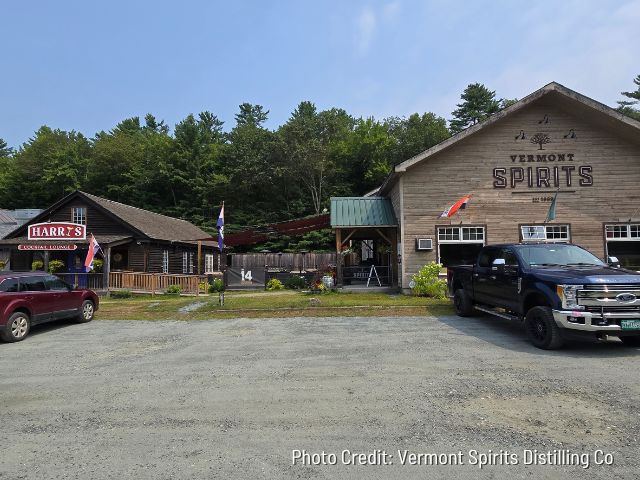
Yeah. Well talk about the construction of this distillery down here, and we're sitting in a cocktail bar that's next to the distillery called Harry's.
Don (06:40):
Correct.
Drew (06:41):
Talk about where the name comes from and Harry's relationship to the distillery.
Don (06:46):
Sure. Well, Harry Gorman was brought in by Duncan about four years after he started and never looked back. Harry became the head mastermind in making great products and just continued that whole process. In 2009 when the laws changed and we could actually sell and taste out of distilleries, they decided that they needed a lot more foot traffic. They had also had a fire at the original distillery, so they had to rebuild. And the current building that houses our distillery here in Quechee was built up there originally and then dismantled and moved down here and reopened in 2011. Then in 2023, we saw the writing on the wall where the building next door to us was becoming available and in honor of Harry, we decided to make Harry's cocktail lounge, which has been a great addition to make this an epic destination for us.
Drew (08:00):
Well, I'm looking at the distillery next door, and you were describing the fact of how he helped put all that together.
Don (08:07):
That is correct. He put together every pipe to every still and to every waste tank, and it's pretty magical everything that Harry has had his hands on. And as a matter of fact, he's the one that built, he's the one that did all the construction here at the cocktail lounge as well. He built the deck in between the two buildings, truly a renaissance man, and we owe an awful lot to our history due to Harry Gorman.
Drew (08:37):
Yeah, so this building that we're in was actually elsewhere, this was moved from the farm or where was it moved from?
Don (08:45):
The building that we're in right now was over in White River Junction and moved here, actually bought by the previous landlord that owned this whole complex, and he had it brought over and reassembled here.
Drew (08:59):
Okay. There's an antique mall right next door, and I was mentioning as we came walking in the door that it felt like this was built here specifically to fit with that antique mall, or was it the other way around? Maybe
Don (09:14):
It is a coin flip. We're not sure the chicken or the egg.
Drew (09:17):
Yeah, so you're making maple spirits. It's an impressive facility next door. I think what's interesting is when I walk in, you may not necessarily, I've walked into some distilleries where there's a wow factor when you walk in because of just the way it is designed. This one, when I walked in, it's very well lit in there, and it's two stories, which is interesting to see how that second level was built in. There. Was this something that Harry had?
Don (09:54):
I believe that the original thought, the way we see it today is a little bit different. So where the original tasting room was on the front part of the building was actually the receiving dock. Everything was kind of flip flopped, so we made the addition of the tasting room and really had a good idea of how it might be rung, but that was 12, 13 plus years ago when that was all put together and times have changed. So we're letting things evolve as they can and we see it fit to make it happen, and we're just taking it one day at a time.
Drew (10:42):
So in terms of the process of making maple vodka, we will definitely talk about bourbon in the moment, but this is one of the big things that drew me up here to want to see this and kind of understand it is prior to that I'd not really seen vodka made out of other things. I've now seen it made out of grapes, and I'm starting to see that yes, we know there's potato, vodka and the rest, but it was that tie to my research. And I had asked you actually during our call about when I was doing the research into Tennessee whiskey, the early spirits that they were making were rum from sugar maple trees, and the question was, why couldn't you call this rum? And of course it all comes down to the government and TTB and what they do, but it got me wanting to really understand this process and how it goes from being syrup to becoming a spirit. So can you walk us through that process?
Don (11:50):
Yeah, absolutely. The magic that everyone does to make bourbon is we convert the starches into sugars, but thankfully nature gives us a lot of sugar throughout maple syrup. Obviously it needs to be boiled down, but it's a completely convertible sugar at this point and it's ready to go. And through the magic of fermentation, we have an actually pretty easy job. We just need to make sure that we keep everything clean and there's no bacteria and nature does most of the work for us, and obviously we do the stripping run and then a spirit run, and we don't have any computers on any of our stills. It's all handled by just one simple steam valve on each still, and that's our major computer, our supercomputer, and that magic. And then using all of our senses, our taste and touch and smell is where we start to make the cuts and make sure that we have an ultimately ridiculous, clean, smooth and beautifully tasting product.
Drew (13:12):
So let's go back to the beginning and first you have the syrup coming in and you want to get it to fermentation, so what steps do you take to get it to the fermentor?
Don (13:23):
Yeah, so SAP comes out of the tree at one to 2% sugar. All maple syrup is boiled down to 67% sugar. Our yeast likes to work around 20%, so we add a lot of water, we make sure that it's the right temperature, and then we put it up in our fermentor and pitch our yeast up there, let that process work for anywhere from seven to nine days. We go from 20 degrees bricks to down to six, and that's almost equatable to the 13% alcohol that we get off of that. And then we run it through our stripping still, that gets into the 40% range, and then we run it through our 12 inch glass column still, which is an entirely unique device, one of a kind, and it works Its magic.
Drew (14:16):
Yeah, the stripping still's interesting shape. It's not what you necessarily would, it looks like a cooker
Don (14:22):
In
Drew (14:22):
There,
Don (14:23):
So it's actually going back to the source. It's a converted maple arch of what a sugar house would use to actually boil the sap to make their own maple syrup. So it's totally repurposed and everything that we have in our other than processing tanks and fermenters, everything that we have is all custom made and very unique.
Drew (14:51):
Okay. Did Harry build the, for instance, that column still?
Don (14:55):
He didn't blow the glass.
Drew (14:56):
Okay.
Don (14:56):
Yeah, but he assembled everything. He came up with making very unique holders to go on our forklift to allow for that glass to be moved up into the height where it is.
Drew (15:12):
Okay. And it doesn't have any plates in it,
Don (15:14):
No plates. It's all stainless steel packing, which allows us to not have as much control as plates would, but it allows for a very clean and very flavorful vodka. That's outrageously delicious.
Drew (15:32):
You were actually running some great,
Don (15:36):
Yeah, we do a couple contract things, and today we're running a little grape brandy just doing some cleanup of some Rita Distill so we don't get overrun by the amount of Rita Distill that we might have.
Drew (15:49):
I'm nosing and going to taste the vodka. Now, of course, the idea behind vodka is that it really isn't supposed to have any kind of flavor, but what are the elements you feel like you get out of maple vodka?
Don (16:03):
So we obviously do everything that we can to make a very, very clean spirit, but the maple does translate through. I never get any maple per se. Some people do, and that's okay, but I get a lot of vanilla in particular in the nose. And then I also get maybe some butterscotch on the backside as well, almost that again, these are components of maple, but not necessarily the maple in your face.
Drew (16:36):
It's not a heavy, but it's got kind of a milky mouth feel to
Don (16:40):
It, and I love the viscosity.
Drew (16:42):
It's
Don (16:42):
Unique. It really truly is. It's not oily or heavy, but it is. The coating in your mouth is definitely present
Drew (16:52):
At 40?
Don (16:53):
Yes.
Drew (16:53):
Okay. I
Don (16:56):
And you'd barely know.
Drew (16:57):
Yeah. It's one of those where I could see just sipping that,
Don (17:03):
And that's kind of a common thread amongst all of our products is everything is outrageously smooth, very sip. Even our clear gin is crazy smooth and you can just pour it over a rock and truly enjoy it, and that's pretty unusual for a gin.
Drew (17:21):
Yeah. When you're doing a tasting with people, do you walk them from the vodka to the gin to the bourbon, or do you do the bourbon before the gin?
Don (17:29):
We typically go clear to heavy and finish up closer to the bourbon side. We do a couple other one-offs that are a little bit sweeter. We do a creme de cais as well as a 1791 cocktail that's finished with a little honey that's on the sweeter side. So those would be your finishing items.
Drew (17:50):
This is the gin. Yeah, though, right off the bat when you nose it, that's one thing about jumping between gin to bourbon, you can definitely tell one from the other.
Don (18:04):
Yes. Although it definitely, since it was put in used bourbon barrels, it definitely has that. We actually sent a sample to someone recently and she is like, your label needs to be changed. I originally thought that this was whiskey until I tasted it, and she goes, and if I had known it was gin, I wouldn't have tasted it. I've had a bad gin experience. She goes, this is phenomenal.
Drew (18:35):
Wow. Those are good feedback to get.
Don (18:39):
Exactly, exactly. I'm like, then the label
Drew (18:41):
Worked. Yeah, there you
Don (18:43):
Go. There's nothing wrong with the label.
Drew (18:45):
Yeah. I find it interesting actually that I had a whiskey the other day and it was a whiskey, it didn't have any botanicals in it, but it had a esque kind of a experience to it. So I don't think they're miles apart.
Don (19:03):
They're not,
Drew (19:04):
And especially I think it was a rye whiskey, and you tend to get a lot more of that, or sometimes more of those botanical kind of notes out of,
Don (19:15):
Depending on where the, almost like green pepper, green peppercorn like that. Yeah.
Drew (19:21):
So how did the gin come about?
Don (19:25):
Well, in 2013, we saw the start of the FOD kid demise, and we knew that we needed to diversify, so we started playing around with recipes with gins as well as that's around the time that the number 14 bourbon came about as well,
(19:46):
And we played around, we do have the two clear gins, and then we decided to start playing around with some old Tom style gin and start to barrel age it. A few years back, our CEO realized that there were a couple barrels that were 6, 7, 8 years old, and we decided that we really liked that flavor profile, so we kind of kept going with it. We don't want to overburden the spirit with too much wood. So we've found that blending in some various ages actually works for us. But there is some six and 7-year-old in this bottle and blended in with a couple, a little bit of two year and four year, but the average age on this is about four years. This is a very traditional seven botanical gin, just made extremely smooth double barreled. So it goes in toasted oak for almost a year, and then we move it over into used bourbon barrels for up to another six years.
Drew (20:55):
The nose has me thinking holidays.
Don (20:57):
Yes, for sure. The cardamom really starts to explode on this, and it really plays well with bring up holidays, the fall aspect, the cold weather aspect and hot toddies with the barrel gin is
Drew (21:14):
One
Don (21:14):
Of my favorites.
Drew (21:15):
I get a lot of all spice kind of notes in this, and I mean, just a lot of baking spice kind of scents in that.
Don (21:23):
Yep. That's the cardamom really playing tricks on your nose. What all? It could be
Drew (21:30):
A little anise in there.
Don (21:31):
Nope,
Drew (21:32):
No.
Don (21:32):
Okay. So actually the botanicals are across the top up here. So we've got lemon peel, cardamom, coriander, juniper, rose petals, licorice root and lemon peel.
Drew (21:43):
It's the licorice root. Yeah, I mean because it's there, it's just to kind of underlying the whole thing.
Don (21:49):
It's very, very subtle,
Drew (21:52):
But my nose draws to it. No, this is a great nose. Almost don't want to drink it. Well, you won't be disappointed. I want that to carry through. Wow, that's interesting. I can see how somebody who's a whiskey drinker would taste this and go, the gin aspects of it are muted enough and you're getting kind of the mouth feel of the caramel vanilla side of things.
Don (22:22):
So we actually really like to use this as a whiskey replacement. So Manhattan's old fashions are outrageously great with this, and then a barrelage gin Negroni is phenomenal, the pasta, and it loves, especially with that coriander aspect, it loves being matched with ginger. So ginger beer, just a simple dark and stormy. I'm doing that at the golf event tomorrow, so it's so versatile and fun, and there's nothing wrong with putting this in some of your eggnog through the holiday season too.
Drew (22:58):
Yeah, yeah, I could see that. Definitely.
Don (23:01):
Yeah,
Drew (23:01):
I'm thinking of having a little gingerbread cake or something. Absolutely. Along with it.
Speaker 3 (23:07):
Yeah.
Drew (23:08):
So onto the bourbon, what was the inspiration first for doing the bourbon, and then we'll dive a little bit into what it's made up of.
Don (23:19):
Sure. Well, like all of our products, we have a tie back to Vermont. The number 14 specifically came because we, Vermont is the 14th state, and we found a mash bill that actually works extremely well with an addition. It's just a simple addition of some maple syrup at the backend right before final filtration. And there's an awful lot of maple flavored bourbons out there. We're not one of them. The whole idea of this is to be extremely subtle, be a bartender's friend of if you want to run a maple old fashioned, this is it where you don't need to add any maple to it, add your bitters, maybe do a little fruit muddle, and you're off to the races. But we are not trying to make this sticky, sweet and or maple flavored. It is extremely subtle to make it ultimately very smooth. And that's the concept.
Drew (24:23):
And you're very open about the fact that your equipment is not really designed to make bourbon, so you're having to source the spirits. Where are you getting them from?
Don (24:34):
We have contracts with four different distilleries across the nation, and we do a little blending as we see fit as we need to, and they're doing our mash bills for us and it's working for us.
Drew (24:50):
Okay. So you do have some control over what the spirit is that you're getting in? We do.
Don (24:56):
We do,
Drew (24:57):
Yes. Okay. And are you doing all the aging here on site or are you
Don (25:02):
What we prefer to do is at least three seasons here, so at least nine months if we had our druthers, two years would be great. But we have found our sweet spot to be around three, three and a half years total age, and that's all been working for us
Drew (25:19):
In a way. You're a blending house
Don (25:22):
In a way.
Drew (25:24):
Yeah,
Don (25:26):
I think even as you're nosing that you'll find that the maple is quite subtle. It's not in your face. The bourbon aspect still shines through, and you'll find that on the backside too of the bourbon is a nice long finish and there's no disappointment in this.
Drew (25:47):
Maple in the way is kind of like vanilla was for me for a long time that I could not nose it, the bourbon. It was very hard for me to kind of pull that out because I hadn't made a connection in my brain to the bourbon esque version of vanilla. And I will talk to people, I get it more on the palette than I do necessarily on the nose. And this is all just part of kind training in getting your catalog of tasting notes in your head and being able to identify things. Because I would have a lot of people who would say, well, Canadian whiskey, I don't drink it because it's too maple. I taste it and I go, it's sweet. It's sweet. I don't necessarily pick up the maple in it. I'm getting better though. And on the palette, I'm starting to pick it up a bit, but I think their comment is it's too heavy handed in terms of the maple. Yeah, it's there, but as you say, it's the rest of the spirit that's coming through. Oh, okay. There it is on the finish. It really does pop through because it really is a bourbon esque experience until the finish. And then again, it leaves almost like a little coating on your tongue,
Don (27:17):
Very slight, but then you're still getting that bourbon back set. It's still
Drew (27:21):
It. Yeah. Yeah, it's really interesting. And so how do you infuse the maple into this? What is the process in terms of your, you get the spirit in and then are you basically batching it together and then what kind of barrel are you putting it in a barrel that has held maple
Don (27:45):
Syrup or, so we are not doing any aging after the addition, it's all aged whiskey. We we're doing the blending, making sure that on the right page we have our set recipe, we'll add about 75% of what our recipe calls for, and then we do a tasting at that point and decide how much more maple do we want to add, how much more maple do we need to add, and is it smooth enough? And that's, is it sweet enough, is it smooth enough? Is it too sweet already? And then we make our final last two gallons of whatever we're putting in, whether it be water or whether it be maple. And then from there we do a filtration, but it's very simplistic of just adding the maple. And so all of our maple is sourced within 10 miles. It's all coming from a family farm, Richardson family farm, which is right in Woodstock. And that's all the maple for all the products that we use. And they do a fabulous job. So we are very consistent in the maple that we're using, and we have a really good idea of what kind of quantity that we need. So
Drew (29:01):
Yeah, well talk about the experience here. When people come to the distillery, what kind of things can they take part in?
Don (29:11):
Well, we are on the cusp of doing a little transition here. We have moved all of our flight samplings and bottle sales over to Harry's, and currently the distillery is not open to the public, but that is about to change. And our goal is to open this up for actual tours and barrel sampling as well as bottle fills out of those barrels. So
(29:39):
We'll have some really truly unique things out here. I actually, to kick this off, one of these barrels that you're looking at right here is actually barrel age vodka. So we've got some really cool things on the horizon. One of our other products that we do is 15 hands, an Homage to the Morgan Horse, and that is a high barley mash bill bourbon that we age for an extra few months in our Apple brandy cast. So the finish on that's a lot more Irish Lake and very unique, but that's in one of these barrels as well. So it'll be a truly unique, fun experience, very interactive, and we're really looking forward to kicking that off in the next month or so.
Drew (30:31):
There are a lot of distilleries in Vermont, more than you would think.
Don (30:34):
There certainly are. There's a lot competition. Unfortunately, we've already seen a couple that are starting to wane. We're very happy the way that we have positioned ourselves so far. We're Vermont's oldest craft distillery, and we truly think that we've done a good job in keeping our prices very competitive in not only the Vermont market, but also nationally as well.
Drew (31:04):
Yeah, and you got a whistle pig is right around the corner, so people who want to do a little mini
Don (31:09):
Trail
Drew (31:10):
Could come through and
Don (31:12):
Absolutely. And just down the road in Windsor is silo and up the road the other way is Caledonia. They're all close. We've got a couple cool ones quite close.
Drew (31:24):
Very good. Well, thanks so much for walking me through the spirits and giving me the guided tour of the distillery. It was fun walking back there, seeing a different process, a process that I know, but how it's been kind of shifted to be able to work with maple syrup. It's really interesting. Yeah. Cool
Don (31:43):
Process. Well, thank you for stopping by. We really appreciate it.
Drew (31:46):
Awesome. Cheers. Thanks. Well, I hope you enjoyed this flight to Vermont Spirits in Quechee. And if I peaked your interest in traveling to the distillery, make sure to pick up a copy of Whiskey Lord's Travel Guide to Experiencing American Whiskey, the Ultimate Field Guide to exploring all the great distillery tastings, tours, and cocktail experiences across all 50 states. It is on sale tomorrow. It'll be on sale Thursday as a Kindle, and you'll also find it at your favorite online booksellers as well as distilleries across the country as we prepare to leave Vermont Spirit to make our way over the Green Mountains into New York state. If you're still on the fence about the visit to Vermont Spirits, let me give you my three reasons why I think you should have this distillery on your whiskey lore wishlist. First, this is a great chance to stretch your knowledge about everything that you think you know about vodka and gin, bourbon and rye fans will be quite surprised by the flavor profile of their gin, especially.
(32:50):
Second, check out the fascinating walkthrough of the Maple Distillation process, or check out one of their barrel sampling experiences and fill your own bottle. And third quiche is dead center in the combo of New Hampshire and Vermont, so it's easy to get to any part of either state. There are lots of distilleries to visit on either side of the Connecticut River, including Tamworth with their meat inspired spirits whistle pig with their tasting rooms, mad River with their fore grain, bourbon and oats and split spirits, maple and black cherrywood infused whiskeys. You can find all of these experiences in Whiskey Lord's travel guide to experiencing American whiskey while New England. It has been incredible and I have just a couple more stops as I make my way home, including a baseball inspired distillery in a town that is filled with both history and lore. Make sure you're subscribed to the Whiskey Lore podcast so you don't miss a moment. It's a great 48 tour. Carries on. I'm your travel guide Drew Hanish. And until next time, cheers and Slava for transcripts and travel information, including maps, distillery planning information and more. Head to whiskey lord.org/flights. Whiskey loza production of Travel fuels Life LLC.
About Vermont Spirits Distilling Co.
Tours by appointment.
Also visit their cocktail lounge Harry's: 5573 Woodstock Rd, White River Junction, VT 05001
Take a Whisky Flight to Vermont Spirits Distilling Co.
Map to Distillery
Note: This distillery information is provided “as is” and is intended for initial research only. Be aware, offerings change without notice and distilleries periodically shut down or suspend services. Always use the distillery’s websites to get the most detailed and up-to-date information. Your due diligence will ensure the smoothest experience possible.