
Milk Street Distillery
Wish List (Log in)
Drew (00:00):
Just a reminder that you can get an extra 20 minutes of interview time in this episode as a member of the whiskey lore speakeasy. Get a seven day free trial membership at patreon.com/whiskey lore. Welcome to Whiskey Lord's Whiskey Flights, your weekly home for discovering great craft distillery experiences around the globe. I'm your travel guide Drew Hanish, the bestselling author of Experiencing Kentucky Bourbon second edition, experiencing Irish whiskey and the Lost History of Tennessee Whiskey, which are all on sale for holiday gift giving@whiskeylord.org slash shop. Each copy of those books will be signed as I send them out the door. And if you want to pre-order a copy of next year's hottest whiskey travel book experiencing American whiskey with over 1000 whiskey distilleries included, as well as all the tips and tricks you need to know to plan out your own whiskey adventure, you can find that there as well@whiskeylord.org slash shop.
(01:07):
And if you get your order in by December 10th, you'll be among the first to receive assigned copy. And inside that book, I'm going to be focusing on the distilleries that we're going to be stopping at over the next few weeks is the great 48 tour. Now heads into New England and it's definitely what I would call the fall foliage tour because the leaves are absolutely incredible. I left on Sunday from South Carolina, drove up through the Shenandoah Valley, got to filibuster Distillery in northern Virginia, decided I'd go visit at least one distillery on my drive, and then ended up in Allentown at 5:00 PM Enjoyed a cheese steak for dinner, didn't really want to drive around or go hunt for things, so I just looked for something that was close to the hotel, got myself a good night's rest, and then next morning I am up. I had to get through Bethlehem, Pennsylvania, which is a bit of traffic, but then after that it was all back roads.
(02:11):
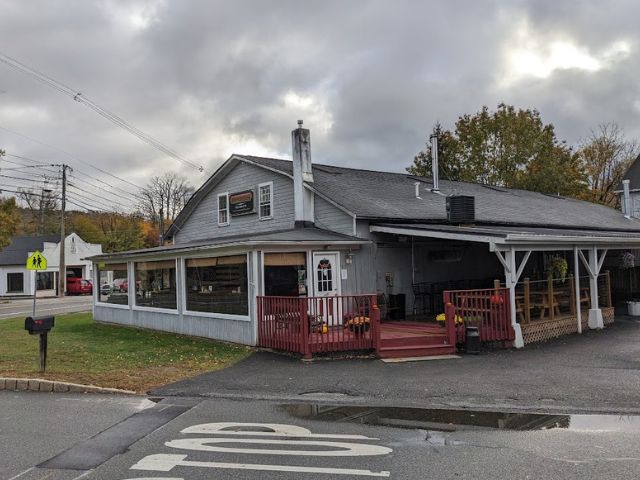
This distillery Milk Street that I am heading to is a bit off the beaten path, and so I relied heavily on GPS for this drive, and I have to say that it was an incredible little journey there. Went past fields of corn, climbed hills, was getting some beautiful overlooks of the hills as I was rounding the band and kind of what I call the fruity pebbles look when trees are really at their peak and there's just so many colors going on. And I crossed over us 2 0 6 into the village of Branchville at the distillery just a few minutes early. So I took a few pictures for my experiencing American whiskey books New Jersey section, and that I was greeted by Esther, the distillery cat through the window and in minutes Gordon showed up and his brother Mike followed. Moments later, we walked into the distillery, took a look around, talked about a few different things that we might talk about during the podcast, and they're doing some really interesting things.
(03:19):
We're going to focus a little bit on vodka. We're going to talk about their bourbon with a unique name, and then we'll talk about their Irish whiskey style. I'm always curious when somebody says Irish whiskey style, which style that they're talking about, and then we're going to get into a little bit of history with one of their brands that is a smoky bourbon. There's actual history embedded in this whiskey. We're sitting in the cocktail bar right now. Got some glasses in front of us, Mike. I think the best place for us to start is to get into the story of how all of this started.
Mike (03:58):
Well, the story goes, we were working on a school being built in Newark, and it was February, January, February, something like that. It was cold and break time. We went to the trailer and Gordon was scrolling the news on his phone and he noticed that Christie relaxed the distillery laws, the governor. So he's like, ah, we should do this. We kicked it around for a little while and we wanted to get in on a low end before everybody jumped on board. So we decided to quit our jobs, mortgage, our houses, and open a distillery.
Drew (04:38):
Wow.
Gordon (04:39):
Like I said, temporary insanity.
Drew (04:42):
And when you were thinking of a place to put it, this is the area you grew up in.
Mike (04:47):
The rent was cheap and the building was kind of a shell, but we took a construction experience otherwise we wouldn't have been able to afford to have somebody do it. It took us almost two years to get our license, so that time we fit the building out and did all of the work into it.
Gordon (05:07):
The water, sewer, gas, built out the tasting room, put a bathroom in. It was our full-time job to be here and get this place to snuff.
Drew (05:17):
So talk about this building that we're in. What was it before you took it over?
Gordon (05:23):
Originally it was built in the late 18 hundreds and it was a feed store. There's actually that picture over the fireplace. I know there's a podcast, but it's a picture of it in the early 19 hundreds, and you could see the doors that we still sliding, doors that we still have inside there. There's sacks of grain stacked floor to ceiling in there.
Drew (05:40):
Wow.
Gordon (05:41):
Bringing it back just in the liquid form,
Drew (05:43):
Both of you sound like you didn't have any real distilling experience in the back, and you're not in an area with distillers all around you. So
Gordon (05:52):
Yeah, we wouldn't distill a drop before we had our DSP. No, that would be illegal. No. We were both whiskey guys going into this and we wanted to make whiskey, but we also, we wanted to make products ourselves. So everything is grain to glass here. We're one of a few distilleries in the state that is all grain to glass. Some distilleries will buy a little bit of neutral spirits to make their gin or their vodkas all the way up to buying everything and bottling it and just
Mike (06:22):
Calling it their
Gordon (06:23):
Own, calling it their own just says bottled by on the back of their label instead of distilled in bottled by.
Drew (06:28):
Yeah.
Gordon (06:28):
So we started out with the clears. We started out with a corn vodka, locally grown corn, and that was our black Fre vodka. And shortly after we opened with that, we had our wooden leg rum, which is made from molasses and evaporated cane juice, and then we started with a rye grain spirit, which was it's white whiskey, terrible. Nobody wanted it, especially after the age stuff came out and then it was okay. So we discontinued that product and we've just been laying down stuff trying different things. We moved into a rice vodka, made a hundred percent rice, double distill. Double filtered wins an award. Every contest we put it in and it surprises most people who aren't vodka drinkers, they taste it and they go, wow. And then new vodka could taste this way. So it's not super flavorful, but it's got a little bit more body to it than your typical stripped, neutral
Drew (07:21):
Spirit. So how did you come about the idea of doing rice then? Because I mean, this isn't really a rice growing area. You have a sack sitting around somewhere that you went, Hey.
Mike (07:31):
For me, our corn vodka, when we first started distilling, it had so much flavor to it and I said, I want something a little more neutral, and I was trying to think of grains that had hardly any flavor, and I thought, rice, it turns out there's actually a lot of starch and rice, and that was kind of a crutch for us to figure out our distilling process and make sure there's no flavor in it.
Drew (07:59):
It is interesting that, I mean, the thing with vodkas that I find is that they all do have some bit of flavor to them, and that when I tasted through and did a blind tasting on three or four, I found that Smirnoff had a little bit of a metallic taste to it that if you really paid attention to it, but it was really neutral for the most part. But the others kind of had a little personality to them that I thought, if you're making a cocktail, this might actually work better. Softer kind of notes to
Mike (08:35):
It. I just recently did a side-by-side with Belvedere and I had mine first, and then I had Belvedere and I was like, wow, because it's made from rye and then that pepper really comes through. It's a lot biter than this is much smoother.
Drew (08:53):
I can't put my finger on a flavor. There's definitely something there, but it's very mild and just clean. It is very clean, very clean. So yeah. That's interesting.
Gordon (09:06):
There's a softness to it
Drew (09:08):
That
Gordon (09:08):
You don't associate with vodka.
Drew (09:11):
Talking about your own pals and being able to pick up stuff like that. I mean, I remember when I first started tasting and really trying to taste whiskey beyond just enjoying it was really a challenge to start picking out those flavors and now you're taking something off the still that you're going to have to put into a barrel, so you kind of have to anticipate what the flavor that's coming out the still and then sitting in the barrel is going to do. What was that process like for you guys? It's
Gordon (09:41):
Pretty much same thing. Initially it was, all right, cross your fingers,
Drew (09:45):
Let's
Gordon (09:45):
See what we get. It's been pretty fortuitous. It's turned out very well for us for what we've been making.
Mike (09:52):
Yeah, all of our spirits I think are pretty good.
Gordon (09:54):
Mike does all this subtle nuance tasting now
Mike (09:57):
Because Gordon doesn't,
Gordon (09:59):
I don't. Gordon's pretty
Mike (09:59):
Dry. Yeah,
Gordon (10:00):
I've been dry for two and a half years, and if I taste something most of the time it's just burning.
Drew (10:07):
Yeah,
Gordon (10:07):
Burning an oak. I completely lost my palate for any of
Drew (10:11):
It. Wow, okay. I guess if you don't use it, it kind of goes away after a while. Yeah, I
Gordon (10:18):
Guess that makes me the skinny chef. Yep,
Drew (10:20):
Skinny chef. Did you ever have one that you were kind of experimenting with and after you tasted it you went, wow, that's a lot better than what I was expecting to get. Got to be to murder.
Gordon (10:35):
Yeah. Coming out of the barrel. Yeah.
Mike (10:37):
Yeah. That was such a good surprise. And now I think it's hitting critical mass too. A lot of people are, like I was telling you before, the farmer's market, I sold a bunch of it and people are coming in for it. It actually made me feel really good when we first bottled it and the first bottles came out. It's a release 12, and then I actually in rain, I had a bunch of people standing online for it. It was right up there with my kid being born. Nice. Yeah, it really was cool. It's cool to see.
Drew (11:10):
Well, it's something you made. Yeah,
Mike (11:11):
Something. I made something. We waited five years. It went in a 30 gallon barrel, so it took like five years to come out and we had some, what did we have? Five gallon barrels, I think we originally put it in. Yeah, it was
Gordon (11:24):
Five gallon
Mike (11:25):
For
Gordon (11:25):
Just a taste test
Mike (11:26):
Batch. We were going to do a New Jersey blended bourbon with jersey spirits, and we made that, and I tasted it coming out at a five gallon barrel. It was like, sorry John, I'm not blending this. This is going to be be a product. And yeah, I think that's my biggest surprise. So
Drew (11:46):
Murder bourbon, where does this name come from?
Mike (11:50):
That's our bartender of almost seven years before it was labeled before anything. It's a hundred proof
Gordon (11:58):
Testing out those five gallon barrels to people
Mike (12:01):
Testing out 'em, testing them out, and something about it leaves a taste in your mouth to make you want to have more. I don't know. She fell for it and she drank more and more, and apparently I had to give her a ride home and she came in the next day and she's like, that bourbon murdered me. And we're like, oh, perfect name. We were struggling to find a name. This is good. So yeah, murdered bourbon,
Drew (12:29):
And it gets people
Mike (12:30):
Talking. It gets people talking. It's a blacked out label, so it's all murdered out and yeah.
Drew (12:37):
Let's dive into this mash bill because of the murder bourbon, because you're doing something to this bourbon that I've not heard anybody do before.
Mike (12:49):
Alright. Well, the mash bill is, it's about 600 pounds. It's 400 pounds of corn, it's 112 pounds of rye. It's 50 pounds Vienna malted barley, and it's 50 pounds of unmalted barley. And I feel like the unmalted barley lends a creaminess to it that allows me to take it off or bottle it at a hundred proof and still make it a nice neat sipper without having to worry about your mouth burden.
Drew (13:23):
Yeah. Well it's interesting because I think of Irish whiskey and how Irish pots still whiskey. Their third ingredient is sometimes oats, and the idea of the oats is to give much more of the mouth feel.
Mike (13:38):
Yep. A body to it. I can see that for sure.
Drew (13:41):
So in a way, you're kind of doing the same thing with the unmalted barley here and really concentrating on the mouthfeel, but I also kind of wonder, even though that's not a large percentage of the grain bill.
Mike (13:55):
No, not at all. Yeah,
Drew (13:57):
It's still maybe enough to kind of give those notes that you think of Pepperiness and grain note. Yeah,
Mike (14:06):
And this was the shower recipe. I was scrub AUB dubbing in the shower.
Drew (14:10):
I came up
Mike (14:11):
With this one. No folks, it wasn't made in the shower.
Drew (14:16):
That's where I do my best thinking in the morning. That's why my water bill is so high.
Mike (14:25):
Esther wants to join us for our podcast.
Drew (14:28):
Yeah. Really nice mouthfeel to it. And that
Mike (14:33):
I know is the unmalted barley. It's got to be
Drew (14:36):
It. Yeah. What's the char level and how long are you aging this?
Mike (14:41):
It's a number three char. It's in new white American oak from the barrel mill and it's 30 gallon barrels for five
Drew (14:50):
Years. Okay,
Mike (14:52):
So it's like a six year 53.
Drew (14:55):
Yeah. It's got a really nice balance to it. I mean, it's not overly sweet. It's not caramel heavy. It's got probably a bit more of the little oak char note to it. That's the reason why I was asking up front about the,
Mike (15:12):
I got to tell you the five gallon barrels we sourced from Mexico when we first started making this, and it was like buttery brown sugar. It was magical, but a lot of caramel, a lot of caramel. But unfortunately that was the only size they made right where we were getting them. Yeah, I think so. That was, we weren't, that was just for test barrels. We were getting, yeah, it's not economical to put everything in five gallon barrels, but it was amazing coming at it here. It's so good.
Drew (15:43):
So in terms of the Irish style whiskey, talk about that because whenever I hear Irish I always go, okay, what did they mean? Are they going for the Jamison direction, the triple distilled, or are they going more for the pot still style, which is the malted and unmalted barley?
Mike (16:04):
Well, I guess when I started my whole whiskey venture, Jamo was my training wheels whiskey, so I think I wanted to try and copy that. The mash bill is 3, 2, 1, so it's 300 pounds Pilsen, it's 200 pounds of unmalted barley, and it's 100 pounds of corn. It's aged probably right around five years in a used 15 gallon barrel. Whatever barrel is available and fresh at the time, we'd throw it in there. So it could be the rye barrel, it could be the bourbon barrel. Doesn't really seem to affect it too much. There's not too much variation between the flavor and it's what, 90 proof.
Drew (16:48):
How do you treat the barrels before you stick the new liquid in? You let 'em dry completely out and then Nope, stick 'em in while they're still
Mike (16:57):
Wet. Empty one, put it back in.
Drew (16:59):
Okay.
Mike (16:59):
Put something right back in.
Drew (17:00):
The reason I asked was because you said it didn't really have much of an effect on it, and you would think
Mike (17:05):
There's, you know what? I think it's after it sits so long. I think they all seem to homogenizes.
Drew (17:11):
Yeah.
Mike (17:12):
We have one more batch and we had a malt whiskey that we called Las Vestige that it was good, but it wasn't a good seller. Everybody gravitated towards the bourbons or something like that. So we lost faith in this while it was still in the barrel. So we decided to not even produce anymore, but this came out and it ended up being well received, so we started making it again. I think we have one more batch and then it's going to go away for a while until the rest of it's matured and then it'll come back out.
Drew (17:48):
Okay.
Mike (17:49):
Yeah.
Drew (17:49):
Interesting. McNally the name.
Mike (17:51):
Yep. McNally. Well, for all you guys who want to steal my identity, mom's maiden name.
Drew (17:58):
Nice. I make up a name for my, I don't use my mother's maiden name, so it'll say mother's and maiden name and I just put whatever you make up. Yeah. Whatever name I made up Steve. Yeah, Steve, it's interesting to think when you are learning how to distill and you're starting to go through and you're making product, that idea that you might lose faith in something that ends up being something that people actually really do end up liking. Or maybe it just needed a little bit more time in the barrel and it sings.
Gordon (18:37):
You can definitely see that. We did, one of the local breweries had a couple barrels of beer. They barrel aged and it got a bre mycin and yeast infection in it, and they're like, listen, we're not doing anything of this. You guys want to make spirits out of it. So was it a dopple B Belgian? Belgian. And so it was three beers. We ended up calling it Trinity, but it was pretty good off the, still put it in a barrel. And then it was in there for a little while and I was like, Ooh, hey, what's going on here? And then we let it go a little further and then ended up we blended all three together and it made a really unique good product that people loved
Mike (19:17):
It. People still ask us for it, but I was complete one.
Drew (19:21):
Yeah. I guess that's the other thing too that you can always consider is maybe we can use this barrel for something else in terms of blending or something else. If you end up with something that you go on its own, maybe not, but
Mike (19:38):
If you could do it, I got two more that I really mean two more brown spirits that I
Drew (19:41):
Want you to try. Sure. If you could bring 'em in two separate glasses and we can,
Gordon (19:46):
Alright. What do we do first? Do the
Mike (19:48):
Rum.
Gordon (19:49):
Yeah, that's easier drinking than a war penny.
Mike (19:51):
Okay. Alright. So the wooden leg rum are white stuff we put in a barrel, and this is also five years in a 15 gallon barrel, and we only have one other batch because once again, we
Gordon (20:07):
Didn't even think
Mike (20:08):
About it because busy, we didn't think about it and it turned out so good. My only regret with this is I probably should have been 90 proof. So vanilla comes out a little more.
Drew (20:18):
Yeah. Now is this molasses or is this
Gordon (20:22):
This is evaporated cane juice and molasses.
Drew (20:24):
Okay.
Gordon (20:25):
Same recipe as our clear stuff. The only difference is the barrel.
Drew (20:28):
Okay.
Gordon (20:29):
Most people just don't think of rum as a
Drew (20:33):
Yeah,
Gordon (20:33):
Plenty of people do, but most people don't. Everybody thinks they're rum and cokes or they're,
Drew (20:38):
I mean, I drank Captain Morgan's when I was younger in Pepsi. That was my mixer. After a while I got to point where I just don't like Rome. Oh, I call rum kind of like burnt sugar and I don't get into it, but I keep my mind open. I'm always open to somebody changing my mind and getting me much more interested in rum. Yeah.
Gordon (21:06):
This ends up so much vanilla's like a
Mike (21:08):
Sweet whiskey. So much vanilla. I love it. 90 proof. It would a lot more. It's and that's all
Drew (21:15):
Barrel. It's interesting because it does have that little tinge of that makes me know it's rum. There's a lot of scotches now that are finishing in rum barrels and it's like, okay, it's kind of like you're interrupting my scotch with a little bit of that flavor that I'm not really a big fan of. This is really an easy drinker and
Mike (21:39):
Super easy drinker. This is so good.
Drew (21:42):
And that rum note is there almost in the same way that it is with the scotches that I'm talking about. It's not dominant and that's all
Gordon (21:51):
It comes down to. The molasses that you use too. If you go in with black strap molasses, that's your most burnt molasses.
Mike (21:58):
Yeah. That's your burnt sugar there.
Gordon (21:59):
It's terrible. It's terrible. But we use a different molasses. We use a rich brown molasses has more of a caramel flavor and that carries all the way through.
Drew (22:08):
This could be one of the ones that sort of helps me go, I need to investigate rum a little bit deeper because if you are, you get it in your mind that you don't like a particular flavor it, it's hard to shake that.
Gordon (22:22):
Sure. Yeah.
Drew (22:23):
I love gingerbread cookies, which are filled with molasses. So to me, molasses is one of those things that I should actually gravitate towards.
Mike (22:34):
Holy crap. That just gave me an idea for a new drink for the menu. Soulless ginger and some rum.
Drew (22:40):
There
Mike (22:40):
You go. And mix it with what though? Anyway,
Drew (22:44):
Good for this time of year.
Mike (22:46):
Yep. Yep. We do seasonal menus, so nice. We try to come up with different cocktails for the season and good people can have while they're sitting here listening to music or watching a chicken take a dump. Not in the winter. Do you know of our chicken tip? Bingo? No, I haven't heard. Well, Gordon's got a few chickens and so we do this the second and fourth Sunday. It's not really a plug, it's just fun. So you come in, you buy a drink with every drink, you get a number, and then once an hour we put a chicken in a pen on a numbered mat, and if the chicken poops on that number, the first poop that hour is a free drink. The second poop is a t-shirt that you can only win and people go bananas for it.
Drew (23:34):
That's awesome. This is much better than cock fighting. Oh man.
Gordon (23:43):
The prices are probably better though.
Drew (23:47):
Well, I mean that's a good reason to come up to this part of New Jersey beyond the leaves changing and the rest.
Mike (23:53):
So just as we were opening up, we saw some booze, traveler, boo travel on a travel channel, do it in or went to a bar in Texas that did it like, yeah, let's do that.
Drew (24:04):
Nice.
Mike (24:05):
And then the local ball field stadium stole it from us and tried to claim it as ours as
Gordon (24:10):
Theirs. Don't be hating.
Mike (24:11):
I'm not behe. Sincere conceal flattery.
Drew (24:16):
Oh man. So we have one more to taste. We'll let Gordon
Mike (24:20):
Showcase his bourbon there. Okay. So
Gordon (24:23):
The war penny is cherry wood smoked beer barrel. Finished
(24:28):
Some of the corn we give to our farmer who takes our stillage. He's got plenty of cows and pigs and he turns it into bacon and beef and brings that back to us. But he has a smoke house on his property as well. So he takes the corn, lays it out and racks and smokes it over a small cherry wood fire over the course of two days. Then we take that corn back, we mash it in. It's just a corn and rye mash bill. We mash it in, ferment it, distill it. The smoke comes through there and we age it in new white American oak barrels, predominantly tens and fifteens, two and three years. Then we have some thirties laying down. It kind of gets mixed in there and after it's done there, we'll put it into beer barrels of differing varieties. This particular one was a stout beer barrel from Fort Nonsense Brewing and just a whole lot going on in there.
Drew (25:22):
There you go. You got to love the pump of the cork.
Gordon (25:25):
Yep. A little history on the war. Penny. In 1943 during World War ii, it was imperative to utilize copper for the war effort. So the US MIT said, Hey, we're going to do our part. We're going to make pennies out of steel, coat 'em with zinc and everybody hated
Drew (25:45):
Them. And you're going to name your whiskey after something that everybody
Gordon (25:50):
Hated. Well, it's unique. And it was a collector's item so you could look at it. War penny that
Drew (25:54):
Right. So he's Mike showing me the,
Mike (25:58):
There's a steel 1943 penny stuck in the wax of every bottle.
Drew (26:02):
So that's the actual penny. That's actual penny. Actual penny, yep.
Mike (26:04):
40.
Gordon (26:04):
I min about a billion of them. And everybody saved them. They thought, oh, these are going to be collectors' items.
Drew (26:09):
But
Gordon (26:09):
Everybody saved them and they're not collectors' items.
Drew (26:13):
It's like my 1978 tops baseball card collection. It's there
Gordon (26:17):
You go. Yeah,
Drew (26:18):
Overdone.
Gordon (26:19):
So in 44, the US mint said, Hey, we got to do away with these because the vending machines were taking pennies. They still took pennies and they got stuck in the magnets as slugs in 44. They made 'em out of spent munition shells and they put a little copper in there. That's why if you look at 44 penny, it has a bit more of a brassy sheen to it than it does.
Drew (26:44):
That's really interesting. Again, the rye kind stands out in wherever you're getting your rye from. It adds a dryness to the spirit, but yet the caramel of the corn kind of stands out as well. So it's kind of a balance between those two.
Mike (27:03):
It's two thirds corn, one third rye, and half the corn is smoked with cherry wood.
Drew (27:08):
Okay. Yeah, it's really interesting. Beyond the chicken droppings, what is a Saturday night around here?
Mike (27:15):
Saturday nights are awesome. There are our busiest night. We always have a food truck and live music. And when we're outside or in the summertime spring and up until late fall, we have seating for 200 people outside. So we always book the bigger bands and it's always a great time. And in the winter for a few months we end up settling inside, lowering the volume down a little bit with some duos and trios and just wait to get back outside. We do trivia, music, bingo, name that, tune, stuff like that just to bring people in.
Drew (27:56):
Very good. So if somebody's coming to the area and they want to check out the distillery, maybe do some things around here and maybe find a place to stay. There are a lot of BMBs around it. This feels like a BB kind of area.
Gordon (28:09):
Yeah, there's a lot of Airbnbs, VRBO. There's a couple lakes around here that people rent out their lake houses, campgrounds, and there's a couple really good campgrounds.
Mike (28:20):
So according to Google, we're the second biggest draw in the area of Stoke State Forest is the first biggest draw, kind of quiet around
Gordon (28:30):
Here. There's a lot of hiking to do around the area. You got Sunrise Mountain, you can overlook the whole county hike up there. Fishing. Delaware River is 20 minutes from here. You can raft down to the Delaware River or go fishing or whatnot.
Drew (28:45):
I still have to get it straight in my mind that I'm only really maybe an hour, hour and a half from New York City.
Mike (28:53):
Yeah, yeah.
Drew (28:54):
I mean,
Gordon (28:56):
Depending
Mike (28:56):
On traffic.
Drew (28:57):
Yeah, it feels very isolated out here. Versus
Gordon (29:01):
This isn't the New Jersey on the beginning of Sopranos
Drew (29:05):
For sure. Taking all these little back roads through here. Google was taking me on a tour de force of leaves changing and hillsides and cruising through. So some great scenery through here.
Mike (29:19):
That's great.
Drew (29:19):
Well worth seeing.
Mike (29:21):
Well, we appreciate you picking us.
Drew (29:24):
Yeah, absolutely.
Mike (29:25):
And New Jersey here
Drew (29:26):
Before we close out the name Milk Street Distillery. So why Milk Street? What is,
Gordon (29:35):
We were overflowing with creativity and decided to name it Milk Street. It's on Milk Street
Drew (29:42):
And the background of Milk Street. It was a causeway for
Mike (29:45):
Borden Dairy.
Gordon (29:46):
Yeah. Sussex County was a farming community. There was a time there was more cows than people in the county and we're pretty much smack dad. Between two Creamies, two old creamery. There was Borden's behind us and across the street is the old Sussex creamery.
Drew (30:02):
It's not a long street, that's for sure.
Gordon (30:05):
No, you can almost
Mike (30:06):
Throw a football down it.
Drew (30:07):
Yeah, there you go.
Mike (30:08):
Definitely a Frisbee.
Drew (30:11):
Well great. Well thank you guys. I appreciate you taking the time and
Mike (30:15):
Thank you.
Drew (30:15):
Yeah, it's good to, I love finding out of the way places that people haven't really necessarily discovered yet and need to definitely out of the way come to see. So. Awesome. Cheers. Cheers, cheers. Well, I hope you enjoyed this journey to Milk Street Distillery in New Jersey. And if I piqued your interest in traveling to the area to support this great independent craft distillery, we'll go ahead and pre-order your copy of Whiskey LO's Travel Guide to Experiencing American Whiskey 2026 Edition, where you get all the insider tips on the logistics of distillery travel and travel advice for all 50 states, including New Jersey and listing of over 1000 distilleries for you to choose from, all you got to do to start your journey is head to whiskey lore.org/shop. And remember, if you pre-order before December 10th, I'll sign your book and send it out with my first batches as I prepare to head to my next distillery destination.
(31:14):
If you're still on the fence about a visit to Milk Street Distillery, let me give you my three reasons why I think you should have this distillery on your whiskey lore wishlist. First, as you could probably tell, there's a great laid back vibe at Milk Street, and if you bookmark it on Google Maps, it'll remind you that when you're traveling by, this is a great place to take a little side trip, drive through the Rolling Hills, and enjoy a cocktail or flight on the porch. Maybe you'll make some new friends, second fans of Irish Pot still whiskey. I know you are a little bit curious about this use of unmalted barley, so stop in and try their murder bourbon with unmalted barley and their Irish style whiskey. And third, grab yourself a bottle of war Penny while you're there and take home a fascinating piece of American history.
(32:09):
Well, I hated to cut this short, but I got a power pack trip ahead of me, two distillery visits per day on this journey, and I'm off to my next spot. It is another scenic destination just north of I 84, or as it was described to me, the Yankee Red Sock Dividing line. And I'm heading to a distillery that my friend and longtime Patreon member Fernando has been telling me about for years. I am finally going to get to Litchfield Distillery in our episode. Get your ticket to ride along by smashing that subscribe button on your favorite podcast app. I'm your travel guide Drew Hanish. And until next time, cheers and Slava for transcripts and travel information, including maps, distillery planning information and more. Head to whiskey lore.org/flights. Whiskey lore is a production of Travel Fuels Life. LLC.
About Milk Street Distillery
Tasting room available.
Take a Whisky Flight to Milk Street Distillery
Map to Distillery
Note: This distillery information is provided “as is” and is intended for initial research only. Be aware, offerings change without notice and distilleries periodically shut down or suspend services. Always use the distillery’s websites to get the most detailed and up-to-date information. Your due diligence will ensure the smoothest experience possible.