
Black Draft Farm and Distillery
Wish List (Log in)
Drew (00:00):
Just to note to Patreon members that there's an extra 15 minutes of this interview on Patreon. I'm going to be chatting with Glenn from Black Draft about a historic loss distillery, how close far he feels from the rest of West Virginia out here in the eastern panhandle, and where outside of Kentucky and the Ozarks Black Draft Distillery is sourcing their barrels. I also don't do any commercial interruptions during those Patreon episodes. If you're not a member of Patreon, get your seven day free trial at patreon.com/whiskey lore. Welcome to Whiskey Lord's Whiskey Flights, your weekly home for discovering great craft distillery experiences around the globe. I'm your travel guide Drew Hannush bestselling author of experiencing Kentucky Bourbon, experiencing Irish whiskey, and the brand new book that busts 24 of Whiskey's biggest myths, whiskey lore, volume one. And today I have caught up on sleep after a huge day of driving up I 81.
(01:06):
Yesterday I was up at 5:00 AM driving from Greenville, South Carolina to Carlisle, Pennsylvania to do some research, and then I backtracked an hour to get to the town of Martinsburg, West Virginia. If you've ever been up I 81, you'll know that you're in Virginia for what seems like forever and then all of a sudden don't blink because you'll be through West Virginia and Maryland in just a matter of about 30 minutes and heading into Pennsylvania. So backtracking wasn't too bad. It was just about an hour south of Carlisle, Pennsylvania to get to Martinsburg. I'm going to be spending a few days up here in the Mid-Atlantic States. This is a great jumping off point as I've got Maryland, West Virginia, Pennsylvania, Virginia, Delaware, all within a very short drive of this area. And to kick things off, I actually was being interviewed myself rather than me interviewing someone else as Josh Triggs from the Black shirt Bourbon Society.
(02:07):
Got in touch with me through Instagram and said, Hey, I understand you're coming up this way and would love to have you on the podcast. So I went over to his place, he runs a photography studio just south of Martinsburg, and he actually helped introduce me to a lot of different whiskeys that are within a 50 to 70 mile radius of this area in West Virginia. And so I found a couple that were really intriguing and I'm actually going to start sharing those up on whiskey lower.com/travel along with the distillery profiles that I am building for those distilleries. And so keep an eye out for those. And after getting done with our interview, it was time for me to take my microphones ride along with him to one of his marketing clients, the man I was going to meet, Glenn Price of Black Draft Distillery. And if you're unfamiliar with West Virginia and how it's laid out, well, there are a lot of moonshine distilleries and of course Smooth Ambler and some other distilleries that are in the middle of the state out here in the eastern panhandle.
(03:17):
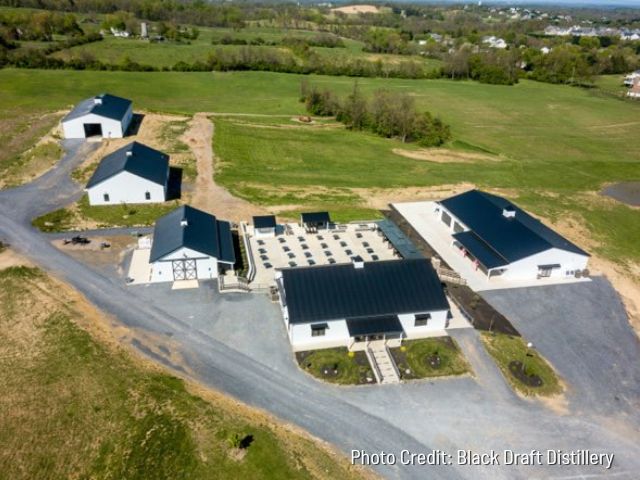
It's a little distance away from everything else in West Virginia. And it's probably one that if you're in West Virginia, it might not be the first place you think of then if you're driving up I 81, it might not be the first thing that you think of. And so I was unfamiliar with it. Actually, if you're unfamiliar with it, well don't be surprised because Glenn and his wife Brookie have not been that big on advertising, mainly because they haven't had to be since the distillery's beginnings. It has grown. An excellent local reputation is the place to be on the weekend. In fact, the place is so busy that rather than building more Rick houses, like most distilleries, he's expanding his barns as he calls them. And these aren't your typical barns that are filled with hay and horses. Instead, each one features additional space for their weekend shin digs.
(04:10):
Now we decide on holding off on touring the distillery and going first into our interview. So we stepped into Glenn's smoking room and Josh and Glenn lit up some cigars. They offered me one. I am not much of a cigar smoker. I will tell you that straight out. I'm actually more of a pipe smoker, although I haven't smoked a pipe in years because they kind of grew passe. But according to Josh and Glenn, they are starting to make a comeback, although I will say I'm much more a fan of smelling other people's secondhand smoke for pipes than I am smoking one myself. But enough about my smoking habits, it's time to get into West Virginia Spirits and find out first of all how Glen got all of this started up.
Glen P (05:02):
We were originally a horse farm, bought a little three acre property over on south end of town. So I want to get into horses just as a little hobby. And I got big black perch around horses from an Amish family and had a horse farm, had it for about 10 years. Big part of the community would go to neighborhood kids and think about wagon rides. We would bring Santa Claus into a town square. They do an annual tree lighting ceremony. And I was the guy that brought in Santa, that kind of stuff. So just had a lot of fun with it. It was great. Did it for 10, 11 years. And one of the horses got sick just emotionally with the family. We're like, I don't want to get back into horses. It was supposed to be just a hobby. It was never supposed to be a business.
(05:43):
It was never was a business. And here we sat looking at an empty barn in your backyard at an empty barn for seven months, eight months you're like, and my old man and some other buddies are like, what the hell are you going to do with this place in the back? You just can't leave it shrine like that. So four or five of us, kind of much like this, sitting around drinking, said, dude, you should make some moonshine. I was like, I ain't going to make a moonshine. Who the hell? What the hell does that? There's no other distilleries in the area. I don't even know where to begin. I know our family made it. Of course you're from West Virginia. Everyone's passed around and jar of moonshine. Same thing like you in North Carolina or whatever. There's always got moonshine. So it was a week later and I was just like, you know what?
(06:22):
It doesn't sound bad. What are you going to do with a barn in the back hills of West Virginia? You make moonshine. So started making moonshine, working well, getting a good vibe out of it. Had little 10 gallon laughs, pot, nothing crazy, just making gallon at a time. Something little like that. And out of nowhere I get a phone call from our federal rep, Alex Mooney's office, and it's from one of his staffers. And she goes, Hey, I hear you're making moonshine. Is there any chance you can bring it down here to the capitol building? And I was like, hell no. No way. There's no way in hell I'm going to go do that. And three days later I got a phone call from one of Shelly Moore Capto, our senator cap's office saying, Hey, we were talking to Mooney's office and they say, you're bringing in some moonshine.
(07:04):
Would you mind grabbing a couple extra jars and doing it? I was like, this is crazy. And I go, you know what? Let's do it just for giggles. Let's see if it's any real good. If you got federal senators asking you to come, bring it down. Let's do it. Let's do it. So a mule down there, I jump on the DC Metro, I go down there and I remember talking to everyone, shaking babies, kissing hands and that kind of stuff. And I'm walking down to the Capitol Hill stuff, heart building steps, and I had to stop for a minute and I just thought to my head, I went, wow, how many federal laws I've broken just now? Just literally going across state lines and I'm taking it through the metro and I'm taking up the Capitol Hill steps and I got guards that are whiskey. Why do you have glass bottles? And the staffers would come down and had a blast. It was a great day, but at the end of the day, you get that breath movement. I was like, wow, I'm so screwed right now if anyone wants to pull the plug. And at that point I was like, I went back to the MRS and said, I really do need to go legitimate with this business. I need to go do all my TTP reports and I need to really just get my DSP licensing and just do it. Right?
(08:09):
So that was the spark where, how the hell did you transition over from a horse farm to doing it right?
Drew (08:14):
You met some Congress people
Glen P (08:17):
And they scared me and I was like, yeah, let's do it.
Drew (08:19):
Nice.
Glen P (08:19):
Ironically, they still do come in. Here we are, here we are 12 years later they still come in and were like, at the time, the funny part was, and this has happened over Christmas time, where they came in and they were like, oh my God, I remember you doing that. And I was like, really? And they're like, we never knew your name. We didn't know the name of your distill because we drank it all
Speaker 3 (08:37):
On purpose.
Glen P (08:38):
And yet here we are. She goes, holy crap, this is crazy. And of course I talk to Alex all the time and the staffers and they were like, we didn't know who you were. We just know you were some guy who made moonshine and brought it into dc. I was like, well, it's parlayed into a little bit something bigger now. So that's something a little side note. So when we went legit, we just kept the name Black Draft Farm
Drew (09:03):
And Black Draft being
Glen P (09:04):
The big black draft horses that we originally had. So you'll see all of our logos or whatever, you'll still see the horse in the logo from original plow that we did. So that's the history of the name.
Drew (09:14):
So were you running a farm here or was it basically just It was a horse farm, it was not a You're growing grains kind of Correct. Yeah,
Glen P (09:23):
Correct. At the same time, I was a horse farm. I was in, you get to know a lot of other farmers and that kind of stuff. And so there's a tab, family farm, they probably own about 2000 acres in Jefferson County, one county over from where we're at. And he was like, Hey, whatever you need, if you need more corn for you at the time, I was just buying a 50 pound bag just to feed, like I said, 10 gallon lobster pockets, like you're running through a burn through a lot of corn. And the guy goes, well, I got 35 acres over there if you want it, you can do non GMO corn, whatever you want.
Speaker 3 (09:56):
So
Glen P (09:57):
At that time I was like, well, hell yeah, let's go back to USDA, tell 'em my game plan, tell 'em what I want to do and let's go legit on a very small scale mind you, but let's go legit. I, that's actually where we met was local magazine wanted to do a thing about this new distillery or this new guy just popped up in the area making whiskey and he did a photo shoot, God, it had to be like 12 years ago,
Speaker 3 (10:23):
It
Glen P (10:23):
Was a while back, did a photo shoot. And so did a photo shoot. And next thing you know, we said, okay, we had so many people that would knock on the door and say, I want to see how you make it. Show us how you make it. Show us how you make it. We went, okay, I'm not going to open up the doors fully, but I'll open up every couple months for a weekend. We'll have an open house,
(10:45):
Black drop open house. We'll do it every fall, springtime, 4th of July, that kind of stuff. And lo and behold, about four or five, six years in, we'd have a hundred people standing in a barn that's maybe twice the size of this office. I mean, it was a ton of people and just really knew at some point, wow, this is not just selling whiskey. This is a tourist event. This is where people plan their Saturdays to come down and hang out with us, try some whiskey, talk to some people, listen to a live band and that kind of stuff. But you got to imagine for that seven, eight years that we first started, that's all we did. We only opened up on weekends. We didn't really embrace the tourism part. That makes sense, what we're talking about.
(11:26):
And then COVID hit, no, lemme go back. Yeah, well, it was kind of about the same time, but right when 2019 COVID hit and we had an open house and one of the local farmers was there at the open house and she looks over at me and goes, you've outgrown a barn plan. And I go, yeah, you think I can't move or anything like that? She goes, me and my husband, we had a 60 or 90 acre farm over on the north end of town, and we're looking to buy a house in Florida. Why don't we sell you our so we can go do it? And they own like three or four different farms here in this area,
(11:56):
But we're looking to sell one of 'em, go buy a house. So we came up here right in the start of COVID and looked around at the property and went, you know what? Let's build it up. And this was nothing. There wasn't a single barn out here. It was just literally just a hay field. And that was it. That's all they did was pull hay off of it. COVID hit. And we had some government contractors that said, Hey, can you make hand sanitizer? And we were like, I don't know, squat about hand sanitizer. I don't know, squat about it. And they go, well, we can't find anyone in DC who can handle the volume of what we do and addition to it, they can't make alcohol fuel. They can just do the consumable alcohol for hand sanitizer. You know what I mean?
Speaker 3 (12:33):
Yeah.
Glen P (12:34):
And they go, we're looking at the TTB working with ttb, and your name keeps popping up because you have a fuel alcohol permit. Apparently eight years ago when I was filling out the form to get your DSPI checked off the alcohol permit box.
Drew (12:47):
Wow, okay.
Glen P (12:47):
Accidentally. I promised I wasn't deliberately it
Drew (12:50):
Did you know something was coming, we didn't know.
Glen P (12:52):
Had no clue. So parlay that into here we are just bought a new farm. We have these major contracts. We ended up taking over a big building and the other south end of town, a hundred thousand square foot building, and we cranked out a lot of hand sanitizer. We had three shifts running over it. We produced over 2000 gallons a week, US capitol building, just everything from IRS to Coast Guard to US capitol building to all this. We were just cranking through some hand sanitizer. Everything else is shut down. We're like, dude, we're hiring people. I need to hire people. Probably that to realistically, that's what kind of allowed us to afford building this place.
Drew (13:26):
So you are probably one of the rare examples of someone who actually made some profits off of doing hand sanitizer.
Glen P (13:32):
100%.
Drew (13:33):
Okay,
Glen P (13:33):
100. You got to realize I'm still working, I still have my real job and everything. So hand sanitizer wasn't like, this is my new full-time job. It was like, oh no, I need to hire people just to take over the business that I can't do
(13:45):
Higher production guys, that kind of stuff. So anyway, people wonder, how the hell did you come out of COVID with three brand new barns and a big facility and that kind of stuff? Well, I put it right back into this business. There was a huge demand, like we said, every weekend when we'd have these open houses, you were just flooded. You were just slammed with the amount of people. But that was a big risk. Like you said, when we come here now all of a sudden we open up the patio and we don't know if there's going to be 25 people or 250 people or 2,500 people. We had no
Speaker 3 (14:16):
Idea.
Glen P (14:18):
So we underestimated the amount of people that came here and we ended up having to really, you got to imagine all these buildings that they've just come online here over the past three years. So it's not like we've been here for 15 years and we've grown. And again, we're not talking anything like Jack Daniels level or anything like that. Not even close to Jim Beamer or anything. But here we are a small town in east eastern panhandle of West Virginia, and this place is crazy as far as I'm concerned. My expectations just wild. And I'm still very shocked the fact that people come out and see my dumb ass here. I hate seeing it like that. But
Drew (14:52):
Are they coming from West Virginia and upper Virginia or are they coming from because of I 81?
Glen P (14:59):
So that's a great question. That is a great question. And the biggest, I hate to say research that we've done really is we go walk around the parking lot and you look at the
Speaker 3 (15:07):
Tags,
Glen P (15:08):
And I would say 50% of the tags are from West Virginia, if that. But I would bet probably about half of 'em are locals and everyone else comes out of Frederick Greencastle. They're from right outside here, Winchester, et cetera, get a lot of folks to come up out of dc. They're looking to get the hell out of of the city. Somehow they find Martinsburg, West Virginia, and they come out here and visit very lucky like that. I don't know how else to say it. The goofy thing is, and I shouldn't be telling this, but I'm anyway, we really don't have a marketing budget. There's no marketing. Everything we do here is word of mouth. You'll come up here and look at the patio and you go, wow, there's 250 people here, 200 people, 250 people here. And I said, Josh and I look back and go, man, we haven't spent a dollar. It's not like there's a roadside on 81 that says, come visit Black Shaft Distillery. You would never even know except for this sign right here on the side, we even existed. So for us to be able to grow this quickly, and this, in my opinion, large is all word of mouth.
Speaker 3 (16:07):
And
Glen P (16:08):
That is a real kudos to the people around me, the customers that come in and they go, wow, Glenn, this is great. I love hearing the live bands. I'm going to go tell my sister, my aunt, my niece, and my cousin, and we're all going to come up here and pile in a Suburban and come up here and do it. And I'm very fortunate, very lucky, very humbled. If that makes any sense, that people would actually, one of the things that I've told, again, I'm ranting here, so
Drew (16:32):
No, that's fine. Go ahead.
Glen P (16:33):
One of the things I've always told Josh, and with Emmy coming online is, lemme go back a step. I have a lot of customers that as they kind of get to know who I am, I come in here. I don't brand myself. I don't even tell customers who I am. Most of 'em they, oh, that's Glenn. It's the owner walking around the thing. And a lot of folks, they come in here like, Glenn, thank you for building this. This is terrific. We needed a place for us, 40 to 50 year olds to come here, hear a band, hear a cocktail, and go home at night. We needed a place like this. And I go, it's actually my honor, the fact that you have decided to come out here of all the things you could have done on Saturday night, the grass mowings, the go play in the pool, go babysit the grandkids. You decided to grab up the family and bring 'em out here to me. So really, that's my honor. That's my privilege. The fact that you decided of all the things you could have done, you decided to come and visit my little farm?
Drew (17:23):
Yeah. Well, if you think about things to do and you're in a rural area, the more creep we get of urbanization everywhere, the more these kinds of things are sort of fading out of people's minds. And you point out the 40 to 50 year olds, they still remember a time when things weren't growing up quite so quickly and probably doing things with the family and more of those kinds of experiences and less social media and things that are driving people to stare at their phone all day instead of actually going out and doing something.
Glen P (18:04):
Absolutely, 100%.
(18:07):
And I really think this parlays, like we said after COVID, where people got stuck in their houses for so long. And I really think, like you said, you and I, we remember what it's like to go spend every weekend going down to playground. And mom and dad would roll us up and take us into Barns and Noble and that kind of thing when we were younger. So we were used to spending the weekends, we're getting the hell out of the house and go in life. And I think that really parlays into this, the crowd's us,
(18:31):
The crowd's as Josh's, that kind of stuff. So most people, when they come through here, they're between the age of 35 and 55. We close at nine o'clock, which is unheard of around here. You've got 85 bars within a nine iron or where we're sitting that to stay open until two or three in the morning. So of course you get that. Glenn, why are you guys closing at 9, 9 30? Why are you open? Why do you close so soon? We're going, Nope. No, that's it. I'm old man. I got to go to bed. It's nine o'clock. We'll get out of here by 10 o'clock, Josh and Pops and them, we'll go hit Waffle House and I head home, go to bed. And all the people around here, actually, they appreciate that. They feel like at 10 o'clock it brings a different crowd. You get your hardcore partying crowd. And I'm going, that's not us. That's not our branding. That's not who we do. That's not who I cater to and that's not me.
Drew (19:24):
What's a surefire way to cure a hangover hair of the dog that bitch you? It seems like this advice has been passed around since time, but is it true? Can you just grab another sip of the spirit that hammered you the night before and all will be good? We'll travel back in time to learn the origins of this theory as well as some crazy examples of people applying it and whether there's any medical evidence to support it. It's all in my latest book, whiskey Lore Volume One, where I explore 24 persistent myths from the world of whiskey. It's available now in paperback from Amazon, or listen to the audio book on audible Apple Books or Spotify. Your Bloody Mary May never be the same again. Let's talk about kind of how you evolved into this spirit making because you make more of the moonshine. Now.
Glen P (20:23):
We do actually, moonshine is a very small, very, it's minuscule compared to the overall volume of what we do. Moonshine kind of started with us thinking, okay, you're in West Virginia, you got to make moonshine. And very quickly, very quickly I realized that wasn't our market. Women coming in, as soon as they hear moonshine, they're like, I'm out. Me personally, I'm a bourbon guy. I love bourbon. I'm a rye guy. So I jumped straight into bourbon as soon as I possibly could,
(20:50):
Just my own avenue. After a while, we had a couple bars and restaurants to say, Hey, we need you to make a vodka for us. I'm not a cocktail guy. I don't know much about cocktailing. They're like, no, we need you to make it. I'm not asking you. We're telling you you have to make a vodka for us. If we're going to carry your stuff, we need to do a vodka. And ironically, there was a coffee roaster called Black Dog Coffee down the road here in Jefferson County. What's it called? Barain, not Barain Ransom. So here in a little town of Barain, they do a coffee roast, and ironically, their clientele is identical to ours.
(21:20):
If you look across, if you go there on a Friday night, Saturday afternoon, you will see probably the exact same people, the same 35 to 55-year-old people drinking coffee and hanging out and listening to some Y play guitar in a corner of their place, flat out. And they're a small business. So we hung out with Brian and Jen just naturally just small business going together. And it was just one afternoon, Brian and Jen, you do a coffee vodka? I'm like, that's not going to suck. That's going to be terrible. I can't imagine that. And lo and behold, we kind of said, all right, well screw it. Let's set it up on a table and let's see what happens. Let's increase the amount of vodka, lower the amount of vodka. Let's see what we can do it. And within an hour's time, we were like, holy crap, we're onto something here. If you could sweeten this up, just a hair with a little bit of sweeten or sugar in it, you know what I mean? We're onto something. So the following week get ahold of A, B, C, West Virginia, A, B, C, and say, Hey, we're doing a vodka. Assign me a number. We're just going to experiment. Do eight cases, nothing crazy, really tiny batch and sold it out of it within two hours. We're like, oh crap, this is not good. It's one thing to sell out after a weekend or
Speaker 3 (22:24):
Whatever.
Glen P (22:25):
It's another thing after two hours, you're like, oh, I just sold eight cases, I'm screwed here.
(22:30):
So anyway, we kind of ramped up coffee. So coffee was our big real cell. We sold more coffee than we did actual vodka. And that kind of, once you do that, and then what was the second one? Mint. So because we're so tied into the horse community, horse racing community derby season comes along like, dude, you got to make a spearmint vodka. You got to do, forget the spearmint whiskey. You should do a spearmint moonshine, spearmint vodka. So Mint ju came out, we did it for derby season. Then after Derby season, we're like, I'm not making the mint anymore. Screw it. Not doing it. It's too much of a one-off. It's not bourbon, it's not as sexy as bourbon.
(23:05):
I'm doing it. And the bars and restaurants came back to me, you can't kill this. What do you mean I can't kill it? They're like, no, no, no. We're doing iced tea. We're doing sweet teas with your mint. You can't kill it. It's a hundred menu. I go, okay, come August, boom, August, September, I'm killing this thing. And they're like, alright, we'll see August, September comes around. I'm like, no, no, no, you can't kill it. We're putting in our hot chocolate. It's on our menu. It's on our winter menu. You can't kill it. So next thing springtime comes around, I'm like, this is the one product I cannot kill. So it's like every year I always threaten, we're getting rid of it. And the production, you're like, you can't do it.
Drew (23:38):
Well, that's a good problem to
Glen P (23:39):
Have. It is. It is. But that's kind of the weird part was I just do a one off and next thing you know, boom. We did that for quite a while. And then last, was it last year or year before? We came out with Peach? Year before we came out with Peach. Terrific. I always wanted to come out with Peach. I always thought Peach would be a nice refreshing cocktail. And then same people are like, now you got to do blueberry. You got to do blueberry. And I don't want to be like Pinnacle Vodka where you have 85 different different flavors. That's not at all what I want to do. But at the same time, if you have enough customers saying, Hey man, I take your blueberry vodka and I put it with lemonade, it, it's fantastic. And they're taking it down to the boat.
(24:13):
They're out on the boat and they're doing all these cocktails and you go, this is crazy. The business that we're in, because I'm still Bourbon and Brian Guy, that's still my hardcore. Now, when we open up this place, my gm, now I have a gm, her name's Em, Lou and Emmy handles all of the cocktails here. Every month we have a rotation of cocktail, and every cocktail is featured on this. We only offer seven or eight cocktails every month, and they rotate. But each one features one of our vodkas or R et cetera, and people line up for that. They wait for us to produce what next month's cocktails are and first weekend of the month, wow, this place is lit up. It's crazy just because of that. So that kind of explains a little bit how we ended up going from bourbon, from moons, and it was weird for me to come full circle, but where you come from making moonshine to vodka to bourbon and that kind of stuff, and how we go about doing it and where we've kind of grown up to where we're
Speaker 3 (25:07):
At.
Glen P (25:09):
You know what I mean?
Speaker 3 (25:09):
Yeah.
Glen P (25:09):
So now we've kind of grown where I would like, I think we have enough products on the shelves. Me personally, now I get to enjoy the little one-offs, the Double Oak bourbon drinks, the cash drinks rye that we do, which I think is absolutely fantastic, but we can't produce enough to put it out national distributor yet.
Drew (25:28):
Yeah. You know what I mean?
Glen P (25:30):
We might only pull two barrels and only do a hundred cases of it at Christmas time, two weekends in it's gone.
Drew (25:36):
The brand that you've put on one of your whiskeys interests me because its name rings a bell,
Glen P (25:44):
The Ville, the Hani Ness Distilling Company.
Drew (25:47):
Talk about that.
Glen P (25:48):
Where'd that
Drew (25:48):
Name go from?
Glen P (25:49):
So that comes from a great story where when I was looking to decorate the old barn at the other place, I went down to Berkeley County Historical Society, and I go, look, we got to have pictures of moonshiners. There's got to be old school, West Virginia moonshiners a picture. So I actually went in there looking for photos just to decorate my horse bar, and I'm flipping through and I started looking at these, the library index cards that basically are smaller cards, all three by fives, and it would show 5,000 pounds of grain heinous distilling company go, okay, cool. Look at it again. 50,000 pounds of rye hamous distilling company, 5,000 pounds of barley, that kind of thing. And what I started doing was I would realize that every month it was the same cards that would show up August, September, it would be the same. And I'm going, and we didn't have a rye at the time, so we were like, holy crap, I got a hold of their mash bill. You could literally see the
Speaker 3 (26:50):
Train, what they were making,
Glen P (26:51):
What they're making, what they're burning through in order to make their rye. You can see their mash bill. So we experimented with it and we were like, holy crap, we're making a rye. And one of the things, as I kind of talked to some folks, I'm going, I want to do a ride, but I don't want it to be like our bourbon. I want it to be separate. I go, let's go back and see if anyone owns the Hamus fill name, anything with Hamus Distilling Company. Let's go back. And no one owned it. So I was like, wow, I have to jump on this trademark real quick. And as we started getting into the branding, as we started getting into the branding, we realized that they had Square, like that one up there. They had Square Medicine bottles, the original hys, the Ceiling company.
Drew (27:29):
Okay, that is, that's
Glen P (27:31):
It. That's one of 'em.
Drew (27:32):
Oh, that's so
Glen P (27:32):
Cool. You'll see a bunch floating around here. We don't actually talk about it, we just note that they're there. Yeah, we don't want anyone to steal it, so we just kind of hide. Yeah, I hear you. Place them around the place. So anyway, that's where the square bottle for Distilling Company comes from, found a font, found the kind of marketing that pays a real homage to the original family that did heis fill and just brought it back into the original recipe and the same volume, the same numbers, the same ratios I guess you could say for it. So that's actually, and you got to imagine this, within a week's time, the entire business went from being 10 years old to 110 years old within a week.
(28:12):
Now your history goes back that far. And we've had, what's the name of General Naden Bush? So the original story behind it was General Naden Bush came back from the Civil War and he had a 19 acre property here downtown Martinsburg. And the owner, Henry Hs, owned a distillery in Philadelphia, owned one in Baltimore, and outgrow them both. So his friend Colonel Naden Bush says, Hey, I got 20 acres of perfect rye fields for you up here in Martinsburg. The original Naden Bush family now comes in, and whenever they do, they sign their bottles for me. We have a couple Hein field bottles up there that actually have naden bush signatures on them.
Drew (28:49):
That's very cool. You're going to have somebody now who is going to be interested in digging into this Hani distilling story, because that is the origin of our name going back to the Czech Republic.
Glen P (29:05):
Yeah, it's amazing. I will say it's a little, there's some sad parts to the story, which as you probably look up, the guy got hit with a, I think he hit along the way. The guy got hit with it. He produced everything here in West Virginia, the stuff that he got, and at the end of it, right around prohibition time, he got hit with a $1,200 tax bill from the state of West Virginia and never paid it, never thought he had to pay it. And instead of actually paying it, he went the DC and checked out, left the whole thing to his wife and kids and everything. So there's some heartbreaking aspect to the whole story. So I could see where there wasn't a lot of demand to pick it up on who would do higher, because who the hell wants this heartbreaking story. At the same time, I'm looking at the history going, this is amazing history. This is where you come from.
Drew (29:48):
If people are interested in coming out here and doing a tour, I know you do events, but you also do guide people around. Kind of talk maybe about your philosophy. How could they engage with a tour here, and what's the tour?
Glen P (30:05):
So here's what I do. Again, this is just me. This is what I like to do. Most people when they come here, I would say 95% of the folks that come through here, they're here for experience, the cocktails, they're here spending a Friday night and Saturday night kind of hanging out and chilling. Understand, that's 95% of my market of who comes to here. But a lot of times what I'll do is I will actually grab some of the folks who are here and say, Hey, who wants to do a little bourbon tasting? Who wants to get a little geeky with me? And it'll be a Friday night. Again, have 150, 200 people here. And I'll go, okay, let's start cracking open some of these barrels and we'll go up into barn one and I'll show you. But up in Barn one, we have a bunch of filled barrels, and I have a couple double oaks in there.
(30:46):
I have some that are two years old, somewhere that are four years old and a couple of double oaks. And I have a couple of staves. So it kind of like what you were telling me earlier where you're like teaching where I can show you, okay, you're trying a 2-year-old whiskey, it's not ready yet. I know it's not ready yet. I'm not bottling this, but these are the things that I look for. You're going to get hit with the high proof of alcohol because we barrel everything at 120 proof. So you're going to get hit with that high proof of alcohol, and seven seconds later, here comes your flavor profile. And then the remaining 15 seconds is the burn from it being so young that phase, and no one really understands those phases and why the barrels are charred and that kind of stuff. So I get to actually, here we are explaining to 'em, this is what I'm looking for.
Speaker 3 (31:29):
Now
Glen P (31:29):
Let's go to the 4-year-old. And now the 4-year-old, they go, oh, it doesn't have the burn. That burn disappears after three seconds and not 15 seconds. Okay, now you're starting to see where I know that a barrel is starting to come of age when there's no more burn, boom, we're ready to bottle it, send it up to bottling area and go. Do you know what I mean? Yeah. And I go, then let's try the double oak. Let me show you what I think is fantastic bourbon. And that's when it just knocks their socks off, et cetera, blah, blah, blah, blah,
Speaker 3 (31:54):
Blah.
Glen P (31:55):
So it's not necessarily the fact that I come and do tours. I mean, I'll show pretty much most people, we'll go up to the Rick house and I'll show you my whatever, 300, 400 barrels that we have up there. That's not, I think that's fun. But for five seconds you're like, okay, it's a lot of barrels.
(32:11):
Next. That's nice. Next you get a little bit of an all factor and turn it out and be like, all right, that's cool. But to actually have someone sit there and go, well, let me tell you what chars. And people go, oh, your barrel's charred. No, let me show you what a stave looks like on the inside. Let show you the veins of the wood. And where in the wintertime it constricts and when the summertime, it expands and it pulls the liquor up into the veins of the wood. And every time it goes through, it goes this level of char. And you can pick the levels of char one to four. And the more gator skin you have, the more oakiness you have, the less you have, the more vanilla you have. And where that parlays into whether or not we're making a rye or this barrel's going to be used for rye, or this barrel's going to be used for bourbon. I get to get real geeky into the woods
Drew (32:50):
Regarding
Glen P (32:51):
That goes, this
Drew (32:53):
Is the first distillery I've been to where I've sat in the smoking room to do the interview, which has been fascinating.
Glen P (32:59):
I it's very cozy. Whiskey and cigars is what we do. I know it sounds funny, but it kind of goes hand in hand on what we do around here.
Drew (33:08):
Well, Glenn, thank you so much for spending the time today and talking through what you guys do here and giving people a feel for the personality of this place. And I think it's definitely worth knowing that West Virginia, the eastern panhandle isn't just a little speed bump along I 81. There's some whiskey here and you need to check it out. Thank you very much,
Glen P (33:28):
Sir. Appreciate it.
Drew (33:29):
Cheers.
Glen P (33:30):
Cheers.
Drew (33:31):
I hope you enjoyed this visit to Distillery number 13 on the Whiskey Lo Whiskey Flights Great 48 tour of America's great craft distilleries. And if I piqued your interest in visiting Black Draft Distillery, you find this and other great local distilleries to pair up with on your drive down I 81. Just add to whiskey-lore.com/west Virginia. View the profile of this distillery and sign up for a free account. Add it along with any of the other 700 distilleries on the site to your very own whiskey lore wishlist. Then when you're ready to travel, use the site's convenient planning tools, maps, tour dates, booking links, and more. To create the perfect distillery itinerary, start your journey@whiskeylore.com slash West Virginia. And while you're there, also check out the 72 New York distilleries that I've added, as well as 36 Wisconsin Distilleries Whiskey Lord, trying to make your distillery travel search easy.
(34:32):
After a great walk around, the distillery and event space included a large outdoor patio, and soon during the summer, showcase a farm filled with grains. He continued our conversation over drinks. Then Josh took me down into Martinsburg to see some of the lingering bits of the old Hansville distillery site. And now I am getting ready to make my next stop in Northern Virginia. But before I go, if you're still on the fence about visiting Black Draft Distillery, let me give you my three reasons why I think you should have this distillery on your whiskey lore wishlist. First, if you're a ladder millennial or Gen Xer, you've been looking for a place to enjoy drinks, meet people, and listen to music while unwinding away from kids. Black Draft Distillery fits the bill. Second, Glenn's unique approach to letting you taste through the barrel aging process is definitely something that sets this place apart.
(35:33):
And third, if you're a fan of history, well, black Draft is close to a ton of Civil War history, including Gettysburg, an teem, one of my favorite spots for photographs, Harper's Ferry. Was there a ton of distilleries in this area to explore? Well, I hope you enjoyed this visit to Black Draft Distillery. Next up, I'm going to cross the state line into Northern Virginia where we'll encounter a distillery that's built inside of a cider mill, and that features one of the only malting floors within a distillery in the United States. Make sure you got your ticket to ride by smashing that subscribe button on your favorite podcast app. I'm your travel guide Drew Hanish. And until next time, cheers and Slava or transcripts and travel information, including maps, distillery planning information and more. Head to whiskey lo.com/flights. Whiskey LO is a production of Travel Fuels Life, LLC.
About Black Draft Farm and Distillery
Tours by appointment.
Take a Whisky Flight to Black Draft Farm and Distillery
Map to Distillery
Note: This distillery information is provided “as is” and is intended for initial research only. Be aware, offerings change without notice and distilleries periodically shut down or suspend services. Always use the distillery’s websites to get the most detailed and up-to-date information. Your due diligence will ensure the smoothest experience possible.