
Working Man Distillers
Drew H (00:08):
Welcome to Whiskey Lore's Whiskey Flights, your weekly home for discovering great craft distillery experiences around the globe. I'm your travel guide Drew Hannush, the Amazon bestselling author of experiencing Kentucky Bourbon, experiencing Irish whiskey and the Lost History of Tennessee Whiskey, which are all on sale right now with free shipping and me signing each copy that goes out the door through this Friday for your holiday gift giving@whiskeylord.org slash shop. And today we are headed through New England and I am loving how close together everything is up here today. I'm going to demonstrate just how close everything is. I started out the morning in Connecticut, took about an hour long drive to get up to Working Man Distillery in Pawtucket Road Island. It's going to be another 45 minutes to drive to Boston Harbor Distillery just south of Boston. And then tonight I'm going to clip through New Hampshire and head up into Maine where I will be having a meal at one of my favorite little greasy spoons.
(01:12):
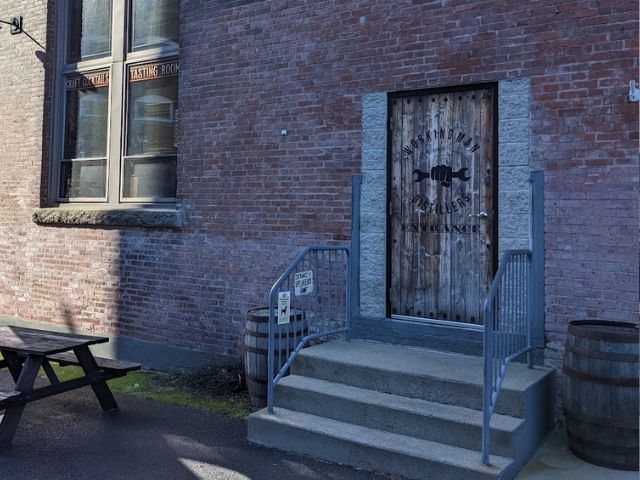
I guess they would refer to it as the Maine Diner and Fried Clam strips. I am a sucker for good fried clam strips, so Pawtucket is a place I've not been before. I have driven through Providence before. I guess I probably drove through Pawtucket on my drive through this many, many, many years ago and didn't really spend any time there, very urban area, and so it's good to have a GPS when you get off of the highway here and take some roads through town to get to Working Man Distillery. They've got a fenced in parking area there, and the city apparently is doing some planting of some trees just outside the fence. The distillery is a big multi-story building. You can tell it by the wooden door that it has with the logo on it, and there's a glass door entry to which goes upstairs, but the main area where the tasting bar is and the seating and all of that is downstairs.
(02:18):
So go through the wooden doors. As I arrived, John also arrived. He opened up the door for me and introduced me to his wife Kelly. I also met Jillian, who's their event coordinator. Jillian showed me around a little bit. She had an accent that I recognized and I said, you're from Ireland, right? And sometimes you throw that out there and you go, I hope I'm right. She is. She's actually from Cork. And so we got to a little conversation about my trip there a couple of years ago where the one place I could not understand anybody in Ireland was in skiing, which is very close to there. I actually was in a little pub there and they were watching Hurling and it was a championship going on, and the guy next to me was so nice and he was chatting with me, but I have no idea what he said to me for that entire conversation. Then John walked me around. We did the grand tour, showed me some of the distilling equipment that is still being set up there. This is a distillery that was born in Massachusetts, but moved across into Rhode Island. We're going to dive a little bit into why they made the move, but I wanted to start out first in our conversation, asking John A. Little bit about what was going on in your life. What were you doing before you got interested in starting a distillery?
John L (03:41):
I'm a plumber by trade, so obviously cooking and distillation is mostly heating and cooling, so having that foundation was definitely a good foundation to have to get into producing whiskeys and other spirits. So yes, I was a plumber. I started doing drains before I even had a license. I was kind of in my family. My father was actually a mechanic, but I had uncles that were plumbers, and my uncle Mike was a drain cleaner. So I got into that with him. I did it until my late twenties and I wanted to get into the plumbing aspect of it. So I ended up going back to school, working primarily in Massachusetts. Then I worked for some of the big name companies, rot, Arruda, Ruman and stuff like that. And then I ended up going through a family owned company named McMahon Plumbing and Heaton. I was there for a few years. Right after that is when I opened the distillery with my wife.
Drew H (04:40):
Here's a little interesting story about how this all came about. A certain kit that you
John L (04:46):
Yeah, yeah, yeah. So I'm a big history guy. My wife do that. I read a biography on George Washington by AU in my twenties, and I thought it was very, very interesting that he had a Scottish bomb hand named James Anderson that told him he could take the grain he is going banquet with and make whiskey out of it. And him being the entrepreneur that he was, he said, yeah, let's do it. My wife always knew that I was also very intrigued by making spirits going from grain to glass, that process, so she knew that. So she ended up getting me a distilling kit, a small five liter system that you could keep on your stove top. I held it hostage until I proposed to her, and then I did, and she gave it to me and I turned the kitchen into a science project, obviously doing essential oils and stuff like that because home Distill is still very illegal. I did home brewing and stuff like that, but I didn't really find it as fun, I guess. So we did that and we toured a bunch of local distilleries up and down the East coast, craft distilleries, bigger distilleries, and even some of the bigger ones that we saw how they started and kind of scaled up, and we were fortunate enough for them to give us kind of a full rundown, give us stuff about their distribution channels and stuff like that. So we were always big fans of speakeasies.
(06:11):
So we came with retire. We had some retirement money that I could cash in. I said, if we can start our own, make it not just a distillery, but we want to taste room to be kind of like speakeasy ish and give people a firsthand account of the production of what we do and how to make these spirits and stuff like that and educate people and let's do it. So we did. It was during COVID, there was rough times, but fortunately for her, she got laid off. I, I was a plumber. We were essential. They wanted people washing their hands and stuff like that, so we helped them do that.
(06:50):
We didn't take no two weeks off or anything like that. Didn't make any sense. But yeah, she was laid off. So it gave her the opportunity to build out the spot we had in North Attleborough, which took about six to seven months, and she did. And then we opened the tasting room with the limited capacity, 40 people at a time. We had to, if you're going to serve alcohol, you had to serve food. So we got a small food permit to serve hot dogs and stuff like that. And fortunately for us, people were still drinking, so it was a lot more bottle sales in the beginning. And then once people saw the space, they got more acclimated About 20, 21, things started lighting up a little bit, and now we started. Then the capacity went up again, and it got to the point where we were so busy, we either going to have to hire somebody to manage the tasting room or I was just going to retire as a plumber and dive into it.
(07:42):
We came to the agreement that obviously our heart and souls into it, so it would be hard to find a manager that's going to care about what we were doing as much. So yeah, I retired and that was it. We were off and running and by the next year we were already needing more space, so we expanded into another unit, and that did very well. We were booking a lot more events and we built our own distribution in Massachusetts. We could self distribute there to about 40 or 50 accounts, and then it came to a point where the parking became an issue because there was so many people coming, so it didn't make sense for us to expand it to another unit in that same building. We would've been paying too much. We offered to buy the building. They didn't want to sell. So we had a friend who knew about the spot here in Pucket, Rhode Island, way bigger space. It was three times the space that we had in the other spot, and it was pretty much the same rent, private, parking's gated, big brick building. So it's more industrial and set up for what we're trying to do. Big bad wolf will never blow it down, so it just made sense to
Drew H (08:50):
Make the move. That's really cool. So how far away was the old
John L (08:53):
Location? It was about 12 minutes from here.
Drew H (08:56):
Okay.
John L (08:56):
Yeah, so it's not that far, but it's a highway trip too. So we found that when we did move once we reopened 10 months later, which that was another rough patch to get through, but we did get it open. We thought we were going to see a lot of the same crowds of the same people coming here, but we didn't. So we had to pretty much, it's almost like starting from scratch. We had to market to this area, and now we're getting to the point. So we're coming up on April will be our second year. We're getting to pretty much where we were before, but with a new audience, there's a lot of loss in this area, so we're getting a lot of the people from the loss, a lot of local businesses we're doing work with. We're booking a lot of events, which I think I told you before we started that we've kind of pivoted the tasting room to more of an event space, which has been very, very well. And Jillian, who you've met, very, very lovely woman, handles our, she's our event coordinator and she does a great job. Yeah.
Drew H (09:55):
Were you doing events at the other location?
John L (09:57):
We were just not as much, and we have twice the capacity here. So we doing bigger events and we got set up here. We kind of knew it was looming that we might have to get into more event planning just because we don't have distribution. We still don't have distribution here because Rhode Island, it's a requirement to bring in a distributor that you can't self distribute. So we kind of restructured our tasting room to have a larger menu, but also to be able to cater to those big events with 200 people sometimes.
Drew H (10:34):
We
John L (10:34):
Have an eight kegerator tap systems. We do eight drinks on tap, pre-made cocktails that are just charged inside of a kegerator with CO2, very, very easy, very. You just garnish and go. And with the staff, it's easier for them to then I don't have to give 'em so many ingredients to make a certain cocktail. So we have eight of those, and we have about a dozen other drinks that we make from scratch that are pretty easy. But if we know we're going to have over 200 people here, then we kind of do a limited menu just so people aren't waiting for drinks.
Drew H (11:04):
Did you ever think you were going to get into event planning?
John L (11:07):
We didn't get into this for event planning, but it's very rewarding. Yeah, it's very rewarding, especially like I said, we had a rehearsal dinner here last two weeks ago, and to see the amount of praise and the amount of thank yous we get from the people that book these events with us and for us to take 'em through it, it is very, very rewarding to see everybody smiling to get the follow-ups later on saying we go above and beyond to make their event special and for them to choose our spot. Like I said, it's very rewarding.
Drew H (11:44):
It's a stunning area downstairs and really very eclectic kind of furnishings in there.
John L (11:50):
Oh yeah. So we didn't want it to be generic. We want people to see something new every time they come in. You might see a vintage playboy stuffed in one of the beams or something like that. So we keep it lively and again, something, you're going to see something different every time you come in. We have a vintage old tools. Kelly made these great, she calls 'em whiskey nooks out of wood. There's these little encased in wooded seats that are, there's vintage tools on it. One of 'em has an old light bar from an old police car. So we were big antiques before we did this. So to have a place to put all that stuff was great. So you have to keep it in storage.
Drew H (12:37):
There was a bit of a tractor downstairs.
John L (12:40):
There was a toilet being used in an interesting way. Yeah, well, a commode. Yeah, it was a old commode. I mean, I hope it was never in use, but whatever it is, it's clean. It's clean, and people love it. We have a tub. We cut out a bathtub, a clawfoot bathtub that as a plumber
(12:55):
I've demoed numerous times and it's not fun, but to do it for something like that and smoothened out the edges and stuff like that, people love it. I think when we did all our inspections here before we opened, the plumbing inspector in Rhode Island saw the place. We had it pretty much furnished before the bar and the plumbing was done, and he was so blown away. He was like, let me know when you guys are open. I'm going to come. I'll bring my whole staff here. We'll just have a few drinks, maybe get some food or something, bring in some food or whatever. So he didn't, all he did was they all hung out right by the clawfoot tub, and it was about maybe 25 of 'em, which is pretty cool. And then one of his guys wanted to book his wedding here, which is another cool thing.
Drew H (13:43):
Yeah, he got a little foosball table there too.
John L (13:47):
Yeah, I think that was just a Wayfair thing, but it's been with us since the beginning. It was at the old spot too, and especially kids are welcome in the tasting room as well. They're not allowed to drink, obviously, but to have something to keep them occupied, they always gravitate right to that foosball table.
Drew H (14:05):
Then you have some pet entertainment as well?
John L (14:07):
Yeah. Oh yeah. We are dog friendly. Like I said, we don't serve food or anything like that, so we're very pet friendly. We have our own dog. He doesn't roam the tasting room when we're open. We put him up in the office where he holds down the fort. But yeah, we see a lot of dogs and pets in general. I think we had a pig at the old place one time came in, it was clean and it was friendly, so we're like, yeah, we're not going to discriminate against it.
Drew H (14:39):
So one of the whiskeys that you produced was actually inspired with a little bit of history. You can tell that story.
John L (14:49):
Yeah. Yeah. It was inspired by George Washington's mash bill of 60 20 20 rye. And so we experimented with that and we actually, we tweaked it just a little bit. We felt it might've been a little malty, obviously back then they could get away with just serving whiskey unaged because it's maltier. It was actually easier to drink
(15:13):
When we proofed it down. But what we found was when it was aged, that malt kind of just took over. So we scaled down the malt just a little bit. So we do with 60, 25 and 15. And so we found that's a very, very good recipe for our rye whiskey, and that was, we called it the 10 hour. And we have, unfortunately, it's sold out right now, but we still let people taste it. We still have enough to serve in the tasting room, and once we get, I showed you, we move the equipment, so it's not back in production yet, but it'll be the first thing we make again, once we get the big equipment up.
Drew H (15:52):
What was that process like going from, because you're going to have to get yourself, I guess you can move your DSP down here, but you can't necessarily, you got to get through all new regulations.
John L (16:03):
No, we actually, we couldn't move the DSP. Oh, you couldn't? Okay. Across state lines. We had state lines. That's true. We had to apply for a brand new DSP, which was a whole nother process. Originally we were going to be an alternate and proprietorship with another distillery. We're just going to share a production flow because of the production flows, 12,000 square feet. And so we were going to just produce there. They were mostly wanted to get into distribution. They had a 430 gallon system, pot system, vem, but unfortunately, I guess they just tried to go too big too quick and they couldn't get it up and running. So we had to pivot. We moved, we had our equipment pretty much ready to go, so we ended up moving it into a smaller space in the same building and win the works of getting just 150 gallon system back up and running.
Drew H (16:52):
So what did you do before you left? You just distill a bunch of stuff and get ready for it, and then where do you put all that whiskey and transition?
John L (17:01):
That's a very, very good question. So fortunately for us, the distillery community is very, very supportive. And there's obviously some friendly competitiveness, obviously, but whenever there's someone in need, you always hear stories about even workhouse is burning down and other distillery is helping. So there was another distillery, o Brian and bro in Bristol, Rhode Island. They offered to let us store our barrels in this space until we got the DSP up and running here. So we did a transfer and bond, they did it. We even offered to pay 'em a monthly storage fee, but they were just happy to have more barrels on because they have a full glass display, you can see the distillery. So having more barrels in there, they were like, we will happily accommodate very, very trusting, great, great couple that own that distill and run a great tasting room. They have great cocktails too. So they helped us out, and that's how we were able to store it, because it would've been hard to get the DSB going first and then moving. We would've had to keep paying. We don't know how long you're going to be paying a month to month lease. It would've been too expensive to keep that going and trying to move at the same time,
(18:21):
Being able to dump 'em off somewhere and not worry about it and then focus primarily on getting this DSP going was a great accommodation.
Drew H (18:30):
Yeah, I was going to say, the reason I found out about you guys, I been doing my investigation. I knew that you existed, but as I was looking through, I was like, the distillery I'm probably going to go to is the one that my fan favorite Bracketology
John L (18:45):
Fans
Drew H (18:46):
Had voted for
John L (18:46):
Sons of Liberty,
Drew H (18:47):
Which was Sons of Liberty. But when I reached out to them, of course, this is peak leaf season, so I mean, there's a lot of stuff going on up here. And so they said, well, we're actually not able to accommodate, but you need to go up to working, man. So I mean, again, it's that kind of, there's not a lot of distilleries in Rhode Island, but the ones that are here do seem to want to take care of each other.
John L (19:11):
Oh yeah, absolutely. Yeah, we dealt mostly with their former head marketing guy, Brian Rickett. He was just a sweetheart of a guy. Mike Ucci owns it, and I've honestly never met him, but we have a lot of mutual friends, and he's always been that kind of guy to be supportive of, especially people in the industry. And he's done a great job with that place. There's a great tasting room there as well in this single malts. Dave really kind of just really, really crushed it with the production of American single malts in that space. And they do a great job. And actually we did some work with, I don't know if you've ever heard of Crowded Barrel whiskey in Texas.
(19:53):
They run the Whiskey Tribe and stuff like that. So we met Rex and Daniel at a fundraiser in Connecticut and then offered, we were just getting our stuff going. We weren't open yet, but we were building the place out, and we offered, I was like, oh, once we get open, I'll s send you some bottles. And we sent them some of our stuff. They reviewed it and they did a great job. We also sent them some other local distilleries with a Bully Boy, and we sent them Sons of Liberty. That's the uprising. And it was funny. They get it and they're just like, oh, we've already reviewed this. Somebody already sent it to us. So it's just a testament to the fact that the Sons of Liberty, they've been doing a good job.
Drew H (20:31):
So when you decide what you were going to start producing here, what did you start with and what have you added since?
John L (20:37):
So we've done mostly, I mean, our first production was actually gin because we had the small system going. It's only a 30 gallon pilot system. It's pretty much what we run our experimental batches and then scale 'em up.
Drew H (20:50):
And
John L (20:51):
Then even we found when we do scale 'em up, there's some tweaks we still got to make because obviously it could be one way on a smaller scale, but once you scale up that grain, certain things happen, certain things take over, you got to kind of tweak 'em. But we were doing a lot of the gin production first, and then we did two rye whiskeys, and then the single malt And the single malt we originally did in North Attleborough, we did about 120 gallons, so several different barrels, a lot of char two barrels, what our Cooper recommended for single malts, we just did a hundred percent Vienna malt. It was super easy. We actually mashed it at a brewery and then we bring it back over here on a tote, ferment it, and then distill it. So we did a hundred percent Vienna malt, so we kept that mash bowl that also we tweaked one where we added a pilsner and we used the Danko rye malt.
(21:47):
Danko rye is very, very good. It's expensive. So that's the batch we're getting ready to release now. But the a hundred percent Vienna went over so well with people that we kept that going to, but that that's still aging. And again, it's just so easy to make, especially going to a brewery and let them, if you want to do a big batch of it, we usually just cook everything and still pump it over, ferment it, and then we do that several times. But that's only 150 gallons. So if I want to do 375 gallon mash, I can just do that, pump it into a tote, bring it over, then ferment it here one, it's like one and done. You don't have to worry about it. A lot less work. And the breweries are set up more obviously for malted barley anyway, so all you're doing is just to clean up is the only hard part, and you just raking the grain out and disposing of it and having somebody come pick it up or whatever. But being able to have them cook it, and I just pick it up and I help 'em cook it too. But being able to just bring it over and pump it into a fermentor, it's already cooled.
(22:50):
Throw some yeast in there and let it ferment. And it's funny, the first time I did it, I didn't add a foaming agent to it, because malt can foam up really, really a lot during fermentation, actually, we have several fermenters, but one of them was a non-op top. We do experimental stuff, so we made such a big batch, but I had to utilize that variable top that had a top that you can inflate and it seals up. I put that top on it, and then the next day I came into a mess. It blew the top off, it clogged the airlock and then literally blew it off. And there was foam and malt everywhere, or malt wash everywhere. It selt great, but it was a lot of clear,
Drew H (23:33):
Yeah, you don't want to break people's equipment while you're
John L (23:36):
No, well, it was our equipment. But yeah, it was interesting. It was not something I was hoping to walk into first thing in the morning.
Drew H (23:45):
Those little lessons that you learn as you're going along, you have any pleasant surprises in terms of what you were producing and maybe something that you thought, boy, I don't know how this is going to go. And that
John L (24:01):
We did a hundred percent rye a batch. It was the biggest batch we ever made. And it's funny because it's probably the lowest yield we have now, but it was a big batch of rye. It was 95% regular winter rye, and then we did 5% to danco again, and then it got infected with butyric acid. We didn't cool it fast enough,
(24:26):
So it was very funky. And then especially fermentation, we reached out to the guy we got Aye from, and he kind of gave us some pointers of how to rescue it. It was Patrick Heist. He owns Wilderness Trail and obviously he's got his doctorate and bioengineering and stuff like that. Really great guy, another one that will help when something like that happens. And so he just told us, get some heat on it. It's going to be funky, but you might be able to rescue it. He's known. People have gotten some beautiful flavors out of stuff when that stuff happens. So we got some heat on it. It was a long fermentation and my wife wasn't happy because the open top fermenters, it was like a charcuterie board. It would go from cheese to puke back to cheese. So yeah, so it was the last thing we distilled before we moved. We column distilled it, ran it through charcoal, filtered it, and got it into some barrels. And that's over three years old now. And even the after charcoal filtering, it was still like you were smelling it charcuterie board after distillation. We got it in a heavy chow barrel, heavy chow barrels anyway, and you could smell it through the barrel right after we coming up on three years now. And it's, it's very interesting.
(25:49):
So now we get the smell, we know about it, but we did a blind tasting with people and they were just intrigued by it. And the taste is a hundred percent different than those, which is very interesting. It's like a lot of just blackberry smoke a lot of the oak and it's got a sweet finish to it. But I had to have other people taste it just because, especially in my head, I already know
Drew H (26:13):
The memory of that
John L (26:14):
Exactly. But yeah, we did the blind tasting with people and they actually went over pretty good. But again, smaller barrels age over three years now. So again, the yield on such a big batch was probably one of our smallest yields.
Drew H (26:30):
The problem is if once it's ready and people are tasting it, they go, wow, this is so interesting. I want to buy more of it. Yeah, I know you can't. You can have a hard time trying to replicate that one.
John L (26:42):
Yep, yep. We also did a brandy. We did a brandy with laquint and winery. They're in Franklin,
(26:50):
Another husband and wife team did great. I get a bunch of their grape skins, mash it, throw some hot water in it, and then add a little bit of sugar. Not too much though. And then fermented that and distill distilled an agent in a 10 gallon barrel. And then my grandmother used to love brandy. She was A, B and b. She would drink B and B occasionally. So I named it Mary Pat's brandy after her small batch and then Laina expanded. They bought a building and moved. So I couldn't make more of it. We will be making more of it now back up and running, but I only did 10 gallons and it sold super quick. We had John Licorice from Iron Root Republic. He came by one of the days he was helping the other distillery and he's a big brandy sommelier. So I had him try it and gave me the hats off to it so that it was very vindicated.
Drew H (27:45):
That's going to
Drew H (27:46):
Feel good.
Drew H (27:46):
Yeah.
John L (27:46):
Yeah. So it was pretty cool to get that compliment from him.
Drew H (27:50):
Yeah, Robert and I have had discussions over, that's one of my favorite Texas distilleries.
John L (27:55):
Oh yeah. Yeah, those guys are great. Yeah, it's funny. I had friend, one of our customers was going out to Dallas and they were releasing there, I think it was the winter solstice. They have a lottery. So I was part of the lottery. I bought a bottle and I just emailed Rob and I was like, Hey, I'm going to have, because the tasting room wasn't open, I was going to have a friend of mine, Brian, just come pick it up. I could have him ship it to me. We got a DSP, you could ship it to a place with a license. But I wanted Brian to see the place and maybe buy some more bottles while he was there too, which he did. And he said they were very accommodating. He was like, oh, they didn't take me through. Brian was like, I didn't get to see the distillery or anything, but it was a cool spot. I think it was like a half hour from where he was staying. So you never realize how big Texas is until you get there and realized it's like driving, this would be driving from here to Florida to get just across Texas.
Drew H (28:58):
This is what I'm loving about driving around New England. It's like my last trip was through the Western states. I drove 4,000 miles over 10 days to get to 10 distilleries.
John L (29:09):
Oh my God.
Drew H (29:10):
And this is two distilleries a day. Easy for me to get around New England, so not too bad.
John L (29:16):
Yeah, yeah. Lot less roadwork for sure.
Drew H (29:20):
So what are the plans going forward in terms of the stills are not a hundred percent set up,
John L (29:25):
So we're trying to get 'em done before the end of the year to, like I said, we're going to ramp up the rye production. We're going to do a lot more bourbon. Bourbon. We do a lot of red distilling as well. So we'll source a bunch of young barrels and then blend it with the stuff that we actually distilled from grain, just to boost the inventory. So with our 150 gallon system, we usually do 30 gallon barrels, and if we work hard, we can fill about four 30 gallon barrels in a span of about three weeks. So not a big, big production, but with red distillation we can double that. So we'll do that with the Bourbage because it sells more than the Rye. The rye, the only blend we do is the one we have on the shelf right now. It's 30 gallons of a source rye blended with five gallons of stuff that we distill. And that's not REDI distilled at all. It's like we do a full year RI and blend it with the stuff that we age for about 18 months in small barrels. And then we find it's very unique, very good. And we've had whiskey som tried just to 18 month old whiskey and they think it's aged for five, six years. So having that blend, we even had MGP reps try RI and they couldn't discern it from MGP. They thought it was completely different. Just having the extra five gallons in there is big.
Drew H (30:54):
Any thoughts of having a Rhode Island distillery trail? At some point?
John L (30:59):
We were talking about doing that. So we actually, I know you probably drove by this gigantic building across the street from us. There's actually, there's another building. It's connected to this building, but it runs along the side right next to the train station and it has a beautiful storefront with, it's all glass windows and we're actually talking to them about possibly leasing that spot out, putting another still there. And then just as a showcase. And because there's so much foot traffic there, there's so much traffic from the train station and you can see everything. So we're talking to them about possibly doing that. But on the side of the wall right by the train station, we're trying to find somebody to do a trail like brewery and Distillery Trail of Pawtucket because there's so many close by. We love to, again, there's obviously city stuff which they would support for sure. Finding the artists to do it and then finding everybody to work together to get it done as well and see how it's going to look. And a lot of planning for
Drew H (32:06):
That. I was just thinking you could get to O'Brien and bro and to Sons of Liberty within an hour from here, I would say. Yeah. And then you've got Rhode Island spirits here in
John L (32:17):
The
Drew H (32:17):
Area as
John L (32:18):
Well. Right. Kentucky can walk there.
(32:21):
We got white dog distilling too. It's right around the corner on the small distillery. So yeah, there's a lot. I mean, you get the Guild Brewery right up the street, you got foolproof. There's a ton of breweries too. And Smug Brewing just closed, but somebody just bought 'em, so they're going to be reopening, which I was happy to hear too. So yeah, I mean, we have people that, bachelor parties and stuff like that, they rent scooters and they go to the brewery first and they come over here and then they dish the scooters an Uber nice. But we had that a couple of times, and what happens is those electric scooters, they sit out front and the company doesn't come pick 'em up. We have to call 'em and say, you got to come get your scooters. They're just sitting out front. But yeah, so having some kind of a map, or maybe we've even talked about Rhode Island spirits, maybe doing an online website thing too that could be shared as well. That will take you to all the locations of all the breweries and distilleries in Rhode Island, because for such a small state, there's a lot of them.
Drew H (33:23):
I'm starting to understand now, why Family guy named their beer Pawtucket.
John L (33:31):
Yeah, well, they actually just made a, was it called, is it the Clam Shack or the
Drew H (33:38):
Yeah, the Clam Shack,
John L (33:40):
The That's
Drew H (33:40):
Their bar. Yeah.
John L (33:41):
Yeah. So they just made a replica of it. Did they really? Yeah. And it's in Providence though.
Drew H (33:45):
Okay.
John L (33:46):
It would've been better if it was in Puck
Drew H (33:49):
Would've made more sense.
John L (33:50):
Yeah, yeah, yeah, right. But it's a complete, it's a hundred percent replica and then they have the living room and stuff like that. And another room too. It's a really, really cool place. I haven't been there yet. I definitely got to check it out. But yeah, they serve drinks there and stuff like that. You can get food. But yeah, it's like you're walking into the family guy pretty much. That's great. And outside Providence too, if you ever saw that movie outside Providence, Alec Baldwin's in it, and I forget the other kid's name, but it was called Outside Providence, but a family, a father and two sons growing up in Pucket, Rhode Island, which it was a great, great movie. If you've never seen it, definitely check it out.
Drew H (34:28):
Very good, very good. Get into the mood, everybody get in the mood before you come out here to visit the distillery. That's awesome. Well, John, thank you so much for taking the time to talk through and we had quite a conversation actually before we even got on the mics. I was like, should have been recording the whole time we were doing
John L (34:45):
Yeah, it would be a longer podcast
Drew H (34:48):
Before it would've been. Yeah. But that's fine. But yeah, thanks so much and good luck moving forward.
John L (34:53):
Thank you very much. Yeah, thank you for taking the trip out and chatting with us. Cheers. Cheers.
Drew H (34:59):
I hope you enjoyed this journey to Working Man Distillers in Pawtucket. If I piqued your interest in traveling to the distillery@towhiskeylore.org slash flights, click on the Working Man link to get to the distillery profile page and then use the handy bookmark button, sign up for a free membership and add working man to your whiskey lore wishlist. And then when you're ready to travel, log into your member page and you'll find all the distilleries you bookmarked with profile links and links to book your tours directly. That's at whiskey lord.org/flights. If you want a handy carry along guide, then make sure to pre-order your copy of Whiskey Lord's Travel Guide to Experiencing American Whiskey featuring Travel Tips, and a list of over a thousand whiskey distillery experiences across the country. You can order yours now@whiskeylord.org slash shop as I prepare for my next distillery destination. If you are still on the fence about a visit to Working man, let me give you my three reasons why I think you should have this distillery on your whiskey lower wishlist.
(36:05):
First, if you love antiques and creative design, well the tasting room and event space have plenty of conversation pieces to chat about while you're enjoying a cocktail or flight. Or if you live in New England, you might check it out as a space for an event. Second, consider booking a whiskey tasting with John as your host. He'll walk you through the process of making whiskey and talk a little deeper about how each whiskey is made a little different than a tour and a chance to really get to know their spirits. And third, this is a perfect distillery to build your own Rhode Island cocktail trail around. Start at Sons of Liberty, head up to working man to enjoy a cocktail and maybe some live music in the food truck, and then head out to Newport Craft or O'Brien and Bru to finish up a perfect day.
(36:56):
They are all that close. Just make sure to have a designated driver so you can enjoy the day fully as I get back on the road again, about a 45 minute drive up past Foxborough, Massachusetts and into South Boston in the Dorchester Heights area where we're going to meet a whiskey lover who helped launch the Nation's first well-known craft beer brand. And that's up at Distillery on the Harbor in a beautifully restored historic building. We'll get into that history and the whiskey and much more. You got to get your ticket to ride along. All you have to do is smash that subscribe button on your favorite podcast app and you'll get your weekly dose of whiskey travel. I'm your travel guide Drew Hanish. And until next time, cheers and slung of ah, for transcripts and travel information, including maps, distillery planning information and more. Head to whiskey lore.org/flights. Whiskey lore is a production of Travel Fuels Life. LLC.
About Working Man Distillers
Tasting room available.
Take a Whisky Flight to Working Man Distillers
Map to Distillery
Note: This distillery information is provided “as is” and is intended for initial research only. Be aware, offerings change without notice and distilleries periodically shut down or suspend services. Always use the distillery’s websites to get the most detailed and up-to-date information. Your due diligence will ensure the smoothest experience possible.