
Minden Mill Distilling
Drew (00:08):
Welcome to a special edition of Whiskey Lord's Whiskey Flights, your Weekly Home to discovering great craft distillery experiences around the globe. I'm your travel guide Drew Hanish, the bestselling author of Experiencing Kentucky Bourbon, experiencing Irish Whiskey, and the brand new book that bust 24 of Whiskey's biggest myths, whiskey lore volume one. In just a few moments, we're going to have an interview with Joe O'Sullivan. I've interviewed him before. He was the head distiller at Clear Creek in Oregon, but now he's moved to Minden Mill in the high desert of Nevada just below Lake Tahoe. And so we're going to learn a little bit about the distillery that he is working in and some of his processes and what he's making. But this place has a very special spot in my heart, and you're going to find out why during this episode. And it all goes back to my days of doing the Travel Fuels Life podcast, which was the first podcast that I ever attempted to do where I was teaching people how to live a travel lifestyle.
(01:13):
And while I was at a travel conference in Bozeman, Montana, I was trading emails back and forth with Tahoe South and with Carson Valley trying to set up a visit and it all came about, so had to get my airline tickets all kind of rewired. And now instead of flying home, I was going to fly into Reno, rent a car, and come down for a four day adventure. And this all started out actually with a conversation between me and another travel writer, Angela Deloretto. She now has with her husband there doing the Van Life and they have a YouTube channel called Fitting in Adventure. But back then she was doing work with Carson Valley. And so she had contacted me and said, there is this distillery that you have got to see. It is the most incredible thing in the world, and you must see it because she knew of my interest in doing whiskey.
(02:12):
And of course in doing my book experience in Kentucky Bourbon, and whenever somebody tells me that there's this incredible distillery and you need to go see it, I always kind of take it with a grain of salt because you've probably seen it yourself. If you go out online and you start looking at Google Maps and you're looking at reviews for distilleries, it's like everybody says how wonderful every distillery they've ever been to. It could be a shack, doesn't matter. They make the most incredible cocktails. It's all that. So I was taking it with a grain of salt myself, but I mean they were willing to fly me out there, pay my way for three, four days. And so I said, okay, well let's see what this is all about. And there was a lot of anticipation behind this. The distillery was supposed to be the fourth day and was going to get to see the ranch and all of that.
(03:02):
The first two days were spent in state line, Nevada. I got to ride the gondola up to the top of the mountain and there's a ski lodge there, heavenly village down below. And I got to ride a rollercoaster at the top. I got to walk the skywalk up there and get a wonderful view of Lake Tahoe and then ride back down in a windstorm. And they were talking about we might get stuck up there because the wind was too aggressive for the gondolas there at one point, but got back down, ended up going to a place called the Community Speakeasy, which was the first speakeasy I have ever been to, and met Leo the bartender, who's also a part owner. We had a great conversation while we were in there. It's cool to go into in a sandwich shop. And then you ask about the speakeasy and they take you back through a freezer door and then you're in the speakeasy.
(03:58):
So that was really cool. And while I was there, he was mixing up some drinks, lame old me. I just ordered a bookers and I'm like, okay, I'm not going to dive into a cocktail, but I wish I had actually, because there was one he was making that had to ask him about. He had a bottle of Woodford Rye and a bottle of La Freud, and he was mixing this cocktail up with both. And I'm like, that is the weirdest combination I could possibly think of. And he said, well, you wouldn't want to drink this Woodford Reserve rye that I have because I've diluted it with green tea. And then he's blending in the La Freud to give a little bit of a smoky character to this particular cocktail. And the people who bought it enjoyed it. So there's something to it. There's something to it.
(04:48):
But I also got to go across the way while I was there to a big golf course in the Edgewood Bistro where I had dinner with my host Jim Boyd from Tahoe South. And while we were there, we stepped over after the meal to get a cocktail. And so I said, well, make me something local. What would be something that has kind of a local flare to it? And the bartender said, well, I'll make you a Harvey. It got its name from this area. And I said, do tell Here I am. I've heard all this lore in Kentucky. Now I want to know what is the story behind this? And he told me the whole story and I was so excited. I had this very interesting story. And then I went home and I fact checked it and it wasn't true. So it goes back to actually Hollywood, a bar in Hollywood and a marketing campaign.
(05:44):
So it was not quite as glamorous as the story that I was being told, but that's the fun of lore, right? We get to hear these stories, pass them along and then find out that they're not true. So after two really nice days up at the top of the mountain, I got to ride down into Carson Valley and talk about, it's kind of like when I used to live in the Metroplex in Texas, you have Dallas that's kind of more of your East Coast flare versus your cow town Fort Worth. They're divided by Arlington and Grand Prairie, and it's just kind of like two different worlds within a very small area. So here I am headed into the high desert of Carson Valley. Now one more day before I get to go to this distillery, and this was a very fun day. I love history.
(06:36):
And so it was kind of fun heading out and learning a little bit about the Mormon pioneers who had settled this area in 1851, snowshoe Thompson, who had come out with a pony express, a story behind him, the Courthouse Museum, the old post office that was in there, and the Genoa Bar, which is actually the Genoa bar. So you've heard of the Italian town of Genoa. Well, they pronounce it Genoa. And this particular bar is known as Nevada's oldest thirst parlor, and it is a place that is full of stories. It's really interesting to note that the town of Genoa burned down in 1910, but somehow this particular bar filled with alcohol did not go up in flames. But that's just the beginning. There are some other fun stories around this. When you walk in, you feel like you're kind of going into an old West Saloon.
(07:32):
There's a sign when you first walk in actually that says, no horses allowed, but the door handle is really low. So I'm thinking, is this to try to dissuade riders from coming in? But as tall as I am, I couldn't even see myself reaching down to grab that door handle to get in. There was a dusty bison head cobwebs everywhere, this diamond dust mirror that had Glasgow written in the corner. And the story behind that is that there was not only this mirror made, but it had a sister that was living off in Glasgow somewhere, and it brought to mind this idea of how did they get this thing here? They would've had to bring it in a wagon and this glass, it just amazes me how they were able to do that kind of stuff in the Old West. Another curious thing about the Genoa bar is that they have a safe there and it has these dusty bras coming out of it, women's bras.
(08:37):
And so of course you're going to ask questions about that. Well come to find out the bra that's dangling up above the safe with a picture of Raquel Welch next to it. Apparently she came into the bar and they asked her if she would donate her bra to the collection, and she said, you're not going to put mine up there with a bunch of other ones. The other ones have to go somewhere else. Mine is the only one that can hang there. So it hangs there. It's very dusty, it's still there. So another fun story with that, a lot of famous people have been there besides Raquel Welch too. They were running off names like Willie Nelson, Teddy Roosevelt, Ulysses S, grant, Clint Eastwood. But Mark Twain was probably the one who frequented the most because he worked for the Territorial Enterprise back in 1863, the local newspaper.
(09:28):
And later that evening, we went out for some Basque cooking. I had not had Bask food before, so that was fun. Kind of reminded me of being back in Pennsylvania and going to the Amish villages and going to a community restaurant where you're kind of hanging out with other travelers while you're eating. There was a point at the end where I'd been given a dart and they stuck a dollar bill to it and told me I had to throw it onto the ceiling, and I'm a tall guy, so I thought, well, this shouldn't be a problem. But when everybody's watching you, it makes it very hard to concentrate and be able to get this thing tossed up in the air. But after about 18 attempts, it finally stuck up there. So I don't know if it's still there or not, but the next day was the day to head out to the distillery Bentley Ranch and the estate distillery.
(10:18):
This all started back in 1960 when an Iowan named Don Bentley decided to bring his science and engineering background out to the high desert of Carson Valley with an idea of buying up a bunch of land and learning how to do what today we would call sustainable farming. He was taking a very scientific approach doing a vertical integration method, meaning that he wanted to control all aspects of farming from start to finish in this one ranch. And by 1997, the area was just covered with alfalfa fields and they had a cow-calf operation that was going on at the same time doing some work with Whole Foods. Wess and Woody from the ranch were taking us around. Now, this is a huge ranch. It's 50,000 non-contiguous acres, so we weren't going to see all of it, but we got to see some of the highlights. We saw some of the cattle.
(11:18):
We went by the greenhouse where they're growing botanicals. We got to see the composting operation, and then we drove out to where their hammer mill and malting house are. And I had never seen a malting house in the US before, so this was really a cool opportunity for me. And that's where I met up with Matt McKinney, the Ranch's general manager at the time. And so he was kind of showing me the processes that they were doing and showing me what they were going to do with the malting floor and also showed me a clump of oats. Now, this was the first time I'd ever seen oats that was going to be used for making spirits. And when he was demonstrating it, he's like, yeah, this stuff not so easy to work with. It was very clumpy what he was showing me. So it took out a very interesting challenge when they decided to use oats.
(12:10):
And then after that, Woody took me over to where the grain silos are. I challenged my fear of heights and I climbed and scaled the outside of it for a little ways up the stairs, but I didn't get very far before I had to turn around and say, okay, enough of this. Well, after that, we decided to make our way over to the distillery and before we got there, got a little background on the distillery and how it all came about. It was actually Don's son, Chris Bentley that had the interest in starting the distillery. He was a big scotch man and thought that maybe it would be feasible to turn some of that alfalfa land into grain growing land. And so that's where they started growing the malt and the oats. The idea for the malt was for single malt, and the idea of the oats was for their vodka to contribute a really nice mouth feel to that they ordered two beautiful Forsyth pot stills for making the single malt, and then they built out a separate building where they ordered in these massive column stills, and we're going to talk a little bit about those during the podcast.
(13:21):
Afterwards, we went over to the distillery, the old creamery, to see how they had built this amazing array of piping and column stills into that building. Absolutely stunning. There aren't words. And then we went over to the visitor center and that's where the Forsyth pot stills were. You walked up this wooden spiral staircase and there you did your tasting and saw those great looking pot stills. I got a chance to actually walk in and see the spirit safe. They opened it up and let me look inside. And it was like, they don't let you do this in Scotland. So it was a really cool experience to get to check all of that out. Now before we get into my conversation with Joe, there was a point where it was a little sad to hear the news that actually the Bentley Heritage Estate Distillery had shut down.
(14:18):
I kept waiting to hear some good news. I finally did in May of 2023 when Minden Mill Distilling was founded with Foley Family Wines acquiring it. They also own the Las Vegas Golden Knights, so there's some money there and they have put it into the distillery and revived it, and now they're doing tours again, and it's just a place that you need to go see. Now there's part of me that wonders why this place has such an impact on me beyond it's just a beautiful distillery to go visit, but then I always kind of think back to the early days of whiskey lore and there's a connection there, and it didn't come clear to me what that connection was until I went back and reviewed my old episodes of Travel Fuel's Life around this distillery. Well, that's going to wrap up season one of Travel Fuels Life and Never Fear.
(15:18):
I will be back with more guests and more travel lifestyle stories and inspiration, and it'll start December the second. So make sure you are subscribed. And in the meantime, I'm going to be working on a brand new podcast series called Whiskey Lore. And unlike Travel Fuels Life, this one is not going to be a weekly instead every three months there's going to be 12 episodes released. You can binge listen to them and get the stories behind the bottles. It's just going to be a fantastic experience, I think for me, putting them together. Yes, it signaled the beginning of the Whiskey Lore podcast and all that I do with whiskey lore now and the shift from Travel Fuels Life because of a pandemic that came along that kind of forced my hand on stepping out of doing the Travel podcast. But I was already out with my first series of whiskey lore episode.
(16:14):
So it's always something that I sort of connect with this particular distillery that it was kind of that first step into taking things in a brand new direction. And now it's time for you to learn even more about the Mendon Mill Distillery. It disappeared for a while. It is back, and I am so glad that Joe is at the helm. Let's get into my conversation with Joe O'Sullivan of the Mendon Mill Estate Distillery. So let's talk a little bit about your background because we chatted not too long ago on the Whiskey Lore Interviews podcast about Oregon and its history in distilling, but you're not originally from Oregon either. Kind of give me a little background on you.
Joe (17:02):
No, man. I am from Massachusetts. I'm a New Englander, but a lot of hired guns out there. I go where the work is, and that approach has allowed me to see a number of amazing states and gotten to live in and really see the value of different small communities as well as, I mean small communities like New York City at times, but also small communities like Hood River and now the Carson Valley here in Nevada. It's been an amazing experience to have this lucky of a career.
Drew (17:34):
So was Hood River your first distilling experience or were you distilling back east?
Joe (17:39):
Oh no, I started off, it's been a few times. I seem to always wind up back in the northwest. I started in 2005 at Clear Creek Distillery. For those out there who aren't as familiar with fruit brandies, they were one of the first craft distilleries in the us. They were the third, as a matter of fact, and the very first distillery to ever produce an American smal. Steve McCarthy, who he was my mentor. He's the man who trained me in this industry and really has helped me right up until the time we lost him a couple of years ago. He released McCarthy's, Oregon Smalt in 1996, and everything that's come out of American Smalt has branched off from that seed. After that, I moved to New York for a little while and I was a consultant and worked on a lot of the first distilleries out in New York City as post-prohibition, and then got hired back at Hood River Distillers when they had acquired Clear Creek to run their entire portfolio, but focusing a lot of it on their emerging brands, which were the craft brands and just kind of working close with agriculture, understanding regional and local appreciation of flavors and how that can affect design, and just really diving into the history of what these regions had to do and drawing inspiration from that.
(18:58):
And then I got hired here at Minden, which has been a wonderful experience.
Drew (19:02):
So what's curious about this is that the first time I tried McCarthy Single Malt was actually in Minden. I was at the or it wasn't Minden, it's the town. Is it Gardnerville, right?
Joe (19:14):
Yeah. They bleed into each other pretty clearly. They're usually referred to in one breath as Minden Gardnerville,
Drew (19:20):
Yeah, at Battle Wine. And so that was interesting. It got me kind of hooked on that and then having seen this amazing distillery that I was getting to see when I was in town. So how did you and Minden Mills connect?
Joe (19:38):
Well, the previous me, a man named Johnny Jeffrey, and I want everyone to know his DNA is still here. I think it's pretty impossible, and when you run a good distillery and you train a good team for your influence to ever leave, nor do I think it'd be appropriate if it did. I'm glad that Johnny's presence is still here. Johnny just wanted to leave the distillery, wanted to go into consultation and eventually possibly move back to closer to family. And that opened up an opportunity for me. And I got a call from Dave Smith at St. George and he said, Joe, there's this opportunity in Minden and it'll take you moving your family, but I really think it's something special. Now, I had heard about, much like you, I had heard about Minden Mill and I'd seen photos, but to really understand this place, you have to come and walk the floors. It is magnificent. There's two types of distilleries out in this world. There are ones that people draw comparisons to, Willy Wonka and Wizard of Oz, and then there's the much worse one where they draw comparisons breaking bad. And I'm proud to say that I'm 100% in the Willy Wonka return to Oz type approach.
Drew (20:54):
Yeah. What was that feeling the first time you walked into the bourbon distillery?
Joe (20:59):
This is, it is going to sound hyperbolic, but it's really not. When you travel Europe, every once in a while you walk into a really amazing cathedral and it just kind of stops and you can't control your head on your neck from just slowly tilting upwards as you just take in the longest expanse that you can of this place. And I had that exact experience when I walked into the single malt room at Minden Mill and to say it was love at first sight, that would be the most accurate description. I just knew it was something I had to be involved with.
Drew (21:39):
Get a picture of this place for people who haven't been there before. There's actually two distilleries in one complex.
Joe (21:48):
Yeah. We have a single malt distillery, which is everything is designed. The approach to aesthetics here is so appropriate. It's the way that that distilleries should be done where there's an artistry and it's really recognizing that in the design. So you walk into the single mal facility and it's this big backlit glass high wall with these two beautiful Forsyth copper stills on the right and the left, and they're cooling towers and this black spiral staircase that goes up to this upper landing in no pipework anywhere, it's all below you and you can hear the hum of it, but you understand you're almost in this living chapel to single malt distilling. And then you walk into the bourbon and rye and vodka distillery, and there's an architectural concept called compression where you channel people in through a narrow area so that you can reveal something big and grand and wide.
(22:51):
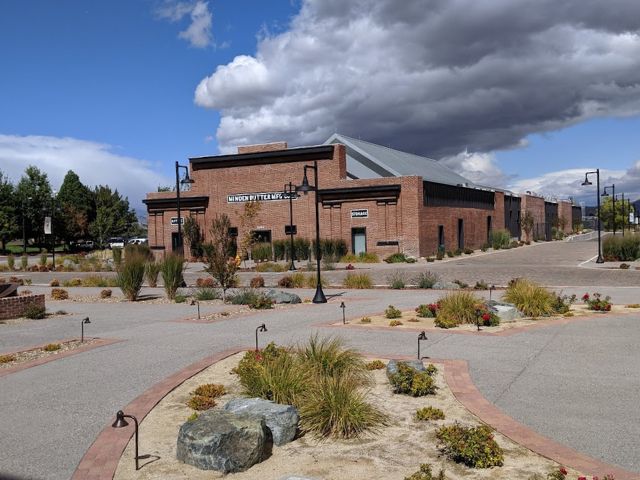
And this has the profound effects on how you see things, and it has that moment of taking your breath away when it's done, and that's what they've designed here. So when you're on a tour, one of the things you experience is going in through this small little door and this old creamery all brick on the outside original brick from the early 19 hundreds. And then when you come in this reveal of this massive 30 40 foot tall twin column hybrid still that is so iconic to what we do here is just right in front of you and different than the single mall facility which has all of the piping underneath, and it's all hidden and it's just this very simplified reverence. This has this huge energy of all of the pipework. There's seven miles of communication cabling that goes through that facility just on that one side. And you can see everything is exposed, but it's all done tastefully. It's like showing everybody every detail, but making sure every line is parallel, making sure that every conduit is beautiful stainless. I mean, the approach to the quality of the whiskey that we have is entirely reflected in the aesthetics that we present to people when they come here.
Drew (24:15):
This has got to be an interesting challenge that you're coming from a background of making ped single malt and now you are jumping in and you're taking somebody else's stocks over and you're having to make a transition to what you are going to be doing with those stocks. What approach do you take to that? I mean, do you first go in and kind of assess and say, I'm going to try to stay within a lane that's developed. Are you going to use blending to kind of maybe evolve one way or another? How did that process go for you and how do you see that process going forward?
Joe (24:57):
Given previous conversations that you've had with me and Caitlin Bartel may, it's pretty obvious I have a team player. I don't try to bring a lot of my ego into this. I want to see success of the product far beyond success of myself. That's secondary. And what I walked into here was an incredibly highly trained team, and that is very much demonstrated by John, our lead blender. And John and I worked on the initial blends, but he was delivering me 75, 80% of the finished product right away, and I understood that he had put in so many years in that barrel room. For me to come in there and start sweeping tables would be just an insult to his efforts, and that's not what I'm about. So I listened and I learned from him. And yeah, the final sculpting was something we did together, but these were visions that were set out before me and it was my job to understand them in the same way that my experience at Clear Creek trained me on so much and why I am so knowledgeable about fruit brandies now was because I was willing to have an open ears.
(26:03):
I want to try to do that here as well. And going forward, I have my own passion projects for sure, but I'm not going to come in and start radically changing the projection of something just because I'm the new kid. I don't think that that's going to benefit the product, and it's up to me to understand how we got there so I can use my experience to push it that last mile.
Drew (26:26):
One of the things that you were doing up at Hood River was bringing in grain from outside sources, namely Scotland, and now you are working with grains that are coming from the farm
Joe (26:41):
Three miles
Drew (26:42):
Away, three miles away, right down the road. First of all, where do you do the malting, all of that sort of stuff, how does that process go and how much interaction do you have when you get batches of grain in to kind of advise back and forth what's working, what's not working, that sort
Joe (27:00):
Of thing? I mean, you kind of get one shot a year in order to correct mistakes. And so we work very closely with the Bentley Ranch and the farmers there to make sure that our yields are good, that the quality of grain is good, and ultimately, yeah, there's going to be changes and things that we tweak with. We work with a lot of, especially with our corn, we're working with some of these heirloom grains and those can sometimes be hard to find, so there's more hassle. There's a little bit more struggle involved in making sure that we're getting the same consistent heirloom corn, but we're also in the high desert, so you have to understand that you're going into an activity that is adversity. Great character is formed through adversity, and that's the same for people as it is for rye whiskey. To shape the flavor of rye sometimes means you have to grow it in harsh conditions where you don't have the same immediate starch load, you may have more protein, but that's going to manifest in some really interesting characteristics.
(28:11):
So the same as what I tried to do when I was in Hood River, which is really listen to the local climate, really listen to what the true limitations are. I'm not going to do anything to affect the growing conditions of the Carson Valley that's set in stone, but what I can do is look at it, observe it, love it, and find products that fit in that growth. And sometimes that means you get bad grow years, but that's something that I experienced at Clear Creek all the time. Bad pair years were terrible, bad raw years here feel just as bad. But what you're really always aiming for is that deeper connection and understanding that these are products that can only come from here, and you're trying to grow the grain as best as possible, and you understand why things go well or you understand why things go poorly. And the whole concept is just to see it through soup to nuts to be that steward in the same way that I'm trying to carry this brand forward. I'm also trying to make sure that that grain goes from ground to bottle with the same amount of care, and I'm going to carry it as far as I can.
Drew (29:25):
Is there a distinctive note to your rye that you're finding in terms of flavor profile?
Joe (29:32):
Yeah, the rye, I mean, all of our products are amazing and our bourbon is well loved. Our single malt is special, but that rye caught my attention in a different way, and it's because, I mean a lot of people, I thought I understood rye in reality. I was just kind of focusing on the black pepper that emerges from a lot of rye green that's grown in Canada, growing rye here where it's also very dry, and so we're not going to get any sort of mold that's going into it. What comes out when you're growing it in this short growing window where you have late frosts and early frosts, even though we're growing winter rye, that's just a demonstration of the intensity of the weather here. It's still cold as can be, lots of direct sunlight. It dries out really easily. All of that manifests as a flavor note of something that's not black pepper, but a candied orange quality. And when I say candied orange, I mean when you slice orange really thin and cur it in sugar, so even that pith is edible and you get this really delicious savory note
Drew (30:40):
That's fun. I mean, this is what I love about rye whiskey between rye, single malt, very expressive grains that I think really tell the story of the land.
Joe (30:50):
Oh, totally.
Drew (30:51):
And you are on a plot of land that's been a farm for a long time.
Joe (30:55):
It's been a farm for a long time. We're taking good care of it since the farming started there. All of the grains that post cook go back out to the compost facility there. So we've managed to improve the top soil. And while this is a little just kind of conversational, and I'm not going to be out there with a ruler, we've approved the top soil from about three inches to 12 is what we're speculating on what we're seeing. And by using grain rotation and just making sure that everything is done, you can contribute back to the farmland, but you have to have the space and the patience and the principles to do it right.
Drew (31:35):
It was fun to see the ecosystem there and the fact that you can really, I mean, you'll have distilleries talking about sustainable practices, but mostly they're just trying to figure out how to get the equipment to be better or bring their grain in from a closer location. That sort of thing with a whole farm really gives you the ability to create a cycle and handle it all.
Joe (31:58):
Oh, I'm out there. I try to go out there every couple of weeks and now that's getting a little bit warmer. Probably every week I'll take a drive and I see almost every time, rough shin hawks, sharp shin hawks, coyotes in the middle of the day, hunting often the distance and
(32:17):
Having that long visibility, you can see that this is a very healthy little ecosystem out there. You had mentioned about the milling and where we do that, and I don't want to overlook that comment because one of the cooler things that we have here is that we actually mill on site. We have a malt house in a mill that's between the farm and here. So grain goes from the farm right to the malthouse. If it's the barley, we'll malt it, if the auto malter's running that day, and if it's the rye, the corn, the wheat, that's all going to get milled into our own products. So it's that additional step of control that we're having where everything is super fresh. We're making sure that everything is done here to the best of our ability.
Drew (33:02):
I sort of led you into that question because one of my vivid memories is being out there at the milling facility, it was just being completed when I was out there, and this was the first time I saw somebody show me what oats look like when they're milled. Oh gosh. Because they were milling oats and he's like, look at how clumpy this is. Were there experiments that were coming along or are you using oats in anything right now?
Joe (33:33):
Oh, no, no, no, no. I killed that right away. Let it never be said that I am product over people. The oats cause so many headaches for everybody from the farmers to the millers to the distillers to maintenance that even though I had kind of announced when I came on that, yeah, I'm not going to change anything for the first year. I really want to understand why you do things and how, I think it was two weeks in that I said, no, no, no. The oats got to go. This is terrible. And they do contribute a really nice mouthfeel. There's lots of benefits to it, but to deal with that volume of overcooked gloopy oatmeal in your stills, there ain't nothing that's worth it. I can't. People have to do that every day. So those were called out. Sorry, Johnny. I know that that was your call to have them in there, and I understand why, but I couldn't do that. It was too hard. So I replaced it with things like a hundred percent rye vodka, things that are really easy to make, nice rye, super famously easy to deal
Drew (34:46):
With. You say famously easy. And of course, I've been talking with people overseas who have tried to do rye and they're like, I broke the still.
Joe (34:54):
Oh yeah, no, rye is not easy, but nothing is like, oh, it's nothing. I don't think I heard it multiple times that people had given up eating oatmeal for the rest of their lives because of that.
Drew (35:05):
Yeah. One of the things that I found really interesting out there, and I would tell whoever I ran across about it, especially when walking through a warehouse, was how they had basically set up two different warehouses and one was called Scotland and the other one was called Kentucky, I think were the names that they gave them and that they
Joe (35:29):
Were, yeah, there's a couple of different names for sure.
Drew (35:31):
Okay. And probably some you can't share with in terms of the frustrations of the bills that probably are generated from trying to heat and humidify and do all of that, talk about those warehouses. It's fascinating.
Joe (35:47):
Yeah, the Rick houses are differently, a big part of it. We talk about limitations of where you're at. The high desert's really, really dry. It can get cold. Everyone thinks it's going to be some sort of a sandy dune like planet out here, but it's not. It's rocky, it's just cold. We're at 5,000 feet, and when min and first started doing experiments with local environments, climate maturation, we were losing two to 3% to angel share every month. And just for the people out there, you want to shoot four in year one, about 5% a year, and maybe 3% or 2% after that per year. So losing two to three a month meant that the extraction was going to be way overcooked. You were going to have just a bitter nasty puddle in the bottom of that barrel. It's just totally not something we can deal with here. So having to put some of your ideals in the side and say, well, we're going to have to do climate control was the only choice. But in order to do that correctly, you might as well have some fun. Everything here is about fun. You might as well try to do something a little inspired. And so our bourbon and Rye Rick House is tied to a weather station in Bardstown,
Joe (37:10):
Kentucky.
Joe (37:12):
If you go in there right now, you can go from the hot dry heat of Nevada dusty in the summer
Joe (37:23):
To
Joe (37:23):
The sweaty, warm, wet, humid environment of Bardstown, Kentucky just by passing through a couple of doors. And now to make it even worse, we have all this single malt and single malt truly wants long maturation. You're using used oak for a lot of single malt, and so you want to go for a much longer maturation order to get those flavor qualities up. So how do we do that? We tied it to a weather station in Belinda Locke, Scotland. So in that same parking lot, you go from the dry dust of the Carson Valley to the humid. I guess that'd be like a semi-tropical environment of
Drew (38:05):
Bardstown. Nice. Yeah, it's a nice chill and you have to have some rain coming down.
Joe (38:13):
Well, I mean, I swear to God, I think in the Scotland, which in the Scotland Rick has, it's totally possible. There are times where I swear you can see a little cloud layer
Joe (38:23):
As
Joe (38:23):
The humidity comes in and you can see it puffing out of the compressor. Now, that was another thing. You can call me pragmatic, but that was another thing I changed when I first showed up. Those compressors were tied on a minute to minute basis
(38:39):
And they were just self imploding. So it's more of an hour to hour day by day type deal. Now it's a lot more of a span. But you mentioned the bills for things, and honestly, it's not that bad. That initial kick is a lot, but once the thermal load is really stored in those barrels, it is a little self-sustaining. So it takes time for anything to really change, and you're not going to have a tremendous effect. So it can happen a little bit slower. And that's just to go, I mean, we are a lead gold certified distillery. Environmental and efficiency concerns mean a lot to us, and you don't get that certification if you're just throwing money at an energy at pipe dreams. We are able to achieve all this. And what I'm trying to say is we're able to achieve all this in a responsible manner.
Drew (39:36):
So one of the things that I've always wondered about climate controlled warehouses, and this would probably be more noticeable in the Kentucky warehouse, are there sweet spots? In other words, do you have temperature variations enough in different areas of that warehouse where you're still going to get that heat up top that's going to really quick age your barrels versus down at the bottom, you're going to probably get a little bit of the cooler temperatures for longer age?
Joe (40:08):
Yeah, we have a couple of areas where we seem to get beyond a normal level number of honey barrels and it's speculative at first. You don't know if you're just trusting a pattern that's not there if you're feeling a little second guessing yourself. But as it goes on, you start to notice, well by these doors that's furthest away from the blower that's heating this and maturation, but it's still getting a good kind of dose of humidity. This one spot's really good. In part, you don't see a lot of differences in small rick houses. This is not going to be like a 10 story rick house in Kentucky where there's massive differences. But you still do find these little areas where you get barrels that always seem to perform better than others. And it's mostly, I mean, the fact that you're able to do that with New Oak is really the important part because with used oak, I mean, my experience with used oak is that sometimes you get a good barrel that is just good for its entire life. For some dumb reason, barrel number seven at Clear Creek is still the first barrel to ever age American single malt. And it's still in operation really, because it's kind of a good barrel. Yeah, it's still out there. And so with single malt maturation, it's his home little thing. Barrels seem to take on personalities, but when it's new oak and you're finding it in the same spot over and over again in a larger percentage, you start to go, yeah, there's something in this one little pocket, and you treat it a little bit nicer.
Drew (41:46):
It gets me wondering whether you could, after doing this long enough, maybe be able to pick out those during the bourbon making process so that you know where to send them when you're putting in the single malt in those old barrels to put 'em into the warehouse?
Joe (42:06):
Yeah. I mean, you start to develop, you try to find little patterns and pathways like that, for sure.
Drew (42:11):
Yeah. Well, I was really excited when the bottle of whiskey showed up. I have to say, when I was there, I think they were really dreaming big with the idea. The quote I heard was, we're going to put the single malt in there and we're just going to let it go for 12 years or whatever it takes to make this stuff what it needs to be. Well, we were all kind of whispering amongst ourselves saying, that's a great idea. But the thought being, how do you make money to survive over 12 years waiting? And is 12 years going to be appropriate for Nevada even though you're temperature controlling and all of that because your grain's going to be different and there's going to be different variables coming in in terms of production than the rest. So I was really curious as to what this was going to taste like at five years.
(43:08):
And I have to tell you that when I opened the bottle, this fruit note just came right out of the bottle and it attacked me. It's like sometimes I have to pull a whiskey up to my nose and really dig into the glass, and you can tell certain whiskeys when you pull the cap off that you're going to be in for a very interesting experience if the scent hits you right off the bat. I had the most interesting experience with it because I poured it in glass. I took, I nosed it. I'm like, okay, I'm getting some of maybe little lemon grain notes, this sort of thing. We'll see what happens when I actually taste it. And then when I tasted it, I was like, I need a pad, because I have so many different flavors going through my head right now, and this thing is evolving and I'm trying to keep up with everything that I'm tasting in it. Five years was definitely enough for complexity in this whiskey. Wow. I was getting, I think, my favorite out of the whole thing. I kind of went from a cinnamon red hot to almost like an amber on a cinnamon toast
Joe (44:22):
Kind
Drew (44:22):
Of a thing for me. And then this apple came in, and then as it finished, I was getting chocolate covered bananas, but then they started turning into banana chips. It's just taking me on this whole really fascinating journey
Joe (44:39):
Where McCarthy's was all smoke. This is a very fruit forward distillery, and it goes across all of our grains. Maybe that's something that's coming out of the ground, I don't know. But we are definitely kind of cheating a little bit. And I say this with the respectful cheating. We're doing some things that this flavor is developing way before it seeds the barrel. We use wooden footers. Those are not by any means the most clean places to ferment, and it's supposed to not be, you're supposed to have character that develops in the poorest walls of footers in order to develop house character. I mean, it's like developing a really delicious sourdough. It takes time and it grows. So that's one, and that's going to come across in the new make, the stills that we're using for this, these foresight stills, they're heated using this what's known as a thermal oil calandria, where instead of using a low pressure steam, which is going to top off temperature wise at about 120 degrees Celsius, we are heating the stills by using thermal oil, which no different than the mineral oil that you use for your butcher block. Totally food grade entirely.
Joe (45:54):
But
Joe (45:55):
The insert that goes through the still, that's the heating mechanism because that thermal oil can reach higher temperatures, is cooking at 185 degrees Celsius far closer to what direct fire
(46:07):
For distillation does. And I was trained direct fire. You just don't see it anymore. I totally get why you see flash overs. It's not fun. But what you do get is these more developed esters because at above 160 degrees Celsius, you have the mired reaction, which puts cereal on steak and takes bread and turns it into toast and just kind of develops yumminess. And that's all happening in the new make before it even sees the barrel. And then if you add onto that, the fact that we have good maturation, that we are using a great combination of everything from STR barrels, so shaved toast, char wine barrels from New American Oak and X bourbon and sherry barrels. There's a hodgepodge of barrels in there. We are trying to develop that fruit forwardness first and foremost, because it's definitely part of the distillery's identity. But to me, that is also flavor characteristics. These strong flavor characteristics, particularly in Sigma Malt, they develop best over time, even as you were experiencing in the class. It's because it's not one note. This can hold up and change with an ice cube as it evolves and melts and just becomes, its new as it dilutes, it releases new flavors, and you can really have a big journey. It's releasing the cube, as they say.
Drew (47:38):
Yeah, you got to be doing off grain. If you're doing that high of heat, I'm thinking,
Joe (47:43):
Oh, yeah, yeah, yeah. It's off grain.
Drew (47:45):
Yeah. Okay. What about cut points? What's interesting about this is that those stills, and I think they were patterned after the Glenn Farley stills, as I understand, they looked very close to what the Glenn Farley stills look
Joe (47:59):
Like. That and the McKellen stills. Actually, a funny story about that is we were waiting on the stills and we got a call from the foresights as the story has been related to me. This is another one. Before I got there, as we were waiting on the stills, we got notification from Forsyth that we were not going to be getting them on time because McKellan had put in an order for 31 new stills for their distillery. And Lucas, our brand ambassador, was hosting the fourth sites around because we flew them out to say, look at what we're building, please give us our stills. And they said, well, when did you want to 'em buy? And jokingly Lucas said, because appropriately in my mind, he said two weeks ago, and they all kind of laughed and nodded their head. And three weeks later, we got notification to expect a shipment through customs, and it turned out to be distills. Wow. Well, one day, one of our distillers, Chelsea was cleaning it and she says, it says something here, what does it say? And she kind was upside down. So she turned her head on her side and looked at it, and it says right there, McKellan number nine.
Joe (49:03):
Oh, wow.
Joe (49:03):
And so of all things, of all the claims I'm trying to make about how cool this place is, we jumped the line on McKellan for one, still if not two, but definitely one at the very least a door for that one. I like the full story that we stole one from McKellan much more. But that's the point is we're trying to do this in some very traditional manners using some very high tech equipment to make the best whiskey you can.
Drew (49:29):
It's an interesting comparison because the new Macallan distillery is Scotland's version of kind of this new world Oz, land of stills. When you walk in that room and you see all the stills that they've integrated into that distillery, it's almost like I say to people, don't start at Macallan because you'll be overwhelmed and then you'll be like, every other distillery looks like a little midget. And I sort of feel like you kind of get that impression too, that Minden mill is not the first distillery you want to go to. You want to see a few others and then have what I call the fort pit tunnel experience that you described so perfectly at the beginning where when you drive into Pittsburgh, you've just come out of trees and hills and all of a sudden you go through this tunnel and you just come out to a whole city unveiling in front of you, and it's like,
Joe (50:25):
Whoa. I had that same experience with Pittsburgh at one point in my life, and it truly seemed to be one of the most magical places in the world when I saw that. I think I was in college, I had seen a bunch of Studio Ghibli movies, and it felt like I was flying into one of those.
Drew (50:46):
I had kind of a Star Wars kind of a feeling stuff could be flying around me or whatever. It was just such a drastic change from one spot to the next. Yeah,
Joe (50:55):
They did it. Right.
Drew (50:56):
So what is the tour experience like for people? Do they walk into both distilleries or do you have 'em kind split up into separate tours or
Joe (51:04):
No, they walk into both. Although you don't go into the actual, you'll walk around the production footprints of the creamery, which is the rye and bourbon distillery, but you don't walk into the actual production footprints of the single malt distillery only because it's kind of tucked away, but it is revealed by this giant glass wall from the tasting room. So you can point to almost all of it from that one little spot. But when you're going on a tour here, and we have a really amazing tour guy that we work with named Ryan all the time, I'm always impressed by what he's doing, super knowledgeable, very funny. We try to incorporate the history of this community. The well that we pull from is the source one, well, this is the very first well dug here in Minden supplies water to the town. To this day, all of our water is coming from the Sierra snow melt.
(51:59):
So right away when you start the tour, you can see the mountains that supply the water. You can see the pumphouse that goes to run the distillery and to supply the town with water. And so you start to get this idea of place and history that is intrinsic to everything we do here. Then you'll go in and you'll see that act of compression and reveal of the big stills. And that's the start. I mean, that's the fanfare at the beginning of the film where it just comes in. You're like, wow, this is impressive. And from there, you'll walk kind of backwards and forwards in two different directions from the production of grain coming in into the mash cooker, the wooden footers that we use for the whiskey into the headframe stripping still that we have, which is the, I mean, that's the workhorse of this place. Without that, everything would take five times longer, and then it goes back into barreling and bottling. I'm always so blown away at the amount of interest the public has on bottling lines. It always cracks me up because anyone who's had to spend several years of their life in front of one feels very differently. And then you go back in, you'll have a tasting and you'll check out the single mom stills themselves, and we're always holding community events here to kind of understand a little bit more about the history of the region and the people who've gone to shape it.
Drew (53:24):
Yeah, it's an absolutely fabulous distillery, and as I said, I give it high marks, high enough to say that it is the one that I consider to be my favorite distillery that I've gone to visit in the US mainly from, again, the concept and just that, oh wow moment when you first walk into not only the bourbon distillery, but also to see those beautiful Forsyth stills in that room as well.
Joe (53:52):
I mean, one of the things that we're really trying to do here is continuing to push the industry and estate distillation is part of that. I mean, I haven't made this entirely clear, but I should outline exactly what we're doing here, which is a state distillation is entirely about growing your own grain in the opportunities that provides to the buyer itself, where everybody and everyone wants to grow their own raw ingredients. We're the lucky ones, and I'm flat out we are the blessed. But what that does in the end is by not just getting the same grain from Indiana and Canada, you are showing that there is terroir or demonstrations of the influence of environment on the finished product. And we're so, I don't know. We're so determined of that, that we helped write the laws for the estate distilling license in Nevada. So it's unlike in wine where it's a little bit more amorphous.
(54:50):
This is an audible and auditable and very we, it's very sincere about this gamble that we're making and growing our own products. And you're going to start seeing a lot more talk about estate distillation because this is in some ways pushing the forward, pushing the industry forward into what the next stage of whiskey is going to be. We from the big names to the emergence of craft, to the emergence of single malt, to now, what do we do next? Well, it's about the grain again, but what it's really doing is going backwards. This is how distilling used to be pre-prohibition, where the industry started, where the location mattered as much as the brand on the bottle. And we are taking that gamble because in this big market that we have, you still need to stand out. But to be able to stand out in a way that is beneficial to a community is the right way to do it.
(55:45):
And I told this town that I want Minden to be synonymous with world-class whiskey. And slowly but surely, every time I start to go out to a new state, Oregon or Florida, wherever it is, I'm coming across more and more people who say, oh, I've heard really good things about Minden Mill, and you cannot separate Minden Mill from Minden. It is one in the same. So that's what I'm here to do, is I believe very much in the systems that were set up before I got here by Johnny Jeffrey and all the people who worked here, and I'm going to help promote it and grow their ideals as much as anyone else and see this through to the next step. And if I get a couple of my own passion projects in there, well, that'll be fun too.
Drew (56:37):
I look forward to seeing how you guys develop. It's amazing seeing it up and flowing through that whiskey again, and it's an amazing place and somewhere people do need to check out. Joe, thank you so much for being on the podcast and sharing your background and just your journey into this distillery and all that you're doing there. Really appreciate it.
Joe (57:03):
Oh, drew, you can have me on anytime, man. I think, is this our second or our third? I can't remember. I mean, it's always a blast to be on this show. I think it's one of my favorites. Hands down. Well, thank you so much. Cheers. Cheers.
Drew (57:16):
Well, I hope you enjoyed this special episode of Whiskey LO's Whiskey Flight series. The great 48 tour of American great craft distilleries will roll on next week. In the meantime, if I peaked your interest in visiting Minden Mill, make sure to head to whiskey lore.com/flights where you can view the profile of this and now over 900 other distilleries across the globe. And this week I've included a bunch from Texas and Virginia, and the site is just going to continue to grow. To bookmark the distilleries you'd like to visit in the future, just sign up for a free membership. Then use your members' dashboard to store your favorites until you're ready to travel. And then use the site's convenient planning tips, maps, tour dates, booking links, and more to create the perfect distillery itinerary. Start your journey@whiskeylo.com slash flights as I make my way to my next distillery.
(58:12):
If you are still on the fence about visiting Minden Mill Distillery, let me give you my three reasons why I think you should have this distillery on your whiskey lower wishlist. First, if you've ever wanted to see a Scottish distillery or an incredibly designed bourbon distillery, you actually get both in one right here. Second, if you're contemplating this concept of terroir, it's a great idea to go visit an estate distillery because you're truly going to taste the grain from the land. And third, there is so much more to do in the high desert than you probably thought there was a trip to Genoa, Minden, and Gardnerville. Well worth the time. And what the heck you got Lake Tahoe right above you. Well, I hope you enjoyed this visit to Minden Mill. More episodes are coming up. We're going to get back on the great 48 tour. And all you have to do to join us is make sure you have your ticket to ride by smashing the subscribe button on your favorite podcast app. I'm your travel guide Hanish. And until next time, cheers and Slava for transcripts, travel information, including maps, distillery planning information and more. That's at whiskey lower.com/flights Whiskey. Lower is a production of Travel Fuels Life, LLC.
About Minden Mill Distilling
Tours available.
Take a Whisky Flight to Minden Mill Distilling
Map to Distillery
Note: This distillery information is provided “as is” and is intended for initial research only. Be aware, offerings change without notice and distilleries periodically shut down or suspend services. Always use the distillery’s websites to get the most detailed and up-to-date information. Your due diligence will ensure the smoothest experience possible.