
Frey Ranch Estate Distillery
Drew H (00:00):
Today's episode contains excerpts from a fascinating hour of conversation with Colby Frey of Free Ranch Distillery. There's so much I learned from this guy about whiskey. And if you want to hear that interview in its entirety, just head to patreon.com/whiskeylore. You can take advantage of the free seven-day trial of the Whiskey Lore Speakeasy if you haven't done so before. And if you enjoy these longer commercial free episodes, consider joining as a member where you'll not only support this independent podcaster, but you will fill your head full of Whiskey Knowledge. That is patreon.com/whiskeylore. Welcome to Whiskey Lore's Whiskey Flights, the weekly home for discovering great craft distillery experiences around the globe. I'm your travel guide, Drew Hanish, the best lining author of Whiskey Lore's Travel Guide to Experience in Kentucky Bourbon, the lost history of Tennessee Whiskey, and the book that busts 24 of Whiskey's biggest myths, Whiskey Lore Volume One.
(01:06):
And a long drive from Salt Lake City to Elko, Nevada. Wasn't a lot to see along the way. I was told as it was getting darker and darker that I should watch out at Twilight for deer. Well, the one thing I will say about Nevada is that you can see way off in the distance without a lot of problems because it is just wide opened out there. Sunset came along and I get to Elko, Nevada, and it's 8:30. I'm just checking into my hotel. I have not had anything to eat yet because there weren't a lot of places to stop along the way. And so I started looking up on my phone to see where I could go get something to eat. And lo and behold, everything was going to close at nine o'clock. So I found over by a casino, a Italian restaurant where I had them make me up a pizza, which I got right at nine o'clock, went back to my hotel room, ate it, and then went right to bed.
(02:05):
And then up this morning to head into Fallon, Nevada and just south of there to the Frey Ranch Distillery. And if you've been a listener to the Whiskey Lord podcast for a while, you know that I have interviewed the founders, Colby and Ashley Fray, way back in interview number 14. And if you haven't listened to it, I'll tell you what I did to pass the time as I was driving in the three and a half hours to the distillery was I actually listened to that interview again. It's fun going back and listening to an old interview that you did because that was four or five years ago. And so it was an opportunity for me to kind of critique my own quality of interviewing. And many times I was going, "Drew, ask the question. You don't have to have six hours of setup to get into the question." So I have learned a lot about doing interviews since that interview way back then.
(03:04):
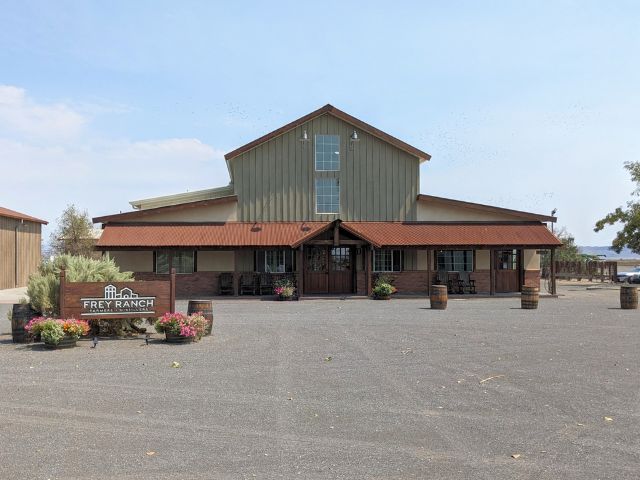
A lot has changed with Bray Ranch also, and we'll talk about that here in the episode. I wanted to cover new ground in today's interview, stuff that I didn't talk about in that original interview. So if you want to go back and listen to interview 14, I learned so much stuff in that. And I was so shocked at how many things that we did talk about that really went into my knowledge bank about whiskey. So once you get past Fallon and you are looking for the distillery, there's signage there to get you there. GPS is not overly helpful. It keeps trying to take you down little roads that you're not supposed to go down. And so kind of followed the signage in. There's a big welcome gate there and beautiful farm. As I pulled up and parked the car, I was instantly greeted by a distillery dog.
(03:53):
And then Doug, their morning distiller came out and said hello to me and said that Ashley and Colby were actually on a Zoom call and that they'd be with me in a few minutes. I was actually there a little early, so that was fine. And Jesse Potter, who's their event and hospitality coordinator, came out too, and he walked me around and we got a chance to go through the distillery. And then we actually, which was a treat for me, went into where their malting takes place. And we're going to talk a lot about malting in this episode because it's not something that we talk about much in the world of distilling because most distilleries do not have malthouses on site. And I took some pictures around and then Colby and Ashley met me. Colby ended up taking me around the farm. And again, I walk away from this thing going, I learned something new every distillery I go to and I seem to learn about 30 extra things that I didn't know about whiskey or about farming, it's influence on whiskey just in talking to Colby.
(05:00):
So let's jump right in. We're sitting in the boardroom at Fray Ranch with lots of bottles around us, lots of things to taste in this particular episode. So let's dive into the conversation. Well, it's been four years since we chatted. Actually, I looked at the date and it was August 18th.
Colby F (05:18):
Oh, that's today. I don't even know.
Drew H (05:20):
And today's the 26th. Dang. Pretty close, yeah. It's just very close. Yeah. So what I was tasting that day was batch one.
Colby F (05:28):
Yep.
Drew H (05:29):
And we went through and I encourage anybody that is really interesting in farming and distilling to go back and listen to episode 14 because you taught me a lot about it. This was the first estate distillery that I had done a full interview and kind of gone into the 160 years, your 165 years you were talking about of your family being in farming. So a lot of great background on that. But we didn't talk about what an estate distillery is and what that designation is. So kind of tell us a little bit of how that came to be and what it is.
Colby F (06:06):
In the wine world, an estate wine is considered a wine that is grown, bottled and produced by the winery. So we just kind of carried that to the distillery where we have 100% control over the entire process from what we call ground to glass. And so it just means that we have complete control, which means we do often on the fields like we'll sacrifice quantity for quality and by growing it ourselves, we can do that. We're just not buying commodity grains on the open market, which are fine. There's nothing really wrong with them, but there's so many things you can do to make better quality for distilling purposes, which by growing it ourselves, we can really tailor it to exactly what we want. And rarely is grain grown for a specific purpose. Traditionally it's just sold to a co-op or for the open market and it kind of goes wherever it goes and we grow it for whiskey.
(06:55):
It has a final purpose and we call it the whiskey farm here and that's what we call myself a whiskey farmer.
Drew H (07:01):
Nice.
Colby F (07:01):
Yeah.
Drew H (07:01):
Yeah. Back then you were saying you were probably about fifty fifty between running a farm and running a distillery. Since then, your product is out in the market and the people know about it now. Is it still kind of that way?
Colby F (07:17):
Yeah, I'd say it's probably more like ... It's really seasonal. In the spring and the fall, it's probably 70, 30 farm distillery, 70% farm, 30% distillery, but the rest of the year it's probably 70% distillery, 30% farm. And
Colby F (07:31):
So it's
Colby F (07:32):
Kind of all hands on deck. In the spring when we're trying to get everything planted and everything kind of perfect for the summer, and then the fall is like all hands on deck, get everything harvested and then get the winter crops replanted back in the fields for the next year.
Drew H (07:45):
Yeah. Was there ever any whiskey interest in your family's history going back or are you really kind of the trailblazer?
Colby F (07:53):
We'd always like drinking it. And we actually used to have a long time ago, my dad was really into wine and had grew grapes and made wine. And that whole time I was saying like, "I like whiskey better anyways." And it really taught me the basics of fermentation and that whole aspect of the distillery. And I'm saying like, "We'd always grown wheat rye barley corn. Why aren't we making something out of that? " I knew it was really high quality and instead of just selling it to a cattle farmer or something like that for animal feed and it's just not very fulfilling. And so by making it into whiskey and creating a product that I can share with people, it's every farmer's dream.
Drew H (08:31):
Yeah. The first question I always run into whenever somebody says they have an estate distillery, I say, "Do you malt your own barley or do you not? " And it's amazing, I will find that say, no, they don't. They have somebody nearby that does that for them. You went to the expense of setting up and doing your own malting here, and it's very different for people who know the process that they do in Scotland, which is basically a malting floor, somebody with a shovel turning. So what is the way that you're doing the malting here?
Colby F (09:04):
Yeah. So we have big drums and each drum ... We have two drums right now. We started off with a one ton drum. Now we have two drums that are three tons each. So they each hold 6,000 pounds of grain. And what's really beneficial about the drum versus the floor is we can really control the atmosphere inside the drum for the germinating process. So for those of the people that don't really understand malting is we take grain, which grain is essentially a seed, right?
(09:30):
We put it in a steep tank first where we're doing three things. We're cleaning it, we're hydrating it, and we're oxygenating it. So we're actually adding air into it. It's mixing it. All of the chaff and any non-viable seed floats to the top of the tank, goes out. It's called a weir and goes into a collector and we get rid of that. And then it's absorbing moisture and oxygen, which is kind of we're trying to mimic mother nature because we're sprouting the grain next in the malting drums. And so the malting drums can create the perfect atmosphere or climate for the grains to sprout so we can add humidity, we can cool it, we can heat it, we can do whatever it takes to create the perfect conditions for germination. The other beneficial part, if you're familiar with floor malting, they often have to rake it or shovel it and they're trying to mix it for consistency.
(10:22):
And so these big drums rotate and so that will keep the grain really consistent. It'll also keep it from clumping up because I don't know if you've ever seen a ... If we leave a bucket of grain outside, it'll all germinate and all the little rootlets will grow together and just make one solid massive matter.
(10:41):
And in the drum, it rotates really slow. So those rootlets keep from combining and clumping up. And in meantime, it also keeps it from maybe where there's a screen at the bottom that's pumping in the air and goes out the top might be a little bit inconsistent where the bottom might be wetter, drier, whatever different conditions are in that part. So by mixing it gets a really even consistent growth cycle. Then inside those same drums, once it gets to a certain point, we stop any future growth by dehydrating it, by drying it. And so in those same drums, we can turn on a big, basically a burner and we dry the grains down to 6% moisture. So they'll store for long periods of time. And it's kind of fun. And do you know why malt is in most whiskeys? Have anybody ever really-
Drew H (11:32):
It's the enzymes you're looking for. Yeah.
Colby F (11:35):
Yeah. And so- Do you know the importance of why enzymes are important though? The enzymes that are created during the malting process liquefy the starch- The
Drew H (11:45):
Starch, yes. ... in
Colby F (11:45):
The other grains. And so the easiest way for me to explain it is we'll put in the corn first. Corn can handle a higher temperature in the cooking cycle. Then we let it cool down a little bit to a certain temperature. Then we add the wheat and the rye. And at this point, the viscosity is super thick. Inside the mash cooker, it's got this big agitator and it's very soupy and thick. Well, common sense would say by adding more solids to an already thick liquid, it's going to get thicker, right?
Speaker 4 (12:13):
Right.
Colby F (12:14):
But we add the barley last because if we add it too high, it'll actually burn the barley. It can't handle as high of a temperature as the other grains. And so when we put in the barley, it actually liquefies the starch in the other grains and the viscosity actually becomes more watery. It goes down. And so now you can have a higher, more grain in your mash bill. It creates a better environment for the yeast to work in because it's not sitting there in this soupy, solid
Speaker 4 (12:42):
Mass
Colby F (12:43):
And everything. And so that's why you see almost a little bit of malted barley in almost every whiskey. Now, some whiskeys, like the one we're going to try here first, is our rye, is 100% rye and there's no malt in it.
Speaker 4 (12:56):
And so
Colby F (12:56):
This one actually has, we add commercial enzymes to it, which don't add the flavor or anything else, but they do liquefy the starch in it. So because when we did our first barley, and we actually wanted to do 100% corn, or we did do 100% corn, 100% rye, 100% barley, 100% wheat, because we wanted to taste what the grains taste like by themselves. Our whole goal from the beginning was to really showcase the grains that we grow here on the farm and bring them to the forefront of the whiskey experience. And we wanted to taste our rye, what it tasted like without any outside influence with even malted rye or malted barley or anything like that. And we made our first batch and fell in love with it and just said, "We're going to keep doing it this way because this is freaking delicious." And so anyways, that's what we're going to try right now.
(13:43):
This one's 124.6 proof. It's a single barrel rye, barrel number 25.70. And one thing I love about our ryes is sometimes rye to me is so spicy that you just ... I got to mix it with something. It's almost like, I don't know if you've ever had ginger beer where it almost like tickles my throat and burns a little bit when I drink it.
Drew H (14:03):
I grew up with burners which is a
Colby F (14:05):
Ginger ale. Yeah, growers ginger soda.
Drew H (14:07):
Yeah.
Colby F (14:07):
And I used to mix that with cocktails and that was really good too.
Drew H (14:10):
It makes you sneeze when you first opened up the bottle.
Colby F (14:13):
Yeah. Yeah. And I used to use that instead of ginger beer because it's like one step under ginger beer, but it still does it, right?
(14:19):
Yeah. Yeah, I love verners, but most ryes do that to me, but this one doesn't. And that's what I fell in love with. But it's funny because it's 100% rye. You'd think it'd be like total spice bomb and everything else, but it's really approachable. And there's a saying in the wine world that we carry on to the distillery that you got to like what you make because you might end up drinking it all yourself. And so I fell in love with this rye and that's just how I wanted to drink it. I get like bazooka bubble gum
Drew H (14:45):
And
Colby F (14:46):
Like a little bit of mint.
Drew H (14:48):
That's what I was tasting before because I did sample the lower proof one and I love rye. And what I love about rye is that I can taste them in different places and they're so different.
Colby F (15:00):
Yeah.
Drew H (15:00):
And it doesn't necessarily have to be a different strain of rye. It just seems like rye overall takes up the soil and- I
Colby F (15:08):
Think out of all the grains, I think you're right. I think rye has the most like terroir, like grapeses grown in different areas. They're so different. Rye, I think really has that more than any of the other grains.
Drew H (15:20):
Very lemony fresh on the nose
Colby F (15:23):
Too. Yeah. I get like citrus and like almost like a ... You know what I get is like those little, you know the banana runts?
Drew H (15:31):
That's the other thing that I'm getting. Yeah, I was getting kind of a tropical note out of it as well, which I don't associate with rye whiskeys.
Colby F (15:39):
That's what I love about our rye. Now there's a single barrel, so it's a little bit different. It's amazing how different the barrels taste when we're tasting through them and picking our single barrels and blending our normal blends and everything. And so it's kind of fun. There's a big variation between the single barrels and it kind of makes it fun to taste through them and see different
Drew H (15:58):
... One of the things that you were doing too early on was you were experimenting by malting all different types of grains and just to see what they individually would be like to just do oats, which is something that not a lot of people do distilling of. And as we talked about while we were riding around the farm, most people probably don't do oats because they're so hard to work with. And so it got me really interested as we were chatting. Now since then, I have learned a few things such as the Canadians. The way the Canadians make their whiskey is they basically distill each grain separately, age them separately, and then create a blending bill basically rather than doing a grain bill. And so it's funny because it's almost like an instinct on your end to say, "Hey, let's try this. " And there's a whole country that's doing this, but most people don't know that that's how they do it, but the flexibility for you to be able to measure each amount of those.
(16:59):
So you've got a quad grain, is that what it's
Colby F (17:02):
Called? We have what's called a quad
Drew H (17:03):
Malt.
Colby F (17:04):
Quad malt. Yeah.
Drew H (17:04):
So describe that.
Colby F (17:06):
Yeah. So our quad malt is, it's the same mash bill as our bourbon and it's our traditional bourbon and it's literally the same grain grown on the same fields. Everything's the same about it. The only difference is all four grains are malted. So traditionally you see malted barley, you can malt any grain. And so it's malted corn, malted wheat, malted rye, and then malted barley. So in our traditional bourbon is just malted barley with the wheat rhying corn. And so all four grains are malted. And what we did, I wanted to do that so you could kind of taste side by side what malting does and how it changes the flavor profiles and things like that. And it's amazing. We did 100% malted corn, we did 100% malted rye and it's completely different. And so we can taste that riht now if you want. So this is our quad malt.
(17:54):
This one's 110 proof, 55% alcohol. But what you're going to get, and what I love about this one, and even on the nose, to me, if you come in July, the corn is growing so fast. It's probably shoulder high at that point, but it's growing a couple inches a day.
(18:12):
And we irrigate 24 hours a day when we're irrigating. And if you walk out in the field at midnight, it's transpiring all this humidity and it smells. The smell of the cornfield is just like this quad malt. So this is a 66% corn
Speaker 4 (18:29):
Already,
Colby F (18:29):
Malted corn, just like our same mash bill as our traditional bourbon. And just a fun fact, we put all of our mash bills are like on the back of every bottle so that we're really open and transparent with that.
Drew H (18:39):
The first thing I notice on this, well, I'm getting the tropical on the nose, so the rice pulling through a bit, that note, but is that in the other-
Colby F (18:48):
It's in the corn and when you taste it, so corn is actually a grass and I get really like that grassy
Colby F (18:56):
Flavor
Colby F (18:56):
When you taste it and almost like just really like sweet corn right off the cob. But it's not the kind you get in the store. It's like when you have sweet corn
Speaker 4 (19:05):
And you
Colby F (19:05):
Pick it right out of the field, you can eat it like literally right off. You don't have to cook it or anything and it's delicious and it tastes just like this whiskey. And it's really that corn really comes through.
Drew H (19:16):
Well, the other piece of this is the mouthfeel on this is incredible. I mean, it's just a nice milky kind of a mouthfeel.
Colby F (19:24):
Yeah.
Drew H (19:25):
I won't call it a pepperiness, but it's almost like a effervescence. I don't know what the term would be that I would use. So I understand you're using different types of yeast. You're not necessarily using distillers yeast.
Colby F (19:38):
Yeah. So we use a couple different kinds of yeast. We use a champagne yeast, which is more for like alcohol production. And then depending on which one we'll use, like we do use like a Tennessee whiskey yeast more for flavor and some of our whiskeys, actually some ale yeast yeast, which beer is made from grain and so they're very universal in that way. And so it just depends on what we're making. But yeah, we use two different kinds of yeast for both
Speaker 4 (20:06):
And
Colby F (20:06):
One's for flavor and one's more for alcohol, but that is the same yeast as our bourbon and everything too because I wanted just to show the difference between malting and unmalting.
Speaker 4 (20:15):
And
Colby F (20:16):
So like, I mean, if you want, you can compare it to our flagship bourbon right here and it'll just show you the difference and what you're getting different.
Drew H (20:26):
Yeah.
Colby F (20:27):
See, that one's got a lot more like caramel and creamy
Drew H (20:29):
And
Colby F (20:29):
Things like that.
Drew H (20:30):
It's really interesting. So it also makes me wonder how a hundred percent malt interacts with a barrel versus unmalted and whether that's the unmalted actually pulls much more of the barrel influence in.
Colby F (20:46):
Maybe. Yeah. And I just think that it's like so grassy and it's that malted corn I think is the one that really, really impacts the most flavor in this quad malt.
Drew H (20:55):
It's nice and it kind of evolves as it's sitting on your palette.
Colby F (21:00):
Yeah.
Drew H (21:05):
Well, I'll be enjoying my conversation with Colby today. And in just a couple of moments, we're going to be talking with him about the golf cart experience we had riding around the farm, a jet flyover that occurred while we were there, a little story behind that. And also we're going to be talking about what people taste while they're on a tour. But we also ended up tasting a bunch of other whiskeys, including a wheat whiskey and an unmalted barley whiskey, which was fascinating to me. And we also talked about some of the grain experiments that Colby has been working on and how he makes his own peat. But that second part of the conversation you can only get as a member of the Speakeasy, the Whiskey Lore Speakeasy. It's also the home of our first Thursday get togethers, the behind the scenes content that I do for some of my stories is out there and so much more.
(21:55):
And you get bonus content from my interviews as well. And all you have to do is join us seven day free trial, the Whiskey Lore Speakeasy at patreon.com/whiskeylore. You talked about something before we move on to the next one. I'd love this and I love to have the audience, because you drove me around the farm,
(22:18):
Which was great. One thing I will say is that you can listen to an interview and you can get to know the distiller, but until you're out where kind of their heart is, you pick up a whole lot more and the feel of the place
Colby F (22:34):
That
Drew H (22:35):
This is truly a farm and it's an expansive farm and there are people here and they all have personalities and all the rest. But then we stopped over by the corn and you pulled out a piece of corn and you described things I never knew about corn. We're doing yellow dent corn here and so where does it get that name from?
Colby F (22:55):
So I mean, farmers aren't very good at naming stuff, so it's a yellow corn that has a dent in it, so it's yellow dent corn. I mean, there's blue corn and there's ... It's funny how all these other corn, they're not very creative with names, but I just love corn because it's so much different than wheat, rye, barley. We grow a lot of alfalfa here like we showed you earlier, but corn is just neat how it pollinates itself with the silk. So the tassel at the top creates pollen. That pollen drops down, pollinates the silk. There's a little hair that's hair that like when you shuck sweet corn goes down
(23:29):
To each kernel. And so that's that pollination phase, which is really important for the pollinating the corn and creating all the kernels on the ear of corn. And then another fun thing about corn is like when you break a corn in half, it's always an even number of kernels around the corn. And it's just funny how ... I love talking about that stuff because it's how mother nature works. And being a farmer, I'm really close with mother nature and just growing things and things like that. And it's funny how it kind of carries on to the, like in the malting drum we're talking about
(23:58):
And the quad malt. Corn needs heat. Rye will grow at above 32 degrees. It'll be growing. So like if we're malting rye, we have to have the air conditioners almost going full blast on the malters. Otherwise, the rye will just take off and go it out of control. It's a very cold weather growing crop. Now corn is the opposite. We almost have to have the heaters on keeping it warm because it needs that warmth to germinate. And it's funny how you see that, how that works there too. And then mother nature is funny how in the distillery, it's really interesting where in the fermentors we add yeast. The yeast is converting the sugar to alcohol. The byproducts are two things, heat, which we have coolers on the fermenters, and then CO2. Now what's important about the CO2 is CO2 is an inner gas and I got to back up.
(24:48):
When you have anything below 18% alcohol, it'll oxidize. So like wine or beer, you have to drink. You open up a bottle of wine or can of beer or bottle of beer, you have to drink it within a day or two because you've introduced oxygen to the container
(25:01):
When you open it up. Now above 18% whiskey, that's why you can drink whiskey over long periods of time and it doesn't go bad because it doesn't oxidize like the same way that wine and beer do. Well, when the fermenters are going, it's creating CO2. CO2 weighs more than oxygen and it's an inert gas, right? So it doesn't affect it like oxygen. So it's almost like it's putting this protective blanket on top of the tank, keeping the oxygen away from itself. And if you could actually see the CO2, it'd be flowing up from the level of the liquid and just like flowing down the sides of the tanks. And it's just mother nature's way of protecting itself from the oxygen. And so that's why in distilleries, you often see open top fermenters because we don't have to worry about it oxidizing because number one, while it's fermenting, it's protecting itself with the natural CO2.
(25:53):
And then as soon as it's done fermenting, we're distilling it and it no longer has an oxidation problem where you'd never see like in breweries, for example, you'd always see closed top tanks really protected, very sterile, everything else.
Drew H (26:08):
You figure you're distilling it. So if anything falls into it, it's no big ... Yeah,
Colby F (26:11):
I mean, you're distilling it above the point of pasteurization. So when we distill it, we heat it up above that point. And then also it's creating alcohol, which is a natural sterilant. So there's never been a foodborne illness in alcohol, can't grow bacteria out or germs or whatever in it.
Drew H (26:27):
Yeah. The other fun part was when we were driving by your irrigation coming in and we saw all the birds out. I mean, I've seen nothing but blackbirds around here all day. And so as I'm watching those, I finally had to ask, I'm like, what is the benefit? They're all down where you're irrigating and what benefit are they bringing?
Colby F (26:48):
Yeah. And so there's worms in the soil and there's actually some bad worms that are not beneficial. Earthworms are really good for the soil, but there's other worms like army worms and cut worms and things like that that are in the crops. And so they're actually eating those worms because as the water goes right over the soil, right at where it's coming in contact, those worms come up real quick and the birds eat them. And so they're actually, they're helping us.
Speaker 4 (27:14):
Yeah. Yeah.
Colby F (27:16):
Natural way to get rid of problems. It's also mother nature's way of protecting the crops and everything else.
Drew H (27:23):
Everything has a purpose.
Colby F (27:24):
Yep.
Drew H (27:24):
Yeah. We were talking about mosquitoes.
Colby F (27:26):
I'm
Drew H (27:27):
Like, what purpose do they serve?
Colby F (27:28):
Yeah.
Drew H (27:28):
They're bat food.
Colby F (27:29):
Yeah. So we have bat houses all over out here, which bats are actually really good because they eat thousands of mosquitoes and keep them down. So you get rid of the bats and then you're going to have a lot of mosquitoes. And it's funny how mother nature, it's got to be a balance. So you don't want to get rid of all the bats or mosquitoes or whatever, otherwise one of them's going to die off and then the other one will take over.
Drew H (27:50):
Yeah. Yeah. So if somebody's coming out here to the distillery to do a tour, when do you do tours and what do they get to taste when they're out here?
Colby F (28:00):
So usually, I mean, they can taste ... Usually we have everything that's available. So usually we seasonally bottle different varieties. So I mean, if you came today, we would have quad malt, we'd have 100% unmalted barley. We would have our malted smoked American single malt barley. You could try ... Today we actually have a wheat single barrel, which is very rare. We have an oat single barrel, 100% oat. And then we have a blend of wheat, a blend of oat. We have our flagship 90 proof bourbon. We have our flagship 100 proof bottle and bon rye. And it varies. Sometimes all those aren't available, sometimes air, sometimes we have malted corn. We've had single barrels of bourbon very often that just happens to be sold out right now. And we're open every Saturday, only Saturdays, noon to four, and we do free tastings and tours.
(28:59):
So we don't charge for tours or tastings. We want everybody to come and experience it. And we are kind of off the beaten path, so we don't want to charge everybody when they come out here and we want to reward them for coming out here and show them a good time. And you really do get to see the farm, and it is right here. This is our home,
(29:16):
So much different than like a ... I love going on the bourbon trail, but a lot of those are just factories, big factories that are beautiful and fun, and it's so neat to go and see them, but this is like our home and our farm, and my family's heritage is right here, and that's the whole reason why we did it, is to kind of carry on the farming legacy.
Drew H (29:35):
Did the flyovers happen on Saturdays?
Colby F (29:39):
Yeah, sometimes. Yeah.
Drew H (29:40):
Yeah.
Colby F (29:40):
So we're within the five mile radius of NAS Fallon, Naval Air Station Fallon. And so it's kind of a ironic thing to have a Navy base, which is water based in the desert. We're in Nevada, but it's an inland training base for airplanes, so there's a lot of jets flying over and The Top Gun is actually stationed right here in Fallon.
Drew H (30:02):
That's crazy.
Colby F (30:03):
And so we get a lot of those guys. They're amazing people that
Drew H (30:05):
Are
Colby F (30:06):
Fun to talk
Drew H (30:07):
To. They got mountains to fly around.
Colby F (30:09):
Mountains flying. And if you look at Nevada, the whole middle of Nevada is very low populated, nothing but dirt pretty much in mountains. And so they can actually go up there and do maneuvers and things that they can't do in other areas. And so they have these big restricted areas. So I'm a pilot, so I have to stay away from the restricted areas. And then there's MOAs, military operation areas, which you can travel through, but it's kind of at your own risk. And so that's where they go and they do live dog fighting and bombing and all that kind of stuff to prepare. And so they have carrier air groups that come in and there'll be, I don't know, thousands, eight or 10,000 people that come into the Navy base. They train for a week or two and then they go back out to wherever they're stationed.
Drew H (30:58):
Yeah. It's a thunderous noise when they go over here.
Colby F (31:00):
Oh, isn't it crazy? Yeah, you saw
Drew H (31:01):
That. So it's fun.
Colby F (31:03):
Yeah.
Drew H (31:05):
Well, to kind of leave a lingering thing here for the next time I come out and I talk to you, you said unmalted barley and my antenna went up because I'm a Irish potsdale whiskey fan and unmalted barley is really an interesting ... You could actually blend an Irish potstell style whiskey because it's 5% whatever grain you want to choose. And a lot of times they chose oats and then it would be at least 30% unmalted barley, 30% malted barley, and then the rest could be filled in with malted barley or unmalted barley, however you want to do it. Sometimes they would just go 45, 45, I mean, 45, 50 and five or something like that to make it. But what I love about Irish potstell whiskey is that it's very oily. It's peppery. A lot of citrus notes come out and it's like graham crackers to me.
(32:06):
So what do you find in the one that you have?
Colby F (32:10):
Ours I think is graham crackers. It's got a lot of ... It's not the same as like the oat. I get a lot more of that flavor, but it's really like ... It's completely different. Here, I got to let you try it, but I need to ... I don't have another glass.
Drew H (32:23):
We're out of glasses.
Colby F (32:24):
12 glasses here.
Drew H (32:25):
Well, I have water here. I'm going to set that down for a second and I will clear one out.
Colby F (32:31):
But this once again just went to the fact that we wanted to taste each grain by itself. And so we did both malted and unmalted barley and we're really kind of excited about how this one turned out.
Drew H (32:47):
Did you know the Irish whiskey connection to that?
Colby F (32:49):
Yeah. I mean, yeah. So I always liked Irish whiskey too. I honestly like the not super peaty scotches have always been a little bit more my- More
Drew H (33:01):
Cherried or apple and pear.
Colby F (33:04):
Yeah. And just a little bit of peat, but not a lot of peat. Irish whiskeys to me are a little bit more plain, I guess,
Drew H (33:10):
Is the easiest
Colby F (33:11):
Way for me to explain it.
Drew H (33:12):
But this is the challenge that the Irish whiskey industry has is to take people away from the idea that all those whiskeys that were made at one distillery for so many years, Jameson, Redbreast, Powers, and the rest are now only ... They're still dominating the market, but there's 47 or 48 other distilleries now that are making spirits. They're not getting over here yet. Some of them are. They're trickling across, but we haven't really tasted Irish whiskey yet.
Colby F (33:43):
Yeah. Was whiskey created in Ireland or Scotland?
Drew H (33:46):
I say both.
Colby F (33:48):
They all both argue with each other.
Drew H (33:51):
There was a kingdom called Daliata where the Celtic Christians came through and it was part Northern Ireland and part the Kentire Peninsula of Scotland. And Iona, which is in Scotland is where their kingdom capital was, and the Celtic Christians would have brought back the potstills through probably both. Yeah. I'm fine with them both being able to claim it. I think that would ... But they like to argue. Yeah.
Colby F (34:23):
I like if you look at ... If somebody pointed out, if you look at Wikipedia about Scotland or Ireland and what they created, it's like they created all these things, like great inventions and things like that. And then the last one they created was whiskey. And they said that was the greatest invention in the world, so they didn't have to top that with anything
Drew H (34:39):
Else. Absolutely. There's that banana note again.
Colby F (34:45):
Yep.
Drew H (34:48):
Oh, it's really interesting. Yeah, the grain note definitely there. It's kind of like a honey kind of a
Colby F (34:55):
Note. It is. Yeah. And that's what I get in a lot of Irish whiskeys too. And that's why I think they're really ... They're easy drinkers. If you want something easy to drink, I'd go to Irish whiskey myself. That's just my personal opinion.
Drew H (35:08):
The honey blasts you on the finish.
Colby F (35:11):
It's crazy. Yeah.
Drew H (35:11):
Yeah.
Colby F (35:12):
So we've won a lot of awards with this one lately. I'm pretty proud of it.
Drew H (35:15):
That's really cool. I love that. Well, and because Potsdill whiskey, we can't taste it on its own. We're just tasting it as part of the blend. So yeah, that's fascinating. Well, cool. Colby, thanks for showing me around the distillery and the farm today. It's been a lot of fun. I could talk to you and I can learn a lot from you on Zoom, but it's so much different being here and actually getting a chance to experience it.
Colby F (35:42):
Absolutely.That's what's funny is we've had a few internet trolls say like, "Oh, you don't grow all your own grains and you don't do it and everything." I said, "If you don't believe me, get out here. I'll give you a set of work gloves. You can get your ass out there on the farm and I'll put you on a tractor." I don't care. We are a true farm and it's right here in the middle of our home and yeah, you can see that.
Drew H (36:03):
Yeah. And I didn't bring my boots.
Colby F (36:05):
I know. What the hell?
Drew H (36:06):
Well, that's all about me going, that's how I used to avoid work at home when my dad would say, "Hey, we're going to go out and do something in the yard." I'm like, "What excuse can I come up with? " So I didn't wear the tie though. Yeah. That definitely would have said, "Nope, not going out there." But thanks so much and I hope this draws more people out to visit you and see this amazing place. Thank
Colby F (36:31):
You for coming and seeing us. It is fun for us because as farmers, we're kind of secluded too.
Drew H (36:35):
So
Colby F (36:35):
It's fun for me to show everybody all the hard work that we've done and what we built and kind of finally brings it all home. There's a good four or five years there where we were waiting for a whiskey to age, five years, six years that we weren't showing it to a lot of people. And so your first podcast was actually one of our firsts and it was right after we released our first whiskeys. And so that's super fun. Thank you for coming back.
Drew H (36:57):
Yeah, absolutely. Cheers. Cheers.
(37:00):
Well, I hope you enjoyed this trip to Frey Ranch Distillery. And if I peaked your interest in heading to the High Desert of Nevada, well make sure to head to whiskeylore.org/flights where you'll find this and over 1300 other worldwide distilleries just waiting for you to add to your Whiskey Lore wishlist. All you have to do is click the bookmark icon on the distillery page, sign up for a free membership. When you're ready to travel, use the site's convenient planning tools, maps, tour dates, booking links, and more to make your perfect distillery itinerary. Start your journey at whiskeylore.org/flights. Does that make my way to my next distillery destination? If you are still on the fence about a visit to Frey Ranch in Fallon, Nevada, let me give you my three reasons why I think you should have this distillery on your Whiskey Lower wishlist. First, you can travel all over Kentucky for distillery visits, but rare is the occasion where you get to drive past fields of corn that have been grown for more than a century and the current crop being grown with the express purpose of being used at the onsite distillery.
(38:08):
When you're talking about farm to glass, this is as real as it gets. Second, visit to Frey Ranch is sure to provide you with an excellent opportunity to try a completely unique set of whiskeys. Colby's experiments with grain that he's farmed himself, making them both malted and unmalted, yields some fascinating flavors. The tasting experience will give you a chance to discover all of them for yourself. And third, what an absolutely beautiful and peaceful setting that until the Top Gun flight goes over your head, seems unspoiled. You can enjoy a complimentary tour and tasting and help support a great family who are nice enough to welcome you onto their home site. I hope you enjoyed this visit to Frey Ranch. As the great 48 tour continues west, tonight staying in Virginia City, a town that I did a whole feature on back in season four with the Legends of the Old West podcast where we dove into the area's history and also saloon culture.
(39:13):
Been looking forward to seeing that forever. And then the next morning, getting up early for another three and a half hour drive this time through the Sierra Nevada Mountains for our next distillery destination where we'll get into even more whiskey experimentation. Make sure you've got your ticket to ride along by smashing that subscribe button on your favorite podcast app. I'm your travel guy, Drew Hanish, and until next time, Cheers and Sloan Javan.
(39:45):
For transcripts and travel information, including maps, distillery planning information and more, head to whiskeylore.org/flights. Whiskey Lore is a production of Travel Fuels Life, LLC.
About Frey Ranch Estate Distillery
Tours available.
Take a Whisky Flight to Frey Ranch Estate Distillery
Map to Distillery
Note: This distillery information is provided “as is” and is intended for initial research only. Be aware, offerings change without notice and distilleries periodically shut down or suspend services. Always use the distillery’s websites to get the most detailed and up-to-date information. Your due diligence will ensure the smoothest experience possible.