
Boston Harbor Distillery
Wish List (Log in)
Drew (00:08):
Welcome to Whiskey Lord's Whiskey Flights, your weekly home for discovering great craft distillery experiences around the globe. I'm your travel guide Drew Hanish, the Amazon bestselling author of Experiencing Kentucky Bourbon, the Lost History of Tennessee Whiskey. And today I am announcing that Whiskey Lord's Travel Guide to experiencing American whiskey will officially be hitting Amazon and international booksellers on January 13th. But you can get a pre-ordered copy right now. Go out to whiskey lord.org/shop. You'll be able to sign up, pay for your copy, and then just wait for it to show up. I'm going to be ordering those in towards the end of this month, and then they should come in, hopefully the first week of January. I will ship them right out. I'll sign them and get them to you. I'm really excited about this book. This is going to be a game changer for a lot of distilleries that have a hard time being seen by anybody.
(01:07):
There's a thousand distilleries in this book. I tell you, if they do tours, if they do tastings, if they have cocktails, what kinds of whiskey they're making, and I have 227 distilleries out of those that I go even deeper in and tell you specifics about what they're doing, a little of their background. And so for a lot of distilleries, this will be the first chance for them to really get a chance to be out on a platform where they can be seen and that you can know that if you're going to South Dakota, there's a really cool farm to glass distillery there that you should go check out and who knew, right? So now you will know there are no excuses when you hit the road. You got to go to these distilleries. And of course, I'm on the great 48 tour that's really helped me fill out some of this book.
(01:58):
I've had a chance to go to some of these distilleries in states you wouldn't normally think of when you think of whiskey. And actually, Massachusetts really interesting in diving into their history that they were a large producer of alcohol in the 19th century, but they stuck with rum. They did not go into the whiskey world. So whiskey is really somewhat of a new thing in Massachusetts. There were probably some whiskey distilleries around, but they really weren't getting much of the fanfare. Everything was big in terms of they would make rum in Massachusetts and then they would ship it out to the islands. So it had a good enough reputation that it was distributed all around the world. And today, the distillery that I'm going to is not known for their rum. Actually. It's a distillery that comes out of a beer background. It is Boston Harbor Distillery in Dorchester.
(02:57):
It is immediately south of the home of Samuel Adams, and there is a connection here. Rhonda Kelman actually is a co-founder of Samuel Adams, and she is the founder of Boston Harbor Distillery. And so we're going to dive into her story. And when I walked in the door, the first thing that I got were some stairs, and it was her and her sister Estee, who were looking over at me and I was like, okay, I wonder what this is about. Well, come to find out. I looked just like their brothers. So apparently I have doppelgangers all over the place. This happened to me when I was out in Kansas going to the Eisenhower Presidential Library, and I had this woman run up to me and she's going to throw her arms around me at a gas station. And I'm like, who is this? And then she went, oh, oh, oh, wait, you're not.
(03:54):
I said, who did you think I was? And she said, well, you look like my son. So apparently I'm one of those people. I have a friend who he has one of those faces that when you see him, he reminds you of, I look at him, I go, well, he kind of reminds me of Quentin Tarantino a little bit, but then he also kind of reminds me of, there's a country singer. I forget what the country singer's name was, John Barry who he looked like also. So it's kind of like he has one of those faces that kind of fits into a lot of different people. Apparently I'm kind of hitting that same sort of space. But anyway, we're going to dive right in and get into our conversation here because Rhonda's got a great story to tell and we're going to be tasting some whiskeys, but we're going to start out talking about beer. Of course, my first experience with any kind of alcohol and doing a tour of a place was going to Sam Adams in Boston, which became a favorite. I love going up there. Every time I go to Boston, I have to go. And so it was fun because you got to learn a little bit of the behind the scenes and the rest. That's actually where you got started in this industry. Is that correct or
Rhonda (05:08):
It is true on this side of the industry. I was bartending and waitressing for years prior to that, but on this side of the industry, and that's when I fell in love with it.
Drew (05:17):
Okay. How did that all come about?
Rhonda (05:20):
I was working at Boston Consulting Group, and I was an executive secretary. We actually had typewriters back then,
(05:29):
And I had seven people that I was working for, and my low man on the totem pole was cook, and he's the sixth consecutive oldest son to be a brewer in. His family has three Harvard degrees, and he wanted more. And he decided that he was out in the northwest and he saw all the craft breweries starting out there. And this was the early eighties, and he decided to start a brewery in Boston. And one of his colleagues at BCG who invested a little bit of money in the company said, how are you going to sell this stuff? He said, I'm not sure. Well, this guy said to him, you know what? Rhonda comes to work. She's out all the time. I used to come to work a little late and a little hungover, but I was really good at what I did.
Drew (06:15):
Nice.
Rhonda (06:16):
And I'm born and raised here in Boston. Jim's from Ohio, originally Cincinnati, and he asked me to help him start a beer company,
Drew (06:25):
And
Rhonda (06:25):
That was in 1983. And I said, I don't drink beer. I drink whiskey. And that's because my father and my grandfather drank whiskey. And if you wanted to have something to drink, you were going to drink your father's whiskey or your grandfather's whiskey. And I loved it. I loved it. And well, Jim promised that he would make something that I would like, and of course he did. And I spent 15 years helping him make Sam Adams a household name and building that company from nothing. And it was the most exceptional experience I've ever had.
Drew (06:59):
Nice.
Rhonda (06:59):
And what I really fell in love with the most was when we were sitting down with people and turning them on to Sam Adams, Boston, how we Talk. It was they would be like Doc beer. And that was because of the ingredients we were using a hundred percent malted barley. There were no shortcuts. There was no corn, no adjuncts. No fillers. And you could see the difference. I mean, that really set it apart is seeing the difference. Whiskey's a little harder. We're not having colored whiskey here, if you know what I mean. Let's hope we don't get to that anyway. And I just loved the education process of telling people, and we would walk around with jars of hops and malted barley, and we tell people, hops of the nearest botanical relative to marijuana, and everybody would go. Of course it wasn't legal then. And that's what set me off on my journey and here I am.
Drew (07:59):
Nice. I remember I was a big supporter of Sam Adams with my own purchases, and I remember one year you came out with a, it was chocolate stout. It was a winter pack, and so it had chocolate stout and a Bach in it. And it was like, oh man, all these dark beers actually ended up turning me on to drinking darker beers and into that world. And then that pack went away, and then I had to go find another dark beard to go. We had a
Rhonda (08:30):
Cream stout that was to this day, it was so good.
Drew (08:34):
Oh, I drank that all the time.
Rhonda (08:35):
Good Honey porter. We had a scotch ale.
Drew (08:39):
Yeah,
Rhonda (08:40):
They were remarkable.
Drew (08:41):
It was a great introduction. I
Rhonda (08:42):
Dunkel VITs in a dark white wheat beer and people, America went back to drinking lighter and sweeter. It's cyclical. It'll come
Drew (08:54):
Back. So interesting to then get the idea to go ahead and get into the distilling. Was there a distillery in Massachusetts at the time? In other words, were the laws kind of set up to allow you to start up a distillery at the time you started thinking
Rhonda (09:10):
About, oh yeah. My friend Chris Weld started Berkshire Mountain Distillers. He was the first one in probably 20 years ago, so he was the first one in the state. And so yeah, there were others before me for sure, but really not with the focus on whiskey. And I just, like I said, I loved whiskey and it's the evolution of beer. It starts off the same way as whiskey making. I thought this is perfect. And I just kind of took a page out of what Jim had done 30 years prior. He found a white space for good quality beer making here, and I saw the same thing for whiskey.
Drew (09:46):
So this magnificent building that we're in right now, the first question that pops into my mind is, how did you find this place?
Rhonda (09:55):
Well, it was fortuitous. We were actually looking for a distillery location. I found one not too far from here. It turns out it's within, I think it's 800 feet of a school, so couldn't do that. But there was so much traffic on the expressway. I'm not even kidding you. And I was with my husband at the time, who's a builder, and he's so much traffic. He said, why don't we get down here and have a drink? There's a restaurant. My landlord owns a restaurant that's been here 45 years called Venetia, and there's a winery here that's their family winery, a custom crush.
Rhonda (10:32):
And
Rhonda (10:33):
So we roll into the parking lot. I'll have to show you a picture, drew. I mean, it was a falling down, dilapidated junk collector's warehouse, this beautiful, sad building. And Matt looks at it and said, there's your distillery. I'm like, that piece or something. I said, yep. So we go inside the restaurant and ask the bartender, we said, what's going on with the building? He said, I think the landlord wants to rent it. So next we left our number. He called me. We came down here, and I feel like this was meant to be a distillery. It's really, isn't it?
Drew (11:11):
It's beautiful.
Drew (11:12):
The
Rhonda (11:12):
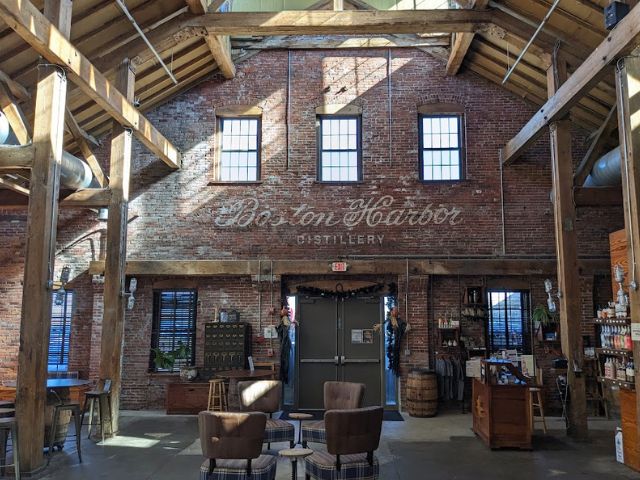
40 foot ceilings and fur beams, brick, wood,
Drew (11:16):
Copper. I'll tell you what it reminds me of while I'm inside here, because of the way the roof is set up with the windows at the top is it reminds me of a Kentucky Rick house from the
Rhonda (11:28):
Absolutely
Drew (11:29):
Early 19 hundreds, late 18 hundreds where they started building them to look sort of barns in a way. But then they had this jetting out at the top of the windows. That was the first thing I saw. But then there was something else about it, and maybe it's the script, the Boston Harbor script that you chose for the front of the facade that gives it such a old world historic kind of a feel to it that I kept thinking, I swear I could have seen something like this in Scotland, but maybe I haven't.
Rhonda (12:04):
Well, actually, that font was handmade by my designers when I started the company and they pulled it off of a 1700 nautical chart.
Drew (12:16):
Okay.
Rhonda (12:16):
Yeah.
Drew (12:17):
So there's a little John Paul Jones in this. It's
Rhonda (12:20):
So much, I mean, we are on the ocean here.
Drew (12:22):
Yes.
Rhonda (12:22):
I mean, there's not too many United States distilleries on an actual ocean.
Drew (12:27):
Yeah. Well, you were telling me too, as I got out of the car, I'm looking straight at the Boston skyline over the harbor, which is so beautiful. Just crazy. But in terms of private property, you were mentioning on the
Rhonda (12:42):
Harbor the last privately held parcel of land, not mine, unfortunately. We talked about that
Drew (12:47):
Too,
Rhonda (12:47):
The fortunes of the real estate tycoons when you could put whiskey and real estate together. Well, then you've got something.
Drew (12:55):
Yeah, well talk about the history of this building. It's been around since before the Civil War and has had quite an interesting history and many lives.
Rhonda (13:07):
It has really has. Well, it was built by the Putnam family, that's the Putnam investment lineage. And they made Horseshoe nails and they manufactured, they figured out how to automate horseshoe nail making, and there were those flat top horseshoe nails, and they ended up with government contracts. Silas Putnam built the business, but his uncle, the Revolutionary War hero, general Israel, Putnam Grace is my label for Putnam whiskey, and was actually the logo for his nail factory back then. So they supplied Horseshoe Nails to both sides of the Civil War. Pretty amazing
Rhonda (13:50):
Stuff.
Rhonda (13:50):
Yeah. This whole 18 acre parcel, a peninsula, it's been the center of entrepreneurial commerce for America.
Drew (14:02):
Wow.
Rhonda (14:02):
Yeah. I mean, America's first industry was cod fishing right here in Boston. It always comes back to the firsts around here. And so I'm happy to carry on that legacy with my whiskey.
Drew (14:15):
Yeah. One of my favorite Revolutionary War stories centers near here, which was the story at the beginning of the war when George Washington had Henry Knox bring the guns from T Droga down and dragged them through rivers and over hills, and then overnight got them to the top of Dorchester Heights, and that's what pushed the British out of Boston. It's such a great story, and it's like, I feel like I'm at Dorchester Heights. I'm trying to think from this area or from the Heights, can you still look over Boston? Because that was the whole idea, was that from the general how from the Red Coats was looking up at the hill going, Washington's done more in one night than my whole army could do, and
Rhonda (15:07):
Yeah. Well, it's Castle Island. It's right out here. And much my screen, you could see in that room, we didn't go in there, but you'll have to because they are amazing gold leaf reproduction of original 16 and 1700 maps of Boston.
Drew (15:24):
Oh, wow.
Rhonda (15:24):
Oh yeah. I can't believe I didn't take you in there, but we'll have to do that.
Drew (15:28):
Yeah, my love of history, but I mean, I always think I'm in Boston and there's just buildings around me, so I can't imagine there being a hillside that I could see, that I could see the whole town of Boston from,
Rhonda (15:40):
Well, Charlestown, bunker Hill, there's still hills. Oh yeah.
Drew (15:44):
Okay.
Rhonda (15:44):
We have our hills.
Drew (15:48):
So if you're a history lover, this is a great building to come down and see.
Rhonda (15:52):
And if you're a whiskey lover
Drew (15:53):
And if you're a whiskey fan, and I know everybody listening is a whiskey fan, so we're good there in terms of what it evolved into after that.
Rhonda (16:05):
Well, when the car came in, you didn't need Horseshoe Nails anymore, it became the George Lolly Shipyard. And Lollys is famous for building America's Cup winning yachts, which graces my label of our nautical line of fresh botanical gins and a hundred percent molasses rums and well, a vodka. My vodka's good, but it's vodka. And they built mine sweepers for World War ii. They too had government contracts and built mine sweepers for World War II right out of this building. So with the a hundred clear story windows, it's just, yeah, it's pretty amazing.
Drew (16:42):
And then a little ice cream after that.
Rhonda (16:43):
Oh, yeah. And so when the war ended, they went out of business, and then it was the Seymour's Ice Cream factory, and that is the inspiration for our confectionary line of espresso martinis, maple cream, coffee, laurs, all natural. We don't use sugar. We're using maple syrup for our sweetener. And then our newest innovation is demon seed whiskey, which is fun. We're going to talk about that.
Drew (17:10):
We're going to a little tasting here in a little bit. I'm interested. Describe that one when we get to it.
Rhonda (17:15):
It'll make you mouth water then some in your eyes too.
Drew (17:19):
Yeah. So when you're getting this all set up, and I mean, who do you lean on? You haven't really necessarily made whiskey before, and so what direction did you go at that point?
Rhonda (17:32):
Well, I was in the beer business, like I said, for 25 years before I started this company, but I was never the brewer, and I'm not the distiller. I just don't want to blow up the place. But I did, started doing some research. I found Dr. James Swan, rest in peace, Jim, and he was an amazing mentor for me. For those of you that don't know, Dr. Swan was hardly regarded as the world's expert on whiskey maturation. He was a little guy growing up in Scotland, and he worked for Arthur Anderson, and they needed to figure out how do you value those barrels of all of the distilleries in Scotland. So I call it liquid gold
Drew (18:19):
If
Rhonda (18:19):
You can get it going, right. Anyway, so Swan helped me with that, and then I met another gentleman who became my master distiller. His name is John Kho. He still, I consider him my master distiller. He formulated virtually most of the brands that I have. He's been at the forefront of craft. So the real crafty guy, the tats and the thing, and he and s SW with the Brooks Brothers. Well, he'd kill me if he heard me say that like Armani suit at this point, but couldn't be two opposite people. But the three of us made a really incredible team.
Drew (19:01):
So the still back there it is a ven dome, still does not look like a ven dome still.
Rhonda (19:09):
Right. The other thing I haven't shown you, but I will show you is well, the still, you can see it from the lounge, and it's 150 gallon still. And it was the Econo model for, because at the time when I knew I wanted to make whiskey, and I knew I wanted to do it here in Boston, but I didn't have a brand name,
Drew (19:31):
And
Rhonda (19:32):
Most companies are actually built around a brand idea. I just wanted to make it so I saw this still, and it's 150 gallons, so basically one barrel at a
Drew (19:44):
Time
Rhonda (19:45):
By the time you get through with it, right?
Drew (19:47):
Yeah.
Rhonda (19:47):
And what I had intended to do was make custom spirits here for restaurant tours, retailers or enthusiasts that just wanted to come in and make whiskey. And that's what I wanted to do.
Drew (20:01):
But
Rhonda (20:01):
It wasn't until we were renovating, and I was telling you earlier, the Caribbean rum paint that goes on, the insulation for the ceiling 40 feet up. I'm rolling it on, and I just start thinking about the history here. And I thought, geez, horses and whiskey are just inextricably linked, like the imagery. You see a lot of horses and whiskey, whether it's from Kentucky or whether it's from Ireland or Scotland, and we don't have a lot of horses here. We have some horses asses, but we don't have a lot of horses in Boston running around. And I thought, my God, why don't I name it after the guy who built this place and coming from the beer business. I mean, they're all guys named Heineken and Coors and Miller and Sam Adams. Right.
Rhonda (20:50):
So
Rhonda (20:50):
That's how I got there. But I had already bought the still, and it was years later that we got the 500 gallon stripping still. So we
Drew (21:01):
Increased
Rhonda (21:01):
Our production by three and a half, four times. And the best part of the story, I think, is Dr. Swang, of course, Scottish guy. He did not want me to buy American equipment. He wanted me to buy Scottish
Drew (21:13):
Equipment.
Rhonda (21:14):
Introduced me to his friend Richard Forsyth. Hi Richard. If you're listening, beautiful stills be very expensive. But I wanted American whiskey made here in Boston, so I got rewarded with that. He's like, you're not going to make good whiskey on that still, young lady. Well, it turns out that each piece of equipment that's used to make alcohol has to have a registered serial number on it. This is the 1,776 piece of equipment that Ven made that they kept
Drew (21:46):
Track
Rhonda (21:47):
Of anyway, and it ended up right here in Boston. Isn't that fantastic?
Drew (21:52):
It's meant to be, right?
Rhonda (21:54):
It's meant to be.
Drew (21:55):
It's meant to be.
Rhonda (21:57):
And the whiskey's great too.
Drew (21:58):
Yeah. We were just tasting a little bit of gin off the still, and I've grown comfortable with gin. I still won't say that gin is a favorite, but it's something that I find interesting to taste in different places to see whether they're going all in on the juniper or if they're heading off in different directions and you're like, go over here and stick your finger under there and taste some of that. And it was amazing to me how I said, it's like I've just crossed the border into Florida and I'm stopping off to get some orange juice. I mean, it really was very citrusy right down to the rind of the orange. And I understand you really do try to, when you're doing flavored stuff and the rest, that you're
Rhonda (22:50):
All natural,
Drew (22:51):
All natural attempting to stay in that world and not go for anything artificial.
Rhonda (22:56):
You taste the difference. And we're using whole grains here. I started the business because I loved whiskey, but I also recognized that all over the world, single malt is the gold standard for whiskey. But we weren't making it in any meaningful way here in the United States. It wasn't even approved government category. And when I stood, the very, very first thing that we made that went through that still 1776, was my Putnam single malt whiskey and it's whole grains, and it's really like craft beer. And there's so many people that love craft beer and they love bourbon. If they thought about it, bourbon by law has to be made with corn, but craft beer, there are no craft beers made from corn. It's really an antico story. It really is. It just goes back to ingredients and whole grains and how the flavor and the complexity and how it makes you feel. You don't need a lot of it because it's so satisfying. And from there, we went to Rye because of George Washington and the history of rye, and that's what I started drinking when I was just a little girl stealing my father's booze, was rye.
Drew (24:16):
Nice, nice. Okay. And
Rhonda (24:18):
Again, it's that spicy. You get this beautiful texture and the spices, and there's different levels of that, which I love. People love bourbon, and it's the poster child for American whiskey. I get it. They also love Bud Miller, Coors and Corona
Rhonda (24:35):
And
Rhonda (24:35):
Heineken. They're all corn-based beers too. So the majority of people in America actually drink lighter and sweeter. That's just what's going on. I can't compete there. And I just couldn't, after 25 years at the forefront of the craft beer industry to go start making using corn just didn't do it for me.
Drew (24:57):
Yeah, that's interesting because a lot of people will start with a bourbon because they know it'll sell. I mean, I think that's the main thing. The frustration I have with Tennessee is that Tennessee has their own category, Tennessee whiskey, but a lot of the distillers will edge towards making a bourbon because people don't know what Tennessee whiskey is. And I'm like, well, that's your chance to tell a story.
Rhonda (25:23):
And they've been doing it for a long time.
Drew (25:27):
And to me, barley and Ry are such expressive grains that I think there's a lot of, especially with as much territory as we have in the United States and the different climates that we can tell a story that's so much bigger than Scotland can tell from a single malt, and then our rye growing distinct flavors across the US that it really, to me, there's such a growth opportunity in those two spirits. If we get past some of the with rye, a lot of times it's, oh, it's too spicy. And so there's people who will put up a wall and they won't try it and don't realize that not all rye is spicy. And actually the stuff that's probably biting more and giving you more of the burn in the chest is the stuff they make in Kentucky because they're making it mostly with it's 51% rye, but it's also the majority of percent corn. Right, exactly. And you're getting the Kentucky hug and the pepper at the same time. Of course, you're going to probably have an experience that won't necessarily be the same as if you have a rye, that the secondary ingredient is barley.
Rhonda (26:41):
It changes. Here at Boston Harbor Distillery, we let our water whiskey wood makes great friends, but when we dump it out of the wood, we give it a chance to breathe as much as three weeks, maybe even a month. And we let the flavors in the ambient yeast and all of that come together, improve it down slowly. And when we put it in a bottle, it's soft. And that's our signature here. And not everybody likes soft. And I'm sure we have some things that maybe won't be that soft, like my demon seed whiskey, it is soft, but that wouldn't be the first thing that comes to mind. But I find that people do. It's smooth and sweet. We're not really doing sweet here, but we are doing smooth. And I love to drink that way. I think it's elegant. I just really enjoy my liquor that way.
Drew (27:44):
Well, we have talked about it for a while, and now it's time to dive in
Rhonda (27:47):
Salivating, right? Yes. Alright, so I think we should probably start rightly so with the first whiskey that we ever made here, which is our Putnam. It was called New England Single Malt.
Drew (27:59):
But
Rhonda (28:00):
If I wanted to join the ranks of the American Single Malt Whiskey Commission, thank you guys for doing all you did to get us here. I'm proud to be part of that. This is now called Putnam American Single Malt, and
Drew (28:15):
If you could tell the story of America, Boston has to be included.
Rhonda (28:18):
Well, that's exactly
Drew (28:19):
Right. I mean, it's one of the starting points.
Rhonda (28:22):
Yes. Well, here's a little toast.
Drew (28:25):
Cheers.
Rhonda (28:26):
Cheers. So what we're using here, we get our malt from Brie. Okay. I use in the beer business too, but what I'm told by them, so I'm sure it's true, is that it's America's best growing region, which is northern Idaho and Southern Montana. So we're using a hundred percent two row malted barley. But about somewhere between 15 and 20% of it is this roasted malt, which you can smell like there's a chocolate sort of coffee toffee aroma.
Drew (29:07):
Yeah. Wow. Boy, that's expressive on the tongue. Right? Right off the bat.
Rhonda (29:13):
And we did that because we just don't grow a lot of things in Boston either. Right down the street is America's oldest chocolate factory was the Walter Baker chocolate factory. And when John Kau moved here to be my master distiller, he lived right across the street from it and he created a smash be that I just love. I think it's very unique and it's big and it's bold, but it's also easy to drink. I mean, I think it's a drop of water, opens it all up and kind of makes it blossom. And we bottle it at 86 proof. So 80 is the minimum, but we do have 86 as most of our whiskey just, we like the way it drinks. We like the way it punches through in a cocktail. You can drink it neat with a cube. And
Drew (30:08):
You're doing new charred oak?
Rhonda (30:10):
We are using, yeah, 53 gallon new white American oak, minimum of 18 month seasoned. But we have some Canton barrels that are over two years seasoned, which I love and heavily toasted. And we were doing for the majority, we still are in number four chart. We're still new. I mean, we're 10 years old. That's not long. And the trajectory of whiskey
Drew (30:40):
Having stood back in the barrel room where it used to be where they stored ice cream, right, it
Rhonda (30:48):
Was a freezer. Yeah.
Drew (30:50):
It's chili in there. So you think a number four char, it won't get overly aggressive. The issue I normally see with a four char is that in a single malt is that the char takes over the flavor pretty quickly, and I'm not getting that here. I'm getting the caramel notes, the vanilla notes, those kinds of things coming through. So it's kind of like that nice bridge into drinking a single malt. If you're familiar with bourbon and you're curious, again, I always kind of think, what would a bourbon drinker think of this in terms of coming over to an American single malt. I think it is that first step, kind of like you getting with Samuel Adams, getting me into darker beers, and then all of a sudden now I can tolerate darker beers. Now I'm in love with darker beers that it's just that introduction and how can you do it in a way that leaves enough familiarity to get them over to the next level. So
Rhonda (31:57):
Yeah. Yeah, it's bold. It's bold, but accessible.
Drew (32:06):
Yeah. Well, and it's got a nice mouth feel to it. So it's kind of between the vanilla, I think the vanilla is actually kind standing out the most to me on it. I taste that. I do,
Rhonda (32:15):
Which
Drew (32:16):
Is nice.
Rhonda (32:17):
It's like, well, it was an ice cream factory. It kind of reminds
Drew (32:19):
Me, there you go,
Rhonda (32:20):
Of the chocolate and the vanilla together
Drew (32:22):
Looking vicariously through its history. Right.
Rhonda (32:25):
Really talking about ambient flavor profiles.
Drew (32:30):
Very nice.
Rhonda (32:31):
Yeah. Thank you. So I am thrilled, and I am delighted that 13 years ago when I started the place, I knew that there needed to be a category of single malt. Why should the gold standard of whiskey in the world not be made in America? That does not make any
Rhonda (32:49):
Sense.
Rhonda (32:50):
So here we are, and I'll drink to that again. So glad we got here and this year, right?
Drew (32:55):
Yeah, absolutely.
Rhonda (32:56):
And so, well, now that we're on this, drew, finally we got to the tasting part. We're going to have Putnam rye.
Drew (33:04):
Yeah.
Rhonda (33:05):
Okay. So this is, again, George Washington being a distiller, and he made rye. This to me is America's whiskey. And this is, well, you taste it and let me know, but it's also bottled at 86 proof. Yeah, that's probably the longest silence a podcast ever had. Sorry. We were nosing our whiskey.
Drew (33:35):
I have the magic edit button. I do a little editing at home.
Rhonda (33:38):
Oh, okay, good. So this will be edited right
Drew (33:41):
Up.
Rhonda (33:42):
Yeah. Boy, this is good, isn't it?
Drew (33:45):
That's interesting. Yeah, it's light and yeah, it's just a nice, it's
Rhonda (33:54):
A soft spice,
Drew (33:55):
Overly aggressive. Again, to all those people who say that rye is too peppery and too aggressive. This is not anywhere in that category.
Rhonda (34:03):
You do get some of the pepper on the finish, which I love. I love pepper. I over pepper every, I don't salt anything, but I pepper it.
Drew (34:11):
I almost get a little black licorice on the finish. Yeah, it's really interesting. I love black licorice, so
Rhonda (34:19):
Oh, that's good. I don't, that's
Drew (34:20):
Funny. I know there's some people who are probably going, oh, black li. No,
Rhonda (34:22):
I get cherry. I get it. Do
Drew (34:24):
You?
Rhonda (34:24):
Okay. I do,
Drew (34:25):
I do. Yeah,
Rhonda (34:26):
No,
Drew (34:27):
Just something about, and something, sometimes if I have a piece of black licorice, there's a little residue left on the tongue. It's kind of reminding me of that a little bit.
Rhonda (34:38):
Yeah, this is a high rise. So it's 95 5.
Drew (34:41):
Okay. And the other 5% is a malted rye, or is
Rhonda (34:46):
Barley
Drew (34:46):
Malta. Barley, okay. Yeah,
Rhonda (34:49):
For the enzymes.
Drew (34:50):
Very nice. Yeah, I mean, it's got a nice, very approachable, and it's more of a drinker than I would say a cocktail, but I'm sure,
Rhonda (35:01):
Oh my gosh. Does it make a great cocktail?
Drew (35:03):
Does it?
Rhonda (35:04):
Well, we have a pre-match barrel aged old fashioned. We actually dumped the whiskey somewhere between five, seven years, depending on the barrels that we're using. Make the cocktail with, we were using Dera, and I'm proud to say we're no longer using, no offense to de Marre because that's fine. But we're using real maple syrup and Anga store bitters, and we make the cocktail, we put it back in the barrel for 3, 6, 8 months, however long it's in there. And the flavors just really melt nicely together. You get this beautiful craft cocktail that you just pour over an ice cube,
Drew (35:44):
And
Rhonda (35:44):
Even if you don't have a bar spoon, you can just use your finger and mix it all up, finger your whiskey a little bit. You know what I mean? And it's delicious. So we do that for our old fashions, but we also, so we make a single barrel cast strength, so obviously different proofs on that. And we do a red wine barrel finish as
Drew (36:07):
Well. Okay. Yeah. Okay.
Rhonda (36:08):
So different red wine barrels. We're using French oak right now. We've used, used all kinds of barrels.
Drew (36:14):
I have to say it because getting stuck in my head, but the way that I was tasting the vanilla in that American single malt, I was thinking after having the gin with the very heavy orange, that maybe you should do a little combo of those two for not necessarily a cocktail, but like a mixed spirit maybe that would be like a cream.
Rhonda (36:36):
The chocolate and orange you talking about.
Drew (36:38):
Be a creamsicle basically, between that vanilla and the American single malt and that orange that's coming out of the
Rhonda (36:45):
Interesting,
Drew (36:45):
My mind thinks that somewhere down the road someone will take my advice and start blending different kinds of spirits together. Instead of making cocktails, they'll just do one spirit and another spirit and come up
Rhonda (36:56):
With some, oh, we do that here all the time. Interesting.
Drew (36:58):
Concoctions. Yeah,
Rhonda (36:59):
We do it all the time. Oh, absolutely. Absolutely. But our gin is wheat-based. Again, it's not corn, it just has a beautiful body to it. If I could come up with a new expression, I think I might do a weed whiskey.
Rhonda (37:17):
I
Rhonda (37:17):
Mean, there's just few and far between Parker's heritage, I guess. There's just not a ton of them out there. I do think that the experimentation, just like with beer is happening,
Drew (37:31):
The ones that I've found that are really interesting are the ones where they use rye as a secondary grain on it because it helps give some personality to the wheat, because the wheat to me is a mouthfeel kind of thing, or it's really dependent on the barrel. And so if you're not planning on keeping it in the barrel for a long period of time, then where does that secondary flavor source come from? And just finding a different grain that will make it
Rhonda (37:59):
Interesting.
Drew (38:00):
Yeah.
Rhonda (38:00):
But that's what you can, I mean, I love you can the grain bill, the mash bill, however you want to build it.
Drew (38:05):
You
Rhonda (38:05):
Can build it.
Drew (38:06):
Yeah, absolutely.
Rhonda (38:07):
That's where the fun is.
Drew (38:08):
Yeah. So what do we got next?
Rhonda (38:12):
Okay, so next. So I called the, I just digress for a second. Go back to the single malt. That was really innovation right at the time, and we've been making whiskey since 1100. Right. To find innovation in the whiskey space is very hard to do, let's face it. And if you can't do it better or cheaper, you got to innovate.
Drew (38:38):
I was going to say, on that line of thinking, the Samuel Adams beer that you distilled. Oh,
Rhonda (38:46):
The spirit of Boston is our distilled. Yeah.
Drew (38:48):
I think was, and thanks for letting me taste those. It shows that you can take a beer with the hops in it and distill it, and those were really expressive in terms of flavor.
Rhonda (39:02):
Oh, it's going to happen. The new thing is the brew distilleries.
Drew (39:06):
Yeah. Yeah.
Rhonda (39:07):
I think what a lot of the breweries are doing is they're going to take batches of beer that maybe didn't come out the way they wanted to, or because beer gets old
Drew (39:19):
Bad
Rhonda (39:20):
Stuff in bad stuff out. Great stuff in great stuff out. So you got to really, to me, again, it goes back to the ingredient story. And we use the freshest beer you could possibly get, actually, the October Fest that you tried, they made it for us in Jamaica Plain. They usually make it in either Cincinnati or Allentown or somewhere else. It was so fresh. We literally picked it up the day it's ready and brought it here and ran it right through the still. And it's awesome. It really is. I call it a whiskey for beer lovers and a beer for whiskey lovers. Nice.
Drew (39:57):
Nice. Well, it's nice that you still have a great relationship and that you're experimenting like that. Oh my gosh. Sam Adams.
Rhonda (40:05):
That's what craft people do. I know. We have to try to make a living off of this too, and feed our employees and make a profit, but
Drew (40:13):
Geez,
Rhonda (40:13):
That'll come. I hope you know what they say. If you build it, they will come. Alright, so you guys, you ready?
Drew (40:18):
Yep.
Rhonda (40:19):
This is called Demon Seed.
Drew (40:21):
My eyes are already burning.
Rhonda (40:22):
This is a scorpion pepper, ginger and maple syrup whiskey. And it is fiery and sweet.
Drew (40:34):
It smells of danger.
Rhonda (40:35):
Oh yeah,
Drew (40:38):
I dare
Rhonda (40:38):
You. Oh, you're drinking the whole thing. Alright, try it again. The second one will calm you down a little bit.
Drew (40:47):
Oh, that's one you want to keep on your palette. And then the pepper hits.
Rhonda (40:51):
Wow. It's a roller coaster of flavors. So you've got the rye that's spicy, and then you have scorpion pepper, which are grown in Trinidad and Tobago. They're the hottest non GMO pepper. So they are over a million scoville units, which is how you measure heat. And then we have fresh ginger. Ginger is spicy, but it's this beautiful sweet spice or tangy, I'm not sure how to refer to that. And we finish it, bring it all together, bind it up with real maple syrup from a small family farm in Cabot, Vermont called Ackerman Farms. That is all.
Drew (41:33):
I want to get a gingerbread cookie out of the oven and eat it along with this.
Rhonda (41:38):
Really?
Drew (41:39):
Yeah,
Rhonda (41:39):
Yeah,
Drew (41:40):
Yeah.
Rhonda (41:41):
Well wait, so for me, well, you're going to do it with our cream. We have a maple cream.
Drew (41:46):
Okay.
Rhonda (41:47):
We call this the cream and demon.
Drew (41:48):
Yeah,
Rhonda (41:49):
Yeah.
Drew (41:49):
No, that's a surprise because when you first put it on your palette, if nobody told you what it was, you would be going, oh, this is just a nice maple leaf. And then all of a sudden, hello. Here comes the pepper.
Rhonda (42:01):
And it is unexpected and amazing though, because people can taste real. It's not a marketing campaign. It's real. And you can taste the difference in a drink like this awesome flavored whiskey. I get it. It's easier for people. This is a flavored whiskey by the standards of the government. This is something really different. This is fun. Use this with make a cocktail with just pineapple juice, demon seed whiskey, pineapple juice, fresh lime, squeeze and drop it in. And you have yourself the best tropical whiskey cocktail. You can have it at a Chinese rest. I want to do demon seed, my tide.
Drew (42:51):
Nice.
Rhonda (42:52):
I mean, demon seed margaritas. This thing transforms any cocktail.
Drew (42:57):
It's
Rhonda (42:57):
A shooter.
Drew (42:58):
You
Rhonda (42:58):
Can drink it Neat. It's great in an old fashioned, it's just really fun. There's nothing like it today on the market. I am in love with it, and people are, it's all ages. We do live music here and people are just, they're drawn to it. I mentioned, oh, that was Drew. Be careful of that one here. I didn't mean to do that
Drew (43:24):
To you. Oh, we're doing a little mix together.
Rhonda (43:26):
Yeah, we're having a cream and demon.
Drew (43:28):
Oh, okay. Oh, this is interesting.
Rhonda (43:30):
Yeah,
Drew (43:31):
Yeah.
Rhonda (43:32):
Cheers.
Drew (43:32):
Cheers.
Rhonda (43:33):
So that's Maple Cream, Boston Harbor, maple Cream and Demon Seed.
Drew (43:37):
I got to say on the nose, the demon seed is winning.
Rhonda (43:42):
Well, that was a big glass, but the cream does Here. Lemme give you, the cream does cut it, doesn't it?
Drew (43:49):
Yeah. Well actually it cut it pretty good right there.
Rhonda (43:51):
Yeah, right there.
Drew (43:52):
Yeah.
Rhonda (43:52):
It's delicious.
Drew (43:54):
Wow. It brings a little heat. It's like having a nice steak that's peppered and that pepper hits you after you have a bite. Yeah,
Rhonda (44:05):
I love that. I think tonight is my rib eye night. I'm thinking about that.
Drew (44:11):
Yeah, there you go. If I could do steak lore, I would do steak lore. But there's not enough history around steaks.
Rhonda (44:18):
Well, maybe you'll find it.
Drew (44:20):
I need to dig. Yeah,
Rhonda (44:22):
But then you'd have to live in cow country.
Drew (44:23):
Yeah, that's true. That's true. I could live in Montana. I could watch your barley for you.
Rhonda (44:28):
Oh yeah. Maybe it's bison instead.
Drew (44:34):
Yeah. Oh yeah,
Rhonda (44:35):
Yeah.
Drew (44:37):
No, it's great because it's that heat, but it's that cream note in there that it's just adding a little bit of heat behind something you don't anticipate heat with, but that blends really nicely with it.
Rhonda (44:50):
Yeah,
Drew (44:51):
Right.
Rhonda (44:52):
Actually, we talked earlier about, I didn't show you these either, but I will, what we do with Good Now Farms, C Chocolatier, they make fine chocolates in Sudbury, Massachusetts with the zip code 0 1 7 7 6. So Sudbury has been part of the history of
Drew (45:09):
America. Yeah.
Rhonda (45:11):
I'm out there three days this weekend. But we do a demon seed chocolate bar. They do a demon seed chocolate bar. They have a Putnam Rye chocolate bar.
Drew (45:21):
Wow, okay.
Rhonda (45:21):
And our lollies rum are a hundred percent molasses, dark rum, and they're all so delicious.
Drew (45:27):
Yeah.
Rhonda (45:28):
So this is just the fun stuff that we can do with quality liquor and La cos.
Drew (45:35):
Yeah.
Rhonda (45:36):
They're amazing.
Drew (45:37):
So now when somebody's coming to Boston and they want to come to the distillery, when do you do tours? And I was surprised to find when you were talking that you have been doing tours here. Are you still doing tours?
Rhonda (45:52):
Oh yeah.
Drew (45:53):
Okay.
Rhonda (45:53):
Oh, of
Drew (45:53):
Course. I mean, as in you personally doing the tours.
Rhonda (45:56):
Oh, me. Yeah. It depends. Yeah,
Drew (45:57):
Sure. Okay.
Rhonda (45:58):
Okay.
Drew (45:58):
Yeah. See, this is what I love about craft distilleries. You never know who's going to be the leading the tour.
Rhonda (46:02):
Absolutely. Yeah. People walk in the doors, even if we're not open for tours, they walk in and we take them around and shake 'em a few cocktails and they usually walk out with two, six packs. They're like, wow, I can't get this where I live,
Rhonda (46:23):
But
Rhonda (46:24):
You actually can. So we're open, we're in the southernmost waterfront of Boston. It's a hidden gem. It's really hard to get to, but it's worth the journey.
Drew (46:35):
Well, as I came down the street to get here, I was thinking, is this a two-way street? Because it's all parking on one side of it, so
Rhonda (46:45):
Nope, it is not.
Drew (46:47):
The other thing that I found really interesting is that once you get off the highway, you're actually on a bi-directional frontage road. Basically as you're coming down there with little cuts onto the main road, and it's like, oh, okay, this is new.
Rhonda (47:09):
Oh, it's a mess.
Drew (47:10):
Yeah, it's interesting. This is what's fun about traveling though, is discovering these unique ways. And first time I came to Boston, I remember getting honked at because first of all, it was the first time I ever went in a roundabout. And the second thing was,
Rhonda (47:26):
We call them rotaries, but
Drew (47:27):
Okay. And then second one was when I was sitting trying to take a left hand turn and the light started blinking at me and the guy behind me was hitting the horn. And I was like, oh, am I supposed to go? It was still blinking red and I was going, I didn't know I was supposed to go. I had never seen that in any
Rhonda (47:47):
Other. Oh really?
Drew (47:48):
Yeah. I think that's a Massachusetts thing. Give somebody a local a reason to hit
Rhonda (47:55):
The horn.
Drew (47:58):
Yeah.
Rhonda (47:58):
Yeah. No, growing up here, it's been fun. It's a city
Drew (48:03):
It, it's my favorite town on the guys. Just say, fly into town, get yourself a T pass, and then just ride the red line and check things out. And I do a lot of walking in
Rhonda (48:14):
This town. Yeah. It's a very walkable city.
Drew (48:16):
Yeah.
Rhonda (48:16):
The public garden is one of the most beautiful places in the world.
Drew (48:21):
Yeah.
Rhonda (48:22):
We're small. It's a very tiny place, but it's got a big personality.
Drew (48:27):
So if somebody's coming out this direction, can they take the T line and what? No, it doesn't come. I
Rhonda (48:31):
Mean, you can, and then you have to walk 45 minutes, so you might as well, you could take the T and then take an Uber, or you could bring a blue bike with you and ride over. Or just take an Uber. That way you don't have to worry about anything and you can enjoy yourself while you're here.
Drew (48:46):
I have to say you, one of the craziest trips I took here was I actually rode the commuter rail or all the way down to Plymouth.
Rhonda (48:55):
Oh yeah.
Drew (48:56):
And then
Rhonda (48:56):
The green bush line,
Drew (48:57):
But it does not let off at the Rock. So you got a long walk. I walked it. I was like, this was pre Uber, so I was either going to hail a taxi or walk it and I decided to do it. But
Rhonda (49:12):
Yeah, we don't make it easy. I mean,
Drew (49:13):
No, but
Rhonda (49:14):
They're all cow paths around here. We haven't really fixed it much. That keeps it interesting.
Drew (49:21):
I got up to Lexington and Concord, I got to Salem, I got to all sorts of places and never had a car. So it can be done.
Rhonda (49:27):
It can be done.
Drew (49:28):
Yeah, absolutely.
Rhonda (49:30):
Exactly right here in Boston, Massachusetts.
Drew (49:32):
Well, Rhonda, thank you so much for giving me your background and for giving me a tour of the place, letting me taste some fascinating spirits and getting to know Boston Harbor.
Rhonda (49:43):
Yeah. Well, cheers, drew. Thank you so much for taking the time to do this for all of us. We appreciate you.
Drew (49:48):
Cheers.
Rhonda (49:49):
All right, bye.
Drew (49:51):
Well, I hope you enjoyed this journey to Boston Harbor Distillery and thank you to Rhonda for sending me on the road with some chocolate made with Putnam Rye and some pickles made with demon seed. Got to say that the chocolate came in handy because they got stuck in Boston traffic for about two hours. But that's fine. It happens. This is what happens when you're driving through the Northeast. If I peak your interest in traveling to the distillery, we'll just head to whiskey lord.org/flights. Click on the Boston Harbor Distillery and get to the distillery profile page where you'll find a handy bookmark button where you can add Boston Harbor to your whiskey lore wishlist. Don't worry if you don't have an account, it's free to do. When you're ready to travel, you'll be able to go to your member page. You'll find all the distilleries you bookmarked with profile links and links to book your tours. That's at whiskey lord.org/flights. And if you want a handy carry along guide, make sure to get your pre-ordered copy of Whiskey Lords Travel Guide to Experiencing American Whiskey featuring travel tips, and a list of over a thousand whiskey distillery destinations across the country. You can order yours now@whiskeylore.org slash shop.
(51:00):
And as I prepare for my next distillery destination, if you are still on fence about a visit to Boston Harbor, lemme give you my three reasons why I think you should have this distillery on your whiskey lore wishlist. First, you got to come see this building. I'm a sucker for historic architecture. So many lives this building has lived and they've done a marvelous job of preserving it and giving it their own spice of personality. You can head over for a cocktail or try their demon seed and then sit back with friends and soak it all in Second. Bourbon fans, you've been curious about trying a single malt, well, because they use those new charred oak barrels. You get that vanilla caramel notes and I think it's kind of a nice mix there for you and might get you interested and it'll introduce you to the complexity of barley.
(51:50):
And third, it's a great place to come for the view with tours on Saturday evenings and the earlier sunsets and this end of the Eastern time zone should get some dazzling views of Boston Harbor from this spot. Well, I made it to Maine in a little bit of rain. I got to my distillery destination and I got in such a great conversation with the owner that we didn't record. So I'm going to try to reach out to him on Zoom this week and we'll see if we can get that all lined up. If not, we're heading back into New Hampshire for our next edition. Figure out where I land. Coming up next week by getting your ticket to ride along. All you have to do is smash that subscribe button on your favorite podcast app. I'm your travel guy Drew ish. And until next time, cheers and slung of off for transcripts of travel information, including maps, distillery planning information and more. It's a whiskey lord.org/flights. Whiskey lord's a production of Travel Fuels Life, llc.
About Boston Harbor Distillery
Tours available.
Take a Whisky Flight to Boston Harbor Distillery
Map to Distillery
Note: This distillery information is provided “as is” and is intended for initial research only. Be aware, offerings change without notice and distilleries periodically shut down or suspend services. Always use the distillery’s websites to get the most detailed and up-to-date information. Your due diligence will ensure the smoothest experience possible.