
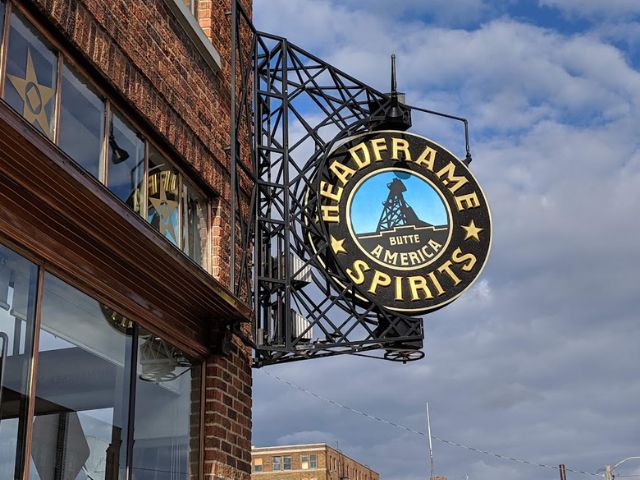
Headframe Spirits
Drew H (00:08):
Welcome to Whiskey Lore's Whiskey Flights, your weekly home for discovering gr craft distillery experiences around the globe. I'm your travel guide, drew Hanish, the bestselling author of experience in Kentucky Bourbon Whiskey Lore, volume one booked at Bus 24 Whiskey's, biggest Myths, and soon a distillery travel guide for the entire United States of America. Yes, experiencing American whiskey. And I will soon have information on how you can pre-order your very own copy. And today we are going to continue the great 48 tour visiting independent distilleries around this great country. And after a beautiful drive leaving Coe d'Alene, Idaho, heading for Butte, Montana, I hit a nice little traffic jam right in the middle of nowhere. And it was one of those annoying traffic jams where you sit there for 45 minutes and then finally once the thing gets moving, you're like, well, what was it? There wasn't any sign of any kind of accidents or some kind of wrecker picking up some vehicle or who knows what it was.
(01:17):
But got to my hotel, got a good night's rest, and then next morning I was out looking for different distilleries to visit. One of the places I was going to head to was Headframe Spirits, and this is not my first trip to this particular distillery. Back in September of 2019, while I was still doing the Travel Fuels Life podcast, I was at a podcast convention in Billings, Montana and decided to tack on a little road trip where I would head to Wallace, Idaho so I could get my picture taken under the center of the Universe sign, and then do a little detour through Glacier National Park. And I was also using the time to start writing my first book experience in Kentucky Bourbon. So I had put together an outline of the chapters and was actually just kind of brainstorming into a mini recorder, all of the content that was going to go into the chapters.
(02:17):
And let's see, I stopped off at Lolo Creek Distillery, which was south of Missoula. I went to a Montana distillery, walked outside of it. That was in Missoula. There's a couple of distilleries in Missoula. And then I went to Glacier Distillery, which is just outside of Glacier National Park. No tour. A very interesting looking still in there though. And then I drove down into Butte. And what's interesting about the town of Butte is that as soon as you start driving toward it, you realize that this is a mining town because just the effects of it are all around and it's a really long town to drive through. Not lot of stuff going on there, but it's like, wow, there was a big city here at one point and the remnants are still there. So I drove up to the top of the hill and I booked myself into the Finland Hotel, which is a great historic building and really enjoyed my stay there because I could walk to all sorts of different things around the area and was taking pictures.
(03:25):
And then I went over to Headframe and got myself a tasting flight. They had equipment sitting over behind the glass, but it didn't necessarily look like they were doing any kind of tours at the time. I sat at the bar, I sipped through a flight of their spirits and was reading through a little book they had sitting on top of the bar that had all of the Headframe spirits names, but also the history that's associated with each of those names, which is associated with a mine that was in the area. And it was a great way to really connect to the history of Butte while I was sitting there sipping on a drink. Well, interestingly enough, once I got back to the conference in Billings, I had a friend call me on my cell and told me about a distillery called Bentley Heritage down near Lake Tahoe that wanted me to come down and see their estate distillery after being wowed by their magnificent bourbon distillery and all of its amazing looking equipment.
(04:35):
I noticed that there was a Headframe logo on one of the pieces of equipment. It was head frame spirits. I thought, well, that's weird. Did they buy this still from head frame that used to be at head frame? Well, I later found out that Headframe actually makes their own stills as well as making whiskey. And so their owner, John McKee, was somebody who I really wanted to get on the podcast at some point. And so I used this trip at Headframe to get his contact information so that we could do a Zoom call. And I want to share that interview with you today. We're not only going to talk about whiskey and the experiences that Headframe offers, but we are also going to dive into his still making business at the very beginning of this conversation. And that's something that we've not really covered on the podcast before. I say this is kind of a hybrid flight episode and interview episode because we're also going to dive into the history of this unique old mining town and learn a little bit about its history and the mine names through all of Headframes spirit names. So let's not waste another minute. Let's get right into the conversation with John McKee of Headframe Spirits. So let's get a little bit into your background. I understand that you're a computer guy, but that you had shifted around the recession into the world of distilling. How did that transition happen?
John M (06:08):
Yeah, well, I mean it was interesting. So originally, I have a degree in psychology to start with, and I turned out I didn't really know how to make anyone better. And so I went into computers and I was working at a think tank that did a lot of things. And one of the things we did there was we invented a way to distill biodiesel commercially. And so when that spun off, that group called me and said, Hey, we want you to come do that with us. And there was only two of us or three of us, and they said, well, you don't have enough computers. And I said, well, that's all right. They wanted me to learn. They knew I was big enough nerd that they wanted me to learn all the other parts. So we started this biodiesel company and that we ran up through the recession of oh eight. So we put a hundred million gallons a year of production on the ground. All those plants still run today. And when I left that industry, I decided I wanted to start making boos. And the interesting part about making boos is when it comes to micro distilleries, they don't do it the way everybody else does. I mean, 90% of all alcohol made is made on continuous columns,
(07:09):
But you can't really buy those. So I was going to Ven Dome and Carl and Cota and all the guys and saying, where's your continuous? And they didn't really do it. So I called up some of the original guys with me at the biodiesel company, and we came together and over a weekend and a couple cases of beer, we designed a continuous flow alcohol distillation system. And then they went onto their lives. And I took that from there and did all the final design and prototyping and built it. And then now we sell what we call version three of that. We sell to distilleries all over the world now.
Drew H (07:41):
Wow. So now when you're talking about continuous stills, we think about when you go to Kentucky, you basically have the beer still, which is a column, but then you also have a thumper or a doubler. Are you talking about more like a coffee still style?
John M (07:56):
Yeah. Yeah, that's exactly it. So when you think about that design, you just sort of that outlined right there, the beer still to thumper, it's continuous system, but it lacks a couple of nuances that continuous columns truly have. And so yeah, what we do is the still that you can think of historically was like a coffee still. Yes. But it does everything. So we do with the still, we'll do everything from whiskey, we do the heads cuts, we can go to neutral and you can go right back down again too. So we do, when the beer goes into our stills, it comes out as this finished product. If it's whiskey, it's coming out at finished proof, ready to go into barrels. In fact, the big still right over here that we make our American single malt on, I guarantee you right now it's coming through at about 114 proof, 113 proof, and it's coming straight off and going straight into a barrel. And that's just single pass when the beer went into the column that was about four minutes before, and that molecule beer, if you will, got turned into whiskey and came out the other side.
Drew H (08:57):
So all those stories about doing cuts and all of that, that's not really something you necessarily, how do you determine what rate you're pulling that off of the still?
John M (09:06):
That's a great question. So cuts are always only based upon temperature. That's the real magic around distillation is that there is no, I'm smelling and tasting for heads. And yeah, I mean that's the story we all tell, but really it always comes off between temperatures. X and Y is where all the heads come off and ethanol comes off between X and Z. And so there's really just really do they just watch temperature numbers and that's how they run pot stills. And people will say, oh yeah, I'm tasting and I'm smelling, but they're not. They're just watching that temperature probe and cutting it off when it's time. What we do is based upon that same concept, what we do is our design. I recognize that. Okay, look, this is just distillation. I've been doing biodiesel, methyl ester distillation, glycerin, distillation, things that are real precise and done at real high vacuum and high temperatures.
(09:55):
When I came over to ethanol, there's a nice temperature curve between heads compounds, ethanol compounds, and tails compounds. And it's very simple to build a continuous column that will just separate those precisely. And so in fact, one of the things we're really proud of is in American bourbon, ethyl acetate is actually a marker of age. So it happens in barrels, right? Where over the time in barrels this compound gets created through the redox reaction. So if they take a sample and they say, oh, this is a nine year bourbon, and they run it through a GC and they don't see a certain level peak of yl acetate, they know that's a forgery. But what's interesting is ethyl acetate is also created in the fermentation process, but these distilleries that run like a beer column to a thumper, they remove all that ethyl acetate from the fermentation. Our still, for instance, I can very precisely say, no, this style bourbon, I'm going to want an YL acetate that suggests that this is a three or four year bourbon. And that's what our systems can do. That level of precision on just catching the compounds you want and making a very precise whiskey, bourbon, vodka, gin, whatever it's making.
Drew H (11:02):
So one of the products that you're making is an American single malt. And so this idea of the Scots are in love with their pot stills. Usually when you see a coffee still they're using it to make high proof grain alcohol. So how do you adjust to a single malt to just barley and still capture those flavors that they're looking for in that past?
John M (11:26):
Well, again, it's really interesting. So what they're doing in those stills, regardless of how they're doing it, they're just, again, making a distillation based upon temperature. If you know those temperatures, I can put it through a column still and get all the same profiles. I can get all the same organic compounds, I get all the same flavors, all the same mouth feel, I can pull all that same thing off. I can just do it for a company my size much more efficiently, much more precisely. And I think a lot of ways, a lot more sexily than the big pot stills. I think the pot stills are cool, and I think they harken to a cool story as far as the history of our industry. But again, if you're going to be competing against guys like that who have been running for 80, 90 years who have thousands of barrels and a year, you're not going to compete with them on the same game. You have to come up with something more novel, more unique. And that's what our still does. But yeah, I mean we've put a GC peak of our whiskey up against Macallan or any of the others that are out there and they just match. I mean, it's not a thing.
Drew H (12:26):
So one of the things that I found in my historical research is that there's a little myth around the fact that the Irish didn't really take to the coffee still. Although what I found was in the 1840s and 1850s, a lot of the illicit moonshiners were basically using column stills because the idea was that they could get a cleaner spirit that didn't give headaches and all the issues that you would deal with with taking too wide of cuts when you're cutting and the fact that you're getting some of the heavier oils out of there that require a lot more time of aging in a barrel. So are you finding your barrel choices are different for the single malt than maybe somebody in Scotland would be dealing with?
John M (13:15):
Well, not particularly. So again, so speaking to American single malt, I'm one of the founders of the American Single Malt Whiskey Commission. And with specifically this in mind, 12, 13, 14 years ago, whatever it was. Now, the very first barrel of anything I made here was a single malt. And I made it in a style that was more akin to single malt, you see from anywhere but America. So up until this year, an American single malt meant that it had to be Asian, a brand new barrel just like bourbon. And when you go around the world and you talk to everyone who drinks whiskey around the world, well, they just said it just tastes like bourbon. They were very uninterested in that kind of spirit because it was very tannic. It's very new oak inspired caramel and vanilla that you'd expect in bourbons, and they just didn't like it. And so I knew that. And so in fact, I love this whiskey called Napo Castle specifically. I liked the 15 year expression at the time. I took that bottle to a gas chromatograph. We took the peaks off of it, we reverse engineered the fermentation regime of that and started working on something that became what we make now. And
(14:18):
Then the aging wise, we were very much in the same boat. I don't like malts made in brand new barrels. It's not good. It does just taste like bourbon. And if I want to make bourbon, which I do, we'll make bourbon. But if I'm going to make single malt, I want to make something that's akin to what I can taste from anywhere else in the world. And so one of the things that we do here is about 70 to 80% of our barrels, just like Scotland and Ireland, 78% of our barrels are used American bourbon barrels, and then about 20% are new barrels, and then we're due when we go and make that blend at the end, there is an influence of new cooperage, but it's only about 20% of the total juice because we're taking about 80% of the rest of that juice out of used barrels.
(15:01):
And so every three weeks, 280 barrels show up here from Kentucky, we get four roses and will it barrels, and we get pappy barrels and we fill 'em right up with our single malt and put 'em into our rick because we're basically just following the exact same thing that the Irish and Scotch have been doing since the fifties when the rule of American bourbon had to be made in a brand new barrel. And they had all these brand new barrels sitting around after the dump when Iron Scotland said, we don't have that rule and start shipping 'em to us. And so we've been making whiskey for the last 15 years that we feel is much more akin to what the customer on the world stage expects from a malt whiskey, not an American made brand new barrel malt whiskey.
Drew H (15:42):
Many years ago I went to a distillery called Bentley Heritage, which is now Minden Mill in Minden, Nevada. And I'm looking at this beautiful setup that they had down there, and then I see headframe spirits and I'm like, I was just there. What is this? Did they take their old still or something? I had no idea that you guys made stills. How do
John M (16:02):
People built theirs for?
Drew H (16:04):
How do people find you for making steel?
John M (16:06):
Well, so the industry was sort of younger, if you will. The craft industry in America was sort of younger. When we entered, I think we were the 297th distillery or something in America, and I was back in 2011, 2012. And I think that at the time I was just pretty vocal about, I was really surprised at the way the industry is working. There was a bunch of, let's just say unsafe and weird things that were happening that wouldn't happen anywhere if it wasn't beverage. And I went around really trying to make change in the industry, especially with regards to safety, especially with regards to proper, how you make a whiskey, why you're making whiskey, and what's the point of it if you're not doing it right. And I just made the name for it. People started asking, well, how are you making yours? And I said, well, I make my own still. And then they said, well, show us. And then they started buying 'em. And so no, I've never had a booth at a trade show. I'm just sort of known in the industry now. And so when people want to still, they just call me. And for a while there, we only built six a year, and so if you got on our list, you got one, and if you didn't, you got one next year kind of thing.
(17:16):
But the nice thing about Bentley Heritage and Minden Mills, now the nice thing about that facility was a gentleman I've been working with for a long time, Johnny Jeffrey and I had worked on stuff since day one, and he was at the time was going to be the lead of that facility. And so we put that still in there alongside the big old four size and the corals. And I'm just really proud because it made a lot of whiskey at that facility our still did in contrast to any other still they had. So I was really proud of that place. I thought of what the stills we put in there, but we've got stills just like that all over the world. I just put one into Costa Rica where they're taking the husks of coffee beans, squeezing that down to get the sugar out of it, fermenting that, and then making a vodka.
(17:58):
So it's a vodka made from coffee bean husk and our stills are cracking that out down there for 'em. And so we have this, I think when you talk a lot about whiskey in America, distilling in America, a lot of people really get caught up in the pot still and they really get caught up in the concept of it has to be done this way. And I think it limits a lot of things that people can make. And that's one of the things we try to pull back on is the limits on this industry and make sure people can do everything they want to try.
Drew H (18:33):
Well, here we are, it's November, and if you are an early bird shopper and you have some whiskey fans on your list, I have two distillery travel guides ready for you at a special price experiencing Kentucky Bourbon. The all new 2025 second edition features over 80 Kentucky bourbon experiences and updated history and more prep materials for anyone's planning of an ultimate bourbon adventure. And also a copy of experiencing Irish whiskey, which is the ultimate planner to an overseas whiskey travel adventure with over 50 distillery experiences. And it's going to help you figure out how to travel in Europe as well as traveling the emerald aisle. Get both for a limited time at a low price of 37 99, both of them signed and both with free shipping here in the United States. Get 'em at whiskey lore.org/shop. That's whiskey lore.org/shop. Your whiskey friend will. Thank you. What I didn't know when I came to town is that you have the distillery that I've gone to a couple of times now that is set up what you call that downtown. You're near the top of the hill. We
John M (19:54):
Call it uptown. Yeah, we call it uptown, yeah.
Drew H (19:56):
Okay. And this is is what really fascinated me about Butte is the fact that when you first drive into town, it's a mining town. You can see the effects of the mining as you're coming in. Then the other thing about Butte is how long the city is to get through. It's not really a small town, it is spread out. However, it's not got a big population. So it's kind of like it was built for a huge population.
John M (20:22):
There was a very large population. So the infrastructure of the buildings in the uptown that you're sort of speaking to there, that infrastructure buildings was built for a hundred thousand people. There are about 33,000 people in Butte now, but at the time, those buildings were all full. And so basically turn this entry, this was the largest city west of Mississippi. We're bigger in la, we're bigger in Seattle, and it all about the mining of copper. Yes, there was some other stuff down there, but they didn't even pull that out. It was just about copper. And in a lot of ways we sort of electrified America and certainly the world. I guarantee if you have ever lived in a house that was built before 1970, there's a good chance that all the copper in the walls came from here. In fact, the Butte to Salt Lake is 500 miles or something.
(21:10):
We pulled so much copper out of here that we could pave the highway all the way to Salt Lake in like eight inches of copper or something like that. It's this gargantuan amount of copper that came out of here. And at the time, that was all hard rock mining. So what would happen is the guys would get lowered down into the mines three shifts a day, and they would go down and they would blast with pick and shovel. They'd pull it back up, it gets smelted. And the thing that lowered them down into the mines at that time were these things called head frames, which is something we named the distillery after. And what these were is they're basically, there's these big sentinels on the hill, there's still about 10 of 'em on the Butte Hill that you probably saw when you were visiting. We light 'em up at night, they stand a couple hundred feet tall.
(21:50):
And what they were is they're basically the top of elevator shafts and they would lower the guys down into the mines, they'd work thousands of feet underground, and then they'd pull 'em back up and pull the aura up at the end of the day. And when we were thinking about naming the distillery, we really didn't want to call it McKee distilling because the name McKee doesn't mean anything. We really wanted to have this to be a connection to something important in the world. And Im Butte, our history of mining and what we were and what we still are, we're still a mining town. We're an open pit mining town. So 300 guys do the work of what 30,000 used to do.
(22:26):
But we wanted to sort of pay homage to the history of our town. And so we called our distillery Headframe spirits, and then each one of our spirits is named after a mine on the Butte Hill that operated on the Butte Hill. And so we said, look, it'd be fun to put the juice in the bottle and we really like it and we hope people like it, but we wanted them to get a little bit more out of it. And so we co-branded the history of our town and our place and the world with our spirits, and so that it goes out in the world. We can tell that story in a little more depth.
Drew H (22:58):
So the distillery that you have up there, I saw that it was associated with the name Kelly Mining Yard. Is that That's
John M (23:05):
Right where it was? That's right. So where I'm sitting right now is the Kelly Distillery, and it is the old warehouse and Headframe site of the Kelly Mine. And the Kel Mine was laid down in the fifties. It was actually not mined very much. What was very interesting about the Kelly is it was built to strictly be a lift, well not strictly, but to mostly be a lift head frame for all the other mines. And so what happened was they drove this, it's the biggest head frame that existed on the hill, and they drove these shafts down to four or 5,000 feet and then it came sideways from the other mines, and they bring the ore over from the other mines. There's, they called a block operation right underneath us too. But there's 4,000 miles of tunnels underneath us right here, just underneath that uptown, all those buildings you saw, there's this great map that the Montana Bureau of Mines has that shows in 3D sort of the spider web of mines that's underneath us. And we go down to sea level. We go down 5,000 feet of mines on the Butte Hill. And so the Kelly, where this distillery is now, we've adaptively reused this site, which by at this point 10 years ago was an abandoned warehouse and an abandoned site. We've decided to turn that into something that's verdant and working and employing people and running a big distillery up here.
Drew H (24:22):
Have you been thinking of something like maybe mine aging your whiskey?
John M (24:27):
Absolutely, I have and I keep working at it. But the other thing that's very interesting about Butte is we are a Superfund site mining is pretty dirty and it causes a lot of issues. So a lot of the mines have either been closed off or are cordoned off in a way that they can't be used. But there is a mine right on my site. We'd have to open it back up. And we've been working for 10 years to get permission to open that back up sideways stove and just start putting barrels underground because heck yeah, why wouldn't I want to do that?
Drew H (25:03):
Yeah, well, especially if you're doing a single malt because that's right, you get those cool damp conditions. That's
Speaker 3 (25:09):
Right.
Drew H (25:10):
Yeah. Let's talk about some of the other names that you had. This is what I thought was so cool when I first visited, maybe not so much for the locals who enjoy the whiskey, but for people coming to town and especially a history geek like me, to see the names of these other brands that you had, and you used to have a book and you could open the book and look at the stories of all of these. Talk about the speculator and the North Butte mining disaster. What's the story behind that one?
John M (25:41):
So yeah, we named all of our spirits after the Butte mines. And what happened was mining was tough. It was not a safe occupation. Just in a standard day, people would lose their lives much less in large incidents. And in the speculator disaster, the Granite Mountain Speculator Mine disaster, there was a fire that started underground and by the time it was over, more than a hundred men lost their lives. It's the largest loss of life in a hard rock mining disaster in American history.
(26:12):
And what we did was when it came up on the hundred year anniversary of that, we elected to release a rye to commemorate that rye whiskey. Last time you visited in 18 was very close to the time that actually came out. We know that story, like you were saying, the locals know that story. We have a large up on the hill just above me here. There's a large viewing stand at Memorial, and you can go up there and read all the names of everyone who can learn all about the history, and there's a bunch of interactive stuff up there to tell you what happened. And it's really moving and it's a really big deal because we were a company town, some of the phrase richer than Rockefeller, that was about the three Copper Kings who ran this town. They were richer than Rockefeller. And so a lot of the people who did the work didn't really get the memorials that the guys who got their names on cities and counties and became us Senators got. And I think that being able to, for the speculator disaster to call to use our brand at that moment, to call that history back out for people outside of Butte. So as that brand went outside of Butte, it gave them a chance to learn a little bit more about the things that this town did for the world, mostly in its electrification and the costs that came with that.
Drew H (27:33):
Well then you had, your bourbon is named Never Sweat.
John M (27:36):
Yeah, never.
Drew H (27:37):
Which is an interesting day. Never. So what is the story behind that mine?
John M (27:41):
Well, I think what's really cool is before we get into that story, so there's this, when we were okay, we decide we're going to call ourselves like, well, what are we, which mines are we going to name? After we went and got this, I forget the date on it, I want to say the 1910 city directory, and there's 400 mines on the Butte Hill in the 1910 City directory. So there's just this amazing breadth and width of things that we could call our spirits. And the Never Sweat was really cool, and for a lot of reasons, there was an irony to it. A lot of the mines on the Butte Hill are pretty hot. So you go down and you'd be working in pretty hot conditions and it's Butte, Montana at 5,000 feet. And so sometimes you'd be coming out in the winter to 40 below after you've been working at 110 degrees.
(28:24):
And there was pretty interesting dynamics these guys had to do. But the Never Sweat was sort of cool because when they first put it down, it was sort of the coolest mine on the hill. And so people were trying to get into that one because you never sweat. It was a pretty good job, but by the time they got down to the working levels, it wound up being the hottest mine on the hill. So it turned into this sort of irony. But the thing that was sort of neat about that one, and this is also at the archives, which Butte has a very, very, very large and very well done museum level historical archives. But one of the things that happened is that they really needed workers. And so a lot of our workers came from Western and Eastern Europe. So it was like I went to high school, you either grew up, you're a M or you're a ski, so you're McKee or you're Zeki, right?
(29:14):
But when they went looking for workers for the Never Sweat, one of the things they did is the company made a bunch of postcards and gave it to the workers at the Never Sweat, said Send it home. And what it had was all these guys sent these postcards back to Ireland and it had instructions on it, and it said, pin this to your shirt when you get to Ellis Island. And on the shirt it said, send me to the seven stacks of the Never Sweat because the Never Sweat had its own smelter. At Seven Smokestacks it said me to the seven stacks of the Never Sweat. And the Ellis Island guys knew to corral those guys together and go put 'em on a train for Beat America because so they used that postcard to literally, and just saying the word never sweat meant enough at the time that the guys at Ellis Island knew where those guys were supposed to go. Wow.
Drew H (30:00):
I hear you reference Butte America. How do these two words connect to each other?
John M (30:07):
Well, it's funny. I think, yeah, we are Butte Montana, but we are really, really diverse place. I think the thing about a mining camp is you sort of envision things like you might see in television shows, but the second light bulb ever lit was lit here. The radio stations all sent their major stars here in the thirties and forties. I mean, this was a very cosmopolitan town. There were opera, but there was also walks of life from everywhere. So like I said, anywhere in Europe that you can imagine had a berg here in town. So there is an Italian area, there was an Irish area, there was Eastern European area, but there's also a lot of Asian and a lot of our Chinatown still to this day, the longest running Chinese restaurant in America is here in Butte, Montana. It's called The Kin. And so when we talk about it here in Butte, I think one of the things we recognized is that there's very few places that grew themselves up as a watering hole of all of us. And so we've lot of us just call it Beauty America because we're sort of the cross section of everyone,
Drew H (31:19):
The laur that you've created, orphan Girl
John M (31:22):
Bourbon, the Orphan Girl. I started Distillery and we said, well look, we just know there's going to be people who just don't want the hard stuff. So we were like, what's an alternative there said, well, Berber Cream Leurs are low A BV, and people sort of like Bailey's, so let's make one with bourbon. That's who we did. And we called it The Orphan Girl. And we sort of just thought it'd be a little, just something when people just don't want the hard stuff. Well, it turned out to be our most popular product. It still is to this day, after 15 years or 14 years, it's our number one seller. And we outsell Bailey's in the state of Montana with it. I mean we have almost since day one. And what happened was there was this reach out from one of the big liquor companies about 10 years ago, and they said, Hey, would you be willing to sell the Orphan girl?
(32:11):
I said, well, I don't know, maybe talk to us. They said, well, we don't want anything else. We'll buy the whole company. Here's a big seven digit number, we'll buy the whole company. No, it's an eight digit number. Buy the whole company. All we wants the brand. We don't care. You can can't ever run again and just sell whatever and just fire everybody. And we said, well, that's not on our interests. We want, this is our place in the world. We want to make something better out of it and something better for it. And so we've not, so disrespectfully declined and we still outsell 'em and we still make jobs for people in Be America. So we've been really proud of that decision. And next year, not next year is 26, the 2027, we're going through and following through with our employee ownership and I'm transitioning the company over to being an employee owned trust and they're going to own the company and take it away from there.
Drew H (33:09):
That's beautiful. Well, so talking about a laur like this, and the one thing that I noted when I was going around Montana was that everybody has posted in big letters two drinks a day, and that everything is kind of formed around this law that says that you can only have two drinks a day at the distillery, right? Yeah. It's got to be pretty handy actually, because I understand that you have a pretty nice list of non-alcoholic cocktails as well to give that option.
John M (33:44):
Well, it's sort of interesting. So Montana, the thing that's very curious about Montana is not to steal your licenses, liquor license, like to run a bar. There's only so many of 'em. They're all quoted by county and they're considered true property. So you drew, you could own a liquor license in Montana, in Butte and never run a bar. You need to sit on it and then eventually price goes up. Scarcity, someone comes to you and says, here's a million bucks, can I have your license? And they're like, sure. And so then they could go open a bar. So the value of liquor licenses, Montana is grossly outs stated their actual any liquor license value anywhere else. And so when the distilleries and breweries started wanting to open their operations and have tasting rooms, the people who own these million dollar licenses were really put out by that.
(34:32):
They're like, look, that's a lot. We put all this money in open a bar, and these guys don't have to do anything. And so limitations were put on us. And so for ignoring breweries, but for distilleries, yeah, you're right, we can have two cocktails per person per day. We have to close at eight o'clock at night. And I think at first we felt that was a little onerous. We do have a pretty deep NA menu as well, but I think as time's gone by, I think we found out that we actually like it a lot better. I think what we like about it is, I dunno if you remember when you came into our facility, but there's no televisions. There's no gambling machines. If you're encouraged to come in and sit down and talk and get to know each other or debate or do any number of things that people used to do in bars, instead of look at their phones and look at televisions and with two cocktails, that's enough to sort of get you talking without getting you talking too much.
(35:22):
And being closed by eight is sort lovely because all our bartenders get to go home. A lot of our bartenders in that tasting room, they're teachers or they have other careers, they do this for fun because they just need to get out and do something different. And so they get to go home at eight. So I think there's been these pushes sometimes by the Distillery Commission of Montana, the group of Distillers, Montana, to change those rules. Let's serve more. Let's be open more hours. I've never really been a huge fan. I was like, nothing really great happens in a bar after midnight. Let's let the bars deal with that and let's give an experience where someone can come and taste what we do. And if they want more, well that's really handy because Butte has no open container law, so we can send them with a goey or they can walk across the street to a bar and they have our product there. Go to that bar, go to any other bar in Butte and continue to sample what we do and continue to purchase what we do and take care of those businesses while you're doing it.
Drew H (36:22):
And you've got places to eat around you. If you were going to suggest a place where people maybe to pair a place to go eat after they've had a couple of sips of your spirits,
John M (36:33):
Oh, it's just great. All the uptown is great restaurants. There's Sean O'Donnell's to Saffron, to the Metals Bank. Eminem is a classic and iconic bar of the Uptown Butte. All of them carry our stuff. And it's just sort of literally, I don't know if you remember when you're talking to our bartenders, they're almost like tour guides for Uptown Butte. If you ask 'em a question, they're going to talk to you for 10 minutes about what do you want? How do you want, let's go over here. Let's look at this idea. And by the end of it, you've got a whole itinerary for what the rest of your night's going to look like. And in fact, that's one of the funny things. If you go back to that TripAdvisor comment I made earlier, we're the only business in the TripAdvisor top 15 things to see and do in Butte, Montana. All the rest are museums. And then Headframes like number seven. And it's because I think that when people show up and they say, what should we do? Our staff has this laundry list. Oh, you could go here. You go to my museum and we become these unofficial tour guides of Butte. It's sort of cool to see that we're recognized in a way that people say, you should stop at Headframe. We want to figure out what you want to do in Butte.
Drew H (37:33):
Yeah, it's a great area to walk around. And I stayed at the Finland Hotel, which I would encourage people to check that place out as a place to, I love Finland, kind of center yourself. That historic, was that maybe early 19 hundreds that was built?
John M (37:49):
Yeah, last year they just went through their hundredth anniversary on the building was last
Drew H (37:53):
Year.
John M (37:55):
But yeah, just a really great building. And you're right, it's that again, it really hearkens back when you walk into that hotel. It's like you're walking into a hotel in downtown Chicago, some of the old ones there, some of the old ones in downtown New York. I mean, this is a historic piece of art when you walk in. It's not like things that get built now, and it's just fun to see it. And you're right, it sort of resets how your brain is working. What am I about to experience in Butte if this is where I'm spending the night, right? Yeah,
Drew H (38:25):
Absolutely. Absolutely. Well, for people who want to come to the distillery, this is what surprised me again, is that I did not know that you had a larger, do you do tours at that larger distillery?
John M (38:38):
Yes and no. We tend to do tours at the larger facility for larger groups or special events. So we've hosted a big Irish delegation that came in a couple months ago, and we host sort of specialized events up here. And the reason for that is that there's no tasting room up here, not like down at the other facility. And it is a big production facility, Alex. There's a semi-truck shows up every two to three days with 50,000 pounds of grain. We've got forklifts going everywhere. We've got 20 barrels of whiskey per day being filled. We've got welding happening in our fabrication facility. So it's a nice place to tour. I love giving the tour, but it's not one that we just offer because there's too much going on that insert that level of distraction or danger, if you will, because again, forklifts, everything else, I don't even let the dog go over there because of all forklifts.
Drew H (39:29):
She's napping right behind you.
John M (39:31):
Yeah, she's definitely, that's sort of her lot in life is to sleep on that couch. No, but again, when it's a large delegation, a large reason for it, absolutely. We host governors, we host senators. I mean, when there's a reason for them to see what manufacturing and value added agricultural manufacturing, what that looks like, we bring 'em to this facility because this is really what we're doing here.
Drew H (39:55):
I was going to say, I can travel around Scotland, Ireland, and the US and I can find Cooperages. I've never seen a place that manufacturers stills actually have a tour, but I know that would be hard to do because you never know when you're going to be making stills.
John M (40:10):
Well, there's that. And also the funny thing about making stills is we're stain in the still welding shop, right? What's the number one rule? Don't look at the pretty light in a welding shop. So it's hard to give people tours in a welding shop. Everyone wants to look at the pretty light. And so I think that, but it is, it's fun when we have the stills going up, when we're fabricating in that space again, it's a really nice thing to be able to bring people into and remind them that manufacturing in America, manufacturing Butte, Montana is not dead. This is something that could still happen and it can be manufacturing from value added ag. So us taking grain and transforming that into a whiskey or it can be steel and taking that and transforming it into stills and selling those to distilleries all over the world either are legitimate forms of manufacturing. And I think we're just really proud that we get to do both.
Drew H (41:03):
Well, John, you have a fascinating town, and I definitely encourage people to check out Butte because I do too. You look at the map and you go, man, Montana is big and you got the Rocky Mountains. Everybody's going to go spend time in the Rocky Mountains. And Billings has done a really good job of advertising itself, and Glacier National Park is up there, but you're in a really great spot where you kind of connect in for people who are coming up for Yellowstone or absolutely coming across from on I 90 from either direction.
John M (41:34):
So we really are sort of the center, if you're going between Glacier and Yellowstone, you're going through Butte. If you're going across the state, you're going through Butte. And I think that what's happened in a lot of the big cities around Montana, especially since 2020 and COVID, is that a lot of those towns have grown, but they've grown with a bunch of event imports of people who've moved to Montana. And I think a lot of them are losing what their original sort of spirit was. And I think what's really cool about Butte is our spirit is a really anchored, I mean, you saw it when you were here. I know you felt it when you were here. We know who we are. We have our vision and our picture of who we are, this melting pot of everywhere. And when you come here, I think we're really conscious on maintaining that image and that of who we are. And I think people really appreciate that and plug into it.
Drew H (42:25):
Well, John, thank you so much for taking time today and walking through things, and people now know what Headframe is about, and maybe they'll see your stills out and about and go, oh man, I need to get to Montana. I hope so.
John M (42:37):
I hope so. I've got the railroad from Nantucket to California and Canada to Costa Rica, so it's a pretty cool way to be able to help the industry.
Drew H (42:48):
Well, best of luck to you, and thanks for joining me. Cheers.
John M (42:52):
Cheers to you. Thank you.
Drew H (42:54):
Well, I hope you enjoyed this journey to Headframe Spirits. And if I peaked your interest in traveling to Butte, make sure you head to whiskey lord.org/flights where you can view the profile of Headframe spirits along with over 1300 other worldwide distilleries in my online whiskey lower distillery travel guide. Sign up for a free membership and then click the bookmark to add headframe and all of your favorite distilleries to your whiskey lower wishlist. And when you're ready to travel, use the site's planning tools, maps, tour dates, and booking links. Firm up those plans. Start your journey@whiskeylord.org slash flights. Now it's time to hit the road. I've got a distillery to visit before I hit the next Whiskey flight distillery. We're going to, a lot of people are talking about Willy's Distillery, which is in Ennis, Montana. It's sort of on the way to Yellowstone. I'm kind of taking a little detour as I head off into Wyoming for our next whiskey flight episode, which is a destination that is not only a ranch, but it also contains a distillery. Make sure you've got that ticket to ride along by smashing that subscribe button on your favorite podcast app. I'm your travel guy, drew Hanish. And until next time, cheers and Slava for transcripts of travel information, including maps, distillery planning information and more to whiskey lord.org/flights. Whiskey lord's production of Travel Fuels Life LLC.
About Headframe Spirits
Tasting room available.
Take a Whisky Flight to Headframe Spirits
Map to Distillery
Note: This distillery information is provided “as is” and is intended for initial research only. Be aware, offerings change without notice and distilleries periodically shut down or suspend services. Always use the distillery’s websites to get the most detailed and up-to-date information. Your due diligence will ensure the smoothest experience possible.