
New Riff Distilling
Molly (00:08):
Welcome to Whiskey Lord's Whiskey Flights, your weekly Home for discovering great craft distillery experiences around the globe. I'm a travel guide Drew Hanish, the bestselling author of experience in Kentucky Bourbon, which is now in its second edition in the Lost History of Tennessee Whiskey, along with a brand new book to bust, 24 of Whiskey's biggest myths, whiskey lore, volume one. And today we are in northern Kentucky, headed towards the Ohio River, and this is an area that back in the 19th century was rich with distilleries. Amazingly enough, a lot of those distilleries were on the Ohio side of the river in Cincinnati, in a town that became notorious for its Cincinnati bust head, which was basically rectified whiskey that was flavored either with bourbon or rye whiskey, but also might've been flavored with some of the stuff that was coming out of the lab. So very interesting history for Cincinnati whiskey.
(01:05):
There were distilleries on the south side of the Ohio. In fact, there were three pretty big distilleries in what was District six. Boone County is probably the most well known, and by 1860 it had already produced over a million gallons of whiskey. There was the Old Darling Distillery, which was named after its founder, WW Darling. And there was also the old 76 Distillery, which had also gone by the name Robeson Staman Distillery. And that one sat near the banks of the Licking River, not too far from the distillery. We'll be visiting today new riff. And actually we're going to find out a very interesting connection between the old 76 and new riff. And the first thing that might catch your ear between these old distilleries and the current one is the difference in the names. That's mainly because back in the early days of whiskey making distilleries didn't have formal names and often went by the name of the owner as brands developed.
(02:06):
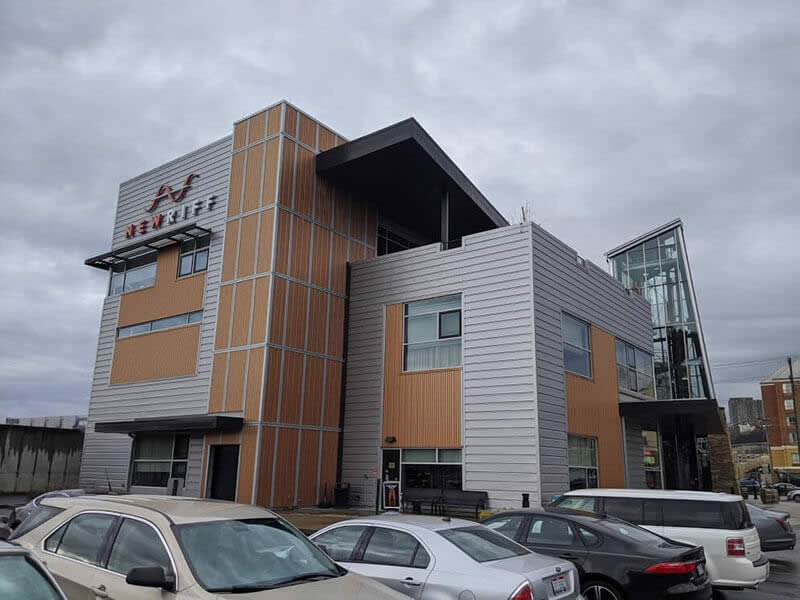
And distilleries would be known by the names of those brands, or they might've been known by the location that they existed in. But then after the Civil War, everything changed and government records came along. So distilleries had to adopt official names, but they still tended to be named after their location, the distillery founder or owner or again, the brand. But in the case of New riff, well that doesn't sound like any of those things, and that is actually on purpose. And we're going to find out why in our conversation with Molly Lewis, who is the president of New R. Now, this is a very easy distillery to get to. If you are coming south, you're just going to want to get on 4 71 from Cincinnati across the bridge, and it's the first exit, or if you're coming north, it is the last exit coming out of Kentucky.
(03:00):
Simple. There's plenty of parking. The party source parking lot is where you will park and you'll see the big distillery sitting there right in front of you. Now, when I went on my tour back in February, I had the opportunity actually to tour with one of our Patreon members, Gary. I also bumped into Molly. She said hello to me as I was getting started on the tour. And so I wanted to have a chance to get her on the podcast to be able to talk about this distillery that not everybody knows about. The bottles of new riff are just now finally getting all the way across the country. And so this is a great chance to introduce you to the brand. But to begin this, I wanted to ask Molly about her background now stepping into the position of president and how she made her way up through the company.
(03:51):
Happily, happily. Well, first of all, thank you for having me on the show, drew. It's an honor to be interviewed and for us to bring this kind of attention to new riff. So I appreciate the opportunity. I've been with New Riff since inception. It is our family business. I remember 20 2009, 2010, sitting around the family dinner table and dreaming up what it would be like to have a distillery in northern Kentucky. And Ken, my father, was in his 40th year as a retailer owning the party source and several other stores here in Kentucky. And he really had access. He saw the bourbon trajectory start happening. He saw the category changing. His business was debt free. He's an entrepreneur and loves a good challenge. So it was fun sitting around the dinner table, kicking around the idea of what if we tried to create a world-class distillery in northern Kentucky?
(04:52):
So I have been on board since the beginning. When we first launched, we hurried up to make our first distillation, and then because we were adamant about not releasing anything until it was at least four years old, it was a hurry up and wait scenario. Another thing we were adamant about because we were so focused on quality and integrity and transparency, was that we wanted our 4-year-old bourbon to be bottled in bond. We wanted everything to be distilled, aged and bottled at on new roof property here at our distillery. And so we hurried up and then we waited. We made some gin in the first four years of our inception, and we purchased barrels from Lawrenceburg, from MGP. We purchased over 300 barrels. And so we did create another brand. We were very transparent about it not being a new R product, it was bottled at New R, but it was a brand that we created called OKI, which stood for Kentucky and Indiana.
(05:59):
So I did have some OKI to play with, but my title was our sales manager, sales director. I was the head and the tail of the sales department for many, many years. And then I also maintained a full-time job in the wine world. So my background is definitely in the wine world. After college, I moved to California and started learning the ins and outs of being in the wine business. And so I kept that position until 2017 until I was able to come over full-time to new R and we were starting to start planning our sales release for our own product. So I was part-time from inception until about 2017. And then my title was sales director.
Drew (06:47):
So let's kind of introduce people who haven't been to Kentucky yet and who probably haven't seen that sleek, beautiful bottle on the shelf before. A little idea about how you guys got started to get to where you are now.
Molly (07:03):
Absolutely. So I mentioned we are a family business. My father Ken Lewis is our founder. He was a retailer for over 40 years here in Kentucky. So not only was he an advocate for the beverage alcohol industry here in Kentucky and changed a lot of laws to make it more socially acceptable, discount stores, et cetera. But he is done a lot for the community in our state. He's also a serial entrepreneur. He saw bourbon growing in popularity. He saw the expansion of rye in his store and there was really not a whole lot of large scale bourbon production here in northern Kentucky. There hadn't been a lot of resurrection of distillery since prohibition and greater Cincinnati we're actually right under Cincinnati, we're right on the border of Ohio. This area had a very rich history of distilling culture. So it was unusual that no one had really tried to rebuild or resurrect any distilleries in this area.
(08:12):
There were a couple of family owned distilleries, much very, very small, high quality. But the vision was to create a distillery and put Northern Kentucky back on the Kentucky roadmap for the Bourbon Trail. When you think of Kentucky, you think of Bardstown, you think of Louisville, you even think of Lexington, Kentucky. But we have a very rich tradition of distilling also here in northern Kentucky. So the idea was to bring that back. And one of the things he does, I always love he did that, I always point out because it's a emblematic of who we are as a business and our culture is in 2014, he actually sold the party source. So his last store, which is still the largest independent retail store for beverage alcohol in the country, and he sold it to the employees. And I point this out for those of you who might not have heard of an ESOP or an employee sales option package.
(09:16):
Basically when you walk into the store, cashiers all the way up through management are all owners of the store. And so there's a lot of pride. A lot of folks really had their lives changed by having this opportunity and it just showcases Ken's value system a lot. He's all about community and taking care of folks in our little corner of the world. So that's the vision that we built new riff with, was that we wanted to make sure that we made really high quality world-class whiskey and really took care of our community and our employees and our little corner of northern Kentucky. And so those were the founding principles, and I am proud to say that 11 years in, we're still going strong.
Drew (09:59):
One of the things I was surprised by when I went on the tour, you don't think about it always when you're in an urban distillery, but where did the barrels go after that? And you guys actually have a historic warehouse that you guys are storing in.
Molly (10:14):
Yeah, we sure do. So we, because we did decide to build the distillery, our production distillery in a very urban location, we are in Newport, we're right on the border of Ohio. It's a more high density area than somewhere a farm in Bardstown or out in the countryside in another location in Kentucky. And so we realized early on we didn't have enough space in the production facility building, which was newly built in 2014 and modern and plays towards our looking towards the future and modernization. We decided that we were a new riff on an old tradition. And so the production building really honors the future and where we're going with innovation and creativity. And then we purchased a building that was built to the late 18 hundreds over in West Newport. So we're still in the town of Newport, Kentucky. It's about a seven minute drive from our production facility here where my office is located, and it's where our bottling line is. It's where we do all of our single barrel selections, and most importantly, it's where our rick houses are in our warehouses in the back. And so we've really preserved that building. That's a nod to history. It's a nod to Kentucky history. It's a nod to all the great tradition of bourbon making here in Kentucky. So we are a new riff on an old tradition, and we showcase that even with our two different types of buildings.
Drew (11:44):
It is on the licking river, right?
Molly (11:46):
It sure is. Yeah, absolutely. Yeah. I
Drew (11:49):
Was talking with the tour guide because I said that's really interesting because I'm digging into Kentucky Bourbon history and the source for that are the little creeks that come out of Bourbon County.
Molly (12:01):
A hundred percent.
Drew (12:02):
You got that Bourbon County water flowing right by it.
Molly (12:05):
You sure do. Well, and one thing that I always love to point out about new R is that we entirely are run on our own alluvial aquifer. So not only are those little rivers feeding into the Licking River here in northern Kentucky, but all our entire water source is coming up from more inland in Kentucky and flowing right under our production facility and feeding out to the Ohio River. So a hundred percent of the water we use in this building and that goes into all of our whiskey production is limestone rich, alluvial aquifer water, which is always really important to point out. I like to call it our secret weapon.
Drew (12:48):
Well, it was kind of a secret weapon. You might end up parking over the spot where you guys, how did you discover that aquifer underneath?
Molly (12:57):
I'd like to say that we planned the distillery because of the aquifer, but that's not the case. And we're all about transparency. When we were digging the foundation for the distillery, we had already decided to put the building here. We realized a hundred feet underground that we had the alluvial aquifer flowing underneath. So we always say that was one of those moments where we realized there was something greater was telling us we wanted to have the distillery here so it all lined up.
Drew (13:31):
Rebuilding your interest in planning a trip to New Riff as a part of your Kentucky adventure. Make sure to grab a copy of my newly updated and expanded edition of Whiskey Laura's Travel Guide to experience Kentucky Bourbon in it. I'm going to teach you how to plan the perfect Kentucky Distillery itinerary, give you profiles of 44 of the best distilleries to visit from my own personal experience, as well as tell you what I tasted, side trips you might want to plan along the way and insider things to take note of while you're at the experience. I'll also give you advice on how to handle your tastings, and I'll give you the real history of Kentucky Bourbon without all the lore. Make sure to grab the second edition on Amazon or use the shortcut link@whiskeylore.com slash Kentucky book. That's experience in Kentucky Bourbon second edition. So another introduction to new riff for a lot of people is when they see that tall majestic bottle on the shelf, what's the story behind it? It's very interesting color. It's very interesting design unlike any other bottle I've ever seen.
Molly (14:44):
Thank you. Thank you for pointing that out. Again, building on the concept that we are a new riff, an old tradition, we were very conscientious about what we wanted our bottle to look like because for the sake of transparency, so we chose a more historic bottle. You might've seen this particular bottle in a number of different historic brands coming out of Kentucky specifically. It's a beautiful bottle. It's a tall bottle, but it really is a nod to Kentucky history and the history of bourbon making in this area in general. And then we wanted to put our own modern twist on it. So we knew we wanted to modernize it. We didn't know exactly how. We worked with a local firm here in the greater Cincinnati area. They're called LPK, and they were a fabulous design firm to work with. So we came up early with the concept of what we call the ombre and the ombre is that black gradation coming down the bottle.
(15:45):
The goal was to make it really stand out on a back bar. We wanted it to be noticeable. We wanted it to be different. We wanted it to be a new riff on an old tradition. So we kind of hit the jackpot we feel with the ombre design. And then a couple of our principles that are really important to us as a distillery, which are being bottled in bond, almost all half of what we produce is bottled in bond. If it's not bottled in bond, it's bottled at barrel strength. So we don't go under a hundred proof or any of the whiskeys we release. So in Bo, the bottled in bond, it says Bottled in bond right on the front of our label. I'm looking at it right over your shoulder. And we took it one step farther. We decided really that we felt that chill filtration stripped some of the bold flavor out of the whiskey, which is a common practice in the whiskey industry, especially with larger houses. And so we were so committed to not chill filtering that we actually put that on the bottle as well. So that sort of finished out the bottle design and we are really happy about it. It is unique and different, and thank you for noting that. We feel like it was a success.
Drew (17:03):
Well, something else is different too. And yours was the first distillery. I noted this at Chattanooga was the second and interesting that your brewers both came from the same distillery, was that rather than going into Kentucky to find a storied old master distiller to come in and do the work, you actually went north to Cincinnati to find your distiller and not somebody with a distilling background.
Molly (17:29):
Yeah, I love this story. It illustrates completely Ken's collective taking. He really made a decision that he didn't want to hire an assistant distiller from say, Woodford or Makers, right? I mean, we could have gone that route. The idea was we didn't want to have Makers North, we didn't want to have Woodford North. We wanted to put our own stamp on what we were doing. And so we really took a risk by hiring Brian SP France. Brian Sprat is our now master distiller. We coined him Master distiller last year. He wouldn't accept the title for 10 years. He wanted to work his way up to it. And it's true, he hadn't ever distilled anything before he came to us here at New rif, but he was a master brewer and had worked at Boston Beer for over a decade and really knew his fermentation and really knew how to handle grains.
(18:32):
And so we did have Larry Ebersold as our consulting master distiller, teaching Brian the ropes and getting our distillery built and up and running the way we wanted it to. Larry comes from the former Seagram's plant, which is now MGP, but we consider him the master when it comes to rye particularly, and he taught Brian to embrace rye to work with rye, taught us to love rye here at New R. And so Brian was in good hands. They referred to him as the sensei or their guiding light in the early days, and we were Larry's first consulting project as well. So I think that was pretty special for Larry too. But he set Brian on his course and Brian has just really developed and really has earned that title Master distiller. He's phenomenal
Drew (19:27):
That move from going from barley into rye. But I noticed as I'm walking around the distillery that there are always specialty grain bags sitting around. How much experimentation does he go into?
Molly (19:42):
We don't have enough space here in our building. Again, one of the quote problems of being urban, if you will, we just put large grain super sacks wherever. Someone's not going to hopefully walk into them, but we direct import a lot of our grains. He's a stickler for super high quality. I mean, we feel like we bring in the best grains we possibly can get our hands on. We have our traditional mash bills that we make for our bourbon and rye very dialed in. But because we are independent, we do encourage creativity and I think Brian really appreciates that. For example, we released a sour mesh. We call it sour mesh. We released a single malt two and a half years ago as well. And that's been a real passion project for Brian and his team. We'd make a lot of calculated experimentation here. We play with heirloom grains. We allow Brian and his team's creativity to really soar.
Drew (20:39):
One of the ones that I got the sample while I was there, my ears perked up when I heard about it, was the winter whiskey, which actually uses oats, which I mean, it had to be a challenge for him first to move into the world of rye because rye can be a little difficult to work with. But oats, as I understand, are even harder to work with.
Molly (20:59):
Yes, that's my understanding as well. Our winter whiskey, which is not very readily available, we release it around the holiday time. That is a real testament to Brian's brewing background. I mean, that is a mash bill that should have been a stout and came from being able to create beautiful stout beers in Brian's history. But yes, my understanding is that oats really gum up the still and are so hard to work with. In fact, that was a successful project. It's so delicious. It's made with chocolate malt and oatmeal and an oats. And so it's so delicious and so popular that we've asked Brian to make more of it. And he's put his foot down. He said, I can only do one day of this. It's such a pain in the butt to work with and gums up the still, and you have to clean the still. And so instead of one fermentor full, do a full day of two or three fermentors full, but that's it, generally available just in our gift shop here at the distillery.
Drew (22:05):
Well, it's been fun seeing the distillery evolve. The first time that I came was in 2019, and it was impressive because it was the first distillery. I think I had been to Woodford and I'd been to Wilderness Trail and I'd been to Makers, and then all of a sudden I'm coming up to this very modern looking distillery. And we took a certain path around the distillery that first time, some of it the same, but in the end we ended up doing our tasting down in the barreling area, which was interesting. We got to see them filling barrels while we were there doing our tasting. But it's evolved now. It's actually turned into a progressive tasting, which is a really cool idea.
Molly (22:50):
When folks come to distilleries, they want to taste right. So we decided to give our tourists and our fans what they want. It's fun to taste a little bit along the way, and it's fun to taste while you're actually in the distillery looking at the barrels being filled or in the distillery watching things go into a fermentor. So we add that layer of hospitality to our tours at this point. But you're right, I mean back in 2019, we had been releasing bourbon and whiskey for a year max, and we even were doing some hand bottling at that point. I mean, our bottling line has changed dramatically as we've grown. But when you were there in 2019 tasting in the barreling room, that's where we finished our tastings. We thought to be as transparent as possible, let's watch the clear liquid whiskey go into barrel and taste its final product, its final evolution. So it was the before and after approach. And the reason we don't do that anymore is not that we don't love the idea or that it's not fabulous, it's just we've outgrown it. Our tours are a little bit larger now, and we have the whole tasting room bar area where we like to celebrate and show people our hospitality part of what we're doing too. So it's changed a little bit.
Drew (24:13):
Well, it is kind of nice too, doing a progressive tasting because you get to kind of evenly enjoy the whiskey while you're being told about the whiskey.
Molly (24:24):
I agree. It's fun. We try to be a little different and provide guests an experience that they don't necessarily get in other locations.
Drew (24:33):
While we were doing the tour, the guide at the beginning said, look out for a particular thing is you're going through the distillery and then you'll get a free drink ticket at the end. Is that something that you guys normally do or is that just sometimes you lend creativity to your tour guides?
Molly (24:52):
I think that's the tour guide, adding their poetic license to the tour, which we encourage. We love it. Some of our tour guides have really become fan favorites. I mean, it's special. When we were designing our program, we modeled a little bit after Buffalo Trace having their main tour guide be Clammed for and asked for. And so we wanted our tour guides to feel special and feel important like that as well. So if they take poetic license within reason, it's kind of a fun part of the experience.
Drew (25:26):
So you are right across from Cincinnati. I mean, just drive out and you're basically on the bridge, but there's other stuff going on in northern Kentucky in that area. In fact, there's multiple distilleries now in the area. So what are some things that people might choose to do when they come to that area and they're going to go to New R, but they may want to maybe find a place to eat or some other activity to do while there?
Molly (25:52):
Absolutely. I'm glad you asked. Thank you. There's so much to do in northern Kentucky. It really is an exciting destination for bourbon, but also for families, for all kinds of tourism. We meet NKY, which is our local tourism outlet, has created something that's called the bline, and the Beeline stands for the bourbon line. And that identifies different restaurants that have over a hundred bourbons on their back bar, hotels that are bourbon forward that you can stay in when you're in the area. And then of course, all of our distilleries that are on the Beeline, which are now 10, we are still one of the larger distilleries on the Beeline, but there are a number of other smaller distilleries that are fun to get to that are generally about within a half an hour drive. So the Beeline really extends from us, which Newport, you can't get more north in Kentucky than Newport and really finishes down in Sparta, which is a good 45 minute drive from Newport at the Neely Family Distillery. So there are 10 of us in between that area, but it's a great location for a weekend. We also have a lot of musical events going on. There's arts, there's culture, great food, there's an aquarium. We have professional sports right on the Cincinnati side. We have Red Stadium during baseball season. We have Bengals Stadium during the football season. So there's a lot of reason to come and spend time in Northern Kentucky or greater Cincinnati.
Drew (27:28):
Well, Molly, thank you so much for your hospitality, and I appreciate getting a chance to meet you there at the distillery, and then take the tour through again and see all the things that have changed since the last time I was there. It's definitely, especially if you're in Ohio and you're not that far from Cincinnati, I think it's well worth taking a drive down there. It's right off the highway and very easy on and off from there. So thank you so much for being on the podcast.
Molly (27:58):
Thank you for having me. Thank you for having me. We like to think of ourselves at this point as the head of the Kentucky Bourbon Trail if you're coming from the north. So that's another wonderful resource that guests can use is the Kentucky Bourbon Trail website. So there's lots of access to things that folks can do in Northern Kentucky and then provides information about the rest of our great state as well. So thank you, drew. Thank you for having us.
Drew (28:21):
Cheers.
Molly (28:22):
Cheers.
Drew (28:23):
I hope enjoyed this trip through Kentucky celebrating the release of Whiskey Laura's Travel Guide to experience in Kentucky Bourbon's second edition. If I piqued your interest in visiting new R, make sure to grab a copy of the book on Amazon, or you can find it at your favorite online bookseller or soon to be in distilleries across Kentucky. So make sure to keep an eye out for it. Take a picture of it. If you see it, post it online, tell me where you saw it. Hopefully we're going to get into at least half the distilleries on the trail, if not more, and we're hoping that new R is one of those destinations where you'll be able to get yourself a copy. Now, before we get to our next distillery, if you are still on the fence about a visit to new R, let me give you my three reasons why I think you should have this distillery on your whiskey lore wishlist.
(29:09):
First, if you're a fan of rye, well, you'll enjoy not only their rye whiskeys, but also their bourbon, which is a high rye and really brings the flavor of the grain through. Plus, their focus on using unique grains and the fact that they don't have a ton of space will give you an opportunity to spy and see what some of the cool grains they are using in the next batches might just be. And second, the distillery layout from front to back is impressive. The fact that they have turned the tour into a progressive tasting means that you don't have to sit there waiting to taste the flavor of the spirit. You get to do it all along your journey. And third, check out the beautiful new aquifer lounge on the third floor. You might try a flight of whiskeys, or if they have it, you might have one of their specialty whiskeys like that winter whiskey.
(30:00):
I hope you enjoyed this visit to New Riff. Next week, we've got a Simulcasted episode on both whiskey lore and the whiskey lore. The interviews podcast. Join me as we learn about a distillery that is built around the science of distillation and meet a founder who not only makes his own exceptional whiskey, but is found a way to help many others get their distilleries to work out the bugs and get back on track. He's someone we've made reference to and some of our episodes, especially the ones down south, and can't wait to share my interview with him coming up to make sure you've got your ticket to ride along by smashing that subscribe button on your favorite podcast app. I'm your travel guide Drew Hanish. And until next time, cheers and Slava for transcripts and travel information, including maps, distillery planning information and more. Head to whiskey-lord.com/flights. Whiskey lords of production of Travel fuels Life, LC.
About New Riff Distilling
Tours available.
As seen in "Experiencing Kentucky Bourbon."
Take a Whisky Flight to New Riff Distilling
Map to Distillery
Note: This distillery information is provided “as is” and is intended for initial research only. Be aware, offerings change without notice and distilleries periodically shut down or suspend services. Always use the distillery’s websites to get the most detailed and up-to-date information. Your due diligence will ensure the smoothest experience possible.