
X03a - The Lost History of Bourbon: Between Truth and Lore
Listen to the Episode
Show Notes
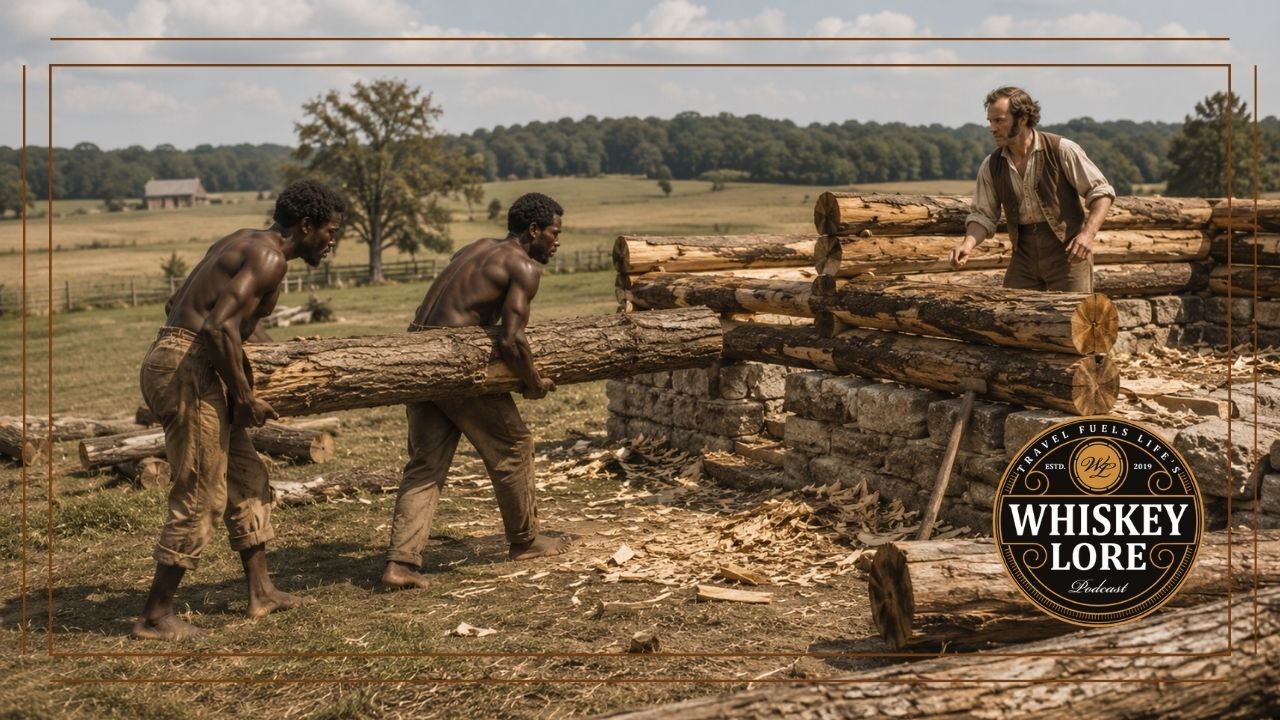
During a congressional hearing in 1935, talk of federal agencies and food safety soon turned to whiskey. A Kentucky congressman, challenged by the witness over the origins of Bourbon tries to set the record straight. He names the person he thinks made the first Bourbon. In Chapter 3 of The Lost History of Bourbon, we're going to dive into the name he suggests and others who may have come before him. The photo depicts the man Rep. Chapman suggests was Kentucky's first distiller of Bourbon whiskey. Legend has it, he used the services of two enslaved men to haul logs for his distillery. Learn who it is and let's dive into 18th century Kentucky frontier distilling in this rough draft preview of my next book.
Transcript
In a smoke-filled room on Capitol Hill. Kentucky’s 6th District congressman, Virgil M. Chapman was firing questions at government and industry experts during a long Saturday hearing. The Bourbon County resident was seeking compelling evidence to support a restructuring of the Pure Food and Drug Act of 1906. To many on the hill, including Chapman, it was believed industrialists were exploiting loopholes in the law, and it was having an adverse effect on the American consumer.
During the morning session, the key witness was former congressman and then chairman of the Federal Trade Commission, Ewin L. Davis. Chapman questioned him on how regulatory power should be divided between the Food and Drug Administration and Davis’ FTC. After a two-hour lunch break, the afternoon session shifted to Dr. Lyman F. Kebler, a chemist and longtime food-and-drug expert who had worked alongside Bureau of Chemistry chief Dr. Harvey Wiley on many of the issues that led to the original legislation three decades earlier.
As the session progressed, the topic turned to whiskey and whether it should be included in the legislation. Dr. Kebler was of the opinion Congress should include spirits since the regulations specifically targeted the prevention of adulteration, misbranding, and false advertising. With whiskey now on the table, the tone of the conversation shifted as missed opportunities in the old law were brought back to the forefront.
One item the Pure Food and Drug Act avoided was the hot button issue of clearly defining what whiskey was. At the time, wholesalers and rectifiers were determined not to lose the ability of labeling their blends made with grain neutral spirits as whiskey. The distillers had other ideas, wanting only unadulterated whiskey—commonly referred to as “straight whiskey”--to stand alone in that category. With the question unresolved after the passage of the act, the battle over what could legally be labeled whiskey ramped up. Finally, in 1909, President William Howard Taft issued Executive Order 1061 instructing his Solicitor General, Lloyd Bowers, to conduct formal hearings on the matter. But the results of the initial hearings pleased no one, so a second round of hearings were conducted. As the process dragged on, President Taft saw no end in sight and feared the fight over labeling requirements might cripple the industry, He took it upon himself to draft his own conclusion and rather than stoking the fires over the word “straight” he simply clarified that whiskey is a spirit distilled from grain.
Now twenty-six years later, on August 10, 1935, the Taft Decision and the hearings that preceded it became the topic of conversation between Rep. Chapman and Dr. Kebler. The doctor noted that during the Taft hearings it was concluded that straight whiskey “did not come into existence until about 1862, when someone conceived the idea of putting the alcohol, reduced to proof (50 percent), and putting it in charred barrels and keeping it there for a while, first 2 years and later 4 years.”
To Chapman’s ears, something didn’t sound right in this talking point. “ Doctor, we are going off at a tangent. I am no authority on the subject myself—”
The doctor replied, “Neither am I.”
MR. CHAPMAN: “But you say straight whisky did not come into existence until 1862?”
DR. KEBLER: “Yes, sir; straight whisky, according to the whisky hearing.”
MR. CHAPMAN: “I can't vouch for the District of Columbia or some other place, but I do know that as an accurate, historical fact, in the year 1790, 2 years before Kentucky was admitted to statehood, a man by the name of Jacob Spears, in Bourbon County, Ky., where I reside now, made straight Bourbon whisky, and because it was made in Bourbon County, that type of whisky, wherever made in the world, has been called Bourbon whisky ever since. That was the first distillery set up west of the Allegheny Mountains in this country. That was a long time before 1862.”
DR. KEBLER: “You may be perfectly correct in your statement, but he didn't age his whisky.”
MR. CHAPMAN: “Yes, sir. I beg your pardon. He did. And so did hundreds of other distillers in the State of Kentucky, long before the War between the States.”
DR. KEBLER: “You mean age it?”
MR. CHAPMAN: “Yes, sir; age it in charred barrels.”
DR. KEBLER: “Then the record I have just referred to, namely, the whisky hearing, is incorrect, because President Taft there based his decision on that idea, namely, that whisky made in charred barrels did not come into existence until the Civil War, 1862.”
MR. CHAPMAN: “That is a very interesting statement. I am glad to have the benefit of it, but I believe it is erroneous.”
DR. KEBLER: “That was President Taft. He decided that in view of the fact that whisky had been made as indicated just a moment ago, namely, from grain alcohol reduced to proof with or without added color and flavor, that all grain alcohol distillates, reduced to potable, with or without added color and flavor, is whisky.”
Late in the afternoon on the second to last day of hearings, perhaps Chapman thought they were about to go down a rabbit hole from which neither would escape.
MR. CHAPMAN: “Doctor, I beg your pardon for the interruption, but if you have some more amendments to suggest, we will be glad to consider them before we adjourn.”
DR. KEBLER: “Well, you started me off on this whisky question.”
MR. CHAPMAN: “You started it, and I just interjected.”
DR. KEBLER: “I will gladly give you all the information I have on whisky.”
MR. CHAPMAN: “We appreciate all you have told us and thank you very much.”
The hearing closed for the weekend and wrapped up the following Monday. And while the whiskey question was left unresolved, in the other details Chapman had heard what he needed to. Over the next three years, he made it his mission to reform the 1906 act. His tenacity resulted in the Federal Food, Drug, and Cosmetic Act of 1938 which greatly expanded federal protections against unsafe and misbranded foods and drugs.
As for the proclamation that Jacob Spears made straight Bourbon whiskey as the first distiller west of the Alleghenies, calling that an “accurate, historical fact.” was a bit of a stretch.
Straight whiskey still didn’t have a definition as of that hearing, let alone in 1790. It wasn’t until a few months after the Chapman/Kebler hearing that the Federal Alcohol Administration, under the control of Assistant Secretary of the Treasury Josephine Roche, finally defined what straight whiskey is. And in that same set of regulations, she established the modern rules of Bourbon with its mandate of having at least 51% corn in the mashbill.
Which creates a fascinating question: if there was no strict definition for Bourbon before 1936, what was Jacob Spears making? And did people in 1790 throw around words like Bourbon and straight in regards to whiskey?
What the Chapman/Kebler hearing revealed is a major flaw in how many people approach understanding whiskey history. They assume that yesterday’s distillers were actively looking for ways to bring us to today’s modern standards of distilling and marketing. They deconstruct from today’s mindset, leading them to assume because we have bottles with fancy labels, branding a whiskey was a concern of early distillers. Or in the case of “straight” whiskey, they think these distillers were seeking ways to place their whiskey within a category or standard. This line of thinking is a breeding ground for lore and it gets compounded when marketing companies repeat these false assertions over and over, or when congressmen hazard a guess or trumpet oral tradition in the congressional record. Being from Kentucky, Rep. Chapman had knowledge of the modern distilling industry and he’d likely heard the stories of Jacob Spears from his neighbors. But by combining the two, he inadvertently drove us away from a deeper understanding of what our ancestors really valued in whiskey.
It's time to step out of the 1935 mindset of Kentucky Bourbon and reconstruct the world of the 18th century Bourbon County distiller. By putting ourselves in their shoes and getting a feel for their stills, terminology, and markets, maybe we can draw a better conclusion of their mindset, and figure out why Jacob Spears might be interested in building a standalone distillery and see whether the word straight had any meaning in his world and see if his distillery has any shot of being claimed as the first built west of the Alleghenys.
Bourbon’s Distillers
To get a deeper understanding of 18th century frontier distilling, it is first important to define the word distillery.
To modern minds, a distillery is a commercial operation—usually stand alone—with sacks of grain, cookers, commercial yeast, fermentation vats, steam-heated column, hybrid stills, or pot stills, a warehouse, and a visitor’s center and/or retail area with labeled bottles of whiskey for sale, Staff ranges from a husband/wife team doing every part of the operation to full-scale commercial facilities with a master distiller or operations manager overseeing year round production.
The world of the 18th century distiller was very different. Commercial operations only developed after there were markets close enough or accessible enough to support them. Otherwise, a “distillery” could range from a lone still sitting in a crudely built shack near a natural spring or in the corner of a barn or gristmill. Having a natural spring nearby was a great advantage, with spring houses built to protect the water supply, and troughs built to direct the water by gravity to the stillhouse. Farm-based stills used harvested grain from the field. To cook the grain, buckets of hot water were carried by hand to fill hogsheads (barrels) with corn cooked first, then other grains like rye, wheat, barley, and oats added to the mixture. To convert the grain’s starches into simple sugars, malted grains with natural enzymes were required. A laborious process, the distiller typically made a bushel of malted grain at a time, drying the grain with the heat of the still—then using just enough malted grain for conversion. The mixture was allowed to cool and yeast was added into the same barrel, either from a prepared supply or delivered naturally from the atmosphere by placing the mash into smaller barrels to speed up wild yeast propagation. The importance of barrels in the frontier distillery can’t be overstated. Barrels were used as cooking vessels, fermentation vats, holders of singlings (the term old timers used for the first run off of a still), and holding tanks for storage and transport. For distillation, pot stills or kettles were used. Simple stills for personal use ranged from 20-40 gallon capacity. Standard size stills for farms of that era ranged from 40-100 gallons. The stills were flame fed, meaning a good supply of wood was required. Fermented mash was placed in the kettle and boiled. A smart distiller would set up a damping system between the flames below and the kettle above to prevent scorching the grain. The alcohol vapors rose and passed through a tube that dropped through a worm tub. That tub contained cold water, causing the passing vapor to return to a liquid form. There was a decision point for the distiller in the moments before the condensed liquid came through the worm. They needed to decide if they are only collecting singlings (the initial run) or if they want to improve the spirit by taking cuts or distilling a second time. Depending on their decision, the whiskey was either stored in clay, earthenware, and stoneware jugs or placed in clean, seasoned white oak barrels. The spent mash was taken from the still and fed, sometimes through a trough to feed the hogs or cattle. As for the whiskey, it was consumed or bartered as frontier currency and rarely stored. The output of a hard day's labor on a 100-gallon still was around 8-10 gallons of raw whiskey or 3-4 gallons of double distilled whiskey depending on yields and cuts. Unlike the modern era, frontier stills ran seasonally, working through left over grain from the harvest until the supply was exhausted. If fruit trees were available, stills could convert to making peach brandy in the late spring and apple brandy in the fall.
There were no visitor’s centers or retail shops in the 18th century. Instead, frontier farmers took their spirits along with eggs, meats, grains, and farm made goods to the local mercantile for store credit. As for distant markets, travel beyond the local area was prohibitive due to time away from the farm, the rough roads, and on-going dangers of ambush.
Noting that Bourbon County already recognized whiskey in its tavern records in 1786 and that distillery was a pretty loose term in that era, it is hard to believe Rep. Chapman’s assertion that the first distillery appeared four years later in 1790. Because of the lack of record keeping during that era, we will never be able to definitely name the first distiller or distillery, but by tackling circumstantial evidence and oral tradition, we can at least build a list of possible pre-1790 Bourbon County distillers.
But before revealing these challengers to Jacob Spears’ claim, keep this in mind. One similarity between early Bourbon County distilling and today’s distilleries is the fact, the person’s name associated with the distillery isn’t always the person doing the distilling. In those days, the few records that were kept, including Census records, only concerned themselves with the head of household. Distilling was much the same way. The person possessing the distilling talent, whether the farmer, his older children, his wife, or their enslaved workforce wasn’t typically recognized. And this continued once tax records began keeping track, stills were associated with the owner of the still, not the person working the still.
With that in mind, our first candidate for Bourbon County distilling before 1790 is the same Jacob Spears. We don’t know when he arrived from Pennsylvania, but records show Jacob being given the rank of Lieutenant in the Bourbon County militia in 1788, meaning he arrived a couple of years earlier than Chapman’s date. Knowing this allows us to include him when considering people with earlier claims.
The work of historian William Henry Perrin gives us our first challenger. In his research for the book History of Bourbon, Scott, Harrison and Nicholas counties, Kentucky (1882), he collected letters from the children of early county residents. One of the letters came from Elizabeth Hamilton Smith, the granddaughter of early Bourbon County settler Captain John Hamilton. She told of his birth near Gettysburg, Pennsylvania in 1766, his kin Hans Hamilton’s purchasing of the rights of slaves and their killing of a bear in Pennsylvania, his formative years spent in Washington County near Ginger (Guiger) Hill, and his father and brothers service in the Revolutionary War. She claimed his first interaction with whiskey was learning how to write his name on the head of a whiskey barrel. In 1787, he and some companions built a large canoe and traveled down the Ohio River to Limestone Landing. From there they took the buffalo trace to Isaac Ruddell’s mill. The visit prompted him to settle and he purchased land near Houston Creek. She claims that after raising corn and rye, he “doubled” (meaning double distilled whiskey) once a week, making six to eight gallons. Every Saturday, the men from neighboring plantations came to his house and consumed his liquor. Then, when the whiskey rebellion broke out along the Monongahela, he returned to Pennsylvania by way of Daniel Boone’s Wilderness Road. When he arrived, his brother was standing his ground, refusing to pay the tax on his whiskey. John said he encouraged his brother to leave the area and they packed up his still and set off for Bourbon County. When asked as an old man about his exploits he claimed: “I have never been intoxicated in my life, but have sold thousands of gallons of whisky.” Yet no contemporary records exist as to his output. That said, if he mainly bartered the whiskey in the local market, there was a need to advertise his whiskey.
Another early distilling candidate is the man whose mill John Hamilton visited upon arriving in 1787—Captain Isaac Ruddell. There are several bits of evidence that make his early distilling plausible. First, his wife Elizabeth’s argument against having the county seat near their mill was because they didn’t want people picking apples and peaches from their orchard. Peach trees were plentiful in the area and Kentucky developed an early reputation for its peach brandy. An orchard alone doesn’t necessitate distilling, but further evidence shows the Ruddell's second youngest daughter Elizabeth, marrying an Irishman named John D. Mulherin in January 1789. Perrin points to Mulherin's milling partnership with Isaac and his reputation for distilling a highly intoxicating pumpkin brandy. Add to the possible evidence, the existence of Isaac’s gristmill and it was a prime candidate for having a still on-site. Isaac had a still in his inventory upon his death, the only question for our purposes being, when was it first acquired?
Then there is Major John Miller. It is unclear in the record when he built his first gristmill—it may have been before or after 1790. He too had a still in his inventory upon his death in 1815. William Perrin suggests John owned a distillery, but infers that it was more of a 19th century operation.
Other millers including John Hinkston, John Kiser, Alvin Mountjoy, John Edwards, Laban Shipp, and maybe even James Garrard could all be part of this investigation, thanks to their ownership of gristmills. Hinkston is an interesting character, because there is a Thomas Hinkston who failed to pay his whiskey taxes in the 1790s, but it is unclear if he was directly related to John Hinkston. Other members of that 1790s tax list have a potential claim to the crown as well, since they were all residents of Bourbon County in the late 1780s, including: Samuel Lyon, James Ingels (Ingalls), and James Hutcherson (Hutchinson).
Beyond this speculation come all of the farmers moving into Bourbon County, By 1790, the Kentucky census showed 6,929 white citizens and 908 enslaved living in the county. Keep in mind, these numbers come from after Mason County was carved out of Bourbon County, reducing its size to half its original size. Still, that is a sizable population with numerous farmers having the opportunity to acquire stills.
Which begs the next question: How easy were stills to acquire in the late 1780s?
Before the printing of the Kentucky Gazette, which was launched in Limestone in 1787 and established soon after in Lexington, records of still purchases would fall to the discovery of difficult to source merchant receipts. But afterward, the newspaper becomes an excellent source of information. Its pages show that by 1788, a Bourbon County distiller could obtain a Philadelphia-built still from Robert Barr’s store in Lexington—just a 6 hour wagon ride away. By the end of 1789, the market was strong enough that New York stillmaker Charles White established a coppersmith business in the growing community. He placed an ad asking for old copper, brass, and pewter to make stills, brew and dye kettles, and brass casts for mills.
At the same time, not only are stills available, but the newspaper shows a trend in equipment and distilling techniques. Jacob Spears’ brother Solomon posted an alert in the Kentucky Gazette in 1789, warning “all persons from taking any assignment of a bond given by Henry Crist and Solomon Speers (Spears), in favor of Parmeanas Brisco.” The bond was for two-hundred pounds and was paid with, among other things, twenty pounds worth of double-distilled whiskey and two differently sized stills. Another example appears that same year, as James Everet advertises his willingness to trade “a likely young Negroe man” for two copper stills, “one of about eighty gallons the other about forty gallons” plus cash and twenty pounds of store goods.
This shows a clear picture that distilling was taking hold in the Inner Bluegrass Region before 1790. So if Jacob Spears’ exploits didn’t happen before 1790, it weakens Chapman’s claim that he built the first distillery west of the Alleghenies.
But perhaps it wasn’t just a still in a barn or gristmill. Maybe the semantics are unclear and what is being suggested is that Jacob Spears ran the first standalone distillery beyond the mountains. But in an age of local commerce, what would justify this move? It’s doubtful it was his desire to be the first to do it. Firsts are the fantasy of marketers and historians. IfJacob expanded to a standalone operation, there had to be some financial sense in taking that step. Was there a sudden increase in the accessibility of markets beyond the bartering of Bourbon County?
It has long been speculated that Bourbon County distillers had an interest in getting their whiskey to New Orleans. Had Jacob found the golden route to Louisiana, or was another market forming?