
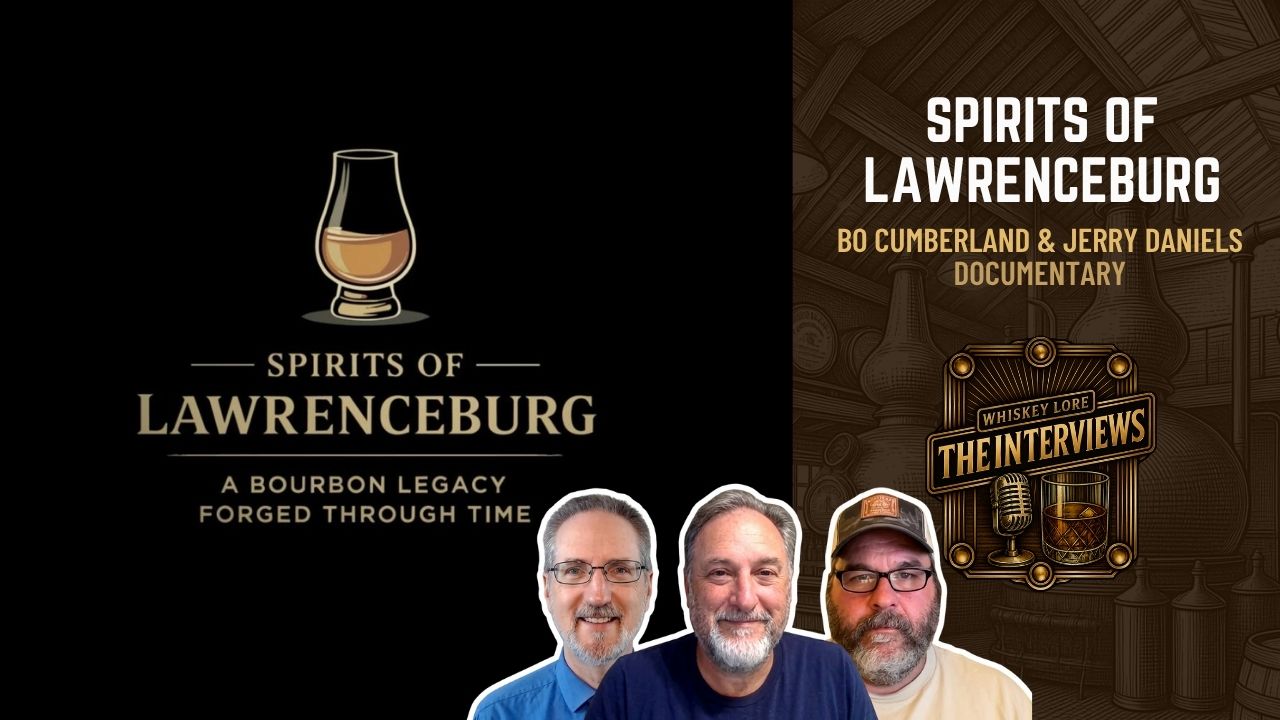
137 - SPIRITS OF LAWRENCEBURG: Documentary
Listen to the Episode
Show Notes
Long before Bourbon became synonymous with Bardstown and Frankfort, Lawrenceburg was home to a network of distillers whose names helped shape the industry itself. Families like the Ripys, Hawkins, Bonds, McBrayers, and Dowlings built businesses, mentored one another, and left a legacy that still echoes across Kentucky whiskey today. In this episode, Drew Hannush talks with filmmaker Bo Cumberland and Stone Fences Tours co-founder Jerry Daniels about their new documentary, Spirits of Lawrenceburg: A Bourbon Legacy Forged Through Time, and why one of Bourbon's most influential communities deserves to be remembered.
In This Episode
• Why Lawrenceburg became one of the cradles of Bourbon
• The forgotten names behind familiar brands
• Old Joe Peyton and the rise of Old Joe Distillery
• How distilling families became intertwined
• Why the Ripys reached far beyond Wild Turkey
• Lost distilleries hidden beneath modern landscapes
• Oral tradition and the challenge of preserving history
• How a documentary brings vanished places back to life
• Why Lawrenceburg still matters to Bourbon today
EVENT INFORMATION
https://www.facebook.com/events/s/spirits-of-lawrenceburg-film-p/2776198759399609/
Transcript
Drew H (00:00:14):
Welcome to Whiskey Lore the Interviews. I'm your host, Drew Hanish, the bestselling author of Whiskey Lord's Travel Guide to Experiencing American Whiskey, experiencing Kentucky Bourbon in a book that busts 24 of Whiskey's biggest myths, Whiskey Lore Volume One. And today we are about to step beyond the modern whiskey centers that you know in Kentucky, Bardstown, Louisville, Frankfurt, and Lexington to take a moment to learn a little bit more about a community that back in the 19th century was one of the foundational areas of bourbon development. I am talking about Lawrenceburg, Kentucky, an area most known today for four roses and wild Turkey. Behoo's whiskey history actually goes a whole lot deeper with names like Hawkins, Bond, Lillard, Dowling, Ripy, Saffle, brands like Joe Payton's Old Joe or Judge W.H. McBrayer Cedarbrook, which was named after a local creek, but touted in the 19th century as "The whiskey that made the crown heads of Europe turn from scotch to bourbon." And that is quite a claim.
(00:01:24):
Well, my guests today are Jerry Daniels and Beau Cumberland. Bo is a documentary filmmaker who recently brought the Buffalo Trace story to life and short stories on his YouTube channel, My Journey Through American Spirits. And last year he told the story of Crowe, Taylor and other Frankfort legends in his full length documentary, Frankfort The Heart of Bourbon. And today he's going to introduce us to his soon to be released documentary Spirits of Lawrenceburg, a bourbon legacy forged through time. It's a brilliant 80-minute film that he produced with our other guest and also friend of the show, Jerry Daniels, co-founder of Stone Fences Tours and the talent scout and organizer of the bourbon sessions that take place at the Rippy Mansion in Lawrenceburg once a month. And on Saturday, July 25th, that is going to be the site of the premiere of this documentary. And today we're going to learn a little bit more about the distilling families of Lawrenceburg.
(00:02:25):
They're ties to several brands that you know today and we'll go behind the scenes to learn what it takes to put a film like this together and how to capture the essence of a forgotten, distilling community. Jerry, Bo, welcome to the show.
Jerry D (00:02:41):
Thanks, Dre.
Drew H (00:02:42):
Thanks, Drew. Great to have you here. I heard you guys on the Bourbon Road not too long ago talking about what we're going to be talking about today. So I'm going to try to throw some questions at you maybe that weren't covered in that particular podcast. Todd and Jim do a great job over there. So we'll see if we can carve out some new territory, but we'll hit some of the high spots of things they talked about as well. Let's talk about kind of a little setup here because what you are presenting coming up in July is a new documentary on the spirits of Lawrenceburg and it may be something that people are, if they hear Lawrenceburg, they may go, "What the heck is Lawrenceburg and where does that fit into the world of bourbon history?" So you are going to take us through basically about, let's see, 80 minutes or so, maybe a little over 80 minutes of history on Lawrenceburg.
(00:03:42):
I've had a chance to see the video myself, which is great. And I guess the first question to either of you, where was the inception of this idea? What went, we need to do a documentary on Lawrenceburg.
Jerry D (00:04:00):
So you know what we do at the Rippey Mansion in Lawrenceburg. We've been doing that since 2019. I saw Bo, he had done a recent one that premiered last year called Harder Bourbon on Frankfurt History Distilling. And we're both part of the Frankfort Bourbon Society. I just called him and was like, "Would you like to do another one of those on a different city?" And he asked me which one. I was like, "I'd love for you to do one on Lawrenceburg." Like I said, just from doing the bourbon sessions, I've met a lot of the families of these brands that have been brought back to life, let's say. And I know how excited they would be to be able to tell their story of their ancestors. So I thought Bo did a great job with the one in Frankfurt. So I was like, "Let's try one in Lawrenceburg."
Bo C (00:04:52):
So yeah, we had only met one other time and so I knew who he was. And so he reached out and said, "Are you interested in doing this film about Lawrenceburg?" And I tell this story begrudgingly because I'm kind of ashamed of it, but I said, "Yeah, Jerry, I would love to do something on Lawrenceburg, but other than Wild Turkey and Four Rose is really what's there to
Drew H (00:05:16):
Tell."
Bo C (00:05:17):
But in my defense, I did know all of these stories. I knew the Mary Dowling story. I knew the Hawkins, I knew the Rippy family, I knew all these stories, but I just hadn't really delved deep enough to really put them together and put them all in Lawrenceburg. So I had no idea that all of this took place in Lawrenceburg. I knew the stories much to my surprise, this film, unlike the Frankfurt one. The Frankfurt was more linear than anything. This one is, I tell everybody that I talk to about it, it's like tree roots. I mean, it's multidirectional and the issue that Jerry and I would have is we would follow this Fox Trail down this path just to come to realize that none of this stuff was true that the internet said or that ... It was just kind of a nightmare at first putting all of this stuff together and having to undo this and it is what it is now.
Drew H (00:06:21):
Yeah. It's a crazy process, this digging into history and trying to patch it together and make it make sense. So let's talk about, because with Frankfurt, I may have some audience members that go, "Frankfurt, well, what was that about? " But then you say Buffalo Trace and everybody goes, "Oh, okay. All of a sudden, Blanton, Taylor, we got all these names that come flying out at us." Lawrenceburg, of course, a lot of people know Jimmy Russell and know about Wild Turkey. They probably have seen Four Roses on the shelf if they're not that familiar with bourbon, but they probably bumped into that somewhere along the line. But this idea of Lawrenceburg and the fact that we talk about Wild Turkey and it being really just kind of the modern tip of the history of that basically evolution from the Rippy family. And so when you're trying to piece something together like this, how do you even get started with your own education on it to be able to understand?
(00:07:27):
Did you start plotting out diagrams of here are all the families? Or how did you kind of work out and get in your mind enough of a conception of what this is so that you could figure out how to present it?
Bo C (00:07:42):
Honestly, for me, the best way that I found after trying many different ways is to start with what's there now and work backward. So working backwards, like the Wild Turkey example, the Wild Turkeys, the Austin Nichols, the Rippy. And so as you work back, then those other branches start to form and you bookmark that kind of stuff. And then when you kind of work your way back to the base of that trail, then you have all that stuff bookmarked. So then I can start working my way forward and doing that with four or five different tree root systems, I like to call them, you have all that stuff that you've worked backward from now until back then. And then you start to see how even back then they intertwined and this family led to that family and this family helped this family. And Jerry jokes around, we talk about this all the time and he says, anything else that we do, any other city or territory that we want to do, nothing's going to be like this one.
(00:08:54):
It's this one.
Drew H (00:08:57):
Jerry, that's wishful thinking. You know that.
Jerry D (00:09:00):
I know he mentioned Bardstown. I was like, oh my
Bo C (00:09:03):
God. Oh yeah. Barbstown will be a monster.
Drew H (00:09:06):
There can be some crazy, crazy webs. Well, and Jerry, you'd actually done some of this pre-research actually with Lowell on your own little video series that you were doing. I mean, how much did you lean back on a lot of that information?
Jerry D (00:09:20):
Well, I mean, I've been researching the Rippies for ... I mean, I first learned about them probably 12 years ago, just researching for our tours. I mean, that's how I found the house, was just the research and finding that house online. And with that family, Tong B. Rippy, who appears in this, luckily UK allowed us to use some interviews that they had with him that we could use in this and that man knew Lawrenceburg. I mean, he knew it inside out when you talk about bourbon distilling. I mean, so he's kind of the point that led me to learn about Mary Dowley, to learn about the Bond family, to learn about the McPrayers. He was kind of that starting point that led me after discovering who the Rippies were, I mean, most people have no idea who the Rippies are.
Drew H (00:10:11):
I
Jerry D (00:10:11):
Had no idea, didn't even know the Rippies existed when I started researching bourbon families. I knew the Beams, I knew Colonel Taylor. I'd heard of the Samuels, but never had heard of the Rippies. And him and Mr. Glagen, they've both been great about showing me locations, talking to these families. And then like I said, when we started these bourbon sessions, a lot of these families came out. So there were bond descendants that I got to talk to. And that's kind of, like I said, what led me to even approach Bo, but it is very complicated. It is. I mean, I know you've done a recent podcast about Four Roses and we didn't go in depth on Four Roses, but we were just trying to figure out O Joe to Old Prentice. Every family in Lawrenceburg was involved with O Joe, either original
Drew H (00:11:03):
Or
Jerry D (00:11:03):
What people called O'Joe, which was O Prentice. I mean, they were all the Hawkins, the Bonds, the Rippies, the Browns, and then the Hawkins again
Drew H (00:11:15):
All
Jerry D (00:11:16):
Involved with this distillery. And it's one of those things that's, like I said, a spiderweb of these families that all intertwined. Mr. Ippy talked about his aunt was Mary Dowling's daughter. They all married. WB Southwell married a Lillard and it was all intertwined, but great families. And like I said, these brands are coming back now, so I'm excited to kind of shed a little light on those.
Drew H (00:11:42):
That's the real challenge, I think. I mean, I found that going through the Four Roses story. I know when Jerry, you and I were talking as I was working on that Four Roses story, I was starting to say, "Okay, here's some things that we think we knew, but maybe it's not necessarily true." I didn't cover a lot of Four Roses in terms of that particular distillery. And part of the reason I didn't was because it was so confusing as to what did they even call it? Because the thing that people don't realize, and this happens with Buffalo Trace too, a lot of times those distilleries just had nicknames. You would call it something, but it wasn't its official name. I think Buffalo Trace at one point was called Ancient Age Distillery and nobody's running around going ancient age because they don't really think of that name first when they're going with Buffalo Trace and Four Roses was much the same.
(00:12:38):
It was old Prentice. It was old Joe at a time. It was Calvert Distillery for a short period of time. Some people were calling it that. It had a number of names and that's hard enough when you're just talking about one particular distillery. What I found interesting while watching this was even as somebody who is as into history as I am, I didn't realize how much of a impact the Hawkins family had on distilling in Lawrenceburg. Would it be fair to say that they're kind of like the subtle foundation under a lot of this history of Lawrenceburg?
Jerry D (00:13:18):
Yeah, I believe so. I mean, like I said, the bonds were starting early. We know they were back somewhere in the 18teens, 1820s, and we know O Joe Payton started O Joe, but that was quickly sold to the Hawkins who took that over pretty early. But one of my drivers is a Hawkins. His great grandfather was OM Hawkins. His great great grandfather was Heard Hawkins and they were OJO, but just kind of tracing their line, they were involved in quite a few distilleries right there on Gilbert's Creek. They had multiple distilleries. So I mean, like I said, five generations of a large impact to Lawrenceburg.
Drew H (00:14:02):
When you're trying to tell this story, Bo, and you want to get it across to people who are maybe not familiar with the story, I mean, do you find yourself having to kind of strip away a lot of really interesting stuff that you'd love to put out there, but it just is going to throw people probably off into a crazy direction that they'll not come back from?
Bo C (00:14:24):
Yeah. The one thing that I've told Jerry on many occasions that I feel almost bad about is there's so much history. Each of these storylines or family lines, we could do a two hour documentary on just the Hawkins, just the Bond family, just the Rippy family. And so condensing all of these families and all of this history into, like you said, 80 minutes or whatever it is, there's just so much we can't tell. And the idea for this, just like the idea for the one in Frankfurt, at the end of the Frankfurt video, I think I probably had 40 to 60 hours worth of interview footage from the different distilleries and folks. And on this one, I have about the same amount of hours of footage from these families just sitting down and just telling the whole history and story. And so the idea is always these pieces are just the starting point.
(00:15:26):
So like you, Drew, I mean months from now, if we want to do something on the judge or do something on the Hawkins family, I have the footage and the interviews where we can do something completely on that. So this is just kind of a starting point, but it is kind of heartbreaking to know that people are going to watch this and know that they're literally getting a taste of all of these different stories that make this Lawrenceburg story up.
Drew H (00:15:57):
Yeah. I mean, do you kind of write it when you are creating this thinking, how can I kind of maybe lay some breadcrumbs to make people curious that there is more to this story than what is just in this video?
Bo C (00:16:11):
Yeah. I mean, hopefully that's exactly what it does is it gives people just a taste of this and one of two things, like you said, either they will go discover this stuff on their own or I will hear through the comments or through just conversation with people that I'd love for you to dive into this story. And whenever I get feedback like that, it kind of drives me to my next projects and that kind of thing. So either one of those is kind of the point of this whole thing.
Drew H (00:16:43):
What is your process? Do you do a lot of the interviews first, kind of hear some things from them and then go research or do you kind of research before you jump in or a little of both?
Bo C (00:16:53):
Probably a little bit of both. I would like to know the general gist of the story or the history and then that kind of leads me to some of the questions. And as I'm interviewing, you hear things, it's like, "Well, I didn't know that or I didn't understand." So then you kind of dig in that way. But yeah, I like to do enough of some upfront work that I kind of know what I'm talking about when you're interviewing. But I have done this before where I've interviewed people and then later as I'm digging through, I find out this Pandora's box of stuff that's opened up and it's like, "Man, I wish I had known this when I was interviewing this person," that kind of thing.
Drew H (00:17:37):
Do you go back and try to ... Did you get to re-interview some people?
Bo C (00:17:42):
We didn't really interview anybody twice. We did get Bo Garrett from Wild Turkey. He had done his segment on Wild Turkey and then when we got to the SAFL segment, we couldn't find anybody around the area, family members or anything like that to tell the story. And we contacted him again and he's like, "I got some good Saffle stuff." So he came back out and we interviewed him a couple of times once for his wild turkey side of it and the other side for kind of the Saffle side. But in other projects that I've done, I have done that where I've interviewed somebody, found a treasure chest of other information and called them and, "Can I come back and interview you on this segment?" And so yeah, when you can do that, that's the best case
Jerry D (00:18:30):
We put out APB for SAFL relatives and just did not get responsive.
Drew H (00:18:34):
Couldn't find
Jerry D (00:18:34):
It. I mean, I would love it if maybe this might lead to maybe we've been able to talk to him or somebody coming forward that we could get more of his story. I mean, I'd love to have more of his story in there.
Drew H (00:18:44):
Right. Yeah. I take this all back to, again, my Four Roses experience where I had a chance to talk to Al Young and we chatted for an hour and over that hour, he was so modest about his own history at Four Roses in his book that he wrote that I wanted to fill in those gaps. And what I found is that after I got done doing the interview, I got home, I started piecing the story together and all sorts of new questions start coming up and you're like, "How do I frame this story because there's a missing piece of information? I want to go back and get it. " And this is one of the tough things about historical research. If you have somebody who's of an age, they may not be here for you to go back and ask them the question. And I think that's an important piece of this and getting that oral tradition from the individuals that you talk to is that for many of them, they probably never considered even putting their histories down and it's nice to have somebody come along and do that.
Bo C (00:19:51):
It was definitely, this was a different project than anything I've ever worked on in that the other stuff that I work on is distillery focused or the history is about the distillery, about the practices in the distillery. This one was more really focused on the families kind of telling their story or the families giving us the information. And so I had to handle it just a little bit differently than I would interviewing a master distiller at a distillery talking about linear history. And in some cases, Jerry and I would interview somebody and walk away with not really anything that we ask, but just a bunch of other stuff that we had to figure out, okay, how do we piece all this together? And not that it was wrong or we were on the wrong path, but it was just like I wasn't expecting this information.
(00:20:47):
So now I have to go back and rework the segment that I had planned. I planned it to be ABC. Now I have to do it this other completely different way, but it seemed to work out. It seemed to work itself out.
Drew H (00:20:59):
Jerry, did you hear any stories that you're like, "Wow, boy, that answered something that I just was kind of not even thinking about. "
Jerry D (00:21:08):
We interviewed Convey. One of the cool things that I found out from Cobe is that Mary Dowlings Dubler is sitting on the porch at Vendon.
Drew H (00:21:17):
Oh, wow. Okay. Yeah.
Jerry D (00:21:18):
I was just sitting there on the ... It's like a second story porch at Vendon and I've got photos now of it just sitting there. And supposedly, I think he said that if he opened up a tasting room, he got first dibs to that.
Drew H (00:21:31):
Now this is the question because people may not know who Mary Dowling is. Of course, she was distilling in Lawrenceburg, but then when prohibition hit, she moved to Juarez, Mexico and made Mexican bourbon. Was this a still that was used? Do we know whether it was used in Kentucky or was it used in Mexico?
Jerry D (00:21:51):
Yes, supposedly
Drew H (00:21:52):
There.
Jerry D (00:21:53):
Okay. Okay. Yeah. I mean, I love her story. I love how tough some of these people were around that time. They all had their own little ways maybe to try a little something different when prohibition hit. So I mean, there's always talk. We've never been able to prove it about tunnels connecting these houses from rippy to Dowling to Saffle. There's talk about tunnels. I would love to be able to discover those. Just thinking about Lawrenceburg during the 1800s and how busy that city was.
Drew H (00:22:27):
There's a shot in that I want to try to figure out what the heck was going on in town when that picture was taken because it's like there is a street in Lawrenceburg and I've been to Lawrenceburg and if there were six cars on the road, that was a lot. And now all of a sudden I'm looking and there's like this mass of people standing there. It had to be a festival or something, but they're nicely dressed, it looks like. Yeah.
Jerry D (00:22:54):
You think about all these families interacting, having dinners together. I mean, because like Tommy Rippy said, there was about 17, 18 distilleries that were in Lawrenceburg before prohibition. And a lot of these weren't small distilleries. A lot of these were large distilleries. I mean, the ones that TB Rippy had and Cedarbrook and Bon the Leather, these were big production distilleries. And so there was a lot of money. I mean, just the little town of Tyrone, what it was like back in the day compared to now. It was a full-fledged city going on with everything they needed right there. I mean, but you also had three to four distilleries right there in Tyrone and just to see that when you go there today, how much difference there is.
Bo C (00:23:35):
That's what blows my mind the most is the first time Jerry took me to Tyrone and all that's there now is a quarry and a boat ramp and a few houses. And when you think about it was basically an industrial park at one time with the distilleries down there and it blows my mind. And I mentioned to Jerry, I said, "I bet nobody that lives here knows that they're on the grounds of all these sacred distillery sites that there's even..." I mean, there's no trace of them anywhere. And it's just, you look at the pictures of these distilleries and it's like they were little cities almost and now there's not a trace there.
Drew H (00:24:19):
Jerry and I had that experience when we went to Old Pogue because Old Pogue is right down on the Ohio River and you look at the pictures within the house and you look down and you're like, "Where the heck was this distillery? There doesn't look like there's any room between the railroad tracks and the Ohio River. How the heck did they fit a distillery into this spot?" And I've seen that a lot. Bourbon County, the same thing. Some of the distilleries that I, the Peacock distillery, if you go look at where the footprint of that is and then you look at the old Sandborn maps, you go, "How the heck did they fit this in here?" Because it doesn't seem natural that they could do that, but they could do a lot with a small space apparently back in those, or those distilleries aren't as big as they actually appear when we're looking at the pictures.
(00:25:06):
Yeah, for sure. Yeah, that's a fun part. Probably one of my disappointments about going to Wild Turkey recently was that the first time I went to Wild Turkey, when you walked into the visitor center, as you walked down towards the gift shop, there was a history and that history had the Rippy's name on it. And the last time I went back, they took all of that off of there. So it's really fascinating to me that Wild Turkey is one of those brands that could claim a history going back into the 1800s, but you don't see it in there. So this is really kind of an opportunity for people to watch and see this Rippy family and understand Jerry, talk about the impact of the Rippe family because I mean, it seems like if the Hawkins were kind of a foundation that flowed through each of the distilleries, the Rippies seemed to be kind of like the experience leading everybody to the future.
Jerry D (00:26:09):
Yeah. Yeah. I mean, you got to think they come in and TB, so there was James and John that came through early and we kind of talk about the early ... I know David does a good job talking about their early rippies. James had two sons, James P and TB. They both went into distilling. I know TB's first distillery, he bought off his father with Judge McBrayer. They bought that together. So I think he really kind of learned under Judge McBrayer, which we see this throughout all of that where there were mentors from these various ages from the early 1800s all the way to the rippies of the 1860s. There were mentors that kind of went from one family to the next, teaching these other families how to distill and all that. But TB bought him out real quick and within a year, he had that big, huge distillery by himself.
(00:27:03):
And then he had a bunch of sons and they all pretty much got into distilling. I know his brother had a distillery up on the hillside overlooking the Kentucky River. TB's distilleries were more down in Tyrone, couple large distilleries. Now he owned multiple other distilleries too, a litle bit of Taylor in him.
(00:27:21):
He did a lot of willing and dealing. There were times where he had a lot of money, times where he didn't have much money. He saw that a lot, but his brother had one up on the cliff side that eventually TB sons got involved with, which became Rippy Brothers distillery, which we know today is wild Turkey. But the other sons, a lot of people, they don't know about the other sons that actually went to Old Hoffman and really brought that back after Prohibition. Most of the other brothers besides Ernie were involved with Old Hoffman after Prohibition. So the Rippery Brothers lasted early 1900s till prohibition, shut down, and then opened back up after Ernie opened it back up. Like I said, his other brothers were involved with the Hoffman and really the last Rippy that ran what became Wild Turkey actually hired Jimmy. So a lot of people don't know that fact that the E.W.
(00:28:18):
Rippy Jr who was the only Rippy in the Bourbon Hall of Fame. We were talking about Hall of
Drew H (00:28:23):
Fame. Wow, there you go. All right. Yes. We need more. Well, maybe your work will actually help get some of these names recognized.
Jerry D (00:28:33):
Yeah. So
Drew H (00:28:33):
Like
Jerry D (00:28:33):
I said, TB was a huge distiller involved in so many different things, but the whole family was involved. So you're talking about really one, two, three, four, four plus generations that really impacted Lawrenceburg.
Drew H (00:28:48):
You mentioned the old Hoffman distillery and this is how I like to connect people to these old places and let them realize that actually that place still exists in some form because the first place I heard about the old Hoffman distillery is apparently Julian Van Winkle III had taken that warehouse and was basically using that for the blending of and the production of Pappy Van Winkle, which we all know, but it actually is now passed into New Hands. And this is what I love about this documentary. You kind of go through a linear timeline with it and give us each of the aspects as we're going through in the development of Lawrenceburg and where it kind of faded and how it came back and you touch on these, but you also give ... I mean, I sort of feel like this is as much a tourism video as it is a historical video.
Bo C (00:29:53):
I would agree with that.
Jerry D (00:29:55):
Yeah. We definitely wanted to promote the distilleries that are kind of there now that are coming And coming back to fruition or new or the brands that were gone and now have come back or been brought back by someone. But yeah, it's a lot about the future too. I mean, what Largan or Old Commonwealth are doing today, people will be discussing decades later. So we definitely wanted to show where it's going, hopefully.
Bo C (00:30:23):
Well, and also we wanted to touch on in Lawrenceburg and other communities like Lawrenceburg around Kentucky, even though bourbon seems to be the draw, bourbon isn't the only thing. I mean, the agriculture that's there, tobacco and in some instances, Woodford County is horses. And so anything we do like that, we want to touch on those aspects as well because there's a line at the very end of the film where talking about there's so many of these farmers that are the backbone of the bourbon industry and because they're not the ones distilling it or whatever, they're the ones providing the grain and we don't know their names. You don't know who they are, but they're just as much a part of it as the people making the whiskey, putting it in barrels, blending it, bottling it. They're just as big a part of that, but we don't see that aspect of it.
Drew H (00:31:23):
Yeah, that's a fun part of digging into this. We forget it's an agricultural product in the end. And that a lot of those earlier distillers may have basically started out just by feeding their families off of what they were making before they actually turned it into a business and went, "Oh, we can make some money off of this. " I think one of the other things that's interesting that you cover is the river and transportation because one of the things that may enter people's minds, why are all these distilleries out in rural areas? They're not necessarily ... There were distilleries in the colonial era that were in the big cities, but a lot of distilleries found their way on the frontier out in the middle of nowhere. And so talk about the stuff that you learned about river transportation and how important that was to whiskey back then.
Bo C (00:32:22):
The river was life. I mean, Robbie talks about this. The river was the only way before railways came through. The river was the only way to get your product from these communities to get them to Louisville and get them eventually down the Mississippi River to New Orleans and then out into the rest of the world. So if you didn't have a distillery on the river, you weren't successful. I mean, it was life. Water was life back then.
Jerry D (00:32:54):
Yeah. Especially when you talk about that mid 1800s
(00:32:57):
When they really started to commercialize. Early on, a lot of them were just building by springs. I just wanted some type of fresh water. And then you just kind of see that transformation to the rivers, like in the mid 1800s when they were more concerned about, "Hey, we got to get this out. " And then 30, 40 years later, we have railroads. And I thought it was funny about TB. He pushed so hard, or not TB, but the judge, Judge McBrayer, he pushed so hard to get the railroad into Lawrenceburg and he eventually accomplished that, but he also had the railroad kind of like Colonel Taylor getting the railroad ran to Castle Key. He got the railroad run through his property. I mean, it worked out great for him. Then all these distillers were building these rig houses up by the railroad, by the tracks.
(00:33:45):
So it made life much easier there in Lawrenceburg when that happened.
Bo C (00:33:49):
One of the coolest things is we got a chance to go to the old side of Cedarbrook, which it's literally in somebody's front yard right now, but there's still walls, partial walls standing from the old distillery. They're in the film. But one of the things I didn't put in the film, but we got to see in film was there's a base right on the other side of the road and it was the bottom of the barrel mechanism that they would roll the barrels out, put them on this little ski lift almost. And the warehouses, the rick houses were on top of the hill. So they needed this almost like ski lift that they would use to take the barrels up there, put them in the warehouse. And that's where the train track went by there. So it was kind of cool just seeing that ingenuity and thought process for bringing the train in and putting the rick houses right by the train and using that technology to get the barrels up, literally up the side of a mountain.
Drew H (00:34:49):
It's interesting to look at old distilleries. If you see schematics of old distilleries, they cared a lot about gravity because you didn't want to have to do a lot of extra work to get something uphill. So you created your process coming downhill as much as you could. But one of the things that Lawrenceburg has an advantage over Frankfurt is Frankfurt has access to the Kentucky River, but this is something that you guys pointed out that I thought was really interesting is that if you're going up the Kentucky River, you're still going to have to deal with the falls in Louisville whereas what runs by four roses today where there were distilleries down through there is the salt goes to the Salt River and the Salt River actually bypasses and gets further down. And how big is that in terms of helping these distilleries be able to sprout up and flourish in that area?
Bo C (00:35:48):
I mean, it just blows my mind to think about the process of river transportation and getting to Louisville and the falls are all right there. So I think we were on talking to the Bourbon Road gym and he was talking about you get to these falls and you either have to just chance it or pull over, unload all your stuff, take it down below the falls, reload it and just what a nightmare that must be. And so having the option of the Salt River that bypasses all of that stuff, that just seems to be the way to go. It's like interstate versus back roads with detours and-
Drew H (00:36:28):
Yeah. So one of the things that, because you asked me after I watched the film, what I thought about it and I sort of sense probably when people pass me historical stuff, they're waiting for me to get like overanalyzing it and going, "Okay, why did you do that? " But I think there's one of these things that I've learned to relax over. If anybody's read my books, they'll know that I am kind of pesky about the concept of oral tradition. I'm like, "Don't build all your history around oral tradition." However, when you are interviewing people and you are getting their actual stories, whether they're a hundred percent accurate or not, they still kind of are telling their own story of what they value. I mean, do you get that sense?
Bo C (00:37:21):
I definitely feel that way and I do think there's a time and a place for getting actual as much factual information as we can and making sure that the story is told the exact way, but I still think there is room and a need for oral tradition and kind of like what I said a litle bit earlier, this one's a little bit different because it's not telling the linear story of all these distilleries necessarily, it's telling these family stories. And so when you sit around the fireplace or the dinner table with your aunts and uncles and grandparents and y'all are just telling stories, you think about it, how much of that stuff is really 100% accurate versus how much of it is just hearsay over the years, but I still think there's a need for that and there's value in that, just these oral stories.
(00:38:19):
And
Jerry D (00:38:20):
Especially here in Lawrenceburg, because really, truthfully, oral history, really all we have are Mr. Rippy, Mr. Gohagen through UK, Al Young kind of through UK and I think Jimmy did also some stuff through UK, but how many of these stories from these families are going to be lost over the next few decades? And that was the cool thing. We wanted to try to find any descendants that we could to talk about the families. I mean, getting Mary Dalyan's great-grandson, we loved having him and just a couple generations on from that, I mean, what might we have left from
Drew H (00:38:59):
Mary
Jerry D (00:39:00):
Daly and that kind of oral history. And you could just see in some of these, Bob Cole who's a bond descendant, you can just see how proud he was to talk about his family and kind of tell their story. So like I said, everything may not have been 100%, but I know they have done a lot of research, Bob Cole and Julie Wilson, his sister
Drew H (00:39:26):
With
Jerry D (00:39:26):
Being bonded since they've done a lot of research, but they were very proud to be able to share that.
Bo C (00:39:33):
But I just want to also say later on, if I'm working on a piece or we're working on a piece that has to do with Judge McBrayer and we find out that something wasn't exactly right in this film, I don't think it negates what was said in this film. I think we can set the record straight later and talk about how the oral history got us to here and here's the actual fact of the matter and I don't think it negates this or takes away from this at all. I think in some instances it just kind of enhances it. Just like the recent discovery that Dr. Crow possibly wasn't even a doctor, that doesn't negate all of this other oral history and stuff that we've talked about. It just kind of makes the story more interesting to me, to be honest with you. And so I think it's kind of that same thought pattern for the rest of this.
Jerry D (00:40:27):
And it's kind of ever changing. I know Drew, you've talked about stuff you did five to 10 years ago. Now you're like, "Oh gosh, there was so much that wasn't correct at that time."
Drew H (00:40:37):
Yeah. Four Roses went from being a 25 minute episode to being an hour and 45 minutes. So yeah, there's a lot I missed.
Jerry D (00:40:45):
Yeah. I mean, but that's going to happen. I mean, you're talking, like I said, a lot of this is, it is tough to approve a lot of this with the names and all that. I mean, it takes a lot of work and I know how deep down you go to get all this factual information.
Drew H (00:41:01):
And this is the reason why I will say that I am all for people grabbing all the oral tradition they can get their hands on because if I go back and I look at the Jack Daniels story, that's based off of a book that is a lot of oral tradition. And what I find with oral tradition is that it's probably about 80% correct, but maybe a little over embellished and maybe out of time. And so it's my job, but if I didn't have that oral tradition, there's a lot of holes in that story that I would not have even been able to look for because if somebody doesn't bring it up, I don't have the awareness to know that I need to go research and see if it's even true or not. Exactly.
(00:41:45):
So yeah, this is the interesting thing because of course Kaveh's come out with the Mother of Bourbon book and I read it and I went, "I just want the facts. Don't turn it into Gone With the Wind. I just want the facts." But still in reading that and being able to get enough of what I think are the points that I should go research, that allows me to be able to move forward and do any further research that I want to do on the story. One of the things that you got, because you do talk about Mary Dolling in the film and this is funny because I didn't really touch on it in the Four Roses episode because it would be branching off in a direction I didn't necessarily need to go with the story of Four Roses because it wasn't a Four Roses story.
(00:42:40):
It was a Mary Dowling story, which is when they bought the Frankfurt distillery in 1922, the warehouses, one of them burned down in 1924 and that created a whole big hullabaloo because apparently that's where all the dowlings whiskey that had been confiscated from the raid ended up. So this gets me to that kind of question of when you're writing a story like this, one of the things that marketers will do is marketers will sometimes ignore certain things because it doesn't really help their character look good in the future. You didn't necessarily cover that in there. Was that something that you just didn't really think about or was that something you're like, "Okay, we're kind of going off the rails on that story?"
Bo C (00:43:32):
No, I really wanted to include that. One of the things that I guess we haven't really mentioned here is also we tried to give everybody their kind of fair share of screen time, if that's what you want to call it. And I didn't want it to be the Mary Dowling show or I didn't want it to be the Four Roses or Wild Turkey Show. And so as you start to just the editing part of this whole story exists and so how deep in the woods do we want to go talking about this? And that's why I think we just kind of left it at during the prohibition era, the good old boy network tried to bully her out and that kind of thing. And so I do feel like we could have gone into a little more detail because I don't think we really even talked about there's Laura there that the Klan had some anti-Irish sentiment towards her and we didn't really delve into that a lot, but from what I understand, it was a rough time and they really wanted her out like, "We don't want you to be a part of this at all.
(00:44:40):
" And so all that kind of stuff. But yeah, that was a story that I kind of wish we could have somehow worked in there, but I didn't want it to be just a twig
(00:44:51):
Out there. I wanted to kind of keep it holistic. And another thing about Mary Dowling that I really wanted to delve into a lot more is her character for being at the time period that this was going on, she was very much opposed to people treating the help like they were some subhuman category of people. She was very much not of that mindset and the people that she had helping her, the cooks and the maids and the people that she worked with, they were almost like part of the family. And we actually had an opportunity to interview some family members of some of the people that were her help. We never could get that to match up and we never could get in touch with them or they couldn't get in touch with us. It just didn't work out. But that was an aspect of the Mary Dowling story I really wanted to touch on was she certainly would stand up for the people who needed to be stood up for her being that she was an Irish immigrant.
(00:46:03):
So she would've been on the lower end of that scale as well back then. But she rose above that and made sure that all of the people that she came in contact, they rose with her. And I just thought that was an awesome part of her story, but we just couldn't the tags and the different areas of branching off just never kind of worked out where we could really give it the respect that it deserved
Jerry D (00:46:29):
Yeah, this could have easily been a three or four hour documentary easily.
Drew H (00:46:34):
I totally understand because as I say, I didn't fit it into my Four Roses episode because it needs a lot of context and for you to give it the right amount of context means you're going to have to carve out another 10 minutes at least to dive into this story, the backstory of why did this happen and all the rest.
Bo C (00:46:54):
That's the main thing I hope above all the families that we interviewed and we represent, I hope they don't walk away from this going, "Man, he didn't even tell this part of this. This was the best part of the story and he didn't even touch that part." I hope that's not the case. I hope they understand this is just the beginning of what could be ... I mean, I could literally dedicate the rest of my existence on creating content for ... I could do it just in Lawrenceburg if that's how much content is out there. That's how much story is out there. And so I just hope that they don't look at this and go, "Wait a minute, he didn't even tell the good part of the
Drew H (00:47:34):
Story." Well, you're opening a door and that's the big thing is getting people to acknowledge first of all, and again, it kind of gets to the point of how much do you give to get them interested so that they actually show up to the community and visit these distilleries and get to know Lawrenceburg firsthand rather than necessarily because history can be overwhelming if you punch too much of it in people's face all at once. And what's interesting about the way you do it, which is my challenge always in trying to tell stories is I don't always have voices of people telling their story. I have to humanize everybody because that's what connects people to history is the human story, not necessarily the numbers and the dates and all the specifics, which I love to get lost in and I've been told you need to ease up on giving off a list of 600 names of distilleries when you're doing a podcast because nobody's going to remember all that stuff.
(00:48:35):
And so that's great. You also had a villain in the story, which I thought was interesting is the Whiskey Trust comes in and I guess they would be considered your villain of the story because that was kind of the slide down of Lawrenceburg as with all of Kentucky because they ended up buying up 80% of the distilleries in Kentucky. But hard story to tell because again, you would have to kind of dive into the story of Charles Stoll and how the Whiskey Trust built up in its past and the different iterations of it. You have to wonder what that did to that community when you see that picture of all those people hanging out on Main Street Lawrenceburg that they seem like they probably didn't have a care in the world and then at some point all of this shuts down
Jerry D (00:49:30):
Yeah, especially with the Whiskey Trust. I mean you think, talk about the biggest distilleries that were in Lawrenceburg with TV Rippy, his distilleries and the McBrayers, their distillery and Bond and Lillard. I mean, those were all sold to the Whiskey Trust at the end of the 1800s and the whiskey trusts, most of the distilleries they bought, they might've kept the warehouses and their product, but they never really kept production going on a lot of them and some they did, but I mean they streamlined it and a lot of jobs that were lost, like I said, just little places like Tyrone, I'm sure they felt that effect right off the bat because to Rip, you had both those big large distilleries right there. And I think there was a lot of people kind of having local pride. I mean, all the ownership went away from Lawrenceburg and I just think it was all of Kentucky.
(00:50:23):
Like my wife always says, Kentucky started the Great Depression 10 years before the Great Depression actually started because I
Drew H (00:50:30):
Mean,
Jerry D (00:50:30):
Because it did have an effect on these distilleries and which led into prohibition, which is even worse. But just all these, we talk about the relationship between all these farmers and the distilleries. There was symbiotic relationship both ways, one both ways. And there were just so many people affected with the whiskey trust and what it was done across the nation.
Drew H (00:50:53):
I guess the challenge becomes when an industry shuts down pre-prohibition and so we're talking 90 years ago, finding places to go shoot footage is probably quite a challenge.
Bo C (00:51:08):
Absolutely it is. So some of these places don't exist anymore and that's why I feel like, and I probably have it queued up to talk a little bit about the AI components of what we do, but that's why we're in this prime age of using AI and using graphics and whatever to kind of help tell the story. And some people say it's cheating, but I think it's just visualization that helps tell the story. And so I do not think it's cheating. Well,
Drew H (00:51:45):
You're very clear about anywhere that you're using AI because I always see a little message down at the bottom of the screen. It's interesting because if you watch a Ken Burns series, he doesn't use AI. However, he just takes a photo and drags it across the screen. I actually have a software program that says Ken Burns effect because it tells you it's going to do this really slow motion. So I mean, it is so important to be able to get motion into these videos. So when you're creating these AI videos, what are you trying to achieve with those? Of course, motion, but I mean, what do you go, "Okay, what am I going to do with this photo to make it work?"
Bo C (00:52:34):
Let me just be clear on something I'm like everybody else. I get on YouTube and see videos or I see reels and I see these things where it's clear that somebody got on a computer and said, "Hey, create me a video about bourbon and nothing's accurate. It's all a voiceover. It's just clip after clip. It's AI and the whole video is incredibly wrong. It's terrible." So yes, I am 1000% against that. What I'm not against is using the tools and the technology to help tell the story that you create and the story that you are building. And so to me, just like Ken Burns, at some point before Ken Burns popularized this, I'm not sure he created it, but I'm sure he popularized it. At some point before this was popularized, you would watch a video or a movie or whatever and a picture would show up and it would be a static picture for five minutes as somebody's talking about the picture.
(00:53:39):
At some point somebody, maybe it was Ken Burns, but decided, "Hey, I'm going to make this picture move a little bit. I'm going to zoom in and zoom to certain areas." And then from there we went to being able to reenact things. I like to say, what is the difference when you're using AI to help tell your story? What's the difference in that and getting people to reenact it? These weren't the real people, this wasn't the real event. You're just showing what it might have looked like. So that's what I like to use AI for. And an example in this film,
(00:54:16):
There's pictures that I have of the distilleries, like the Cedarbrook distillery. We have on good picture of it. So what I did is I went into AI and I said, "Take this picture and give me a different angle of the same exact setup." And it does a pretty good job of giving me a ground level view of Cedarbrook or a drone view of Cedarbrook. And so to me, it just takes what we have one shot of and gives me five or six different angles to choose from. And I'm not lying, I'm not saying that this place existed that never really existed. It's the same flow, it's even in the same style as the original picture. So it's just different angles and it just makes it a little bit interesting because one of the things you kind of pointed out earlier, it is a linear film.
(00:55:11):
So we might touch on Judge McBrayer in the first part and then he comes back and the second party comes back. So whenever I keep going back to these people and these topics, if I just use the same picture over and over,
(00:55:25):
You would be like, "Okay." So I like to use it to help bring life. And in some instances, I took those photos and I said, there's a couple of pictures of that Cedarbrook where there's smoke coming out of one of the stacks. And all I did was say, "At make the smoke move." And so as you're looking at that picture, you see the smoke coming out. To me, it makes it just a little more real. And like you said, to be honest, every single place in there that I used AI, I marked it that this is an AI usage, but I feel like I never created a situation that didn't happen that didn't exist. It was always something that just helps visually tell the story, but I don't feel like I relied on AI to tell my story. If you can understand the difference in that, I didn't do that and I never will do that, but I think it's an awesome tool to help visually tell the story.
Drew H (00:56:34):
Yeah. I think I was probably about 10 minutes into a video that's an hour and a half long on YouTube about the nearest green story and I so wanted to rip my hair out of my head because what it was basically narrating was all misinformation and it was basically just trying to get people angry. And I'm like, okay, this is not necessarily the story here and you're trying to get clicks and trying to get people through. It's clearly an AI voice that's coming through. And so you start to wonder whether actually somebody's ... Is there a human behind what was created? This is kind of the issue with AI I think going forward because I think younger generations, maybe there's a little backlash on it because they kind of see it as a threat to their futures, what am I going to be doing and how is this going to affect me?
(00:57:27):
Older people probably watch it and don't even realize they're watching AI until it gets to a certain point. I have a hard time picking out what's AI sometimes. I'll get halfway through a video or I was watching a video on a musician and then I started watching one on Stroh's beer and I'm like, "That's the same voice." So it's like, I know this guy's not an expert in this particular musician and Stroh's beer. Maybe he is, I don't know, but that seems a little like a stretch, but I think that's probably the main concern people have with it. I saw this in the early days of the web. I mean, when websites first came out, it's the Wild West and people are experimenting and then certain things are going to take off that people will backlash against initially, but then they just become part of the genre after a while.
(00:58:18):
You just kind of get used to it. I think the disclosure is a big piece. I think the fact that you're disclosing it. I mean, I have watched some videos. I think on Instagram there was a channel I was watching for a while that was showing 1800s movies, actual shop movies that were colorized and cleaned up by AI. So it is people walking through Paris in color in the 1890s and I'm going, "I know this is doctored, but this tells so much more of a story than a black and white photo with all sorts of distortions and issues in it. " So I think it's a matter of time for people to probably get off the, I'm offended to, yeah, I see where this kind of has its place and if used correctly and if you're transparent about it, people won't mind it so much.
Bo C (00:59:15):
Well, I'll often also link it to like, before I got into video work, I was into graphic design and you think about before Photoshop and all that kind of stuff came in, you had people who were, their job was type setting and their job was photo overlaying. And so you might have a crew of 10 people to do this and then Photoshop came out, one person could do all the work and you could tell the ones who didn't know how to use the technology and you could tell it was Photoshopped or whatever, but the ones who know what they're doing do the job and you would never know the difference. And so I think this is the same thing for the next several months, may Maybe even years, you're going to get a lot of just overuse of, "Hey, AI, do my work for me.
(01:00:07):
" But once we know how to filter that stuff out, I think the people who are using it as a tool to make their products better, I think that will rise to the top like anything else.
Drew H (01:00:22):
Yeah. So how did you find all these people that you did interviews with?
Bo C (01:00:28):
I'll let Jerry speak to that. So Jerry likes to say, Bo did all the work. He always says, "Bo did all the work." No, I disagree with that. I did the editing. Jerry is the one that found all these people and lined all this stuff up. I never would've gotten where we are today without Jerry doing all of the legwork. He did all of it.
Jerry D (01:00:51):
Well, I don't know about that, but I mean, a lot of that just comes from the bourbon sessions. Convey was a speaker at the bourbon sessions, so I had contacts with him. Eric, who wrote the book, we had contact with him when the book came out and he's the one that led us to Mary Dowling's great grandson, bland. And so it was like this connections that we had started from the house that actually kind of led to other connections. One of the Hawkins that was on the film is one of my drivers, Sam.
Drew H (01:01:27):
Okay. Yeah.
Jerry D (01:01:28):
So his cousin was on there with him and Brent, we got a lot of information from Brent, not necessarily video, but his home is like a, I don't know, it's a museum to OJO. I mean,
(01:01:44):
It's a whole room of just artifacts from OJO. But I mean, it was just one of those, like I said, the Kohl's, they came to the bourbon sessions. We met the Casiolas who now have the Mary Dowling house and they were glad to come on board are a big part of this event too. But there was a lot of help. I mean, Robbie at Anderson County, Lawrenceburg Tourism helped us out and was finding some people. So like I said, really, I think it was mostly just the connections just that we made to these six, seven years of the bourbon sessions, just meeting the families that came in and we'd ask, "You got any idea who we could talk to about this? " And they would lead us to this person. And so like I said, all these families are intertwined so they know each other.
(01:02:39):
So that was actually pretty easy. It wasn't hard to find, like I said, except for Saffold, it wasn't hard to find family members
Drew H (01:02:47):
Associated
Jerry D (01:02:48):
With all these families.
Drew H (01:02:50):
You didn't have any trouble with McBrayer.
Jerry D (01:02:52):
No, I know. Yeah. I've known Bill for a while.
Drew H (01:02:54):
Bill? Yeah.
Jerry D (01:02:55):
Yeah. Know Bill for a while. He took us up. It's funny when we interviewed him and his dad and his wife, it was at his place in Cincinnati. So we got to see his nice bar
Drew H (01:03:03):
And
Jerry D (01:03:04):
Their McBrayer artifacts that they've got. And he is all about ... The cool thing about him is this whole, what he's done is promote his ancestor's legacy and he wants to carry that forward. It's not about building a brand, flipping it or making money off of it. He wants this brand to go forward. So it's easy to support people like that when they're ... That's their whole goal is to
Drew H (01:03:33):
Bring
Jerry D (01:03:33):
This name back to people, the whiskey drinkers. And he is great at promotion. He does a great job getting out there and telling his family's story. So yeah, we didn't have any problem. We had their first release at the Ripper Mansion, their first Judge McBrayer release.
Drew H (01:03:51):
Nice. Yes. Well, tell us about the Rippy Mansion because there's probably some people. Well, first of all, kind of give us the lay of the land of Lawrenceburg because we've talked about a bunch of different names, but they actually are still sort of represented on Main Street through structures.
Jerry D (01:04:10):
Oh yeah. If you drive down South Main Street in Lawrenceburg and you see a big house that's eight to 11,000 square feet, it was built with burger money in the late 1800s. They all are. I mean, you've got the Rippe Mansion, which we do our event at the Bourbon Sessions at. It's like 11,000 square foot mansion with mahogany, Cherry, Walnut, details all over. And then across the street, Mary Dowling's house, 10,000 square feet.
Drew H (01:04:38):
And
Jerry D (01:04:38):
What the Casiolas have done to it is it is gorgeous. And it's just you go walk down the street and you see the names Bond, Saffell, McBrayer, More Rippy Houses, Johnson, who was a bond descendant. I mean, you see all these large houses and there's other ones throughout the county too, not just on Main Street, but I mean, they're all associated. I mean, they all live right next to each other. That's why I guess they ended up all intertwined. They're associated with each other and what they did through work and live next to each other. But all these names, if you go to the cemetery, which I took Bo there, they're all there. If you say a name, you say Bond, you say Lilly, you say Dowling, Ripping, they're all in that cemetery. And usually all you got to do is look for a large headstone that usually is one of the families.
Drew H (01:05:35):
When I saw the end of the film where you're going through during the credit roll and basically showing all of these stones, I just kept thinking of my friend Todd from the Bourbon Road, because we talked about we should have a podcast where we just go around to cemeteries and do cheers to each of the family members. You
Jerry D (01:06:00):
And Tom.
Drew H (01:06:01):
With you, yes. With the H. Taylor. Yeah, absolutely. Yeah. My favorite shot in the entire video, you're probably going, "What shot would he find that just hit me? " It sort of emotionally hit me because it connected me to the area was when you went from the dowling house and you basically just took the camera straight across towards the Rippy House because I know the Rippy House and that really gave me a sense of place, which I think was extremely effective. Now, I don't know if anybody who hasn't been to the Rippy House would have had that same kind of a feeling, but anybody that goes to Lawrenceburg now and they go back and rewatch the film, it's kind of fun. What made you think of taking a shot like that?
Bo C (01:06:50):
Honestly, I was at the Dowling house one afternoon and then I was getting ready to leave and I went out the front door and even though I knew the Rippy House was across the street, it just hit me that you are literally standing there looking at the Rippey house. So I put my stuff down, got my camera back out and literally just did that shot. And you're right. And the reverse of that, one day Jerry and I were at the Rippy house and we were on the second floor looking out the window and you could see it's just a perfect shot of the Downling house. I didn't put it in the film, but I have a shot of that that I took with my camera that's out the window of the Rippy house just looking at the Dowling house. And it's just beautiful that those two houses are literally like their walkways line up together.
(01:07:44):
And so you can stand at one front door and look directly to the front door of the other house. And so I just think that's kind of symbolic of the connection that this whole place has. So yeah, that's where the idea came from is I literally stepped out of the dialing house and saw that and I was like, "I've got to get this shot right now because ...
Drew H (01:08:05):
" The first thing I kept thinking was, I'm seeing through the eyes of Mary Dowling going across the street to fetch a cup of sugar or something because it's just the neighborhood. We're just hanging out in the neighborhood with these big fancy houses. Well, talk about, because there's a big event coming up, is this going to be at the Rippy Mansion and at the Dowling House?
Jerry D (01:08:27):
It's going to be at both. So this will be the first time actually that the Dowling House has been opened up to the public for tours.
Drew H (01:08:34):
So they're
Jerry D (01:08:34):
Going to be offering the Cassie Elders, they're going to be offering tours. We say starting around four. We have sessions, mini sessions, so like little 20 minute sessions with a pour or two, we know we have to kind of limit this with all these sessions. We want people still focused whenever the documentary comes on. But yeah, we have from 4:30 all the way up till 8:00, somewhere around there we have these little 30 minute mini sessions going on at both houses that we kind of rotate so you can go and we'll have a couple at the Mary Dowling house and then we'll couple at the Rippy House. The cool one is just having Clave doing Mary Dowling whiskey at the Mary Dowling house. Nice.
Drew H (01:09:23):
I think
Jerry D (01:09:23):
That's one
Drew H (01:09:25):
Of the
Jerry D (01:09:25):
Cool ones. We're going to have like on period where we're going to have Bo talking about Wild Turkey, but we're also going to have Tommy talking about the Rippies. So we have those kind of back to back and we may have a special pour of old Rippy that night for Tommy's session. So kind of lining that up from Rippy to Russell and it's all kind of the speakers of the brands that are in the video. And then I know Eric that wrote the book about Mary Dowling, he's also going to be there. I think interview wise, I think everybody is going to be there except for David James couldn't make it, but
Drew H (01:10:11):
Like
Jerry D (01:10:11):
Even Mary Dowling's great grandson's going to be there and Amelia's going to have music. We're going to have catered. It's going to be catered food throughout the evening. We're going to open up the roast garden for some cigars. So we'll have some cigars if you want to sit down and have a little cigar and pour.
Drew H (01:10:26):
Both
Jerry D (01:10:27):
Houses will have bars so you can get you a cocktail, either one, but I think should be pretty fun night. It's all Lawrenceburg. If you want to know about Lawrenceburg, hear about these brands, meet these people, they'll be there that night.
Bo C (01:10:46):
And I just want to say, I don't think we said this, but it is July 25th. Saturday, July 25th is that initial kickoff the premiere of this at the Dowling and the Rippy House.
Drew H (01:10:58):
Fantastic. Well, and then what's coming up with the Rippy Mansion in terms of events that you have coming up for that?
Jerry D (01:11:06):
Our next one in August, we have The Bards actually. So we're going out Western Kentucky. Yeah, nice. I love Tom and Kim Bard. They're some of the nicest people you ever meet. Their ancestors founded Bardstown, which it's kind of cool. They just opened up a taster room in Bardstown last week and I got the visit yesterday.
Drew H (01:11:26):
Nice.
Jerry D (01:11:27):
Always love going out and supporting them. They're just good folk. So they're going to be our next presenter at the house in August.
Drew H (01:11:35):
Fantastic. And Bo, you've got a YouTube channel. Is that where people can mostly watch these videos? I know this new one isn't immediately going to be out there.
Bo C (01:11:47):
So my journey through the American Spirits, if you go to YouTube and all my social media that is related to my journey through the American Spirits and everything I do is to end up on there. These films, occasionally I used to have access to put them on Amazon and do that kind of thing. But at the end of the day, I really like to just put my stuff there. It's free for anybody who wants to watch it and I encourage people to do that and it's monetized. I get gas money out of it. So it kind of pays for my gas money and that kind of thing. So I'm okay with that. But my real goal is I want people to have access to these films and these short form videos that I do so that they don't have to go through these hoops and rent them or download them or buy them or whatever.
(01:12:41):
I just want them to be as accessible as they can be.
Drew H (01:12:45):
How long will it probably be before this? Is there going to be another place where people can watch this before it releases on YouTube?
Bo C (01:12:51):
I am actually, I don't want to say it right now, but there's another venue that I'm looking at getting this promoted on. So hopefully that might pan out and then shortly after that it will be available. I want to get it on my YouTube channel as quickly as possible.
Drew H (01:13:11):
Fantastic. Well, thank you guys for being on the podcast. I wish you lots of success with this. And again, you're welcome back anytime to chat history and about these videos. It's fun to see the visuals put on to the stories that I'm usually working on seeing the pictures, but my audience doesn't get to see all the stuff moving around. So it's cool to see that. So cheers to you.
Bo C (01:13:36):
Thanks. Cheers to you, true.
Drew H (01:13:37):
Well, I hope you enjoyed my conversation with Beau Cumberland and Jerry Daniels. And don't forget that later this week we're going to be returning to whiskey travel with the whiskey flights heading to Long Island, New York, not for iced tea, but instead for some creatively distilled whiskey. And then next week, get ready. I'm going to be introducing a brand new series called The Legends of Whiskey Lore and on Thursday we're going to celebrate America's 250th with a whiskey that honors America's craft distillers. Make sure you subscribe to the Whiskey Lord podcast so you don't miss a moment. I'm your host, Drew Hanish. Enjoy your week and until next time, Cheers and Sloan Jevah. For show notes and transcripts, head to whiskeylore.org/interviews. Whiskey Lore's a production of Travel Fuels Life, LLC.