
139 - LOST LANTERN: A Bourbon Blend of All 50 States
Listen to the Episode
Show Notes
GUEST: Nora Ganley-Roper & Adam Polonski (Lost Lantern Founders)
Independent bottlers have long helped whiskey lovers discover hidden gems in Scotland, but the concept is only beginning to take hold in America. In this episode, Drew Hannush sits down with Lost Lantern founders Nora Ganley-Roper and Adam Polonski to explore how they're introducing craft distilleries from across the country to new audiences—and why blending bourbon from all 50 states turned out to be one of their most ambitious projects yet.
In This Episode
- The weakness of warehouse tasting
- Does a whiskey change during shipping?
- Building a blend that doesn't become a muddle
- The challenge of finding Bourbon in every state
- Why some barrels have "sharp elbows"
- How they map flavor before blending
- Which is harder, 13 states or 50
- The hidden psychology of tasting whiskey
- What makes a whiskey worth bottling
JOIN THE SPEAKEASY: patreon.com/whiskeylore
MORE INFORMATION: whiskeylore.org/distilleries/us/vermont/lost-lantern-whiskey
Transcript
Drew (00:00:15):
Welcome to Whiskey Lore the Interviews. I'm your host, Drew Hannush, the bestselling author of Whiskey Lore's Travel Guide to Experiencing American Whiskey: Experiencing Kentucky Bourbon in the book that busts 24 of Whiskey's Biggest Myths, Whiskey Lore Volume one. And today we are going to wander into the world of independent bottling. Something that we did last year with Shane McCarthy from Two Stacks in Northern Ireland. There's a big tradition of it there. Scotland, whenever I go there, Gordon McPhail, Cadenhead, Douglas Slang, there's a bunch of them that are out over there. Very common overseas, less common here in the United States. And we have actually a business that we're going to be talking to today that they are basically focusing on American craft spirits and bringing to light a lot of brands that people probably would not know if not for them introducing them through their series, Nora and Adam of Lost Lantern.
(00:01:09):
Welcome to the podcast.
Nora (00:01:10):
Thanks so much for having us. Yeah, glad to be here.
Drew (00:01:13):
When I heard about this project and we're going to dive into this, it's called the United States of Bourbon where basically we're taking whiskey from all 50 states and doing a blend of those whiskeys. I thought absolutely brilliant. And then I thought about how you probably were ripping your hair out of your head at times trying to find distilleries in certain states because there are, especially if you're looking specifically for bourbon because not all states have a bunch of distilleries. So I do want to dive into some of that as well. But I also want to get people comfortable first with this idea of what an independent bottler is. So kind of describe for me what the business is and what you're trying to achieve with it.
Adam (00:02:01):
Lost Lantern launched in 2020. We both came from the whiskey industry. I used to write for Whiskey Advocate Magazine. Nora worked at Astor Wine and Spirits in New York, one of the best whiskey stores in the country in our opinion. And we had fallen in love with Scotch independent bottlers and with American whiskey from all around the country. And we felt like a lot of people either didn't know about or couldn't get their hands on a lot of really great whiskey that was out there and sometimes it was only available in one or two states. So we decided that the independent bottler model was the best way to do that. And what that means for us is that we are not a distillery. We're never going to be a distillery, but we buy whiskey, buy the barrel from distilleries all over the country, places that we've personally visited.
(00:02:43):
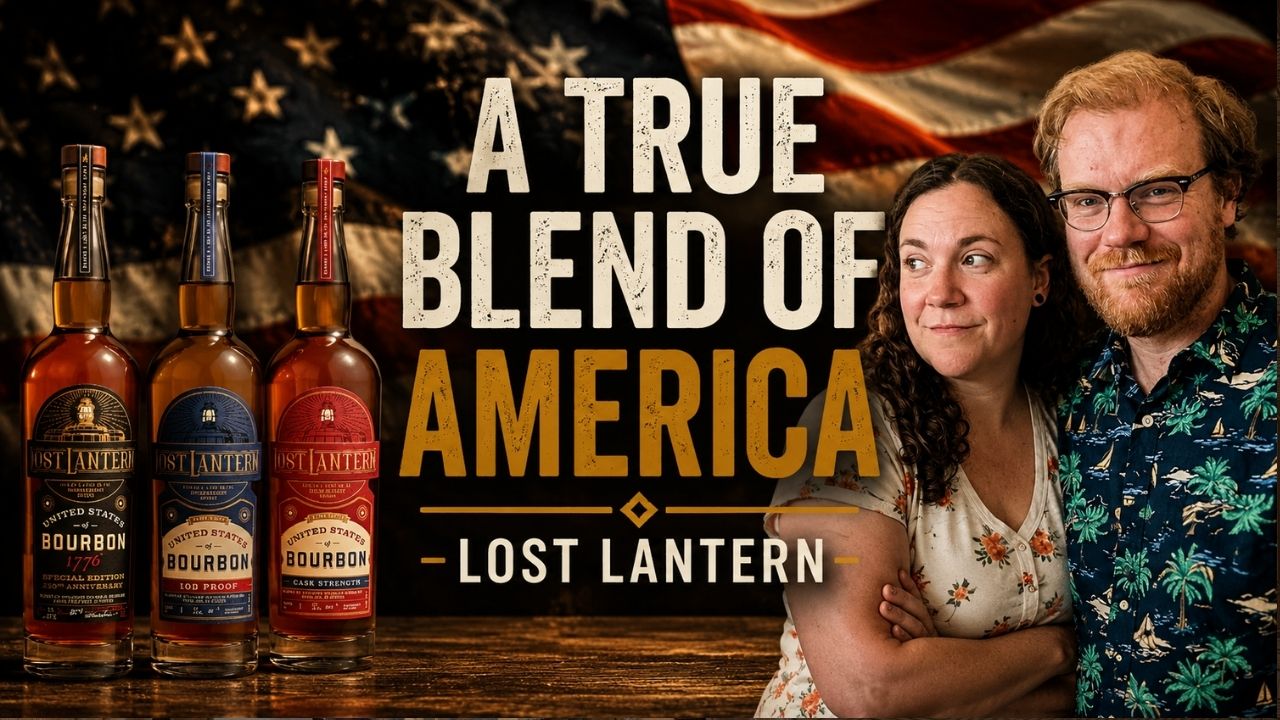
We bring it to our facility in Vermont and we either bottle it as a single cask that says exactly what distillery came from and is kind of our way to showcase this place you may not know or do a small blend of multiple casks from one distillery to showcase a different side of a more well-known distillery like Bacones or Kings County distillery in Brooklyn, or we blend whiskey from multiple distilleries together. And in all cases, transparency is really important to us in that it says even on this release, United States of Bourbon, which was 50 distilleries in it, all of the names of the distilleries are on the label.
Nora (00:03:16):
And
Adam (00:03:17):
That's what to us distinguishes us from a pure blending house where for us where the whiskey comes from is one of the most important parts of what we're doing. We always want to talk about that even if it's part of a bigger blend.
Nora (00:03:29):
We say we're curators and blenders, and that's the mentality that we use throughout. And we're bringing forward the really cool distilleries that people might not discover otherwise.
Drew (00:03:41):
How were you kind of getting awareness of the initial distilleries that you reached out to? Were you just kind of following them on Instagram or you had found them through your previous work or?
Adam (00:03:53):
Yeah, I think that was one of our superpowers when we were first getting started is that because I was writing for Whiskey Advocate and my beat really was Kraft Whiskey or New American Distilleries, I had gotten to know a lot of these places. I had written about them. I had sometimes interviewed them. You knew some of them, especially ones in the Northeast from working at Astor and we had built relationships with them. So when we first reached out to them and said, "We want to come visit you, talk to you about our vision for an independent bottler and talk about buying whiskey from you. " We were people they already had knew a little bit. So it wasn't just like, "You're coming out of nowhere. Who is this? Who wants to do this? " It's like, "Oh, it's those two. They seem cool. We'll at least hear about and talk about it.
(00:04:35):
"
Nora (00:04:35):
And it didn't mean immediate yeses from everyone, but it did get our foot in the door at the beginning and then it's evolved so that now regularly people are reaching out to Adam to work with us because they've seen how much respect we have for the whiskey that we're working with and the fact that we really do shine a light on our distillery partners.
Drew (00:05:01):
How long ago was it when you went to your first distillery and tried to enlist them in doing a bottle?
Nora (00:05:08):
So 2018 we were both living in New York. We had done all of the financial modeling. We had worked through things with our lawyers, made sure that everything legally and financially in theory could work and then talked about it and said, "Well, we need to see if anyone will actually sell us whiskey." So we put everything in storage and we drove around the country for eight months to visit the first swath of distilleries and talk to them. And initially we hadn't thought that we would need to visit every distillery when we went out there, but over the course of about eight months, we decided that that was going to be a requirement for us. So one of the two of us, but generally Adam, has visited every distillery that we work with and understanding the climate that the whiskey is being made and understanding the people, the whole process is so important to us in understanding how to showcase the whiskey and what story that distillery is telling and what story we want to showcase about regional profiles and all of that.
(00:06:06):
So our first whiskeys came out in 2020, but we've been pounding the pavement for whiskey since 2018.
Drew (00:06:13):
Okay. I would imagine that, and the reason I asked that question was I'm thinking in 2018, you have a lot of distilleries that are just getting rolling and they may not have been in this long enough to see the camaraderie in the whiskey industry and that maybe they would've been a little bit hesitant about letting go of their brand to a third party.
Adam (00:06:35):
The interesting thing is that that was true, especially among bourbon distilleries early on, but because we were directly influenced by the Scotch independent bottler model, it's not a coincidence that it's like that. It is explicitly modeled on that, that when we started to go to American single malt distilleries, the reaction we got was actually, "Oh, this is so cool. We've been waiting for someone to do this because now it's a sign that the industry is becoming more mature because it has been around in Scotland forever. It didn't make sense in the US when the industry was almost entirely concentrated in Kentucky and a little bit in Tennessee and Indiana with distilleries mostly owned by big companies. But now that
(00:07:16):
It has become the way it is with thousands of distilleries all across the country, there's a real need for people to be able to have another voice vouching for them and saying that what they're doing is exciting. So single malt people got on early, even people who we had never met before and then bourbon people sometimes took a little more talking to about the value of it. And generally we find the sweet spot for a distillery to be when they've been making whiskey for at least 10 years, not necessarily that they have a 10-year-old whiskey, but that they've been making whiskey for 10 years and learned through the process of doing that. That's usually when they're about ready for something like this in terms of having high quality whiskey, a little bit despair. Because
Nora (00:07:55):
These are distilleries that are making product in environments where no one has ever distilled before in lots of cases. And especially a great example is distilleries in Colorado. No one really knew how to distill at that high altitude. So it took a while for them to figure out what works and then to have whiskey that's old enough to have matured in that climate because it's cool, but it's high altitude. So it's a really interesting, unique thing. And so they need to go through five, six years of R&D and then have whiskey that's aged long enough for us. So just that 10 years, it's pretty quickly emerged as where we start really having serious conversations with distilleries.
Drew (00:08:39):
Yeah. It's interesting because if you think about in Scotland, they're going to be going to distilleries that have been around for a hundred years. So they're not necessarily... And you're going to find plenty of stock to work with. I'm sure going to some of these distilleries, you're probably walking in, you're talking to a distiller and that distiller's kind of proud of what they've done in their small space. They taste it day after day. They don't necessarily taste it amongst all the other whiskeys around. And so you probably sometimes run into people who either undervalue their whiskey or way overvalue their whiskey.
Adam (00:09:15):
That was the interesting thing about the early days in particular is that we would often talk to them, they would say," Okay, we want to buy whiskey from you. "And they would say," Okay, that's great. We want to sell whiskey to you. "And we even would pick the barrels and then it would be like, " Okay, how do we actually sell it to you and get it to you? How
Nora (00:09:32):
Do we price this? "What
Adam (00:09:33):
Do we charge you for?
(00:09:34):
How do we do all the paperwork? How do we move it? Because 80%, maybe 90% of the distillers that we've worked with have never sold whiskey to anyone else before. And I think that's one of the things that makes us unique compared to independent bottlers in Scotland. As you well know, most smaller independent bothers that have not been around for decades are not able to buy directly from distilleries most of the time. They're buying it from other brokers or other places who have spare whiskey around whereas we're always buying directly from the distillery and that means you have the personal relationship, but there's also a lot of -
Nora (00:10:09):
It comes with the good and with the bad. I mean, not really bad, but just more handholding because you're figuring this out as you go. It's not the system that's existed before. I actually like that. I have worked in startup operations as well, we've made it pretty seamless to help distilleries value their whiskey based off of whatever factors they want to and figure out the logistics. But it's definitely an interesting, unique new process that everyone's going through and they have to really trust us to make it worth their while.
Drew (00:10:44):
Yeah. I would think it'd be really interesting in trying to navigate the legal side of it because you are, and especially with a 50 state product that you just came out with, having each state, how are you doing this? I get a picture in the old days they'd have just put a bunch of barrels up on a train and sent it off. And what did you finally have to work into your process to be able to get the whiskey from point A to point B legally and what shipping method? How are you getting it to Vermont?
Nora (00:11:16):
So luckily because so many places are buying from MGP, the process of moving barrels around the US is relatively straightforward. You basically put in an application to the federal government for the distillery you're buying from the whiskey for, and it's a blanket approval to buy from them. And the TTB says, yes, you can do that. And then it just goes, except I'll tell you about Alaska or about Hawaii. Alaska was actually not that bad, but I'll tell you about Hawaii after. But in the continental US, it's just on trucks and there's only a subset of shipping companies that will take alcohol, but they have special licenses, but it's actually relatively straightforward that way. So luckily because places have been buying so many barrels from MDP and honestly the Kentucky distilleries as well, moving things wherever they need to move them, they've made it pretty seamless.
(00:12:13):
Hawaii, we had to ship it across the ocean. And the other nice thing for us about being an independent bottler is we lean on our distillery partners. So we didn't know how to get barrels of whiskey from Hawaii to the West Coast. I think it ended up going through LA, but our Hawaiian distillery partner, Koala, knew how to get things from Hawaii to LA. So they connected us with it. And that generally for us, if we don't know how to do something, nine times out of 10, one of our distillery partners will be able to help us. And as you mentioned before, there's so much camaraderie in this industry and we've been helped in so many ways and we help other people as much as we can and it all kind of comes around, goes around in a wonderful way so that we can get someone on the phone and say, "Hey, how did you do this?
(00:13:06):
" And they're happy to help.
Drew (00:13:07):
Yeah. If it is shipping in the physical barrel, I get this me being a history guy and you hear all the stories about put the barrel on the boat and run it down to New Orleans and it's getting color and it's getting flavor and you're driving these, you're tasting it while you're there, then it's in this hot truck as it's coming across the United States and then arriving to you. Have you ever gotten a barrel where you're like, "This isn't really exactly what I remember when I had it at the other location?"
Adam (00:13:41):
It's a good question that actually no one has asked us before because it is something we think about, especially if it's the summer and we prefer to move fewer barrels in the summer if we can for that reason, but it's not like shipping something down to Mississippi where it would take six months to do it and you have to do a bunch of portages. It usually takes like three or four days even from the West Coast. So usually it's not been a problem. We do taste every barrel once it gets in here to make sure it matches with what we were expecting
Nora (00:14:10):
And we have to wait for it to settle after it gets back. That's the bigest thing is things will generally go back to where they were when they left, but we find the sloshing can pull some things out of the barrel that we don't necessarily want. So sometimes it takes a couple of weeks for the whiskey to settle back to a place that we can then play with. So we are tasting it and making sure that it's ready before anything gets bottled, or especially if it gets blended because we want to make sure that the little mini blends that we're making are consistent with what we're expecting.
Drew (00:14:47):
Talk about the strategy. This is interesting because you got two separate pallets. One is out on the road who is sourcing these barrels and then they're coming back to the other person who is now, they're going to use these ingredients, especially in this blend of trying to create something. How do you communicate in that way? Nora, do you sometimes say, "Boy, if you could find some barrels that had kind of this character to them or that character, or we're getting way too many barrels that have this character to them." Do you kind of have those kind of discussions?
Adam (00:15:20):
Well, the way that it works actually is that while we visit every distillery that we work with, we also don't pick on site because I find when you go to a distillery, you fall in love with the romance of it when you're there, you're in the Rick house, you smell the alcohol vapor in the air, you have the whole experience and
(00:15:42):
I find that it kind of bumps up what you think about everything by like 20 to 30% depending on the exact whiskey. And then when you get it back home again, you taste it independently and you're like, "Okay, yeah, these ones are really good, but it's better than this other one." So we established that early on too, as we would visit, but then we would either bring samples back with us or have them send samples to us and taste in our tasting room. So we both have to agree to every barrel that we buy before
Nora (00:16:09):
We - So you travel, you find the distilleries we select together and then I blend. So we both have to say yes to every single thing as you said. And our pallets are quite different, so that's good. And it allows us to think about the program holistically. And yes, what I need for buns or what we need for collections that we're doing that are showcasing some aspect of the industry, but it is a longer process than it would be if you were going out and finding barrels and picking on site. But to us, it allows us to be as objective as possible and stress test the quality of the barrels, the consistency for us. Because as you know, your palette can be very different depending on what you ate, what time of day it is, all of those. So we're running the barrels through multiple tastes to make sure that there's -
Adam (00:17:00):
Five hours from Oklahoma to Louisiana and a car with air conditioning not working that great, that might taste experience afterwards. Yeah.
Nora (00:17:09):
We're looking for consistency.
Drew (00:17:11):
I am so glad that you brought that up about not being in an environment where your senses are elevated by other things because that's one of those things I was at Tulamordu, I'm doing the warehouse tasting and they're having us nose things and I'm like, "How can I nose in this warehouse? Because the smell is all around me and it's going to taint what my ending experience is going to be. " And no wonder once I have a bottle of scotch over in Scotland at the distillery and I get the same bottle at home and I'm like, "It's not as good as what I had over there." There's a reason for that.
Nora (00:17:53):
Exactly.
Drew (00:17:54):
Yeah. How do you keep track? I mean, I'm thinking I have my little sheets that I keep up and I'll put my little notes on and say, "Here's my nose, my palate." And how do you keep up with, especially when you're doing 50 different barrels for one particular blend, do you get very specific on, "Boy, this really stands out in this? " Or are you trying to find every little note that's in it?
Nora (00:18:22):
So when I'm assessing samples for blending, I'm looking for the dominant profile. And generally the role that I think the whiskey will play, is this something that's going to help with body, with structure, with mouth feel, with some oak note. I'm looking for how it's going to contribute to the whole. So I actually keep things pretty simple where my notes should help me later on. If I'm looking for something with oak notes, I can look through my list and that dominant note is written out. And so I think searching for so many notes, I don't bother because you won't taste it in the blend.
(00:19:04):
So it's really starting to figure out where there's consistency. So if I'm starting to taste like vanilla custard on a bunch of things, it's like, "Ooh, this could be a profile." Or sometimes I'll be like, "Ooh, there's a whole pie crust area and then there's another area that's like lemony. And so what if I'm going for a lemon meringue pie? I don't know. " As I'm seeing those dominant notes, I'm connecting dots and trying to map things out. So trying to keep my notes, I write in a notebook because I find it's easier. From a blending perspective, when we're doing prototype blends, we're fully in spreadsheets, but with my analysis, I keep things as simple as possible so that when I go back, I am not trying to comb through a ton of different tasting notes to figure out the salient details.
Drew (00:19:52):
How do the tastings go when you're both sampling this and blend? Do you find that you're kind of taking feedback from both and trying to find a happy medium or do you kind of talk the other person into, "Hey, this really should probably go this direction for this reason."
Nora (00:20:11):
So with blends, he doesn't taste it until I feel like I'm almost done. So sometimes I'll have a component part and I'm like, "Taste this, tell me what you think. " But generally I go off and do a significant, say like 80, I think the blend is like somewhere between 80 and 100% done and then I have him taste it and give me feedback. And sometimes he'll be like, "Ah, this falls off in the mid, like you need more structure. Ooh, the nose isn't consistent. Here's what I think it's missing." Or sometimes he'll be like, "Yo, this is done. Stop." Because sometimes I'll be agonizing over something and he's like, "This is great. Let's do our final analysis," which is actually we bring it home and pour it and taste it over ice and let the ice melt a ton to have an experience -
Adam (00:20:55):
And
Nora (00:20:56):
A gland carrot too. And a glen carry, but have the experience that someone would have when they actually drink it, not in our specific thing, but it's usually when we're picking barrels, it's way more of a tug of war sometimes where one of us loves it and one of us is less excited about it. But when it comes to blends, I've already gotten to a point where I feel like it's going in the right direction and then I'm seeing if he agrees. And
Adam (00:21:23):
Also the barrels that work really well for a single cask are not usually the same barrels that work really well for a blend. We say that single casks can have sharp elbows. They don't necessarily play well with others. They want to stand on their own and then a blend barrel will be a little friendlier and more receptive or sometimes it'll have more of a simpler structure, be a little more one known. It would not be a single cast on its own. And we've had sometimes where we taste the components of a blend and the components themselves, they're not a complete whiskey. They're meant to be a part of something bigger and would not stand well on their own, but together they become something spectacular. So it's actually a little easier to buy whiskey for that purpose than it would be otherwise. Although sometimes she does steal barrels from me that I plan to do something special with.
(00:22:11):
You're like, "Oh, I used that. Sorry."
Drew (00:22:14):
Yeah, this is fun for me because one of the things I always talk about is that between scotch and bourbon, bourbon because of the way it's distilled usually in America, which has now changed with all these craft distilleries doing a lot more hybrid and pot still, but with it being more driven in Kentucky by column still, I always find that there's more nuance to me in scotch and that scotch's flavor profile is much wider. But now you're talking about 50 distilleries from 50 diferent states and I'm guessing that you are probably not just grabbing their high rye bourbon. Give me your high rye bourbon. Everybody's giving me a high rye bourbon. You've got wheated bourbons, you've probably got Triticali in some of your bourbons, you've probably got oats in some of your bourbons. Are you finding when you're doing the blending that you want to maybe expand the complexity of a bourbon or does that go away from the whole idea of bourbon, that bourbon should be heavy in caramel and vanilla and oak and...
Nora (00:23:27):
Well, when we set out to do United States of bourbon, I think we agreed that we wanted it to be classic in some ways. We didn't want to make it something that really pushes the boundaries. We wanted to simultaneously be as classic as possible while also doing justice to the component parts. So we wanted it to be obviously bourbon. We wanted someone to be able to taste it blind or out of context and know it's bourbon, but also it would've been impossible for me to make something that would taste like Kentucky bourbon. It was a balancing act, but we did want it to feel familiar to most people.
Adam (00:24:05):
Well, not identical because then we couldn't do that and then why wouldn't you just buy Kentucky bourbon instead?
Nora (00:24:11):
Why would it be ridiculous for us to go through this insane challenge to just circle all the way back to something that anyone could buy from any of the great Kentucky distilleries
Drew (00:24:24):
We'll start off with, because this is a great project and I want to deconstruct it a little bit in terms of first, where did this idea come from and how long in advance of this 250th anniversary of the United States did you need to get started on sourcing these bourbons? Because from what I understand, and correct me if I'm wrong, you actually started out doing more vadted single malts than you were doing bourbon projects early on. Is that correct?
Adam (00:24:55):
Yeah. We've always done all styles of American whiskey, including multi-distillery blends. Our first release in 2020 had a blend of American single malt plus single casks of single malt bourbon rye and corn whiskey just to show right away like we are going to do all styles. It is not we're an American independent bottle so we're only going to do bourbon or we're an American independent bottler, so we're only going to do single malt because we want to explore all of these different styles, but we thought early on that it would be people who love single malt who would really fall in love with it first and ended up getting a really strong following among bourbon people who just couldn't get their hands on whiskey from some of these distilleries. So we have done more bourbon over time even as we always keep root in single malt because we absolutely love it.
Nora (00:25:47):
But so this idea, we actually talked about it before we even started Lost Land Turn. It was one of those, as we were talking about the idea for Lost Lantern, we had a running list of things that we would discuss. Wouldn't it be amazing if we could eventually do this, but we have no idea if this is possible. And this is one of the things that came up in that conversation. So we had talked about it, we can't remember if it's before the road trip or during the road trip, but before we started releasing any Lost Lantern products, this was something that we would discuss regularly
Adam (00:26:23):
And we didn't decide we were really going to go for it until about 2023, 2024, but we always had it in the back of our mind. And we actually bought the first barrels from this in 2020 because we had an opportunity to pick up some bourbon from Vermont, which is where we're based that had been aged in full size 53 gallon barrels. And it was the first bourbon from Vermont that we'd ever seen that was aged in 53 gallon barrels. It was four years old. It was interesting and we were like, "We don't know when we're going to find another on that meets these specs." So we were like, "We'll buy it and we'll sit on it and who knows what we'll end up doing with it. " And we did the same thing a few years later when a distillery in Mississippi called Rich Grain Distilling went out of business and put all of their remaining bourbon, which is not all that much on the market and we ended up buying all of it.
(00:27:12):
And part of my pitch to her was this is really good on its own and it's really oaky and powerful and good as a blending agent. And also if we ever want to do the 50 state blend, Mississippi is not going to be an easy state. There are not many distilleries down there. So let's get this now so I don't have to say, "I told you so later." And we did, but in 2023, 2024, we decided we were really going to go for it and we already had a number of distilleries that we worked with all over the country that made bourbon that we knew were good fits for it, but there were other states where we weren't sure yet if we could even get something. So once we made the official decision, we are going for this to release right now. We had about two years.
(00:27:58):
It's our longest planning runway for a project at that point. We sent me on a flight the next week to Fargo, North Dakota for a 3000 mile or probably no 1500 mile road trip through the Dakotas, Nebraska, Wyoming, Montana, and Idaho to see if we could find bourbon from those states that would both fit the profile that we were excited about and that would be willing to sell bourbon to us because those were some of the states that were going to be the hardest.
Nora (00:28:24):
Basically you started with the places that might kill the whole project because there are a couple of states where there's one, maybe two distilleries that are making bourbon and it needed to be two years old because we really wanted this to be a blend of straight bourbons because the people who know that means there are no additives, there's nothing but straight bourbon going into this. So that was a really important thing for us. So yeah, you basically went through all of the places that we thought could kill the project pretty methodically over the course of six months to make sure that we should actually then pursue all the other distilleries who we knew we could buy from.
Drew (00:29:01):
Yeah. Well, and it would kind of kill the project if those distilleries were sourcing their stuff from MGP because then you're ending up with Indiana whiskey from Idaho. And is that really what you're looking for?
Adam (00:29:15):
We did not want to do the United States of MGP. Right.
Nora (00:29:17):
We didn't want MPP that traveled through multiple states coming back to us. Yeah.
Adam (00:29:22):
It was actually something that we really did a lot of betting around to make sure that even from a distillery that does source some of their whiskey, which a number of them do, that we were getting something that actually distilled themselves in - house. So we have bourbon from High West and Utah, but it's their actual Utah distilled bourbon and Smooth Ambler and West Virginia, they're West Virginia bourbon and even our South Dakota distillery, Blackfork Farms, they had another distillery making their bourbon on contract for the first few years, but they were waiting for their own bourbon to get of age and they hadn't released any of it yet because it was only about two, three years old, but we were able to get a barrel I think the first battle of the actual South Dakota distilled bourbon for this project.
Drew (00:30:05):
I'm thinking there's some of those distilleries that probably aren't quite ready to put it out, but they're not ashamed to give it to you for a blending project because it will be a component within everything else.
Adam (00:30:17):
Especially when we're saying you're clearly the most serious distillery in your state. We think you are doing everything the right way, you just haven't been doing it for all that long yet. And there are a handful like that, but generally the idea is that it's a whiskey that we think either already does or soon will stand on its own that people should know about. It's all of the distilleries that we think people ought to know.
Drew (00:30:40):
It's a bit of an eye-opener that the place where all the grain comes from has the least amount of distilleries. So finding something in... I mean, North Dakota was really tough for me to find distilleries. South Dakota Black Fork, I talked to him actually on the phone and I want to go out there someday and visit because it sounds like a fun farm distillery. Yeah.
Adam (00:31:04):
But I agree. I've always thought that the Northern Plains should be a place that has a ton of distilleries, whether it's the Dakotas or even Montana and on the edge of the mountains and the plains. And it just isn't. And I think it's just because there aren't that many people there. So it's just taken a little longer for that to get started compared to Colorado or Texas or someplace like that.
Drew (00:31:28):
It's funny. I have a blending project for you maybe because I talk to different people and as I talk to, my ear perks up about little things. I was on the Bourbon Road podcast many years ago and when I left, I walked away with a bottle of rich grain and I drank it and I said, "This is really good and it's a shame that they've gone out of business." And then I was talking to a distiller at 1861 in South Georgia. Well, when he was looking for a still, Rich Grain was selling their stills, so he bought their still. What's that?
Adam (00:32:01):
Yeah. That's interesting. I didn't know that.
Drew (00:32:06):
So now you got some of that and you might maybe blend from the same still in two different regions. That'd be interesting.
Adam (00:32:14):
People always ask how I hear about distilleries that are more off the beaten track and this is how is whenever someone says something like that, I email to myself immediately so I don't forget.
Drew (00:32:26):
Well, and it's funny because I'm looking down a list and this is something that I hope people will do at some point. Of course, I have a book out where I'm trying to get people to go to craft distilleries more and I look at the bottom of the sheet here and I see you're 50 and on the box that you sent me, it had a map of all of the states. The fun I had was kind of going through going, "How many of these have I been to? " And kind of checking them off. So I had 17, which I was pretty happy. But there were some of them in here that I had not heard of. And so I guess I will have to go back and revisit because I hope that I have as complete a list of all the distilleries across the United States.
(00:33:10):
But again, it becomes word of mouth to some extent. It has to be that the distillery has enough fans that maybe I can bump into them somewhere because so many of these distilleries, how would people get to know them? I mean, how would they learn about these smaller distilleries in the smaller states? And I think that's one of those great things about what you're doing is you can build awareness even through a project like this. And so the question is, there are some ride distilleries out there. There's distilleries doing American single wall. Ever going to do a 50 states of rye or a 50 state of - We
Nora (00:33:49):
Never say never, but it's not right now. We don't think that rye and American single wall are made in all 50 states yet. And in bourbon it was just barely speaking through.
Drew (00:34:01):
And
Adam (00:34:02):
I think there's something special about doing it with bourbon. It's America's native spirit. It is truly a spirit that can only be made in the United States and that felt very celebratory to us. So we really wanted to do that first.
Nora (00:34:14):
Yeah. And it's worth noting for everyone that's listening to this, all of the distilleries are listed fully on the back label. It's basically 60% of the back label is distillery named. So it's all on our website and all the full details are there. So if you want to see how many distilleries you visited head to our website or look at the back of the bottle.
Drew (00:34:35):
Fantastic. Okay. Well, let's go ahead and do a nosing and tasting of the 100 proof. Normally, as I understand it, you do cast strength for most of your projects. Is that correct?
Nora (00:34:47):
So in the spring we released our first proofed down blend. Our far flung bourbon, far flung rye are our flagships. They're in some ways of a little brother and little sister of United States of Bourbon. They both are blends of bourbon and rye from all across the country, but that it's a minimum of four distilleries in four states, which sounds so small. We released far fung bourbon 100 proof this spring because we do think that for these blends, when we're speaking to a broader audience, especially in our home state of Vermont, there's demand for something that's proofed down a little bit and we slow proof so we add water over the course of multiple weeks and it's actually a quite different experience tasting our whiskey when it's slow proofed versus adding water yourself. So we started doing that.
Drew (00:35:41):
Excellent. Now I heard it through the grapevine, Nora, that you are a fan of baked goods.
Nora (00:35:46):
Yes.
Drew (00:35:47):
Okay. So that kind of comes through in your tasting notes a bit. I'm going to give you one with this.
Nora (00:35:53):
Please.
Drew (00:35:53):
I mean, the first thing that I thought was sugar cookies, like vanilla sugar cookies. But my dad used to make Williamsburg orange cake, and so it's an orange and vanilla frosting on pound cake. And I get that frosting smell. To
Adam (00:36:12):
Myself too.
Drew (00:36:15):
Williamsburg, Virginia. Yeah. And when you're downsourcing tarnished truth or something down in that area, you'll be able to do that. Yeah. No, really what shocked me about this is that you almost think, okay, I'm taking 50 states worth of whiskey and I'm putting them all into a single bottle. It's just going to become a muddle. I mean, you're not going to get anything jumping out at you. And that's part of the reason why I asked you this question of when you're doing this blending, do you kind of have a profile in mind that you want to try to achieve? Do you wait till the blend starts speaking to you and then you kind of chase after what the blend is kind of giving you?
Nora (00:37:07):
So I let the barrels, for the most part, for this especially, I let the barrels tell me what they want to do. So we started with probably 60 or 70 component parts, maybe even more, because some distilleries is not just one barrel, some distillers, multiple barrels and started seeing what I felt worked well together. Generally for blends, I'm always looking for the base. So roughly two thirds to three quarters of the blend I build in one cohesive unit and that dictates the profile. So I was looking for enough whiskey that felt like it was in the classic realm. I didn't pick the barrels that were way off the bean path to be that base and had them kind of the barrels that I was starting to look at for the base have them tell me the general profile of the whiskey. For our far flung bourbon and far flung rye, because we are multiple batches in and I'm looking for some continuity, not the same, but with that, I'm always looking for one or two tasting notes to be in every blend.
(00:38:13):
But for this, it was no preconceived notions really, except as we mentioned before, trying to make it feel familiar enough that it would appeal to a broad swath of the bourbon drinking people.
Drew (00:38:29):
Yeah. This is really interesting because to me it does have the vanilla standing out, but it also is bringing some fruit notes. And I saw in your notes that raspberry, and it's funny because you read a note and then suddenly that's like stuck in my nostrils
(00:38:47):
And it's just everybody's going to taste a little bit differently, but I'm thinking when you're blending, this is the headache for me if I'm ever trying to take something and push it in a direction by pouring something else into it, especially with scotch, because if you put in a bit of peat, you only need a drop, it can turn it in a hurry. Were you finding any parts of any whiskeys that you had that were just too hard for you to put even more than just a little bit in? Because if you put more than that, it was going to knock it off in another direction.
Nora (00:39:24):
So hazmat whiskey can be hard when not everything is really strong. So anything that's like 140 proof plus I have to be really careful with because it can swing a blend pretty hard because of how strong it is if there are other delicate flavors. And then there's some other things that are very oaky, very, very oaky can also swing it. So I kind of know that now. And so when I'm tasting things, if I tag them as very strong or very oaky, they're usually not getting placed in that base blend. They're used as... I mean, the best way for this that I thought about is I broke it into three chunks, which from a cooking perspective, it's like you have the meat and then you have the sauce and then you have the seasoning and things that are really tanic or strong oak flavor or really strong from an alcohol perspective are in either the sauce or the spic layers.
Drew (00:40:19):
Okay. Did you get anything that you were like, and of course you don't have to name names, but did you get anywhere you were just kind of settling for something because there just wasn't enough good stuff coming from a particular distillery?
Adam (00:40:33):
We really didn't want it to be like that. Every distillery had to meet all the rules that we normally have, which is that the whiskey has to be well-made and high quality. We also have to like the people. There were some states that were really hard and there were ones that I had to go back to. I had to take a second trip to Idaho actually because a brand new whiskey brand had just launched with eight-year-old Idaho bourbon and it had been very much under the radar before that and I heard about it and I was like, "That sounds better than what I had been working on. " That was the only one where I felt like I was going to be settling for it and
Nora (00:41:10):
Then I was
Adam (00:41:11):
Very glad to find something else because the Idaho distillery we did have with the eight-year-old bourbon is spectacular and actually does have Tritikali in their mashville and is what we like. We like things that showcase those unusual regional styles, but there are some regions of the country that are just not as far along bourbon-wise. New England bourbon, I mean, we're in New England, but just the climate here is so much cooler that whiskey takes a lot longer to really hit its prime, but generally every distillery we stand behind. So we actually really did not have to... I was worried we'd have to settle for some places, but it didn't end up feeling like that.
Drew (00:41:47):
Yeah. I had to trim my list when I was doing Vermont specifically because there's a lot of distilleries, but not a lot of distilleries are making their own stuff there with their maple aging, which makes sense for Vermont. I mean, it fits. However, it does make it tough when you want to put out a book in my case where you're saying these are all distilleries that are 100% making their own spirit so you can taste the state and see what the state is about. So yeah, absolutely. Interesting on this is that maybe I'm sensing your interest in scotch as well because there's so many fruit notes in this that I almost think, and I don't know if you've bumped into other scotch drinkers that you've let taste this and had them go, "You know what? That actually for a bourbon, because some scotch drinkers will not head off in the bourbon director, too sweet for me.
(00:42:46):
" In this particular case, it's probably still got the sweetness to it, but it is, to me, some of the things I'm picking out of it are kind of things I might note in a spaceide whiskey or with those fruit notes.
Nora (00:43:01):
It's the first time we've heard it, but I love it. I would love to hear more of that because the more that we can speak to palettes of all stripes, the better for everything we do at Los Angeles, but especially for this project.
Drew (00:43:14):
Yeah. It's got a nice peppery note at the end. It kind of carries through and is kind of unexpected from where you're at at the beginning. What got me was the ending had a very herbally kind of note to it. So it covers a lot of territory, which is fitting for a whiskey that's covering a lot of territory. So let's go on and do the tasting of the cast strength. Now, part of the reason why I asked you about the toning down or bringing down the proof, did you find when you were going between cast strength to proofing it down that you were seeing some of your blend starting to change in a way that you maybe went, "Ah, boy, do I need to touch this a little bit more with something
Nora (00:44:05):
Else?" No, we find it changes but haven't had any issue with where it goes because we do tests to make sure it'll work before we actually start proofing it. This is the exact same liquid at cast strength and a hundred proof just with some water added to it slowly and steadily.
Adam (00:44:27):
At the same time there are different whiskeys. There
Nora (00:44:28):
Is. There's a different
Adam (00:44:29):
Experience drinking the two of them.
Nora (00:44:32):
We find people have a very strong preference one way or the other for that reason.
Adam (00:44:38):
But very much split overall between the two. It depends a lot on someone's own palette. If you're a cast strength person, you're probably going to like the cast strength and vice versa. But I think both of them really, I think really accomplished what we wanted, which is we didn't want to do a blended bourbon from all 50 states just for the sake of doing it.
(00:44:59):
It's not like we are releasing it ahead of the 250th and we thought that was a great time to do it, but it is not created just for that. And actually these two will both be recurring releases and it's about creating a bourbon that we think celebrates great bourbon from all across the country. And that meant that it couldn't be a big muddle. It had to actually be good and be able to showcase this, especially because a lot of people are discovering well slanted for the first time because of this and don't already know that we have years of blending behind us. So it was very, very important for us to make the Blunton feel cohesive and I think Nora did a wonderful job with that.
Drew (00:45:37):
The floral notes come out a lot more on this to me and more of a nutty character comes through on it versus the vanilla and orange really standing out to me on the front. They're still there, but it's like these other notes have elevated and so I could see where somebody who's a fan of one or could choose and say between one or the other that they would prefer even beyond just the proof point on the whiskey. So me being the type of person that loves to play around and try different things, part of me if I had all those barrels, I would go, what if I just did equal amounts of every single one or what if I did percentages and said, how much of a percentage is the land mass of Texas versus Alaska? And then I used those as my... Did you do any kind of weird playing around with this to see what you could do?
Adam (00:46:43):
You decided against equal parts just from the get go.
Nora (00:46:48):
Yeah. We didn't even talk about it or think about it because it's just not what we do.
Adam (00:46:55):
The fun historical nod in that vein, I don't know if you heard about already or if you picked up on it yourself is, did you notice the order of the states on the back label?
Drew (00:47:06):
Oh, is Delaware first?
Adam (00:47:08):
Delaware is first. Which one is last? It's
Nora (00:47:11):
The same as the sheet of paper that you have. It's the same order.
Drew (00:47:14):
Okay. Hawaii is last or Alaska? Hawaii is last. Okay. Yeah. Okay.
Adam (00:47:20):
You get it. You're a history guy.
Drew (00:47:24):
Yeah, no. And I think about it, well, the reason Delaware is because it says first state or something on their license plate. So that's the thing that reminds me of that. It's their claim to fame being the first. So yeah, no, that's cool. And how long did it take for you to figure out the... It's easy once you start getting into... The first 13 are a litle tough because you got to kind of know when they signed basically. Yeah.
Nora (00:47:57):
Luckily you're also a history guy.
Adam (00:47:59):
And I like that and I had fun redoing the research for it, which is like it's all on the internet so it's pretty easy and learned lots of fun things along the way that like North Dakota and South Dakota, no one actually knows which one was admitted to the union first because I forget which president it was at the time, maybe grew up Grover Cleveland, signed both of them the same. It was Warren Harding, signed them both on the same day and then he shuffled the two papers back and forth in his office so people wouldn't know which one he signed first because even then were very competitive with each other. North
Drew (00:48:34):
Dakota is
Adam (00:48:35):
Traditionally listed first because it then used default to alphabetical, but no one really knows which one was the first admitted of the two.
Drew (00:48:42):
Yeah. Living in South Carolina, I know I'm going to say this and then I will understand that there will be people that'll be upset with me in the Dakotas, but part of me wondered why they were split in the first place. There's not a lot of people there and even back then in the 1880s or whenever it was done, yeah,
Adam (00:49:04):
Really
Drew (00:49:04):
Interesting.
Adam (00:49:04):
I say we need more Dakotas. Why not do East Dakota, West Dakota? We're really moving.
Drew (00:49:10):
Just keep splitting them up. Split them up. Yeah. All right. So your last one that you did here is interesting as well because it's called 1776 and we are doing less states. We're not doing all 50. So what was the idea between 1776?
Nora (00:49:29):
So this is a special one-off edition, never to be repeated. This one is specifically in honor of the 250th anniversary of the United States and it is a blend of straight bourbon from the first 13 states. So very much this one's the celebratory. I mean, everyone should drink all of it for the 4th of July or whenever they want to, but this one is the celebratory whiskey of this trio and it was your idea.
Adam (00:49:56):
Yeah. And then I grew up in upstate New York, grew up going to the battlefield at Saratoga and Ticonderoga and places like that and always felt connected to that history. So the 250th felt like something worth celebrating through whiskey and I just thought it was a cool thing to do of like, if we're doing a blended bourbon from all 50 states, why not do one from the first 13 and what that maybe would've looked at like in 1776? Not that everyone was making bourbon back then or anyone.
Drew (00:50:23):
Yeah. Well, they weren't calling it that at least anyway. Interesting to note though, if you were going to do a rye, that's the one I would do.
Adam (00:50:34):
Oh,
Nora (00:50:35):
100%. Yeah.
Drew (00:50:36):
Yeah. Because there is a Georgia rye and South Carolina's got rye, so you got rye all the way up the coast.
Adam (00:50:42):
Be careful or you'll get me to try to talk her into doing the United States of Brandy 1776 edition brandy from the Northeast peach brandy from Georgia.
Drew (00:50:51):
I would love it. I would love it. Brandy is not something I've really... Have you guys released any brandy? Have you ever done a brandy?
Adam (00:50:58):
We've never done anything besides whiskey up to this point.
Drew (00:51:01):
Okay. I mean, because the thing to me is that
(00:51:05):
I always tell people if I ever stray from whiskey lore, it'll be to brandy lore because brandy, when I do my historical research, brandy was so much a part of the early part of American history and it's completely forgotten. People think of it now as, oh, cognac and yeah, that's European and they don't realize that Johnny Appleseed planted all those apples for brandy. So it's definitely one I would have interested. But what kind of challenges did you have actually? I mean, you would think that 50 whiskeys would be the challenge. Did you find that more challenging or the 13 in terms of blending and finding the right...
Nora (00:51:49):
It's a good question because this one was actually harder to blend than the 50 state. Yeah, because for this, we wanted to actually showcase the region. We had more of a sense of purpose from a profile perspective and because it's from one region, I didn't have the really hot climates to play with the East Coast. Yes, there's Virginia, but that's not going to have those deep, dark flavors.
Adam (00:52:16):
Georgia's not Arizona.
Nora (00:52:17):
No, or Texas or Mississippi. The range of flavors that I could play with for the United States of Burn, the 50 state once, it was flighter. And so it took roughly the same amount of time to play with that many fewer component parts to get to a whiskey that felt like it was telling the right story. It was cohesive. It hit all of the marks, all of the goals that we had set for ourselves with the 1776 edition. And by
Adam (00:52:51):
Complete coincidence, it ended up being exactly 1,776 bottles for the release.
Drew (00:52:56):
Oh, wow. Okay. Nice. Funny how that
Adam (00:52:59):
Works out.
Drew (00:53:00):
Yeah. Okay. Yeah. So when you're doing this, because you have less bottles, do you kind of find a whiskey base like this distillery is kind of the one I'd like to start with and then I'm going to build everything around it? Or did it start with a blend of a couple of them or how did you kind of go through that process?
Nora (00:53:24):
Usually it's a couple. For this, the largest component was from Baltimore Spirits and ultimately we actually called in more whiskey from them because I needed it for the blend because it's the same distilleries in the 1776 edition and the 50 states. So we needed to make sure that I wasn't using all the barrels in one or the other. And Cedar Ridge in Iowa is the largest component in the 50 state blend, but the Cedar Ridge in the 50 state is only 14.4%. So still not a majority, it's still a small amount of the overall blend. So really trying to make sure that it's not one distillery and then you're tacking on other things in small amounts we wanted it to be from that full swath and that's true of the 1776 edition as well.
Drew (00:54:19):
There's other
Adam (00:54:20):
Cases where you stole some barrels from me. The Broad Ranch in North Carolina, there were a couple barrels there where I was like, "I'm excited to release this as a single cast." And you were like, "Too bad
Drew (00:54:33):
." Well, it would be interesting to see in terms of doing these kinds of blends and pulling that together. If you get yourself, you work yourself into a situation where you go, "Boy, for us to meet how many bottles we need to make on this, we don't have enough of one particular one. And to take that out would ruin the balance of the whiskey, but then there's the risk of reaching out to a distillery that is going to get you another barrel, but that barrel isn't quite the same as the first barrel that you have some inconsistencies because I find that even in the larger distilleries, when you get single barrels, sometimes they are way different from each other, even if they're from a similar batch. Do you have to kind of keep that in mind as you're doing your blending and hold yourself back from overdoing it with one in particular just in case?
Nora (00:55:28):
So we always did it based off of what we had. So everything's built off of the actual volumes that we had. I did ask him to go out and buy more whiskey from a few places, but only when we got the barrel samples from them did I start playing with it because we do it on such little... We gauge all of the barrels and we know the rough volume and proof and all of that when I'm blending to make sure that we don't bump up against the issue that you're talking about. So we're really saying," I know the maximum amount that I can put in a blend and then if I want more, he has to go find it for me. "I don't start playing with it until we know he had that locked in. So that luckily doesn't become a problem. I could imagine that it would if we didn't do it the way that we do, but we haven't had that problem.
Drew (00:56:16):
Okay. Knowing that you are, again, somebody who's into baked goods, maybe it's shoeing my nosing notes off or something, but I get coffee cake in this.
Nora (00:56:28):
I see that. Yeah.
Drew (00:56:29):
Yeah. It's really interesting. Some chocolate notes in there. Again, a little herbally. Anything herbal usually tends to stick out to my nose. Really nice mouthfeel to it as well. I mean, how much do you pay attention to keeping the body of the whiskey?
Nora (00:56:53):
A lot. Yeah. Yeah. We look at all of the different aspects of the whiskey and are trying to make it work both individually and as a whole.
Drew (00:57:07):
Yeah. Almost a grape note on the end. Really interesting. But then there's this spice that is, it's kind of that peppery, I don't know if it peppery or cinnamon, but there is a heat that comes off of both of these. Actually, I got peanut butter and jelly sandwich now
Nora (00:57:26):
On
Drew (00:57:26):
My palate. Yeah, it's really interesting. What's that?
Adam (00:57:32):
Now I get that too.
Drew (00:57:35):
It is. It's just funny how that just struck me all of a sudden. It's funny how sometimes you're searching for flavors and you can't find them, but then all of a sudden you just relax for a second and they come to you without you really even trying. How do you, because I've been struggling with this, Nora, if you have to do a tasting of a bunch of different whiskeys in the same day, how do you keep your palate from burning out and how do you keep your nose from being desensitized to the point? Because bourbon is, again, to me, a little more subtle than single malt is. So I struggle sometimes to try after I sniff two. The third one is like, " I'm just not smelling anything now.
Nora (00:58:28):
"So you'll see people do this at festivals, but we reset our palettes by smelling our skin because it's a weird thing to say, but if you smell your arm, your forearm, it helps reset your nose pretty quickly. So that's what we do and it always looks silly but it does actually really work. And I take breaks, I'll walk away, I'll give myself 20 minutes and then come back and see what things taste like. And we don't generally do 50 things in one day.
Drew (00:59:06):
And
Nora (00:59:07):
In the scenarios where we do go down to a distillery and we're doing a blend there, because we have sometimes done that and they give us a hundred samples, we actually will generally winnow it down the two of us together by nose initially without tasting because it's much harder to bring your palate back and so we'll do as much as we can just from nose alone looking for the right profiles and then you taste it to make sure you're actually reading the things right. But I don't know if you have any other best practices because sometimes you're going down to distillery and tasting. Okay.
Drew (00:59:40):
Yeah. Well, the other thing that I always have to remind myself is don't just hit the top of your palate. You want to kind of work the whiskey around because
Nora (00:59:48):
Sometimes
Drew (00:59:48):
I taste stuff on the side that I don't taste on the top of my palette.
Nora (00:59:53):
We also spit ruthlessly unless it's like final analysis where you really need need to figure out... And throughout the course of blending, I'll check the finish by swallowing a small amount, but if we have to do a ton of stuff, then spinning is a total necessity.
Drew (01:00:13):
Okay. So where is this going to be available or where is it available? And again, is this something that's just going to be very short term or do you have enough of a supply of say the hundred proof that it probably will last for a bit?
Adam (01:00:31):
So it's available online through a retailer that is attached to our site and a number of other online partners in most of the country. And it's also available traditional retail in California, New York, Massachusetts and Rhode Island and about to launch in a couple of new states that we've never been in before, including New Hampshire, Maine, Virginia, and Illinois. So very excited about that.
Nora (01:00:59):
The best way though to figure out where to get it is to go to our website and we have dropdowns with state availability. Lost
Adam (01:01:06):
Anchorwhiskey.com.
Nora (01:01:07):
Yes. Thank you. And we make it as easy as possible to get the whiskey to you. So when you put your state in, it'll give as many options as are available to get the whiskey, be it in stores in your state or getting it shipped to your door.
Adam (01:01:24):
And the 1776 edition being commemorative and really someone will never do again, that's going prety quickly and it's also the smallest of the three. So I don't know how much of that will stick around past the end of the year. And the other two are a little wider, but it's still like it would be a small release by even a big craft distillery standard, let alone a big distillery. So it's really not that many bottles overall, but we do plan to re-release it roughly every year. We've
Nora (01:01:53):
Kept
Adam (01:01:53):
A portion in a Solara so we can continue to do that and augment it every year. Nice.
Nora (01:01:58):
And we're expecting the hundred proof to be around for the longest out of the trio as the largest of all of these.
Drew (01:02:06):
Okay, very good. The other thing is, of course, I do the travel end of the podcast. You actually do have a tasting room up in Vermont.
Nora (01:02:13):
You do.
Adam (01:02:14):
We are in the town of Virgins, which is actually the city of Virgins, a city of 2000 people halfway between Burlington and Middlebury, about three and a half hours from Boston, five hours from New York City, two hours from Montreal. And we have, we think probably one of the widest selections of American whiskey, certainly in Vermont, but really at pretty much anywhere in terms of the breadth of it, because you can come here and taste single casks from North Carolina and Arizona and New Mexico and North Dakota in one flight if you want. So we keep an archive of all of our past releases here and it's a great place to do a deep dive if someone's in the area.
Drew (01:03:01):
Nice. Well, are any of these whiskeys that you, do you have enough leftovers of some of them that we're probably going to see maybe a couple of releases of Lost Lantern under some of these particular distilleries?
Adam (01:03:15):
We've done some already, especially through our discovery club because it took a while to get all the whiskey for this together. So that was often we would buy multiple barrels at once and we actually did a single cast of our North Dakota bourbon in our club in March and a couple others more recently. We did our main oded bourbon. So we've done some like that and we'll continue to do so because every disturber that we worked with in this is a place that we would continue to work with in other ways. So people see more of them. Sometimes I have to wait a couple years until they have more bourbon because there are a couple where I could only pry a little bit from them just enough for the blend.
Drew (01:03:53):
Well, I am envious of your tours around the United States and getting... I've been to all 50. I will tell you that for anybody who's thinking of doing the same thing, save North Dakota to last because they actually do a whole ceremony for you at the Fargo Visitor Center for making that your last state. But yeah, I mean people should have fun checking off these distilleries and learning more about them and getting a chance to taste. I think the only thing that we miss by this whole bottle is that individual personality of each of those distilleries, but that's what makes traveling so fun and getting a chance to experience these and go a step beyond. So thank you so much for doing this. It's a great idea and I wish you a ton of success on this.
Nora (01:04:41):
Thanks so much. Thanks for having us. Cheers.
Drew (01:04:43):
Well, I hope you enjoy my conversation with Nora and Adam from Lost Lantern. And coming up, may have noticed I did not do history on Monday. That is because I am studying up and piecing together an epic new podcast series for you. For the first time, you're going to hear the real history of the origins of Kentucky Bourbon. It's a story that has never been told before. I'm going to tell it to you and I can't wait to share it all with you. In the meantime, have a great and safe 4th of July weekend, 250 years, nothing sneeze at, that's for sure. I'm your host, Johanish. Enjoy your weekend and until next time, cheers and Sloan Java. For show notes and transcripts, head to whiskeylore.org/interviews. Whiskey Lord's a production of Travel Fuels Life, LLC.