Clay Risen (Author): The Story of Kentucky Whiskey
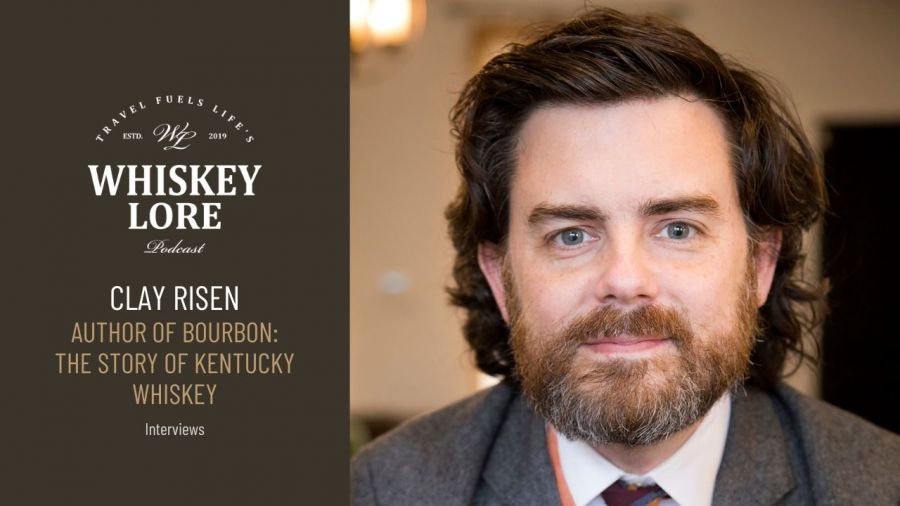
From Nearest Green to the Whiskey Trust, discover the challenges of separating historical evidence from whiskey mythology.
Beyond the Bourbon Bottle
Author and New York Times obituary writer Clay Risen joins Drew Hannush to discuss his book Bourbon: The Story of Kentucky Whiskey. Their conversation explores the challenges of historical research, the people behind Kentucky Bourbon, and the forces that shaped the modern whiskey industry.
Among the topics discussed
- Whiskey as a window into American history and the Whiskey Rebellion
- The origins of the Bourbon name and the limits of historical certainty
- Theodore Roosevelt and the challenge of writing about historical figures
- Nearest Green, Jack Daniel, and the response to Risen’s 2016 article
- Women in whiskey and the contributions of Peggy Noe Stevens
- Kentucky’s human terroir and the camaraderie of distillers
- Preserving oral histories and the rivalry between E.H. Taylor and Joseph Greenhut
- Elmer T. Lee and the survival of Buffalo Trace
- Mad Men, changing laws, and the Bourbon renaissance
- The photography and archival materials behind Risen’s book
Explore Clay Risen’s Book
Transcript Table of Contents
- Introduction
- Meet Clay Risen
- Whiskey as a Window Into American History
- The Whiskey Rebellion and the American Frontier
- Revisiting History and the Origins of Bourbon
- From Nashville History to Journalism
- Writing About Historical Personalities
- Theodore Roosevelt and Historical Context
- The Importance of Multiple Perspectives
- The Two Sides of Walter Duffy
- Nearest Green and the New York Times Article
- Diversity and Whiskey Marketing
- Women and the Development of the Whiskey Industry
- Camaraderie Among Kentucky Distillers
- The Human Terroir of Kentucky Bourbon
- Capturing Kentucky’s Changing Distillery Landscape
- The Challenge of Preserving Whiskey History
- James C. Crow and the Forgotten Distillers
- The Importance of Oral Histories
- E.H. Taylor Versus Joseph Greenhut
- Historical Figures Who Connect Generations
- Jokichi Takamine and Unexpected Historical Connections
- Elmer T. Lee and Bourbon’s Dark Years
- Discovering Bourbon and Writing About Whiskey
- Did Mad Men Inspire the Bourbon Renaissance?
- Changing Laws and the Rise of Craft Distilling
- Whiskey Samples and Journalism
- Photographing Kentucky’s Whiskey Culture
- Exploring Distillery Archives
- Writing a Whiskey Book During the Pandemic
- American Whiskey and the International Market
- Mexican Whiskey and Heirloom Corn
- Closing Thoughts
Transcript
Introduction
Drew Hannush (00:00:10):
Welcome to Whiskey Lore: The Interviews. I'm your host, Drew Hannush, the Amazon bestselling author of Whiskey Lore's Travel Guide to Experiencing Kentucky Bourbon. Today, I have the honor of talking with author and New York Times writer Clay Risen. And as a Whiskey Lore fan, you probably know that name because it was his article back in season three that we talked about as being a catalyst for Fawn Weaver, driving deeper into the story of Uncle Nearest Green and Jack Daniel. But he's also written several books, including ones on Scotch and Bourbon, and he has written some history books as we'll talk about. And this includes a book that he is coming out with next Tuesday, which is all about Kentucky Bourbon. And so today we're going to have a fun conversation kind of learning a little bit about that book. We'll get into a little history as well. We'll talk about Teddy Roosevelt, Mad Men, Women in Whiskey, The Whiskey Trust, and we'll even touch a little bit on this week's Whiskey Lore Story podcast about Walter Duffy and Duffy's Pure Malt Whiskey.
Drew Hannush (00:01:24):
And we will also talk about his writing style and get into how you write about history. But before we jump into that conversation, I want to remind you that coming up this Friday evening, we're going to have our second Friday night happy hour live on YouTube. Just go to youtube.com/whiskeylore and we're going to chat about this conversation I'm having with Clay. We'll also talk about my trip out to Stranahan's and the Snowflake Festival, and I'll have some stories and other things to impart there. And we can also talk about the regular Whiskey Lore episode as well, about Duffy's Pure Malt Whiskey. It all starts on Friday night at 8:45 PM Eastern, 5:45 Pacific at youtube.com/whiskeylore. Make sure you subscribe, ring the bell, and then it'll send you a little alert to let you know that we are starting the YouTube live. All right, time to get into my conversation right now with author Clay Risen from the New York Times.
Meet Clay Risen
Drew Hannush (00:02:33):
Welcome Clay Risen to Whiskey Lore.
Clay Risen (00:02:36):
Hi, thanks for having me.
Drew Hannush (00:02:38):
This is a lot of fun because your name came up a while ago while I was doing research on the Uncle Nearest story. We'll probably talk about that a little bit later on in this, but the main reason that you're here is because you're about to launch a brand new book. It's a book about a subject that I'm sure a lot in the audience will have a keen interest in. It is called Bourbon: The Story of Kentucky Whiskey. So this is going to give us an opportunity to deep dive into some of the research that you've done and talk about some of the subjects that you go through in this book. And you're covering a very, I like to say a very broad subject. In the world of whiskey, it's probably, it is a corner of it, just Kentucky Bourbon versus all the world's whiskeys, but just within itself, with its history, with its process, with all the different stories that come through it makes it a very broad subject.
Drew Hannush (00:03:40):
So we'll talk a little bit about how you filter that down into a single book about the story of Kentucky whiskey as well. So you're a reporter with the New York Times, right? And I understand you also do the obituary section on top of that.
Clay Risen (00:03:59):
Right. Well, that's my main gig these days. That's my assignment is doing obituaries. And I've been an editor for a while. And then on the side, I write about whiskey and occasionally other spirits for the paper. And then I freelance outside of that and write for a few other publications. Most of my freelancing is books. So this will be my fourth whiskey book.
Whiskey as a Window Into American History
Drew Hannush (00:04:24):
Okay. And you also write about history because you have a book on Teddy Roosevelt. You've got some interesting books on the post Martin Luther King assassination time period and also civil rights, which this idea of researching whiskey, but whiskey and history just kind of blend together. It's hard to tell American history without also having whiskey being involved in it somewhere.
Clay Risen (00:04:57):
Yeah. And vice versa. I mean, I think that particularly in America, we talk about whiskey and we're almost always talking about history, especially with some of the older brands. And a lot of that's marketing, but there is obviously a history there. And I think one of the fun things that a lot of people find when they talk about whiskey is unpacking those stories. What is real? What is mythology? And I'll be honest, I think that we're only at really the beginning of starting to understand a lot of that deep history. So much of it was never maintained or sort of poorly understood. We don't have records from, or we don't have pristine records. And then a lot of it was destroyed during prohibition, a lot of the traditions and oral histories. And so now I think I would love for some enterprising set of grad students to, if they're working on dissertations, if they're listening, whiskey is a great topic.
Clay Risen (00:06:00):
There's so much, if you're an economic historian, if you're a social historian, if you're a historian of race in America, whiskey is a great way to bring together a lot of disparate topics into, I think, a pretty fresh enterprising historical view.
The Whiskey Rebellion and the American Frontier
Drew Hannush (00:06:18):
Yeah. And I found it very interesting diving in. I did a series on the Whiskey Rebellion. And when I started writing it, I thought I'd do a 30 minute episode around it. And then I started digging in and I realized there are so many different layers that build into the Whiskey Rebellion. And so many people look at it from a very high level view and they try to fit it into American history by saying, okay, well, the pictures I've seen are George Washington out on horseback and he must have rode the troops into Pittsburgh and there was probably a grand battle or whatever may have got because we romanticize history in a lot of ways, but yet once you start really digging into the story itself, you start learning about Alexander Hamilton and Shays’ Rebellion and all of these different things that led to the Whiskey Rebellion and actually explains why those farmers were in this position where they were frustrated and they couldn't afford to live the way they were going because of this tax that was being put on them.
Clay Risen (00:07:32):
Yeah, absolutely. And I think whiskey is a great way to kind of understand the frontier in America as we understand it. Particularly if you don't think historically, you tend to forget that at that time, Western Pennsylvania was the frontier. There really wasn't much beyond it. And central Kentucky was the frontier. And what was it like to be living there and to be producing goods and in this case whiskey and then to have the centralized government coming in and saying, "Well, you're going to have to pay taxes, you're going to have to follow certain rules." I mean, this is the creation of the American government as we live it in American society. And whiskey is so much at the center of that, both as a unifying force. It's an economic engine, it's tying together farms and markets, but it's also a divisive force because there are people who want to tax it.
Clay Risen (00:08:29):
There are people who want to control it, not just governments, but churches and various sort of social groups want to tell you how much you can drink. And so there's all sorts of tensions about, well, what is that society going to look like? And I think whiskey, it's not the only way, but it's certainly a very important, I think it's a crucial way to understand those early stories about the development of central middle America, what once was the frontier.
Drew Hannush (00:09:01):
Yeah. And I keep thinking that part of the original plan with the taxes was to be able to keep records of how much whiskey these distillers were making so that they could tax them, which leads me to this question of where are all of those tax records? Because even some of the central characters of the Whiskey Rebellion were tax agents who were making whiskey themselves. And so you would think that somewhere there is a stockpile of records unless they were lost in a fire or prohibition caused them to say, "This isn't necessary for us to hold onto anymore."
Clay Risen (00:09:45):
I mean, this is why I say some enterprising grad students, because that's not work that I can do. I have two kids in a day job, but if I were in my 20s and I had some dissertation support, I would go out and figure out, well, are there some out of the way historical society, some records that are kept maintained? Probably not as many as we'd like, but I think there's probably a good amount of stuff that's tucked away that could be really revealing about some of those questions that honestly we've always just sort of set up as can't answer that. We don't know. Some of that I think can be answered.
Revisiting History and the Origins of Bourbon
Drew Hannush (00:10:31):
This is the fun part about history for me too is that, and I found this in my own writings, that I will write a story up to a certain point. And I'm fairly certain that I have all the facts down and that a good example being the flat boats going down the Mississippi River and the theories behind where the name Bourbon came from and me saying in one of my episodes that the Louisiana purchase was the first time that they could have had flat boats going down because the Spanish controlled the Mississippi River. And so I told that whole story in the episode. Then I was researching a later episode and found that one of my home state representatives, Thomas Pinckney, had actually been sent over in 1795 and in the Treaty of San Lorenzo with Spain had opened up the Mississippi River in 1795 for us.
Drew Hannush (00:11:28):
And it's like now I have to go back and revisit my old story because history changed, not because the events of that time period changed, but because there was a part of the story I didn't know. And so that becomes the real challenge.
Clay Risen (00:11:47):
Yeah, no, absolutely. And I think the other thing that you mentioned the origins of the word Bourbon. I mean, this is one of those things that I think in some ways doesn't have a clear answer. I mean, one of the things that I think historians, and I'm sure you've experienced this, you have to have a certain modesty about it. And to know that sometimes there's no one answer. There are multiple answers. How did people start to come to call it Bourbon? Well, the answer could be different for different people. Is it because it arrived on Bourbon Street in New Orleans? Well, maybe part of that. Is it because people in Francophone, Central Kentucky thought it looked like cognac and so they wanted to give it a fancy name for something that was created on the frontier? Yeah, probably part of that too.This is how culture evolves.
Clay Risen (00:12:49):
And the idea that there's one answer and one answer that we can pinpoint and we'll find that document that says this is the answer. That's probably not going to happen, but we don't have to do that to have a good story.
From Nashville History to Journalism
Drew Hannush (00:13:04):
Yeah. So where did your love for history come from? Was there a moment?
Clay Risen (00:13:13):
Growing up, I loved history. I wasn't much of a math and science kid. I was much more of a love to read nonfiction, loved to read history. Grew up in a family that was pretty casual history buffs. Grew up in Nashville where history is a big part. In fact, all around me was, I grew up in kind of the greater reaches of the Battle of Nashville landscape. And anybody who's listening, if you live in Nashville, you've been there, you know that all of coming down from downtown, there's a big sort of triangle shape all the way toward Williamson County and all of that was where the battle took place. So you grow up knowing that, well, there was a battle here. A friend of mine, his backyard had a trench in it that for a long time I thought was a creek and it turned out no, that was actually a trench, a Confederate trench or a redoubt.
Clay Risen (00:14:11):
And you'd still find little bullets in the dirt. So that's not a unique experience. I think a lot of people grow up with that kind of living around history, but it was very present for me. And that's kind of background. And then in college and graduate school, I studied history and came about this close to going to a PhD program and then realized that I wanted to have a career and a fairly stable career path. And so I went into journalism, which is not really the, I don't know, it's maybe one tick further toward the stable career path, but it's what presented itself to me. But I realized that as a journalist, I could still do history writing and that even if I wasn't in the history world, I could still do things that were in that vein. And so a lot of my journalism has been inflected with history, even if it's not explicitly that.
Clay Risen (00:15:22):
I mean, when I write obituaries, every obituary is a work of history. It's a little thousand word biography that touches on where this figure fits into some history. And then that's an approach that I bring to my books. And obviously when I write history books, that's what I'm doing. But even with my whiskey books, I'm always trying to talk about a specific whiskey, a specific distillery, a whiskey tradition, a region, trying to tell it within a historical context because I think that's so important to understanding what it is that we're consuming, what it is we're talking about when we talk about whiskey.
Writing About Historical Personalities
Drew Hannush (00:16:03):
Well, and I noticed in reading the book that you actually break out in certain sections on personalities, people who have had an influence over, rather than just telling the story of a distillery, we're going to dive in a little bit deeper on an individual. So with your writing style, do you feel like you need to get inside your character to be able to write about them or do you kind of look at the world around them and then fit them within that context?
Clay Risen (00:16:36):
It really depends. I mean, I've never written a straight biography, so I've never had to grapple with that question specifically. When I wrote my book about Theodore Roosevelt and The Rough Riders, I really tried to do a little bit of both. I think that that book probably for me was the closest I've come to writing a biography because it was so much about Theodore Roosevelt. And yet so much of what I was trying to do was to place Theodore Roosevelt at that time in his life in a particular moment in American history and to show both how he affected the course of the Spanish American war and of American politics and sort of at the turn of the century, but also how those things affected him and how there was a lot going on that was not just about him. And sometimes there are myths about him, there are myths about the war that are very much pinned to individuals.
Clay Risen (00:17:31):
And I tried to explain how a lot of it was, there were historical forces at work that were bigger than any one person. And so trying to get that balance I think is where the craft of history really comes into play where you're really trying to show the interplay of individual agency, this person did this, this person chose to do this thing and historical forces that are the result of lots of decisions and the result of things that are beyond any one individual's choice and decision making, but nevertheless make up this thing we call history.
Theodore Roosevelt and Historical Context
Drew Hannush (00:18:11):
Yeah. It's interesting because I've grappled with something myself in terms of doing writing about historical figures in that we're in a politically sensitive time right now. And so history is kind of going through an evolution itself. And Teddy Roosevelt is a great example of someone who, if you read about him and some of the things that, some of his opinions, which were opinions of the day, and today we look at it by our standards today and we go, wait a second, who is this guy? And maybe we shouldn't put him on as high a pedestal as we do. But then you have a case where he was the first man to invite a black man into the White House, Booker T. Washington, to have dinner and he was considered a progressive for that era. So how do you grapple with those kinds of things when you're doing your writing?
Clay Risen (00:19:12):
Yeah. So I think you have to set aside contemporary judgments as a starting point. You have to understand somebody in the context of when they were to begin with. And you have to look at not just whether you're going to judge them good, bad, wicked, saintly, but actually what did it mean to hold certain points of view at a time and what were the reasons for that point of view? He also was a big supporter of women's suffrage long before certainly it became a mainstream view, especially for a male leader of the Republican party and which was different party then than it is today, as are the Democrats, but certainly wasn't the majority position of his party.
Clay Risen (00:20:08):
We look at that today and say, "Well, it's incredibly progressive." And it was incredibly progressive, but I think it's important to say, "Well, what did it mean to be incredibly progressive on that view at the time?" When he also had some pretty, what we would say, very retrograde racist probably ideas about race and about immigration. But also it's important not just to say, well, that's... I mean, I think it's important to say, well, that's what people though at the time or that was more of a mainstream view, but also what was the construction of that view? How did it operate at the time? And was it in fact... Were there critics? Were there people who disagreed with that point of view? Where did that sort of fit him within that time period? And one of the things I think about Roosevelt that is very hard to grapple with, but also what makes him such a compelling figure and continues to make him so compelling is that he is one of a kind and he was one of a kind at the time.
Clay Risen (00:21:14):
One of the things that made him compelling to so many voters, but also very confounding to a lot of politicians was that he was very hard to pinpoint. He was adamantly... He's a strong antitrust advocate, but he was also an advocate of big business. He had this position that said, "Look, we need big business. Big business is a good thing, but there has to be rules around what that big business does and we have to corral it and we have to domesticate it essentially. We can't just let it go do whatever it wants because if it does, it's going to ruin everything." Well, that's a pretty sophisticated point of view, and it's one that went against people who felt we need to get rid of big business and people who said, "No, we need to let big business do whatever it wants." And I think Roosevelt's point of view has borne out.
Clay Risen (00:22:06):
I think that's kind of the way that we've approached antitrust for the last hundred years is let's regulate it, but certainly allow enterprise and big enterprise to prosper. But I think you can look at so many things that he did and say, "Well, he was out in front of so many people in terms of thinking about things this way." Now, a lot of his views, and this is again what's confusing about him, is a lot of his views were unique for the time and still seem pretty weird. He was a big advocate of some pretty strange language reforms, just how should we sort of create a standard American English, which it's more of a kind of a novelty. It doesn't make him a good or a bad guy, but if you go back and read that stuff, he had some very strange ideas about how we should spell words in English and what should be the grammar rules, but he had them and he advocated these things and he was very persuasive if you read it and say, "Well, that kind of makes sense, except that it doesn't." But anyway, but that's why he's so fun.
Clay Risen (00:23:21):
If there's a topic, he probably had a point of view on it.
The Importance of Multiple Perspectives
Drew Hannush (00:23:24):
Yeah. Well, I think it's these characters. Napoleon tried to recreate the calendar. I guess once you get into a position of power and you can let your creative imagination get away with you, you can run into situations like that. But it's these kinds of characters like Thomas Jefferson to me. Actually, my first eye-opening experience with politics and history mixed was when I read a biography of Alexander Hamilton, and then I read a biography on Aaron Burr, and I though, "Isn't this interesting? I'm reading..." Now, it's very hard to apologize for some of Aaron Burr's quirkiness, but the author did the best he could to make his character a hero at certain points and justify his position. And then you read the book on Hamilton. By the time I came out of that, I was like, "I really don't like Thomas Jefferson." And the reason I didn't like him was because I was hearing all of his flaws from writers who were trying to justify their characters over another character.
Drew Hannush (00:24:35):
It was on a trip to Williamsburg that I finally decided I need to listen to an autobiography of Jefferson. I'm going to the home of where a lot of his great ideas sprung up from. I listened and I went, "I understand why they didn't like him because he was somebody who could make a decision on something, promote it." A good example being we don't need big government, and then he becomes president, and the first thing he does is he usurps Congress and buys Louisiana. So he's a man who had ideals, but he also was not afraid to shift. And so his writer was able to get me to understand him deeper as well. But it feels like we can't just read one history. We have to read different characters in the situation or different points of view.
Clay Risen (00:25:38):
Oh, absolutely. And I think that's such an important point and something that I think gets forgotten both by writers and by readers, is that there is no definitive history and there's no one truth about any individual, any one story. And that's wonderful, right? Because it means, certainly as a writer, myself of history, it means that there's always going to be a market for new stories about the same stories that we know, but it also, I think, means that we should all be a little humble about what we think we know about certain things. The broad scopes are true. I mean, we can say certain things and obviously facts, unless completely overturned, are more or less true, but it's these interpretations that we take to be true that are constantly in flux.
Clay Risen (00:26:39):
I mean, we see this today. There are great history wars going on today. We sort of always in the midst of a history war about American history, but on a meta level, that is what history is about. And so it can be very frustrating, especially when the truths that you grew up with suddenly are being challenged, but also I think should be, to some extent, hopefully reassuring that, well, that is what happens. That's how things go. There's a new book out now that is all about, it's by a Mexican British scholar who's trying to rehabilitate the conquistadors, particularly in Mexico, and to tell a story about the conquistadors that they weren't as bad as we've been told they were by and large. I've read a few reviews of it and it sounds compelling if, I don't know, some people say it's persuasive, but again, that's a story that probably if you were taught history over the last 30 or 40 years, that's not what you were taught.
Clay Risen (00:27:45):
And yet, here's a guy making the case. So whether he's right or wrong, it's not a truth claim. It's a, here's an interpretive claim, and that's why I love history.
The Two Sides of Walter Duffy
Drew Hannush (00:27:57):
I'm doing a story right now on Walter Duffy and Duffy's Pure Malt Whiskey, which was basically the impression that history has given us of Walter Duffy is that he was almost a con man in that he was selling his whiskey as a medicinal whiskey that would cure things, cure bronchitis, cure hemophilia, cure... So he's going through all of these wild claims and ends up getting a government approval on that his whiskey was... He just called it pure malt whiskey, using the word malt, which at the time was something that people saw curative properties to. And so he played off of that and was trying to get the government tax stamp for medicinal rather than for whiskey because when the Spanish American War was going on, they were raising the rates on whiskey taxes again. And so he wanted to get the lower tax and the government approved him, which made him go, "Okay, see, government approved.
Drew Hannush (00:29:11):
All of my claims are true." And so history paints him as this great conman, but if you really dig into his history, what you find out was that he was from Rochester, New York. He was employing a lot of people. He built the National Theatre there. He was a great philanthropist. He gave money to the poor and was always trying to help build up his community as much as he could. I think this is one of the dangers we get into with history also is that sometimes we kind of paint something with broad strokes and we really kind of filter in on a headline or try to take a life and boil it down to a sentence. And that really becomes an issue. With your studies now, of course we can talk about the Jack Daniel situation because as the original impression of him was put out there, suddenly you bring somebody like Fawn Weaver in and all of a sudden you're digging in and you're finding a completely different person than you expected to see.
Nearest Green and the New York Times Article
Clay Risen (00:30:25):
Yeah. Yeah. I think one of the challenges with that story when I first started telling it was that a lot... So the first article I wrote, it was interesting to see the way that Brown-Forman reacted to it. So they had originally been very, I would say supportive of the article when I was researching it, maybe a little wary about someone else telling their story independently. But what ended up happening when the article came out, it's a very nuanced story, right? Jack Daniel, he was never a slave owner. He was too young to have owned slaves for one thing, but he certainly never owned Nearest Green. He employed him as his, what today we'd call a master distiller. But that nuance got lost. So the headline and the top line story is that Jack Daniel's whiskey was a lot of the development of the whiskey can be laid to Nearest Green.
Clay Risen (00:31:35):
And Jack Daniel's original distiller was a formerly enslaved person. And that very quickly became, oh, Brown-Forman owes reparations because Jack Daniel owned a slave and actually profited off of that enslaved person. Well, that's not the story at all. That's in fact the opposite of the story. And yet especially this came out in 2016 and not that things are much different today, but it was a very tough moment with the election. And so Brown-Foreman actually, they really backed off of talking about that story very much. And one of the reasons I know that Fawn got involved was that nine months later, there really hadn't been any movement at all from Brown-Foreman to recognize and embrace this legacy. And so she said, "Well, I'm going to do that because Brown-Foreman's not going to." And it was very enterprising of her to come in and say, "Well, we're going to make our own whiskey and we're going to create our own brand." And with her business background to be able to turn that into a successful brand.
Clay Risen (00:32:47):
And I think that she's done more for that name and that story than Brown-Foreman ever could. And it's not to demean Brown-Foreman, but they're an aircraft carrier and she's a low PT boat. They're just not able to turn like she can. So it was sort of interesting to watch that play out in the way that... I think that actually Brown-Foreman, and I can't speak for them, but I imagine that they're somewhat happy with the way things have turned out. They don't have the responsibility of telling that story. And they probably at some point regretted that, but there's no risk now. Fawn Weaver's telling that story. And she's a really good person to be telling that story. She is not out to destroy Brown-Forman. She's not out to destroy the Jack Daniel legacy. She's very savvy. I mean, just from a business point of view, she understands it's a good thing if her brand can benefit from the Jack Daniels story and have a symbiotic relationship while still staying true to the legacy of Nearest Green.
Clay Risen (00:34:02):
And so what they've found is I think an independent partner, not literal partner, but she's there telling this story in that symbiosis with them. And I think that it's a unique story. It's not something that other brands are necessarily going to confront. I think some other brands are going to have much harder times with some of their legacy stories. The fact that Heaven Hill embraces Elijah Craig and embraces his history without talking about his ownership of slaves is problematic. And they really have to deal with that. Brown-Forman's kind of lucky. They've got this story about Jack Daniel and they can talk about that legacy without it being... Or they can delegate it to Fawn without taking a lot of fire themselves. And so it'll be interesting over the next, I think 10 years to see how distilleries deepen and change their conversations around their own histories or around, in Heaven Hill's case, their kind of adopted histories.
Clay Risen (00:35:17):
They've embraced this character from Whiskey Past, Evan Williams as well. How do they talk about those characters going forward?
Drew Hannush (00:35:28):
Yeah. I think the important thing is that we're having the conversations at this point.
Clay Risen (00:35:32):
Oh sure. Yeah, no, absolutely. Absolutely.
Drew Hannush (00:35:35):
Well, and could Brown-Foreman, because you think about it, they were telling the story up to a certain point in the early 1970s and then they stopped. Part of it could have been internal conversations of how would we bring that back? Because now it's going to look bad if we haven't been telling that story for so long. And so you don't know all those little conversations that are going on in the background. And it's the same thing that I struggled with when I started doing the story of Uncle Nearest. And I wanted Fawn Weaver to tell the story because I can try to tell that story from my history and my background, but it's going to have more impact coming from her. And so I think that's what made it... She's such a great ambassador for where Whiskey needs to go, I think, in the future.
Drew Hannush (00:36:37):
And so to have her voice out there, I think is important that she's the one making this statement.
Diversity and Whiskey Marketing
Clay Risen (00:36:44):
Oh, I absolutely agree. And I think one of the things that... And I've written about this some, but one of the things that the industry is behind the curve on is recognizing the diversity of its audience. And for a long time, Whiskey has told a story about its audience that's primarily white, primarily male, primarily older. I would say there was probably never a time when that was entirely true, but there was at least a time when most people agreed it was true. And that's not the case now. We know obviously that the demographic is shifting much younger, and that's been true for a while. And some of the distilleries have gotten better at marketing to younger people, but women, people of color, and not just black people, but Hispanic, Latino people, Asians, there's a broad audience out there. And obviously still older white men still make up a lot of the audience, but it's much more diverse.
Clay Risen (00:37:50):
And so it's important, I think, for the industry. And I say this as not as a criticism, I think a lot of people are thinking about this, but it's something that they need to continue to do and continue to deepen really telling authentic stories about themselves and about their brands and doing it in a way that doesn't patronize people, doesn't speak down to them. We can all think of misfires on the part of some brands.
Clay Risen (00:38:26):
Diageo with their Jane Walker rollout was seen by a lot of women is pretty demeaning. I'd say there's a little less of that in the US. One of the interesting things, when I was working on one story, looking back to marketing by certain brands in the '60s when this sort of intersects with my interest in civil rights and civil rights movement, but as marketing to middle class and aspiring young black consumers became trendy in the 60s and 70s, there's a lot of pivots on the part of Bourbon branding to try to appeal to those audiences. And actually some pretty effective marketing and on the one hand, marketing in magazines like Jet and Ebony that were aimed at black audiences, but also just including more black people in their ads. It's one of the things I think often we know sort of superficially, but forget that there's a lot of things in the late '60s and early '70s were really progressive in terms of those questions.
Clay Risen (00:39:37):
Not always, and we can come lots of other examples, but you could look at some of these things. Old Taylor did an ad series with a very fashionable young black couple walking around the old Taylor with what is now Castle and Key, walking around the battlements and the gardens and just kind of taking in and enjoying Bourbon and not making a big deal of it, it's just that's a young black couple doing it. And you can't imagine something like that. I mean, it's 20 years later. Today, yes. But 20 years in the 80s and 90s, that would be... So things go back and forth, but it's interesting to see that there is a history there. And I think that brands can draw on that experience to move forward.
Women and the Development of the Whiskey Industry
Drew Hannush (00:40:28):
So I noticed through your book, some of the profiles that you go through are specifically into those kind of underserved market or underrepresented markets. Peggy Noe Stevens talking about her, Margie Samuels and what she did for... We forget that when I researched the history of Scotch whiskey, in the early days, the women were the ones that were doing the distilling, not the men. It was done in the kitchen, but they were the ones in charge of the still. And so that story gets lost over time because we get into this old man image of what whiskey was.
Clay Risen (00:41:10):
Yeah. There's a great historical monograph from... It's not that new, maybe a couple of decades old, and it's called Every Home a Distillery. And it's about early colonial era American distilling, so particularly on the East Coast, but it's all about how distilling was not separate from the hearth and home. It wasn't an industry in any way or it largely wasn't. And then in a lot of those cases, it was the women doing the distilling just like they were doing the cooking and whatnot. But I think particularly with someone like Peggy, she's a known person. People know who she is in Kentucky, but the role that she played in developing the DNA or the blueprint for whiskey tourism and particularly for how distilleries present themselves and her work at Woodford was groundbreaking. And I think anybody who goes to a distillery today in Kentucky sees her fingerprints, even though obviously that probably doesn't have her picture on the wall or they don't necessarily know what they're looking at.
Clay Risen (00:42:34):
But I though it was really important to highlight her contribution because in some ways that can be forgotten and she's a living figure. Margie Samuels is no longer with us and is a historical figure, but Peggy's someone who I think deserves a lot more praise than she gets for her role in the development of the recent whiskey industry whiskey experience.
Camaraderie Among Kentucky Distillers
Drew Hannush (00:43:02):
My favorite part in your writeup on her was we would assume that because she has the name No, that she would be a shoe-in for any job, but she's going to apply for a job at Brown-Forman. And you talk about the circling in red of the name No on her resume, I guess it was. That's pretty funny because again, we look at this, an outsider would look at it and say that that's how the corporate world might think. But the whiskey industry, from my experience with it and maybe with yours as well, is that they're a lot closer. At least the distillers, the people who are working behind the scenes are kind of friends in that whole world. There's not this amazing competitiveness that comes out.
Clay Risen (00:44:00):
Yeah. One of the things I was interviewing Fred Noe for this book and I asked him, "You guys are Beam-Noe family, you're big dogs at the distillery, but you've got a global conglomerate or a global company that owns the distillery. What's that like and how much are we to buy into the story that you all tell?" And he had a very good answer. He said, and obviously this is probably what the company likes to hear, but I think it's true, which is that having a corporate ownership allows... And the right company, obviously, not any company, but having a company like Beam Suntory allows them to just focus on the whiskey making, allows them to not have to compete with each other. So you get a guy like Fred Noe and a guy like Eddie Russell, they don't have to worry about the bottom line.
Clay Risen (00:45:08):
Obviously, they have the privilege of working at really respected distilleries and really established distilleries, but they're not competitors in that way. They're not sitting there and saying, "Well, how many bottles did we sell today versus how many did Wild Turkey sell?" And they don't show up at festivals and say, "Okay, well, we need the better spot because we don't want them to have a good spot." They're all just friends. And if they're competitive, it's kind of in a loose kind of which high school football team do you support kind of way. And I think that's really important, particularly at that level, that kind of legacy brand, legacy distillery level where these are all people who feel pretty blessed to be in an industry that has popped over the last couple of years, last couple of decades and to benefit from that. But they all remember what it was like before the 2000s when if a piece of equipment broke, you had to worry about could you replace it?
The Human Terroir of Kentucky Bourbon
Clay Risen (00:46:09):
Could you afford to replace it? Fortunately, you had Vendome, which is a family owned company, but you could also call up Jimmy Russell and he'd come over and either fix it or bring the part that you needed. If you were short a barrel or if you had an extra barrel that you could trade, you didn't have to go through the accounting department, you could just kind of arrange for something. And maybe things are different now or it's a little more complicated, but they have that history. One of the things that, just to go into the background of the book, but when my publisher came to me and asked me to do this, they had already published a book, this is the second in a series, they had published a book about the champagne region in France and it's a similar packaging. They come in dual sleeves, so there's a book and then there's a drawer that has maps and ephemera and reproduced old labels and stuff like that.
Clay Risen (00:47:08):
But the idea behind the champagne book was obviously French terroir, how do we talk about individual estates? How do we talk about differed, p—? The terroir, literal climate and ground and the sort of physicality of that product was central to what that book was about. And they said, "Well, how do you tell that story with Kentucky whiskey or with whiskey generally?" These days people talk a little bit more than they used to about the terroir of whiskey and of the grains and there's that. But what I wanted to do was say, "In Kentucky it's..." And we can talk about the water and we can talk about the climate in broad scopes, but there's limestone water in a lot of places and there's -
Drew Hannush (00:47:58):
That's what I'm learning. That's so funny because I'm talking to Peoria and they're like, "And we have the limestone aquifer." I'm like, "Oh, okay. Okay."
Clay Risen (00:48:07):
And you can find extreme annual variations in climate in other places. So it's not unique to Kentucky, but what I think is important in Kentucky or let's say what makes up the terroir such as it is, is the culture and the people and the history and the kind of critical mass of tradition and knowledge and just sort of almost in the bones. It's easy and important to talk about these kind of top line names like the Russells and the Noes and the Beams, but also to talk about the supporting players. And I don't just mean the folks at Vendome or the folks, but I mean the folks who own the farms that supply a lot of the grain. I mean the folks who are third generation warehouse workers who really know the ins and outs of every warehouse at Wild Turkey and know how every bit of that warehouse works and so that a barrel coming out of one corner is going to taste different from a barrel from another corner.
Clay Risen (00:49:18):
That's not something you learn in a class. That's something you learn from the fact that you and your father and your grandfather all worked in the same warehouses. And that to me is what sets Kentucky Whiskey apart and what makes it unique and very hard to replicate certainly overnight anywhere else in the world.
Capturing Kentucky’s Changing Distillery Landscape
Drew Hannush (00:49:40):
And so you jump from talking about the larger distilleries, then you separated into some of the more established craft brands and then into some of the newcomers. Now I wrote a book myself on doing how to plan out a Kentucky Bourbon tour. I did profiles on 32 different distilleries talking about some of the basics of what you could expect while you're on the tour. But the thing about that book is that I wrote it two years ago and let's see, O.Z. Tyler, who I wrote about, is now Green River, so that's changed. And now there's a whole host of new distilleries that are popping up left and right. And so with this explosion of whiskey right now, it really becomes... It's almost like you are writing a piece of history right now because you are freeze framing how many distilleries there are in Kentucky versus where it'll be just a couple years from now.
Clay Risen (00:50:42):
Oh, absolutely. And that is my case to my editor for new editions to come along. No, look, you're absolutely right. I mean, that is the difficulty of writing a book like this at a time like this. I think there will be changes every year. Every distillery is going to go through ownership. Just in the last year, there's been a lot of ownership changes and yeah, a lot of distilleries, not just craft distilleries, but some pretty well financed distilleries coming online and those experiences are going to change. But what I hope I do with the book is at least reflect that sense of innovation, that sense of newness, that sense of at least the diversity of distilleries that are out there so that if there's something that someone else, if there's a distillery next year that opens that someone hears about that's not in the book, they'll at least have a framework for understanding, well, where does that fit within this?
Clay Risen (00:51:49):
Because I think as opposed to just 10 years ago, you have not just a lot more distilleries, but you have a lot more types of distilleries. You have some place like Neeley Family that is just... I mean, talk about garage band distilling, that's what those guys do. And they're making the amount of whiskey they make and want to make is literally a drop in the bucket compared to what Beam puts out every day. And yet they are both Kentucky distilleries. They're very different distilleries and not necessarily one better than the other, but very different. And so I think what I tried to do was create that palette, that kind of spectrum of distilleries. And even though it is, as you said, a freeze frame, it's at least a way of understanding the contemporary picture of Kentucky distilling because it's very different from what it was 10 years ago.
Clay Risen (00:52:51):
But I do think that five years from now or 10 years from now, it's just going to look more like it is today. There will be more distilleries and there will be more, but not necessarily more types, if that makes sense.
The Challenge of Preserving Whiskey History
Drew Hannush (00:53:06):
Yeah. My dad had a series of yearbooks that were put out that would tell what went on that particular year, and you could pull those out and read through and you would be reading a historical perspective from that time period in 1956. How would somebody have written about 1956 in 1956? And we struggle in trying to do this research on whiskey because we only have a few books we can go back to. The Cecil book, Sam Cecil book has some information in it about old distilleries. But if there were yearbooks that had been done pre-prohibition, even just if they'd done one a decade, what a wealth of information that would provide the future generations who are looking in on history.
Clay Risen (00:53:59):
Yeah. I wish every company had it in their mind to create a historical record of what they were doing. Just as a tangent, but I know people who are trying to write histories of the video game industry and we think, "Well, that's not even 50 years old." But actually, it's really hard because these companies that were developing video games in the '70s and even the early '80s, they weren't thinking about their legacy. They weren't thinking about, okay, well, how do we document all these different innovations? And yet from a historical point of view, you're looking back and saying, "Well, how did we get to the point where the Nintendo was the system that everyone wanted to have? How do we talk about all these iterations before that?" Well, turns out Atari didn't keep very good records and Coleco didn't keep very good records. But that's within my own lifetime.
Clay Risen (00:54:55):
So you think about going back 150 years, no one was writing down what was going on in their distillery. Some people were, and their tax records, but a lot of it is much more diffuse, much more just sort of needle in a haystack kind of hunting rather than just sort of that what you want, which is that gold standard industry and corporate level and individual level reports about this is what's going on this year.
James C. Crow and the Forgotten Distillers
Drew Hannush (00:55:30):
Yeah. I had this come up in a recent conversation with Chris Morris at Woodford Reserve. At the end, and I've not asked this question of distillers before, but he is tied into the whole 25 years of Woodford Reserve. So who better to talk to about Woodford Reserve? But at the end of the conversation, I asked him the question of what he felt he was going to... What was his stamp going to be on the Bourbon industry? And his answer sort of surprised me that he said, "I'm just another distiller. Distillers get forgotten." And when I start thinking about one of the people we talked about during that conversation, Dr. James C. Crow, there's no information about him. We can find little snippets here and there, but there's so little that we can find about him, and perhaps because he had the exact same feeling that I'm not somebody...
Drew Hannush (00:56:28):
I'm just distilling. What is this going to have in terms of an impact that future generations would even care about?
Clay Risen (00:56:36):
Yeah, no, that's right. I mean, there's a certain... Particularly someone like him where he's... I think of his legacy as not an inventor, but as an adopter, someone who took practices that were maybe in other industries or were sort of being developed and made them standard and said, okay, well here are... And as a whole, creating a systematic approach to distilling. But you can see how he at the time might not have seen that as particularly significant and that is something that becomes a legacy and is clear in hindsight, but not necessarily at the time. But it's interesting that Chris would say that. I mean, I'm not surprised he would say that, that makes sense for him, but I would give a different answer.
The Importance of Oral Histories
Drew Hannush (00:57:31):
Yeah. And he's such a lover of history. And that's part of what I want to do in these interviews is have an opportunity for people to tell their history and to get it down somewhere so that if something happens... I mean, because a great example is I interviewed Al Young, who was a brand ambassador and had come up with Jim Rutledge through that whole recreation of Four Roses and bringing it back to the United States. And he's so humble in talking about his own time period there. His book, he really doesn't cover much of that time period. And to me, that is a legacy. That's something that we need to know about.
Clay Risen (00:58:09):
Yeah. And I think that's so important, these just interviews with people in the industry. I'm sure you've been through the oral history, the Buffalo Trace oral history at the Nunn Center, and the interviews with some of these guys that if you're in the industry, you know who they are, but their names don't appear on bottles, they're warehouse managers, but the amount of insight that comes out of those interviews, "Here's how stuff worked in the '60s." And just hearing them talk about, "Yeah, here's how we did things back then," is so important, not just to understanding them or the distillery even, but here's how the industry worked. And that's the sort of stuff that I think is, particularly with the kind of technology we have today where it's really easy to sit down and do an interview, you don't even have to leave your house. You just talk like this.
Clay Risen (00:59:08):
And let someone just download their memories is going to be something that scholars and fans in the future are going to benefit from enormously.
E.H. Taylor Versus Joseph Greenhut
Drew Hannush (00:59:22):
So if you had your opportunity, and you say that right now you haven't really dived into the concept of doing biographies, but if there was somebody in the whiskey industry in its history that you could write a book about, that you feel like their story needs to be told, who would you write a book about?
Clay Risen (00:59:41):
So I actually have a contract to do a book. I have another book I have to write first, but after that one, a dual biography of E.H. Taylor and Joseph Greenhut.
Drew Hannush (00:59:53):
Wow.
Clay Risen (00:59:55):
Yeah. And I think that the two of them, both Actually, either of them would be a great subject for a biography, but I think that their interaction... So E.H. Taylor, we all sort of know his story, Greenhut being the head of really the father figure of the Whiskey Trust, they are fascinating characters. And you mentioned, we were talking earlier when we were talking about Roosevelt and the complexity of characters and we can't judge them. Greenhut was a penniless Jewish Austrian immigrant or Czech maybe, immigrant war hero built this conglomerate from nothing, had enormous flaws and was the bitter enemy of E.H. Taylor and Bourbon whiskey, but a fascinating character. And ultimately, I think someone that I would want to portray a little more sympathetically than he often is. Taylor, also an incredibly complex and fascinating character.This is a guy who he's born in Paducah or near Paducah in 1830, dies in 1921.
Clay Risen (01:01:21):
His lifespan, he was born on the frontier. You can imagine sort of fancifully that as a kid, he saw Abraham Lincoln or someone like Lincoln punting his way down on a flat boat down the Mississippi. And in 1921, that's after World War I and he is -
Drew Hannush (01:01:43):
He's seen the rise of the Bourbon industry really.
Clay Risen (01:01:47):
The rise of the Bourbon industry, the rise of America. I mean, this is the story of the development, particularly of middle America. And something that's always in the back of my head is something that's fascinated me is the period of time between particularly the mid 19th century to say the 1920s, the dominance of the Ohio River Valley in industry, in politics, in culture. The stretch from St. Louis to Pittsburgh is all those cities, they dominated American life. And obviously New York and Chicago are important cities, but this sort of stretch is where the story of immigration, the story of American industry, the story of the peopleing of the middle part of the country, practically every president from Grant up until Harding came from that area. I mean, with some exceptions, Roosevelt being one of them, the role that that part of the country played in the Civil War.
Clay Risen (01:03:02):
Anyway, and whiskey is at the heart of this story. Whiskey is a great way to tell this story, the development of American culture, of American politics. And Taylor is this figure at the middle of it. And Greenhut, they're pulling all the levers to get their thing. Greenhut is developing this monstrous trust that is ultimately taken down by its own, falls apart in its own iniquities. And Taylor is pulling, he's friends with senators and he's friends with congressmen and he's developing laws that end up rewriting huge parts of American industry. His support for the Pure Food and Drug Act tells a lot about how industry developed and how government regulations developed around the turn of the century. All these things are going together. And so I think that's the story I'd like to tell. Something that hopefully I'll be able to tell.
Historical Figures Who Connect Generations
Drew Hannush (01:04:08):
Well, it's interesting that you bring this up because in my love for American history, one of the characters I think is not talked about enough because we only think of him as the son of a president who became a president himself, but he was only there for one term, is John Quincy Adams. Talk about a guy who lived American history. His father was John Adams. He was in the household privy to those conversations. His father wanted him to be educated and have an understanding of all of this. He was there watching the soldiers coming back from Bunker Hill right in front of his doorstep. And then he went off to France and he was in France during the revolution. He went from there to being in the Netherlands and during that time period, went off to the court of Catherine the Great in Russia, was there for some time, and then came back and lived history in America through to the beginning of Civil War, to that time period, the Amistad event that he was a part of.
Drew Hannush (01:05:26):
They talk about the old man sleeping in the House of Representatives during all of this, but he really saw the foundation and the growing of America as it is.
Clay Risen (01:05:40):
Yeah. No, and I think that's one of the... You talk about why we love biography. And to me, I sort of set aside the great man theory of, I think it's all just much more complicated. There are obviously people who do have influence on history and history influences people. But you find these characters who allow you to tell stories about, hopefully they're compelling in themselves, but also allow you to tell these stories about history broadly. And I think obviously he's one. I think Taylor is another. I think Oliver Wendell Holmes, he met Adams as a kid and when he was very old, he met John F. Kennedy. I mean, these people that tie together history and they're just fascinating figures. And it's one of the things, I mean, you can find this in any historical field, but I think American history is just rife with these figures, these characters.
Clay Risen (01:06:43):
And that's what I love to tell.
Jokichi Takamine and Unexpected Historical Connections
Drew Hannush (01:06:45):
It's fun to see the ties between them too, because as I was looking into Greenhut, I like to start my episodes off by telling a story that's somewhat related to the person I'm going to be talking to, but it may just be about general American history. But Takamine Jokichi went to work for Joseph Greenhut. And here's a guy that all of a sudden I'm digging in and I'm starting to realize the impact that he had on not as much the whiskey industry, but on adrenaline research and go to Washington DC and you see those cherry blossoms and that was his gift to the country that he came to know and love. And so you start seeing these different tie-ins that are surprising. I did a story on James Anderson, the distiller for Washington, and I found a Jameson tie-in where -
Clay Risen (01:07:46):
Oh, is that right?
Drew Hannush (01:07:46):
Yeah. Where basically he had come over after the excise laws were being passed that pretty much killed off the Scotch whiskey industry for a short time in the 1700s. And he was a farmer and he was likely supplying the Haigs and the Steins, which were the two big distilling families. And it was Margaret Stein who married John Jameson in Scotland and they went to take over a Stein distillery in Dublin, which they ended up renaming Jameson. It's just all of these things that sort of branch together. And that's the fun of researching these because we talk about E.H. Taylor and we can talk about he knew Dr. James C. Crow.
Clay Risen (01:08:34):
Yeah, of course.
Drew Hannush (01:08:36):
There's your tie into that. So too bad we can't ask him questions about him.
Clay Risen (01:08:40):
I know. I wish.
Elmer T. Lee and Bourbon’s Dark Years
Drew Hannush (01:08:43):
Yeah. So another person you talk about is Elmer T. Lee and his impact. And we're getting more into post-Prohibition era and some of the things that we take for granted these days, like where did single barrel whiskey come from? Who was really doing that? And so what kind of stories were standing out to you during that time period, post-prohibition through what we call the dark times, I guess, for Bourbon?
Clay Risen (01:09:12):
I mean, I think it's Lee Elmer is this interesting character because he's both very traditional in a lot of ways. He grew up on a farm, he's distilling... There's a lot of good old boy about him, but he, college graduate engineer, comes in with an engineering perspective on an industry that was by then pretty fully... I wouldn't say fully recovered from prohibition, but it was back on its feet. And yet in a lot of ways was retrograde, was very steeped in tradition, was still run by some people who had no formal education but had been distilling. But then guys like Elmer T. Lee come in who are...
Clay Risen (01:10:02):
And this is one of his legacies is just his systems approach to distilling and really someone who I think was, I don't want to say ahead of his time, I think it was of his time, but definitely someone who was pushing this idea of really being efficient and being very thoughtful and programmatic and running a distillery the way that we would expect and we do see distilleries run today. And so he's I think an important sort of hinge figure. He's also obviously important because he kept the lights on there at what is now Buffalo Trace when he very... I think if he hadn't been there, you could make the argument we wouldn't really have that distillery today. He's someone who cared very deeply about it, but also I think because he had that background, that sort of understanding of here's how we squeeze blood out of a stone, here's how we make things run efficiently, here's what we can sacrifice.
Clay Risen (01:11:02):
We very painfully have to let people go. We can shut down some warehouses, we can rent out some space, but here's how we make sure that we keep doing this thing with the belief that someday some things are going to come back around. And obviously he's of a generation there with Jimmy Russell and with Booker Noe and some of these other guys who had that faith. But I think Elmer stands out as somebody who is unique in that way. I think he's just had a somewhat different approach to distilling than maybe some of the other guys.
Discovering Bourbon and Writing About Whiskey
Drew Hannush (01:11:45):
So let's jump back a little bit into how you got started in your interest for whiskey and how you think it sort of... Did you get into it before the sort of Bourbon renaissance that we're going through now or at the same time?
Clay Risen (01:12:10):
Yeah. I want to make this more than this, but I grew up in Nashville and people drank whiskey as just a thing that was around. And in fact, my grandfather who is not a whiskey, he's more of a gin and tonic guy, but he really liked really good Bourbon and he had a sense of what is a good Bourbon to have around. So not regular, not an everyday drinker, but he would have stuff and he really liked Blanton's. And so early 2000s, I wish I could put my finger on a year, but he introduced me... Blanton's was... And again, this sounds trite, especially today when everyone loves Blanton's, but at the time, no one knew what Blanton's was. I didn't know what it was, but he poured some for me and I understood just what good whiskey generally tasted like. I had not ever had good whiskey.
Clay Risen (01:13:15):
Maybe I had some Jack Daniels and Jim Beam, but it wasn't something I was really thought about as a category. And so at the time I was going back to Nashville. I wasn't living in Nashville, but I was going back a lot because my grandparents were still there, my brother was there.
Clay Risen (01:13:34):
Nashville's not too far from the distilleries. So my brother and I would make a practice of going up to Maker's Mark for a day or we'd go visit this or that place. This is long enough ago where we tried to go to Willett one day and they chased us off the property because... And fair enough, it was not open. It was not open to tourists. We had no business being there, but we knew where it was and so we drove up to it, "Hey, is this the Willett Distillery?" And they're like, "Yeah, but you got to get out of here." But this is what it was like. We went to Maker's Mark and just walked around. There was a tour. We did take the tour, but it was very informal. Everything was casual.
Clay Risen (01:14:23):
I was a journalist, and one of the things I realized pretty quickly was that as I loved whiskey and developed my appreciation for American Whiskey, I could write about it. At the time, there weren't a whole lot of other people writing about it. Chuck Cowdery was around, Lou Bryson, the crew over at what was on Malt Advocate, they were writing, but there wasn't much. There was a lot of misconceptions and a lot of just lack of knowledge. There's a lot of low hanging fruit to write about, particularly for a general audience that was not aware of American Whiskey at all. There's a lot of stuff that's just intro, remedial, not even 101 kind of stuff that you could fill an article with. I started doing that and started writing for wherever, whatever outlets would take me. I was writing freelance for the Atlantic website and my editor there, we were talking about something else or talking about a different article and he was a big food guy and we started talking about whiskey and he said, "American Whiskey is starting to get...
Clay Risen (01:15:39):
I'm starting to hear more things about American Whiskey. I think it might be kind of a next trendy kind of thing. Do you want to write some stuff?" I did that and I don't know, the rest is history, but I was very fortunate to be there at the right time with, certainly not the right guy, but a guy at the right time to be writing about these things. And then it just sort of took off from there where suddenly there were book opportunities and there were writing opportunities and a community. I think that's also really important that a lot of other people... I wasn't alone. There were a lot of other people that were writing, a lot of other people that were fans starting to emerge. And of course, then we also had the emergence of social media and just a more robust internet where people could talk about these things and share knowledge.
Clay Risen (01:16:34):
I think it would have been a lot harder, certainly for me, if I didn't have easy access to just knowledge bubbling up from all kinds of sources, individuals, companies, someone would go visit a distillery and come back and say, "Oh, there's this new still and Buffalo Trace is doing this or here's what's going on at Heaven Hill." And that's great. It's been like that last, I'd say 10 years, it's been great. Now there are so many people doing podcasts with all kinds of different focuses and it's wonderful. And so I'm lucky and feel very blessed to be a part of it.
Drew Hannush (01:17:22):
So what year would have been the first year you wrote an article?
Clay Risen (01:17:28):
08.
Drew Hannush (01:17:29):
Okay.
Clay Risen (01:17:29):
2008. I think it was probably the first time I put finger to keyboard on something.
Did Mad Men Inspire the Bourbon Renaissance?
Drew Hannush (01:17:38):
The best explanation I've heard for this whiskey boom is Mad Men. Do you think that's the case? Do you think that they glamorized the whiskey at the office enough that it made people go... I haven't seen a big rise in smoking and they all smoked like crazy on that show.
Clay Risen (01:17:59):
That was the easy explanation and I don't think it's not part of it, but it's not like they were talking of Bourbon as the thing. And we know, look, at the time they would have been drinking Canadian whiskey just as often or blended Scotch.
Drew Hannush (01:18:20):
Well, his was Canadian Club, that's what he drank.
Clay Risen (01:18:22):
Oh, exactly. Exactly. We didn't see a boom in that. So I think the explanation in the details falls apart a little bit. I don't think it was unhelpful that Mad Men was huge, but I think there was a broader trend going on. I think a more compelling but not complete explanation is that there was a longer term coming back sort of water finding its level where America is traditionally a brown spirits country. We like brown spirits. We like sweet stuff. And yet there's a period from the 70s, let's just ballpark it, 70s to the late 90s, early 2000s when we'd really moved away from a lot of things, vodka, white wine, all these things. We really moved away from flavor as a driving sensory experience. And what we saw generally was coming back to that. It's not coincidental that beer became... Not just beer, but rich craft beer became a thing that what we used to call ethnic food, and today just beyond the bland American, white American palette was embraced by the country.
Clay Risen (01:20:00):
I think that's an important aspect, an important story. And then I think there's also, again, just sort of the longer broad trend of just embracing an embrace of authenticity. I mean, this is marketing stuff, but I think there is something to it where people just wanted compelling, authentic stories behind the products that they were consuming and Bourbon and American whiskey is sort of tailor made for that.
Clay Risen (01:20:34):
We can dump on the individual stories, but there are stories. And so all these things sort of come together and it's kind of not surprising that a new generation of consumers would say, "That stuff, it tastes really good. It's authentic. It's made in America. It's got this great story. Why am I not drinking?" And look, I mean, cocktail culture is another explanation where... And again, I think that's one that sometimes gets a little too much emphasis because yeah, it helps. It helps that people were drinking cocktails, but they weren't drinking Bourbon cocktails. I mean, I think you look at the rye whiskey. I think rye is certainly a function of the cocktail scene, but it's not like people were drinking Bourbon cocktails. I remember the frustration I would have. I'd go to a cocktail bar in, let's say the late 2000s and say, "I don't really want a cocktail.
Clay Risen (01:21:36):
I just want something with Bourbon. I just want Bourbon." Or, "Do you have a drink with Bourbon?" Actually, that was really hard. Drink with Bourbon. We have some Jim Beam, but we don't do Bourbon. Do you want something with absinthe or whatever? And the people that were drinking more Bourbon were not necessarily the people who were going to the cocktail bars, or if they were going to cocktail bars, they weren't the cocktail people. They weren't obsessing over this or that cocktail. I don't know. You can come up with a ranking of all the influences, but I do think that it's generally just sort of a confluence of a lot of different things happening at the same time.
Changing Laws and the Rise of Craft Distilling
Drew Hannush (01:22:15):
Yeah, because you look at these other states like Tennessee. Tennessee had three distilleries up until 2010, then the laws changed and now there's over 40 distilleries in Tennessee.
Clay Risen (01:22:26):
Yeah, legal changes, of course. Yeah.
Drew Hannush (01:22:28):
And other states that you go to, you're seeing a lot of that same thing. They are just Texas. 2010, all of a sudden laws change and you're starting to see this boom of whiskey in those areas.
Clay Risen (01:22:41):
Well, yeah. No, and you're right. I mean, I've been talking about the consumer, the demand side, but the supply side's important too. I think another similar thing is just that the maturing of the craft beer industry where you got to a certain point where... Look, I mean, I don't mean to dump... I think it's really hard to make great beer. Honestly, it's not hard to make beer. And that's a problem when everyone in your town is making beer. Suddenly, you have to differentiate yourself, but you have to know how to make beer in order to make whiskey. So you get, I think, I imagine, and I know a lot of distillers who are former beer people, they made beer and then they moved on to making whiskey. And whether that was because intellectually, they just found it more compelling or they were business owners and they said, "I can't be the 10th brewery in my town of 25,000 people.
Clay Risen (01:23:33):
I need to make something else." And so they moved to whiskey. And then that intersects with the changes in laws where suddenly here in New York, you have the farmer distiller license suddenly becomes a thing where it's suddenly really easy to become a distiller. And so all these otherwise brewers said, "Hey, make whiskey instead," or apple brandy or whatever. But yeah, no, I think that's absolutely true. And then it didn't take long to see that that actually was... You could be successful as a small distiller, whether you had aspirations to be a big one or just want to stay local. And then that allows other people to say, "I want to do that instead." And just to add one more thing, I know for a fact, anecdotally, for a lot of people, that all happened right at the financial crisis where you get a lot of enterprising people who, either because they suddenly realized they hated their job or because they got fired or downsized or whatever, were suddenly looking for something to do.
Clay Risen (01:24:44):
And so Breuckelen Distilling, they're spelled the old way, Brooklyn, Brad Estabrooke, he was in finance and that's exactly what happened to him. He just was like, "I don't want to do finance anymore. We just went through this terrible, terrible period, but I want to make whiskey." And he's been doing that for, I don't know, 11, 12 years now.
Drew Hannush (01:25:08):
I find a lot of lawyers all of a sudden get into making whiskey. I'm surprised at how many people I've talked to are ex-lawyers that have come in and gone into it.
Clay Risen (01:25:17):
I mean, you want to be able to know what you're making, but to be able to know how to sell it in a highly regulated industry, you look at few spirits, right? Paul Hletko, they make great whiskey. They're a great product, but I think a key to their success is the fact that Paul is an ex-lawyer and he just knows all that stuff and the fact that they are fairly successful overseas is partly because Paul knows how to get stuff into other markets. He just knows the laws. Yeah, that's absolutely critical.
Whiskey Samples and Journalism
Drew Hannush (01:25:53):
Another reason I bring up Mad Men is because I'm thinking while you're working at the Atlantic or you're working at the New York Times, you had to have a very popular office because you're the guy that's got all the whiskey coming in.
Clay Risen (01:26:05):
Yeah, no, for sure. It's been a little challenging to do this in COVID, but we have a policy at the times where you get samples and those are samples... We have very strict rules around what you're allowed to consider your own versus... We don't have a way of returning things, right? So this is sort of problem on the ground of, "Well, if someone sends me a bottle of whiskey, I can't send it back, what do I do with it?" But also I could sample it, right? Well, you know what I can do is I can share it with everybody in the office. And then there's a sort of corollary problem, which is I get way more samples than I can... I can literally sample them, but I can't finish them. So what I would do, and everyone would do things differently, but I would let my sample pile build up and then just have a giveaway and say, "Hey everybody, what do you want?" And then whenever we'd have a party in the office, it's like, "Well, we don't have to worry about liquor."
Photographing Kentucky’s Whiskey Culture
Drew Hannush (01:27:12):
So one of the things that I really like about this book are the pictures in it. The photography is amazing.
Clay Risen (01:27:19):
Oh man.
Drew Hannush (01:27:19):
Yeah. So a little backstory on that.
Clay Risen (01:27:23):
Yeah. I was talking to my editor and the publisher or my publishing house, and the champagne book that they had produced is beautiful. The photography is fantastic. And so obviously that was going to be a high bar for whiskey. We started talking about photographers and they didn't necessarily have anyone in mind. Well, I had just by chance at the New York Times, I had worked with a photographer who was based in Louisville named Luke Sharrett, and I'd seen his stuff. He had done a series about driving across I-64. Anyway, it goes from Norfolk West, and it's just a beautiful, very evocative, really, I don't know, to me, very resonant set of photos. And so I suggested him, not only was he local, but I really liked his stuff. We just clicked. It was a little weird doing everything in COVID because we never actually met in person, but we talked on the phone and we talked on Zoom and I knew his work and I just had confidence.
Clay Risen (01:28:34):
And he liked the project and he killed it. I mean, sorry, he killed it in a good way, right?
Drew Hannush (01:28:43):
Yeah.
Clay Risen (01:28:45):
He ran away with it. He did such a good job. All the photographs are his, and if it had been up to me, I would have paid... The whole book would be photographs because I think there are these photographs in there that just perfectly capture what I was trying to do in text, but in some ways does it even better.You talk about a picture paints a thousand words. I mean, every one of his photographs captures an individual. There's a photo of Eddie Russell that is perfect. I mean, it's like, you want to know what Eddie Russell's like, just look at that photo. You never have to meet Eddie Russell. I mean, you should, but it is just that's Eddie Russell.
Clay Risen (01:29:33):
There's so many facets of the book. It's a story about Kentucky. It's a fairly tight topic, but it's also, there's a lot to talk about and there's a lot of different aspects of the book, and there are only so many photographs you can have, and he managed to pack in so many facets of all these things I'm trying to get at, making sure that there are great shots of Vendome stills to really capture the importance of stills, the The centrality of barrels. There's a big section on Independent Stave and on Kelvin, because I think you have to understand who's making the barrels in order to understand who's making the whiskey. He did a great job with that. And I think it makes the book just as much as any text that I could write.
Exploring Distillery Archives
Drew Hannush (01:30:21):
You talk about collecting whiskey and the secondary market and all of that, but there's a photo in there. In fact, a series of photos with hands cupped and there is a bottle in those hands. And the one that drew my attention was the mini bottle of Taylor. I mean, it's like it is a mini sort of rectangular bottle, but I mean, it's as big as your palm. Where were these bottles sourced from?
Clay Risen (01:30:53):
So you won't see this on any tour, but Buffalo Trace has a fantastic archive, both documentary archive, but really a physical, I mean ephemera archive. And they were kind enough to open up their archive to me. Actually, it's in a different building. It's just on the edge of the... Well, I don't think it'll be the edge of campus for long because they're expanding, but right now it's on the edge of the campus. If you go there and there's the main parking lot, it's on the other side of the parking lot from the way everyone goes. But anyway, it's a nondescript office building. But they have old posters, old distillery schematics, but they also have a collection of bottles.
Clay Risen (01:31:44):
I think I only saw a small fraction of what they have. But yeah, so it came from that collection. And it's anything that they've, not just current brands, but any brand that their long history has been in touch with. So they have all this old Taylor stuff. They have all these brands that are part of their history in a broad sense. So that's where that came from. This was fun too, just sort of cluing into getting in touch with people who have caches of material out there. Amir Peay who owns the James E. Pepper Distillery, as well as being the owner of a distillery, he is a huge history buff. And anyone who's taken the tour of that distillery knows, I mean, he's got so much material, specifically on Pepper, but he was great, very helpful in getting some material, letting us use photograph and reference material from his collection.
Clay Risen (01:32:49):
So that was a lot of fun and people want to share. They want to talk about what they have. So that was a fun part of the project.
Writing a Whiskey Book During the Pandemic
Drew Hannush (01:32:58):
Were you able to go on site or was this mostly written during the pandemic and you were kind of forced to work from a distance?
Clay Risen (01:33:06):
I did go on site. I didn't get to go as much as I wanted. So I've been going to Kentucky for a long time. So there's a certain amount that I didn't have to do, which was nice. I did make a couple of just really intense trips, particularly last fall. I went for a week and just went to a couple places I'd never been to before and then checked in with... I hadn't been to Buffalo Trace in a couple of years, so went back to Buffalo Trace, a few other things. I really wanted to meet as many people or interview as many people in person as I could. But yeah, I mean the pandemic, that was rough because last spring, spring of 2020, when I had been planning to essentially take my whole family for three weeks and move to Louisville and just take things easy, well, that didn't happen.
Clay Risen (01:34:05):
And so I left my family behind that fall and I went to Kentucky and did that. So the pandemic is, I will not complain about what it's done to my life because I got a book out. It's fine. But what I do look forward to is, I mean the book, hopefully, if it sells well, if people like it, it'll be an evolving thing. I'll do another edition. There'll be new distilleries in there. Information will change and I'll build on that through continually obviously spending time in Kentucky and going back and visiting things so that yes, born during COVID, but not fixed in that period.
Drew Hannush (01:34:55):
Yeah. It'll be interesting to see how things evolve. Like I say, when I did my writing, the tours were all standard and they were all open. And what happened was now some have had to change. You used to get a little Glencairn glass when you would do your tasting and then all of a sudden you were drinking out of those little plastic, I call them communion cups, which makes it really hard for you to do a good tasting because you can't stick your nose in and get a real good sense of the whiskey with those.
Clay Risen (01:35:26):
Yeah. No, absolutely. I mean, look, my hope is what everyone else's hope is, which is 2022 we'll see a significant reduction in communication and… and a real sort of ebbing of the pandemic to the point where we can go back to some sort of normal. I was at the Bardstown Bourbon Festival in September and that was pretty well attended. There were a few distilleries that did not participate, but generally there's a good turnout and demand for that. Even though they had to put protocols in place and then it was a ticketed event and some people weren't very happy with that, which I understand, but it is what it is. There was a lot of interest and a lot of people there. So that gives me hope that certainly the industry is going to do fine and that whatever demand they're missing right now will just be pent up and released next year.
American Whiskey and the International Market
Drew Hannush (01:36:39):
Yeah. It's so much more the tourist side of it than it is the actual sales of whiskey. I don't think whiskey has ever seen anything close to what we're going through right now.
Clay Risen (01:36:47):
No. No. And it's funny. Everyone has this conversation, but for the first five, six years of the boom, everyone said, "Well, it's a boom, so there's going to be a bust." And then there was no bust. Now we're well into the second decade of this boom and it's not a boom. So what is it? It's certainly a... And then people say, "Well, we're only getting back to where things were in the 60s in terms of volume and in terms of number of distilleries." Which goes back to my point, that we're just sort of finding our level. I think the big thing that's going to be different this time is the export market. And if you talk to a lot of distilleries, particularly the bigger distilleries, they'll tell you not that they want American consumers to stop drinking or to slow down, but for them, that's all gravy.
Clay Risen (01:37:47):
Domestic consumption could plateau tomorrow. And for them, it's all about foreign markets and about certainly getting into China, but places like Australia and Germany and where there is an awareness of American whiskey, but a huge amount of untapped demand. And now we're sort of moving beyond the tariff fights. I think that's going to be... But then that brings us back to tourism, right? So if you have suddenly you have a lot more American whiskey fans in Germany than you used to, well, a certain number of those people are going to come over to Kentucky and that's going to be great for all the businesses in Kentucky. You want those. I mean, I live in New York and I know that we love tourists from around the country, but we really love foreign tourists because they bring the real money.
Drew Hannush (01:38:43):
Yeah. Well, and when I've traveled over to Scotland and you go into a bar, you're going to see two American whiskeys. You're going to see Jack Daniels, you're going to see Jim Beam, and you'll ask people, "What do you think about Bourbon?" And they'll say, "Eh, I'm not really a big fan of it." And they talk about it very one dimensional, which is the same thing I get over here when I talk to people about Scotch. It's just this one little thing and either you like it or you don't like it. I think what the loosening of the tariffs now is going to do is it's going to do what I want to see happen, which is we become world consumers and we start learning that the French have a whiskey industry and that it's a very interesting one that the number one seller of whiskey in the world is India and how much Indian whiskey do we actually have access to?
Drew Hannush (01:39:37):
And then again, for the people who say, "I don't like Bourbon that are living overseas," it's because they haven't had access to a lot of our craft distillers. And once that starts to happen, they're going to see that we make Bourbon, we make American single malt, we make rye, we make a lot of different things that they're probably not anticipating or they've just been held back from for a long time and have not had the ability to try out. And so it's fun to see when you get like GlenAllachie Distillery did some Koval rye finished barrels for their Scotch and Johnnie Walker actually just came out with a rye blend whiskey. So it's starting and pallets will be challenged and I think that's a good thing.
Clay Risen (01:40:31):
No, for sure. Look, I mean the fact that the Scotch industry has used Bourbon barrels for aging for a long time, but it's always been this sort of thing they didn't talk about. But now you see aged in Bourbon barrels as if it were this new thing on marketing and even on bottles of single malt. And it's more a reflection of, well, that's suddenly something that's worth touting instead of something that you would hide. No, I think you're right. It is evidence of a wave. Look, I mean the other thing is when we talk about overseas, when we talk about American whiskey, we talk about Jack Daniels. I mean, Jim Beam sort of, and Jack Daniels is fine not to knock it, but it's a certain flavor profile and it I think might be a little sweet for people who are used to other spirits, certainly people who are used to Scotch.
Clay Risen (01:41:31):
And so as you get more Bourbon, and Bourbon is sweeter than Scotch, but there is a variety of bourbons out there and you get those bourbons out there and I think that's going to open up a lot of consumers just to the possibility of finding the one they like rather than feeling like, "Well, I don't like Jack Daniels, so I don't like American whiskey."
Drew Hannush (01:41:51):
Yeah. But you could go in and you could get Angels Envy or you could go get Rabbit Hole and suddenly you're tasting stuff that's finished in Scotch whiskey barrels and getting some of that influence in there or in sherry barrels the same way that a lot of Scotch is being aged. So it creates that gateway for you to be able to get in.
Clay Risen (01:42:14):
Yeah. And also to your point about just kind of being world consumers, I think there's sort of a two-way street, but there's also a kind of multi-nodal street as well. And the way that the beer industry I think has gotten to this point where you can now go to really almost any corner of the world and there's a craft beer scene and there are people doing things that are both drawing on local traditions, but also drawing on inspiration from the United States or from Europe. I'm just making this up, but you could probably go to Rio and find someone trying to make a Southern Atlantic IPA style. You get that kind of, right? And it's, well, what is that drawing on? It's an IPA, that's a British style, but really it's an American style, but now you're trying to put this sort of Brazilian spin on it and that's really cool.
Clay Risen (01:43:09):
And that's where you're talking about Johnnie Walker with a rye finish and the popularity of distilling rye in Europe is going up and people making... And in Australia there's more rye, but they're inflecting it with local traditions. And over time that all becomes combined into a culture that is both uniform in some ways and everyone speaks the same language, but there are lots of local accents, let's say. And so that there are always going to be styles that are specific to particular areas and people want that, but there'll also be intercommunicability so that a whiskey fan from one place can go somewhere else and say, "Well, what is your local..." Very much like wine, right? Wine is this. I'm dancing around this idea. Wine culture is both global and local, and I think whiskey will be there soon.
Drew Hannush (01:44:04):
Wine is what brought me into whiskey because I would buy a bottle of wine and I'm like, "Geez, I have to drink this whole thing because I don't want it to go bad." And then the move over to whiskey, as with you, my cabinet is filled with so much stuff I'll never be able to drink, but it'll keep and I can go and not feel like I have to consume a lot of it. I just can pour myself a nice little glass of it and experience another part of the world or experience what a particular distiller feels is the expression that he wants to bring to the whiskey industry. And that's a lot of fun and it's great that we have access to all of these different styles and that these distillers are trying to find ways. Even when you're talking about Bourbon and you're saying, "Okay, again, it's not just one thing.
Drew Hannush (01:45:01):
There are a variety of different ways. A lot of heirloom varieties now being used for grain and people are experimenting with things to expand what Bourbon is."
Mexican Whiskey and Heirloom Corn
Clay Risen (01:45:15):
Yeah. And something that I don't know a lot about, but every time I hear about I'm fascinated is the whiskey movement in Mexico and particularly using corn, which is the heart of the history of Mexican agriculture and the understanding of heirloom varieties of corn in Mexico and the idea that merging, blending that with a distilling industry that has typically not distilled corn, it's distilled agave and other things. And you marry those two together with the kind of inspiration from distilling movements in other parts of the world and you come together to find this really fascinating, just very innovative and kind of wacky, not wacky in a bad way, but really just no holds barred sort of distilling sector. There's a corner of there. I had a whiskey, unaged whiskey, unaged corn whiskey from Mexico the other day, not a retail bottle, just something someone brought back.
Clay Risen (01:46:33):
But it had been made in using techniques you would use to make a tequila and using indigenous yeasts, just local yeasts. It was like nothing I'd ever tasted before. It was delicious, definitely not ready for prime time in the sense that I don't think most people would taste it and go, "I want to have more of that." But from kind of a geeky point of view, it was awesome. It was so cool. And so Mexico is somewhere where I want to see where things are in 10, 20 years in Mexico because I'm excited.
Drew Hannush (01:47:09):
Well, this is the fun part. I went to Ironroot and I mean the stuff that they're doing out there right now, and their background is really in focus in the cognac industry and learning about techniques in barreling and being able to... And plus they're growing their own heirloom varieties and they're blending and trying to figure out different ways to make corn a much more interesting grain.
Clay Risen (01:47:40):
Man, we cannot get Ironroot here in New York, but I talk them up every time I can because I've had enough of their stuff to really just know that it wasn't... One, you have one whiskey and it's good and you sort of chalk that up, but everything I've had from them has been phenomenal and unique and I think they're one of the most exciting distilleries out there right now.
Drew Hannush (01:48:09):
Yeah. Fun to see the creativity. Like I say, we're focusing mostly on Kentucky here, but it's fun to see what the rest of the country is doing as well with the experimentation. American Single Malt now is a official category, so fun to see the development of that as well. So American Whiskey is growing.
Clay Risen (01:48:30):
Yeah, absolutely.
Closing Thoughts
Drew Hannush (01:48:31):
Definitely growing. Well, Clay, I really appreciate your time today and going through it. And your book is coming out on the 14th?
Clay Risen (01:48:39):
That's right. That's right. And people can get it. The Big A, you can buy it online at Amazon, you can buy it at Barnes & Noble. I recommend people go to their local bookstore and pick up a copy, but the important thing is that you get one. But no, it's hopefully a great gift or a resource for people interested in learning more about whiskey.
Drew Hannush (01:49:04):
Well, the thing is, I like it because it's not just a dry history. In the history part of it, it gives you a nice overview of where Bourbon developed from, but it also has these stories that are weaved into it that get into the personalities. And so I think for the person who wants to give a gift to somebody who they know is curious about Bourbon and wants to learn more about it, it's going to give them a really entertaining read that will give them a lot of stuff that they'll want to go back and revisit again, especially if they're planning a trip to Kentucky at any point to get a better understanding of what these stories are before they even get there so that they can catch the finer details when they get to these distilleries and on these visits. But I think for the Bourbon fan who thinks they know a whole lot of the stories, there's going to be stuff in here that's going to open them up as well and some creative ideas also in tasting and throwing parties and doing all that sort of stuff as well.
Drew Hannush (01:50:11):
So I think it covers a broad range plus the photography, so you got that on top of it.
Clay Risen (01:50:18):
There you go. Like I say, if you don't like the words, you're going to like the pictures, so there you go. All right. Well, thank you so much for having me.
Drew Hannush (01:50:28):
Yeah, it's been fun. Talking history is always fun talking history.
Clay Risen (01:50:32):
Absolutely. Well, thanks a lot.
Drew Hannush (01:50:35):
And if you want to grab a copy of Clay's book, all you have to do is go out to Amazon. They have it for presale, Bourbon: The Story of Kentucky Whiskey, and they say they will have it delivered by Christmas. If you enjoyed today's episode and you want to ask more questions about it, don't forget about Whiskey Lore's Discord channel. You can go to whiskey-lore.com/discord for a shortcut there. Also, we'll be talking Friday Night Live about this episode and more youtube.com/whiskeylore. Subscribe and ring the bell and be there for Friday night Happy Hour Live at 8:45 Eastern. I'm your host, Drew Hannish. Have a great week, and until next time, cheers and. Whiskey Lore is a production of Travel Fuels Life, LLC.
Quotes
“every obituary is a work of history.”
Clay Risen — approximately 15:22
On the historical dimension of his work at the New York Times.
“it's these interpretations that we take to be true that are constantly in flux.”
Clay Risen — approximately 25:38
On distinguishing historical facts from interpretations.
“That's something you learn from the fact that you and your father and your grandfather all worked in the same warehouses.”
Clay Risen — approximately 49:18
On generations of accumulated knowledge in Kentucky.
“And let someone just download their memories is going to be something that scholars and fans in the future are going to benefit from enormously.”
Clay Risen — approximately 59:08
On preserving oral histories.
“Whiskey is a great way to tell this story, the development of American culture, of American politics.”
Clay Risen — approximately 01:03:02
On the wider significance of whiskey history.
“there were historical forces at work that were bigger than any one person.”
Clay Risen — approximately 17:31
On balancing individual agency with historical context.
Cite This Episode
Hannush, Drew, host. “Clay Risen (Author): The Story of Kentucky Whiskey.” Whiskey Lore Podcast. December 8, 2021. Podcast audio. https://www.whiskeylore.org/interviews/clay-risen-author-of-bourbon-the-story-of-kentucky-bourbon.