
The Untold Stories Behind Blended Scotch
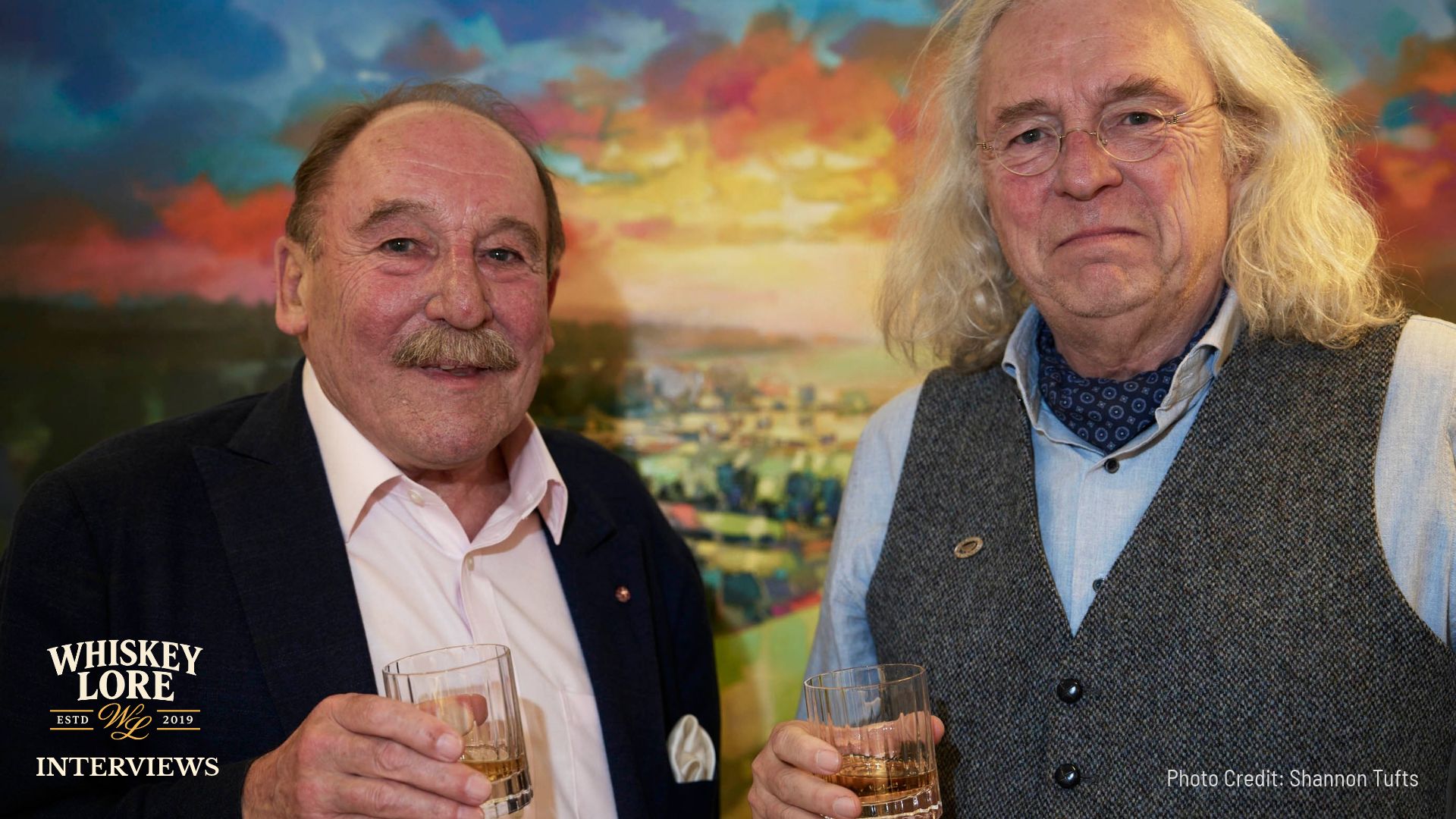
Listen to the Episode
Show Notes
Blended Scotch: The Whisky That Built an Industry
Blended Scotch accounts for most Scotch whisky sales, yet its history is often overshadowed by single malts. Authors Charlie MacLean and Hans Offringa join Drew Hannush to explore the origins of blending, early distilling practices, the rise of whisky brands, and the characters behind them. Their new book, Blended Scotch: Exploring the History, How It's Made, and How Best to Appreciate It, opens the door to a wider discussion of Scotch, Irish, and American whiskey history.
In This Episode
- Why MacLean and Offringa decided to write a book together
- How blended Scotch became the backbone of a global industry
- Why single malts rose in popularity during a period of excess whisky production
- Malt taxation, early grain recipes, and the economics of Highland distilling
- Burnt whisky, punch, toddies, and changing ideas about flavor
- The continuous still and the rivalry between malt and grain distillers
- What the legislation of 1853 and 1860 meant for blending
- Why bottling and consistent flavor helped establish whisky brands
- Stories behind Old Parr, Peter Mackie, and other blending personalities
- Research leads for future episodes of Hall of Legends
Explore More
Transcript
Table of Contents
- Introducing Blended Scotch and Its Authors
- Collaboration and the Rise of Blended Scotch
- Single Malts, Surplus Whisky, and Changing Tastes
- The Royal Commission and the Definition of Whisky
- Malt Taxes and Early Highland Distilling
- Burnt Whisky and Historical Drinking Habits
- Flavor, Congeners, and Maturation
- Grain Whisky and the Origins of Commercial Blending
- Irish Whisky, Column Stills, and Prohibition
- Bottling, Labels, and Brand Consistency
- Old Parr, Peter Mackie, and Whisky Personalities
- Research Leads, Hall of Legends, and Closing
Quotes from This Episode
“Well, it usually breaks up. It usually, there's a fallout in some way along the line.”
Context: Personality: Charlie jokes about the hazards of writing with a collaborator.
“Part eccentric, part fanatic. I mean, he was a big voice.”
Context: Personality: Charlie characterizes Peter Mackie.
“Without consistency, you cannot brand any product.”
Context: Important insight: why blending and repeatability helped create recognizable whisky brands.
“But the Irish whiskey had a higher reputation for consistency than scotch, even in the 1890s”
Context: Historical claim worth investigating: the reputation of Irish whiskey before the First World War.
“They couldn't find the proper glue to adhere to labels on the bottle because it slid off or the glue ate the paper.”
Context: Hidden gem: why some early whisky producers embossed their names into glass.
“In the highlands, a community would make a volume of ale from their precious fertile ground and then the rats would get at it”
Context: Hidden gem: the storage and transportation pressures that could favor distillation.
Transcript
Introducing Blended Scotch and Its Authors
Drew Hannush (00:00:15): Welcome to Whiskey Lore: The Interviews. I'm your host, Drew Hannush, the bestselling author of Whiskey Lore's Travel Guide to Experiencing American Whiskey: The Lost History of Tennessee Whiskey, and the book that busts 24 of Whiskey's Biggest Myths, Whiskey Lore: Volume One. And today I am honored to welcome two of the most prolific writers and respected voices in the world of whiskey. Between them, Charlie MacLean and Hans Offringa have written enough books to fill a library of their own. Charlie's Whiskypedia was actually one of my first introductions to Scotch Whiskey and its background and the enjoyment of it. And Hans' field guide to whiskey is a staple for any whiskey library. Both have spent decades sharing their knowledge and passion for the spirit, and they have just now joined forces on a brand new book called Blended Scotch: Exploring the History, How It's Made, and How Best to Appreciate It. Charlie and Hans, welcome to the show.
Charlie MacLean (00:01:15): Thanks, Drew.
Drew Hannush (00:01:17): When I got word of this book, I saw the title and I thought, why has nobody ever covered this subject before? The popularity of blended scotch in terms of sales would make you think that this would be a given for some kind of a write-up, Hans? Where did the inspiration come from to write this book and why do you think it's been so long and coming?
Hans Offringa (00:01:49): Well, both Charlie and I had done some work on blended scotch, but mostly as a chapter in a book that encompassed more types of whiskey. I'd done a tiny, tiny book about blended scotch in 2012 as part of a series of these tiny books about all the types of whiskey, but it was just scratching the surface. But about four years ago, and Charlie, correct me if I'm wrong, Charlie got commissioned a book, actually a monograph about blended scotch and was commissioned by a wine institute, I think.
Charlie MacLean (00:02:25): International Wine and Food Society. It's based in New York in London.
Hans Offringa (00:02:29): It was a tiny book with very rich in information. And Charlie gave me one. He said, "I have so much more material we can work with and knowing that I also have a huge archive." He said, "I'd like to make a real book about blended scotch. Do you feel like we should do that together?" So credits to Charlie, he had already done quite some groundwork, so laid the foundations for the book that is now in your possession. And I was honored and happy that Charlie invited me to come along for the ride. And that was in September 22.
Drew Hannush (00:03:06): Oh, wow.
Hans Offringa (00:03:07): We coined the first idea of working together on this book. And again, I concur with what you said. It's strange that it's 85 to 90% of the market, but nobody actually took serious time to write a book about it. So we sat down and worked out some synopsis and then texts going back and forth, suggestions for illustrations. We happened to have a very good designer in the house, so she met Charlie and he liked her and he liked what she did. So we had a kind of a little dream team which we could start making the book. But we were both hampered for a while. Charlie had some health issues. I had some issues with my hands. So of the four years it took to have the book as it is in your possession now, I think it's fair to say that the two of us both couldn't really work on it very well for nine to 12 months.
Collaboration and the Rise of Blended Scotch
Drew Hannush (00:04:02): Charlie, how is the job of working and writing in collaboration with someone? This kind of interests me because I think when I jump in and I start writing a book, I kind of have my tunnel vision of how I write it and my personality. And now you got two people who are collaborating. How does that go?
Charlie MacLean (00:04:23): Well, it usually breaks up. It usually, there's a fallout in some way along the line. But as Hans was saying, and everything he said is absolutely, he's got a better memory than I, but I have a visitor's book in my flat here in Edinburgh and Hans went through it and discovered that the first mention was in, what was it?
Hans Offringa (00:04:46): The first mention of this book was in September 2022.
Charlie MacLean (00:04:52): That's right. Yeah. And so we could date it precisely. We worked perfectly together and I would draft texts and then Hans and his wife Becky would adjust and add and send it back to me. And so we tossed it around over the four years. And then when it came to all the production and design and the business side of the book, that was Hans's department. And the book has come out. We're both more than happier with the way it's come out. And miraculously, we didn't fall out at all because you're right to say the often collaborations don't work. To add to what Hans was saying, blended Scotch whisky has always been the backbone. Well, the Scotch whisky industry proper really established in about 1860. And by the 1890s it was blended scotch, blended scotch, blended scotch. Obviously whiskey had been made way, way before, but the industry took off after 1860 and by the 1890s it was going ballistic. And the post Second World War, the demand for blended scotch was immense, particularly in the US and the UK, which was the two established markets, but also in Italy, in France, and would you believe in Germany, thanks to the Marshall Plan, which sold things in Germany or alleviated things in Germany, gave them money to be able to afford these luxuries like black blended scotch. So there was a massive demand, limited supply, which was rectified as soon as there was money around and as soon as there was enough grain around to make whiskey. Rationing was taken off in 1956, I think. So in the 60s and then into the 70s, there was a massive expansion of production. Everything was gung ho. Then lo and behold, with various events such as the oil crisis of, I was at 73, I think, and then the end of the Vietnam War, which has stimulated the American economy and a general downturn and then most significantly change in fashion because blend scotch was now dad's drink, even grandpa's drink and vodka and white rum and wine had really come on the market in the US and in the UK. So by the end of the 80s, the end of the 70s, you had a situation where there was massive overproduction with a declining market. And so there was a lot of closures, distillery closures in 83 and 85 and so on, so and so on. Now, what saved the day was the rediscovery, the renaissance of single malt whiskeys, which were pretty well unknown before the 1980s, all the major markets, except Italy was very keen on single malts. Single malt whiskeys represented, I think it was about between one and 2% of the volume market in the 1970s.
Single Malts, Surplus Whisky, and Changing Tastes
Hans Offringa (00:08:18): Yeah, very, very little. There were a couple of brands like Glenmorangie, Laphroaig, The Glenlivet. They were readily available worldwide. Glenfiddich, of course, but not that whole stream of single malts we see nowadays.
Charlie MacLean (00:08:33): And it literally saved the day because they had this whole stock of whiskey that was now not required for blending purposes. It had been made for blending purposes, but was no longer required by the blenders. Following William Grant's Glenfiddich, their example in 1963, they start to promote Glenfiddich as a single malt. And that was pretty well the first time. I know there was some Glen Livett available in the US on Pullman trains in the 1930s, but a very small for a short period of time and a very small amount as I understand. But even during the 70s, the number of the independent distillers start to bottle their single malts and so on. Anyway, as a result, the whole savior of the whiskey was single malt whiskey. And as a result, well, frankly, blend scotch was never spoken about, but it became the poor relation.
Hans Offringa (00:09:35): Which of course isn't right. It has huge popularity worldwide. But what happened in 1988, United Distillers, now Diageo, but then United distillers, they launched a classic six malts. That was a boost for single malt. The concept was very nice from different regions, different flavor profiles, and a lot of other distillers, they profited from that approach. So Pernod Ricard went the same way, named them. But what also happened was they had to get rid of all these malts. So what happened with some blended whiskey, it would contain far older single malt than it does now.
Charlie MacLean (00:10:16): Exactly.
Hans Offringa (00:10:17): If you open a early '80s, mid '80s bottle of famous grouse and you bottle the same one that was purchased yesterday, you will notice a huge difference.
Drew Hannush (00:10:31): This is interesting to me because I've been deep diving into, of course, American whiskey history and the parallels are all there. The American whiskey industry bourbon really wasn't doing well through the 1980s either, but it was the introduction of premium bourbons, the Pappy Van Winkles when they came out, Blanton's with a single barrel whiskey that all started in the mid '80s and really then started growing. And maybe it was kind of bringing the reputation back up as a whole, making people once again respect.
Charlie MacLean (00:11:11): That is very, very interesting, Drew. I was unaware of that. I knew that bourbon was suddenly started to be taken seriously, even though vodka and white drum was being appealing to the younger drinkers. And it was generally believed that for brown spirits, they'd lost a whole generation or maybe two generation and a half of potential whiskey drinkers. But that's very, very interesting. So I think it probably helped that good quality bourbons and scotch malt pulled the whiskey out of the doldrums.
Hans Offringa (00:11:50): I remember correctly, it was Elmer T. Lee who came up with the first single barrel bourbon from Frankfort Distillers, of course. I don't know if it was Blanton's, could be another brand, but the funny thing is we always hear in Europe say, yeah, single cask, that's a Scottish invention. But factually Elmer T. Lee was the first one who came up with the concept of a single barrel bottling. And then of course everybody jumped on the wagon and they found out this is a revival of an old guy's drink. It has a new lease of life. So we have to be thankful to our American brethren for coming up with that. Yeah.
The Royal Commission and the Definition of Whisky
Drew Hannush (00:12:31): Well, and it's kind of the taking it back to the source. And what I found interesting in reading this book was there was a lot of insights into it that I hadn't really thought about before, like the fact that the Royal Commission and this whole argument over what is whiskey. In the book, you kind of point to the fact that this was Highland distillers who had been making their spirits for so long and really the blenders were getting their success off of the backs of the Highland distillers and that this was creating some tension between the two.
Charlie MacLean (00:13:09): They were upstarts. They were upstarts. Yeah, they were. The Highland distillers were infuriated that so many of the blenders were hitching their... They were promoting their whiskeys on the basis of people in kilts and soldiers and red jackets and bagpipes and highland associations. They were infuriated by it. The pot still distillers, the highland pot still distillers, malt whiskey distillers got so antagonistic. The blenders controlled the consumption. The customers for malt whiskey were the blenders. Forget about the consumer. There was really no, really in the 1890s or for quite a long time, there was little or no market for single malt whiskey. The blenders were the customers. And so there was a sort of dichotomy where during that investigation, what is whiskey? And backed by the distillers company, the biggest of the blending companies, the decision was correctly, I think reached that grain whiskey should be allowed to be called whiskey. And so therefore blended whiskey, blend of grain and malt should be whiskey. And it wasn't exclusively a description for single malt whiskey. That was the thing, wasn't it? But blended pretty well conquered.
Malt Taxes and Early Highland Distilling
Drew Hannush (00:14:50): I want to turn back the clock a little bit in terms of our history discussion, because there was things in the book that I think will be really interesting and will further our knowledge and actually sort of help me see because sometimes I spend a lot of time looking at the American perspective and I have to keep kind of pulling myself back to the scotch perspective, the Irish perspective, so on and so forth. And I find it interesting that as I was reading the history, and it's kind of marvelous history by the way, it is very in depth and really could stand on its own in terms of telling a lot of the history of Scotch whisky. But in talking about early distilling, I noticed that there was actually a mention in here that in 1724, 25 in the Lowlands that they were using a mixture of wheat, rye, and unmalted barley. Now this is interesting to me because the Irish will talk about the 1785 Irish malt tax that brought about pot still whiskey and that potstill whiskey was an invention of the Irish. But it's my assertion that it was probably closer to the time of the Glasgow Malt riots in 1725 when the laws were being changed and the taxes and malt was being taxed. And you made the point, which I've made this point as well, that maybe this was a shift where Scotland went from being more of an ale culture to being more of a whiskey culture because they could save on the taxes by using unmalted barley. Is this something, am I fishing down the wrong hole here or do you think this is kind of, because that recipe really interested me.
Charlie MacLean (00:16:47): So yes and no. The malt tax was very significant in the 1720s, I think both in Scotland and in Ireland. And remember in these days, private distillings it was called, was perfectly legal as long as it was from grain grown in the parish and not for sale. Well, of course they got around that. And you see that makes perfect sense, Drew, because, and I think, I don't know what was happening in Ireland at that time, but on a highland croft, they grew oats and they grew barley. Now oats was the staple. Oats was the life force of the, that's what they ate. Early in the 1690s there were potatoes introduced and thereafter maybe oats and potatoes, if you like, had a couple of miserable vegetables. It was just the most awful thing. But they gave over around about a third and a half of their good ground, their growing ground to growing barley, which was called drink crop. Now drink crop was brewed and made into ale. Ale, it's quite a big volume and nobody's really written about this. I'm determined to write an essay about it. So in the highlands, a community would make a volume of ale from their precious fertile ground and then the rats would get at it and then it would go off. And they didn't have casks big enough because the roads were pretty well non-existent. And so they put them into little anchors as they were called. They were small casks which could be attached to the sides of horses and things like that. But you couldn't do that with ale because that was big. It was a big volume. So it was perfectly logical to distill the stuff, to reduce the volume and increase the strength. And that's what happened. Tourists in Scotland during the 1600s and 1700s were astonished, but they didn't grow hay to feed the creatures. There was a pastoral economy based on cows and so on, cows particularly during that time. So how did they feed them during the wintertime? Well, the answer was they feed them on the draft, the residues from brewing and distilling. I mean, they couldn't have survived otherwise.
Hans Offringa (00:19:39): Very protein rich food, so very healthy for the cows. I just got my notes about some specific dates. Apparently in England, the malt tax was first introduced in 1644 to help finance the English civil war. And only in 1713, it was extended to Scotland and 1785 it was in Ireland.
Drew Hannush (00:20:07): Well, and the reason why I bring this up is because if you read Wealth of Nations by Adam Smith in 1776, he's giving the formula for making Highland whiskey and he talks about unmalted barley. So this is before 1785 when the Irish claim that that was when they started using unmalted barley.
Hans Offringa (00:20:29): So I assume, it's conjecture, I confess, but that the English and Scotsmen already used all kinds of grains to make their beverages. And what Charlie said about using barley is specifically turning it into a liquid, which was not as bulky and also made more money. And the side effect was we have perfect food for our cows in the meadow.
Drew Hannush (00:20:55): Yeah.
Charlie MacLean (00:20:56): But the other thing, Drew, the malting, you've got to have enzymes to convert the cereal into sugar. Malting barley does that. So you can have your vegetables and you can have your... I mean, there were rats in Edinburgh because they were using carrots and neeps or turnips and gone as well during the 1780s, but you got to have that. Now, I think nowadays enzymes are understood and correct me, Hunts, but I think in any other country you can have what's called exogenic enzymes added. That means added, added. In scotch, you cannot add anything. All the enzymes have to come from the malted barley. And so that's why when you've got a grain or a mash or a maize mash, you've got to have about 20% malted barley to give you your enzymes. Sorry, this is wandering all over the place.
Burnt Whisky and Historical Drinking Habits
Drew Hannush (00:22:02): That's all right. We can get deep into this. The other thing I wanted to get into before we kind of step into when blending really started in the industry, another curious thing that I read in your writing that I have stumbled into again in bourbon discussions, which is the idea of burnt whiskey and this idea... Now in American whiskey, it makes sense because if you're going to distill in a pot still with a fire, then you have that opportunity, of course, to have the grain at the bottom with a fire underneath Scotching the whiskey. But burnt whiskey sounded interesting to me when I'm thinking of it in terms of you're just distilling wort, how are you burning whiskey? But I sort of maybe think that's related to, and from your research, maybe you can tell me, the Wash Act of 1784 was when London was trying to get all of these Scottish spirits down into feed the London gin trade because they didn't have enough spirits. And you had basically the changing of the laws going there because the Scotts were abusing it and they were trying to figure out how to distill as fast as they possibly could to send as much spirits down until finally the parliament basically gave them a year death sentence saying, "Here's a one year license time that you have before you can start distilling again." And as I've read, the Hagues and the Steins were basically building these really shallow stills so that they were able to produce more whiskey because they were doing it on production amounts and saying, "We're going to tax you on seven runs a week." And so they were trying to figure out how to charge the stills 40 times a week. And I'm just wondering if that is probably where this burnt whiskey thing came from.
Charlie MacLean (00:24:02): The chemical term is empyreumatic, which means sort of burnt or rubbery or unpleasant. It's always been a problem with pot still distilling, but in small pot stills, you could control it and control the heat and they probably didn't have as much heat as they did. But in the big stills, the stein and the steam stills and the hag stills, when you went into industrial production, yeah, that would become a problem. And it was remarked on now and you can't take it out. You can't take it out.
Drew Hannush (00:24:42): Well, and my question is that I get a sense, we always want to take our modern perspective and throw it back and try to shoehorn it into the past to get answers. But I get a sense that up until probably the mid 1800s, whiskey was much more meant for its alcohol than it was meant for its flavor. The majority of people were looking for a way to have that bite of alcohol in terms of the effect that it would have on you as a libation, but they wanted to doctor it with all sorts of other things. It wasn't necessary.
Charlie MacLean (00:25:24): Absolutely right. Absolutely right. Because the way of drinking whiskey, it's certainly outside of the Highlands. If you look at of accounts of tourists in the Highlands in the early 18th century, it was quite clear the Highlanders, they drank it either straight and new make spirit by the way, which is probably not as high strength as now, but new make spirit or with water and those who were quite posh would have lemon juice and they'd squeeze some lemon juice. But outside of the highlands of Scotland, Scotch whisky was designed to be drunk as punch with sugar, with possibly some spices and herbs, with lemon juice and either hot as toddy or cool as punch. And it was quite interesting that even the blended Scotch whisky coming on the market in the 1870s and into the 80s, they were saying perfect for scotch and toddy.
Drew Hannush (00:26:34): Now this stuff is really interesting to me because again, I see when I read Burnt Whiskey, it kind of went into some research I had done. If you read The Practical Distiller, which was the 1810 kind of practical guide for home distillers to figure out how to make whiskey, he basically talks about how to get the flavor out of whiskey. It's like to get the undesirable flavor out of whiskey. And as I read that, and then the next thing he's talking about is creating cherry bounce or something else. It gives me the impression that basically they just wanted the alcohol and that maybe this is... I relate it to painting. Painting got to a point of trying to find perfection in the romantic era. You wanted to make a painting as close to reality as you could, and then photography came along and then everything went abstract because now you're trying to deconstruct and get a little deeper in because there is a vehicle for getting the actual photo. And I sort of feel like it was the same thing with distillers that before the column still came along, they were in a fight to try to figure out how to make the most pure alcohol they could possibly make. And that would have been the era before Aeneas Coffey and Robert Stein and that there was a shift maybe at that time where people went from, okay.
Flavor, Congeners, and Maturation
Charlie MacLean (00:28:07): Drew, that's a brilliant analogy, brilliant analogy between painting and photography. I can't remember who it was, but one of the great gurus of whiskey in the past said flavor in Scotch whisky is the impurities that you leave in. So the whole business, but even vodka, I once went to Poland to advise a vodka distilling. Even they want to get all kinds of purity things to make, but it hasn't to be completely pure. It's not neutral alcohol. There is some elements that are left in, which maybe may give mouthfeel or doesn't give nose, doesn't give... Because obviously vodka's... Well, actually in Poland and Russia, it's just chilled and down the hatch. And being chilled, you don't taste anything. It's just the impact. But with whiskey, I mean, that's why some distillers like West Coast particularly, Springbank, Ardnamurchan, they are designed to be slightly grubby. They don't want... I know I was very involved in and Jim Swan, my great mentor who I introduced to them when they were doing it up, he designs a distillery to make very pure spirit, but then they adjusted it to make slightly more, well, dirty spirit in the sense that it was more West Coast orientated, sort of more seaweedy, more... They do a smoky bit, but it was just more maritime.
Drew Hannush (00:30:00): Yeah.
Charlie MacLean (00:30:01): It's fascinating. It really is because you don't want pure alcohol for making whiskey. And see, American whiskey in my view is so influenced by the casks.
Drew Hannush (00:30:14): Yes, yes. Well, this comes from an interesting conversation I had with Dr. Don Livermore in Canadian whiskey, because he kind of introduced me to the idea that pot stills, all those congeners you're leaving behind, those all develop in the barrel where you're trying to get flavor. So you don't want to overrun that with a lot of char. You want the flavor -
Charlie MacLean (00:30:39): Interesting. Very interesting.
Drew Hannush (00:30:41): Yes. And that column still distillate doesn't have all those congeners. So you are more dependent on the char in the barrel. And this is why bourbon producers say that 70% of the flavor of a bourbon comes from the barrel because it's that char of the barrel, not the barrel itself, because Scotts use the barrel, but the Scots are using a barrel like the brandy industry uses a barrel in that it is a subtle enhancement over time rather than being the source of the flavor. And this is part of the reason why I argue with a distiller, Jack Daniels. I talked to them about their American single malt. And I said, "The problem with American single malt is you're using the wrong type of barley because you're using it just for conversion, really nothing else. Now you're trying to make flavorful whiskey out of that and you're sending it through a column still. And the column still is meant to strip out all the congeners that make barley whiskey interesting."
Charlie MacLean (00:31:47): You're absolutely right. You're absolutely right on all counts. Charred casks, heavy charred casks typically used in America with different degrees of charring, but the char takes out certain unwanted characteristics, particularly sulfur compounds. But it also adds an awful lot, particularly lignins and it's really coconut and vanilla going into the liquid during its maturation. And when they're brand new, the casks, they're very active. And so that is the character of American whiskey. So the brand new casks, heavily jarred, take out and add. Great. But because of the nature of the climate in much of the American Kentucky, you've got a pretty ferocious climate with hot in the summer and cold in the winter. And you drive on this. And the 200 liter barrels, standard barrels, you're certainly getting a mature spirit in a very short period of time. Two years, I think. I know they don't usually bottle it at two years, but it's perfectly drinkable. They take out, it's a mature spirit. But for the standard JDs or whatever, they're probably about three to five years old, I should imagine. And perfectly, perfectly good whiskeys, lacking depth and complexity, of course, because it's of the length and because you can't achieve that. Oh God, honestly, you've got me started. I've just come back from Japan where I was visiting Ian Chang. He was the guy, the master distiller for Kavalan distillery in Taiwan. Brilliant guy. And his mentor was my mentor, Jim Swan, Dr. Jim Swan. Having put Kavalan on the map, I mean the Kavalans maybe, but it relies an awful lot on the wood, on the maturation climate is so intemperate, like to some extent Kentucky, they can produce a very mature whiskey in a relatively short time, like three to five years, I would say. They don't put age statements on, I don't think, because they cannot produce a long aged whiskey because of the climate. So having set the whole thing up and then he went to help design and run a distillery in Japan, Komoro, which is where I was last week. And one of the things he was saying is he was so intrigued to explore how to make a longer aged whiskey. So he knew all the science and so on from Dr. Jim, but absolutely fascinating. And you see, you are constrained by climate to quite a large extent. So they built this distillery in, it's about three hours north of Tokyo. It's a mountainous region and there's skiing in the hills and all that sort of stuff. So they can explore the maturation there. And then they've bought a plot up in Hokkaido, the North Island where they're going to do the same sort of thing and another plot way down south, which is more closer to Taiwan. And so I mean, it's quite a remarkable, I don't know why we got onto this, but
Drew Hannush (00:35:48): We started diving into this idea of tasting whiskey in the past and the fact that today we kind of people online who are writing tasting notes and we really dive deeply into whiskey. And so this trying to apply this historically to a time before 1825 or so when the column still came along and that was really what kicked off our conversation was the fact that the column still really seemed to be that shift maybe from where you're trying to distill out as much as you can and make the purest alcohol you can on a pot still before that. But then after the introduction of the column still, well, you can do that now. So now you can get more creative and start looking for flavor and people maybe you're getting more interested in. Then the argument, and you cover this in the book, then the argument starts to go between, well, those pot still distillers, they're leaving all those fusel oils in there and those are poison and you don't want to drink that stuff versus column stills which were being sold as this is pure alcohol and this is healthier for you.
Grain Whisky and the Origins of Commercial Blending
Hans Offringa (00:37:07): There's this great ad in the book, you may have seen it about canvas grain whiskey, not a headache in a gallon. That's what they were advertising at the time.
Drew Hannush (00:37:17): Yes.
Charlie MacLean (00:37:18): The flavor in whiskey is the impurities left in malt whiskey. Grain whiskey is relatively pure, although experts can distinguish, I think there's about eight grain whiskey distilleries and they can distinguish one from another. But it is the impurities that are left in that distinguish all the individual malt whiskeys and they come from process and they come from wood, from maturation. And that's crucial. And that really is what distinguishes scotch. Certainly from bourbon rye and Canadian whiskey certainly. Irish whiskey, of course, slight different process. Japanese whiskey is probably the closest, but Japanese they tend to go for great purity and these are less. So the whiskey is generally lighter and more fragrant.
Hans Offringa (00:38:25): In the section about the brand stories, you will find a story about Art Rey, which is a blend from Beam Centauri. And that's where they hark back on the old Japanese blending methods, trying to combine that with Scotch and come up with a new variety in blends. Very interesting story.
Drew Hannush (00:38:49): Yeah. And that's a great bridge into my next question, which is a time period that kind of confuses me and maybe you can clear up some of this for me. 1853 and 1860 are very interesting dates for blending of whiskey because 1853, as I understand, is the act that allowed the vating of malts. So in other words, take a single malt, another single malt or take one single malt, another single malt, you can blend them together from two different distilleries. That's fine. That's now legal. And then the Gladstone Spirits Act of 1860 then allowed for the blending of malt and grain whiskeys. My question being, before 1853, was there the actual law against or was it prohibited to vat malts together? It doesn't seem like there was an industry control at that time, but maybe there was.
Charlie MacLean (00:39:55): It's a very good question. All the Johnnie Walker sort of born 1820s still going on. Johnnie Walker was 14 years old when his shop was bought by his father's trustees. And the Walkers really didn't start blending till his son, Alexander Walker, the first joined the business. But there were so many grocers, licensed grocers blending whiskey from the 1820s. But they may have had little house styles. I've seen books for purchase for Bells in Perth, for example, in the 1830s. And you can see they're buying local whiskeys. But the blends they're knocking together as they're doing blending tea and as they're doing blending brandy and stuff like that, they were called Italian warehouse men for some reason or other, but they were like super delis. But the significance was that in 1853 with this act of parliament, there was an attempt by Andrew Usher in Edinburgh to blend malts. And he produced a thing called Usher's Old Vatted Glenlivet. Now he had had the agency for selling Glen Livett whiskey since the 1820s. And then he blended it with very small amounts of other whiskeys and bought it. But it was the first attempt at making a consistent brand. Without consistency, you cannot brand. And when in 1860 Gladstone Spirits Act allowed the blending of malt and grain, Usher's old vetted glen lived rapidly became a grain whiskey. So they added grain whiskey to it, but keeping the flavor consistent. And that was when all the small time Italian warehouse men and other blenders, whether it was doers or walkers, whatever, all came on board to make a consistent product which they could then brand. Without consistency, you cannot brand any product. And that was the significance of those two dates. It opened the floodgates to blended scotch after 1860.
Hans Offringa (00:42:33): Yeah. You may have seen the two labels of Andrew. It's one of the pages. Two beautiful, very old labels.
Irish Whisky, Column Stills, and Prohibition
Drew Hannush (00:42:42): Yes. Yeah. I want to tie this a little bit into Irish whiskey history from the standpoint that there became a squabble between... I don't know if it's a squabble on the Scott side, but it definitely was on the Irish side that you had the big four distillers in Dublin who were fighting to keep their single malt and potstill whiskeys relevant by the 1880s. And so there was even a book written, The Truth About Whiskey, and it was all talking about pot still whiskey, that this column still and this cheap whiskey that they're making over in Scotland, this is what we have to fight against. But I've seen some of the legal arguments over this in parliament and the arguments are fascinating because it really did come down to kind of marketing sides. It looked like a political fight in many ways, but it was like this is the old pot distiller trying to survive in a world where he's being undercut in terms of price by the blenders. So how do you fight that? You just call their product inferior, right? That's kind of the feel I get out of that.
Hans Offringa (00:43:58): Well, it's certain that the Irish at first totally neglected the success of the column still by saying that's not the real product, but there's a complex of factors why the Irish distilling industry declined so much. So it's not only the neglect of a new invention, but as you know, the Irish didn't want to deliver whiskey during prohibition and the Scots didn't have any problem with exporting that. So they lost one of the largest export markets. And then in the 1930s, the economic wars with England basically almost obliterated the Irish whiskey industry because they lost the second largest export market. But the start, I think, of the decline might well have been the fact that they neglected the column still because as you say, it was easy to make whiskey and milk cheaper whiskey. It was a fight between quality and quantity.
Charlie MacLean (00:44:55): And Aeneas Coffey who perfected the Robert Stein's continuous still, he was an Irish inspector of excise in the 1820s. And then he patented his still, which is a great improvement on steam still in what was it? 1832 or I think 32. But the Irish distillers, thinking about it now, it's rather like the pot still distillers objecting to the grain whiskey distillers in Scotland in 1905, because they said, "No, this is not making whiskey. This is just a sort of spirit and so on."
Hans Offringa (00:45:41): Making alcohol.
Charlie MacLean (00:45:42): Yeah.
Hans Offringa (00:45:43): Yeah.
Charlie MacLean (00:45:44): So as you said, Hans, they never got into blending whiskey in the same way that the Scots did. And Coffey, of course, he sold his ideas to Scotch grain distillers. Well, it was adopted by grain distillers because there's no point in putting malt whiskey through it because it makes a very bland spirit. But then as you also touched on, Hans, after the Ireland, first of all, it lost all the imperial mark. Well, it's a tricky one here because my understanding is that after Irish independence, there was a certain amount of animosity between the church, the Roman Catholic church in Ireland and distilling generally speaking. And you mentioned the four big principle distillers, but there were numerous small distilleries, but the church was against it.
Hans Offringa (00:46:47): That's also where these terms, Parliament whiskey and poitín came from.
Charlie MacLean (00:46:52): That's right. Parliament whiskey. Yeah. And so it was perceived that it was Protestants that were running these distilleries. Whether this is true or not, I have no idea. So they were oligonum. And when prohibition came in, the Scotch took advantage of it to shift and they make sure it was good quality scotch, blended scotch into the prohibited market through legal channels, St. Pierre and Nikono.
Hans Offringa (00:47:26): The Bahamas.
Charlie MacLean (00:47:27): The Bahamas and Canada and even Mexico.
Hans Offringa (00:47:32): The funny thing was that Cutty Sark was designed and made in 1923 for the lighter American pellet in the midst of prohibition.
Drew Hannush (00:47:44): That's right. Well, and perfect with the ship since it was probably being delivered by rum runners up and down the coast.
Charlie MacLean (00:47:53): The UK government had a very... Remember that was a famous... They were being pressed by the American government during prohibition because they knew that the UK government had sort of cast a blind eye on this illicit trade. It was perfectly legal trade, but it was called the private, what was it called? The Scotch whiskey companies banded together to make sure that the product that they were shipping to America was of good quality and at the right price and ideally not dealing with the mob. So they made sure that the whiskey, the scotch that went into America during prohibition was sunk.
Bottling, Labels, and Brand Consistency
Drew Hannush (00:48:40): One of the points I wanted to bring up on this, I want to shift really quickly to bottles because that was a big thing that also hurt the Irish industry that you do cover in this book, which is the idea of the shift to bottling scotch. Because part of the problem with Irish whiskey was that it was still being sent to bonders. The distillers never really distilled their own. The bonders were dealing with barrels more than they were when they were shipping it overseas. They were shipping it in barrels, not in bottles. And the Scotts were doing it in bottles. And to me, that was a big piece. So I kind of like to hit on that here.
Charlie MacLean (00:49:18): That's very interesting because you see the most scotch, even in the 1890s was about 50% was in bulk rather than bottles. But the Irish whiskey had a higher reputation for consistency than scotch, even in the 1890s and the volumes of whiskey that came from Ireland and were sold in England in particular were considered right up until the First World War, I think. And I think a lot of that was bulk rather than bottled.
Drew Hannush (00:50:00): It's interesting because again, in researching, I love that you were putting the dates in of when the bottling actually was ramping up over there because you've got it in the mid 1880s and in the United States, even with our Bottled and Bond Act that came out in 1897, it was still extremely expensive to bottle whiskey at that time in the US until 1903 when we got the automated bottling machine.
Charlie MacLean (00:50:31): Because of course, see glass was heavily, heavily taxed until 18... I think it was 1843, Hans, was it? Yeah. So all whiskey was bulky.
Hans Offringa (00:50:43): Especially clear glass was very expensive. So that's why the -
Charlie MacLean (00:50:47): Clear glass was hugely expensive.
Hans Offringa (00:50:49): Yeah. So that's why it was always brown or green.
Charlie MacLean (00:50:53): But I mean before that it was ceramic jars or small casks. So it was bulk. But then of course there was an act which abolished the glass tax. I think it was 1845. After that it became more realistic. And from a point of view of the producers, they really realized why he stopped to this later because if you could put your product in a sealed bottle, which was driven corks by the way in those days, you could guarantee its consistency. And so I go back to brand consistency and if you could then put in a sealed bottle, which they had been doing previously, but it was not by no means guaranteed. But with a sealed bottle, with a driven cork, they could guarantee the product. And that was when bottling took off.
Hans Offringa (00:51:50): And they also ran into the issue that they couldn't find the proper glue to adhere to labels on the bottle because it slid off or the glue ate the paper. So that's why the first bottlers, they would blow the name in the bottle like Dewar’s did that and some others. I think Dewar’s still does it, but then they found the right glue in the right paper and then there was a burst of branding whiskey. And as you can read in the different brand stories in the last chapter of the book, it all comes beautifully together. We tried throughout the whole book to show the huge variety of blends that came onto the market once they had figured out that particular problem.
Old Parr, Peter Mackie, and Whisky Personalities
Drew Hannush (00:52:41): Well, it's interesting. We know some of these really big names and I love the deep dive into all of these brands. Some of these smaller or ones that we don't consider like the Walkers and the Dewar’s and the rest still exist on the shelf and there's some fun stories behind them. Part of me thinks that part of the reason why blended whiskey sometimes gets forgotten when we're talking about whiskey history is because we don't have a distillery to go to, to connect to people and that sort of thing. But one of my favorites, and I didn't know this story, was the story of Old Parr.
Hans Offringa (00:53:18): That's a funny story.
Drew Hannush (00:53:19): Which is still on the shelf. Yeah. So kind of go into that.
Charlie MacLean (00:53:23): Well, in truth, Drew, the stories behind the blended brands are much more engaging than the stories behind individual distilleries. Would you know what to say, Hans? It really -
Hans Offringa (00:53:39): Yeah, you have Lagavulin and Lagavulin makes Lagavulin. You have a blending house and they come up with all these beautiful concoctions.
Charlie MacLean (00:53:49): I was in Japan last week, would you believe, and Old Parr is a big brand there. Old Parr, which on the label says the old, Old Parr, the old, old, very old man or Thomas Parr. And he's supposed to have lived for about 126 years. I mean, he's buried in Westminster Abbey, for goodness sake. He was presented to King Charles II. I mean, it was extraordinary.
Hans Offringa (00:54:17): I think he even remarried a year before he passed away.
Drew Hannush (00:54:21): Yes, that's right. Well, and that was the thing that it said that he was like at a hundred, he got in trouble for doing something. I forget exactly what it was.
Charlie MacLean (00:54:30): That's right. I mean, these glorious stories. And Old Parrr is still there in Japan. And the stories behind the brands are in many ways, really more fun. And not just the marketing stories like the Old Parr, but the people behind them, the Tommy Jurs, the -
Hans Offringa (00:54:55): Arthur Bell, a very interesting character.
Charlie MacLean (00:54:58): Arthur Bell and the -
Drew Hannush (00:55:00): I was going to say, the guy that I think is the most interesting that I have never seen any real writings on, and maybe you guys can point me in the direction, is Peter Mackey. I mean, this guy was kind of like the crab coming at nipping at the heels of everybody in terms of he was like that. He was the spice in blended with.
Hans Offringa (00:55:23): He shows up in a lot of books. In my Laphroaig books, I pay quite some attention to Peter Mackey. I think Dave did that in his book on. Okay. He touched upon the subject, but a biography about Peter Mackey would be interested. Charlie, shall we do another book?
Charlie MacLean (00:55:43): What was it?
Hans Offringa (00:55:44): A biography on Peter Mackey.
Charlie MacLean (00:55:47): Part eccentric, part fanatic. I mean, he was a big voice. He was very keen on maturation. But he was also very keen on... He invented a thing called where it was some sort of horrible diet that he insisted his staff eat this bone, what was it? Bone brown and marrow or something like that.
Hans Offringa (00:56:20): He was a huge control freak. He really wanted to tell his employees what they are supposed to eat because they will produce better and they will be more healthy. Now there's a little side story here about Mackey. Have you been to Islay?
Drew Hannush (00:56:36): Well, actually I have had coffee in the distillery room at Lagavulin that was supposed to be the competitive... They were trying to copy Laphroaig, I think.
Hans Offringa (00:56:49): Maltmill. Yeah.
Drew Hannush (00:56:50): The Maltmill, yeah.
Hans Offringa (00:56:51): This is slightly different story. Did you fly in or did you take the ferry?
Drew Hannush (00:56:56): I took the ferry.
Hans Offringa (00:56:57): Well, the ferry at Kennacraig, if you go up the hill, there's a huge old house and that house was built by Peter Mackey and he would entertain his guests lavishly in that particular house. How did I know? By coincidence, I couldn't take the ferry anymore, so I had to have a place to stay the night. And I found in that house a lady who was running a B&B, Karen Beauchamp. Now, Karen Beauchamp, she had all kinds of stuff from Whitehorse still in the cellars, so she showed me very interesting things. So I slept probably in a room where Peter Mackey might have entertained some ladies. He was very good at that too. So as the story goes, but Karen Beauchamp herself, she was an interesting character. She is a wallpaper designer and she told me, and I think I can't believe her. She's not someone who makes it up. She designed the wallpaper for Prince Charles's bedroom.
Drew Hannush (00:57:57): Oh, wow.
Hans Offringa (00:57:58): Now, King Charles, but she actually lives on the premises. And if you stay there, it's a little village called Whitehall, you will be actually treading in the footsteps of Peter Mackey.
Drew Hannush (00:58:10): Wow.
Charlie MacLean (00:58:11): Landed.
Drew Hannush (00:58:12): The things you stumble into, right? When you're just traveling - It's just serendipity.
Hans Offringa (00:58:16): Yeah.
Research Leads, Hall of Legends, and Closing
Drew Hannush (00:58:19): Yeah. He's a fascinating character. And there's a lot of characters in this book. You guys go into a little bit of the Pattersons and William Ross is another person that I think is... I'm doing a series called The Hall of Legends, and my idea of the series is not just to bring up the same people that we all know about as legendary figures, but people like my first was Aeneas Coffey, because Aeneas Coffey not only brought about the column still, but he also was involved in the Excise Act of 1823 from the Irish side. And so he had his fingers in a lot of things that now we look at as the modern whiskey world. And so when you get somebody like a William Ross, who was the head of the DCL and their influence over whiskey over so many years.
Hans Offringa (00:59:18): And take Charles Doig for your whole... He's mainly known by many people because of the Pagoda, but he designed so many distilleries and other buildings. If you track him down in Elgin, the library has a huge archive on Charles Doig because he was from that area. If you want to do something with that, go visit Elgin Library and it's a wealth of information you find there.
Drew Hannush (00:59:45): Beautiful. Beautiful.
Charlie MacLean (00:59:47): Link up with that. I think that's a lovely idea, but link up with Dave Broom and Arthur Motley, what do they call it? Antiquarian spirits.
Hans Offringa (01:00:00): The Liquid Antiquarian
Charlie MacLean (01:00:01): Liquid Antiquarian.
Drew Hannush (01:00:02): Okay.
Charlie MacLean (01:00:03): I mean, it's a wonderful, but they really, they love this. And you could do a link with them, save you a bit of time and suggest some things that they might investigate because they're terrific. They really are.
Drew Hannush (01:00:23): I want to thank you both for being on the podcast. And I will tell you that this book, if you are like, Blended Scotch, well, okay, I don't know how interested I am in that. This really is a wealth of knowledge, not only on Blended Scotch, but on the industry as well. And so I think it is well worth anybody having this book in their collection. And maybe it will bring about more of an appreciation for Blended Scotch because you do also have your appreciation section in it and so many brands that have some fun histories in here. So I appreciate you guys taking the time and putting this together because it is a gift to our knowledge of whiskey and so needed in the industry.
Charlie MacLean (01:01:10): That's very kind of you. Thank you so much. Yeah.
Drew Hannush (01:01:12): Thank you so much. I hope to have you back on the podcast again in the future. Lots of great discussions we can have. Cheers.
Charlie MacLean (01:01:19): Okay. God bless. Cheers.
Drew Hannush (01:01:21): Cheers. I hope you enjoyed my conversation with Charlie MacLean and Hans Offringa. Hope to have them both back on the show at some time. We just had a little bit of issue with Hans' feed and so unfortunately he popped out of the conversation every once in awhile. It'd be great to have him back in the future. Big news, by the way, I am working hard on the first redesign of the Whiskey Lore website. First time since it originally launched back in 2019. Got some great new features coming, brand new design, and I am supercharging the access to Whiskey Truths and Lore. It is a work in progress. I'm actually revealing it section by section right now. So if you see some new content, but feels a little light at the moment, or if you see something that doesn't work, no worries. I'm on the case. When this is all done, you're going to find a new, easier to use travel guide, better ways to discover older evergreen episodes of the Whiskey Lore Podcast and my favorite new feature, Truth or Lore, a place where you can actually start going down your own research rabbit holes. If you want to see some of my deeper dives down some rabbit holes, then become a member of the Whiskey Lore Speakeasy. You can find me at patreon.com/whiskeylore. Have yourself a great week. Got more stories and lore on the way. I'm your host, Drew Hannush. Until next time, cheers and slàinte mhath. For show notes and transcripts, head to whiskeylore.org/interviews. Whiskey Lore is a production of Travel Fuels Life, LLC.
Member Content
Please log in or sign up for a FREE account to view this content.